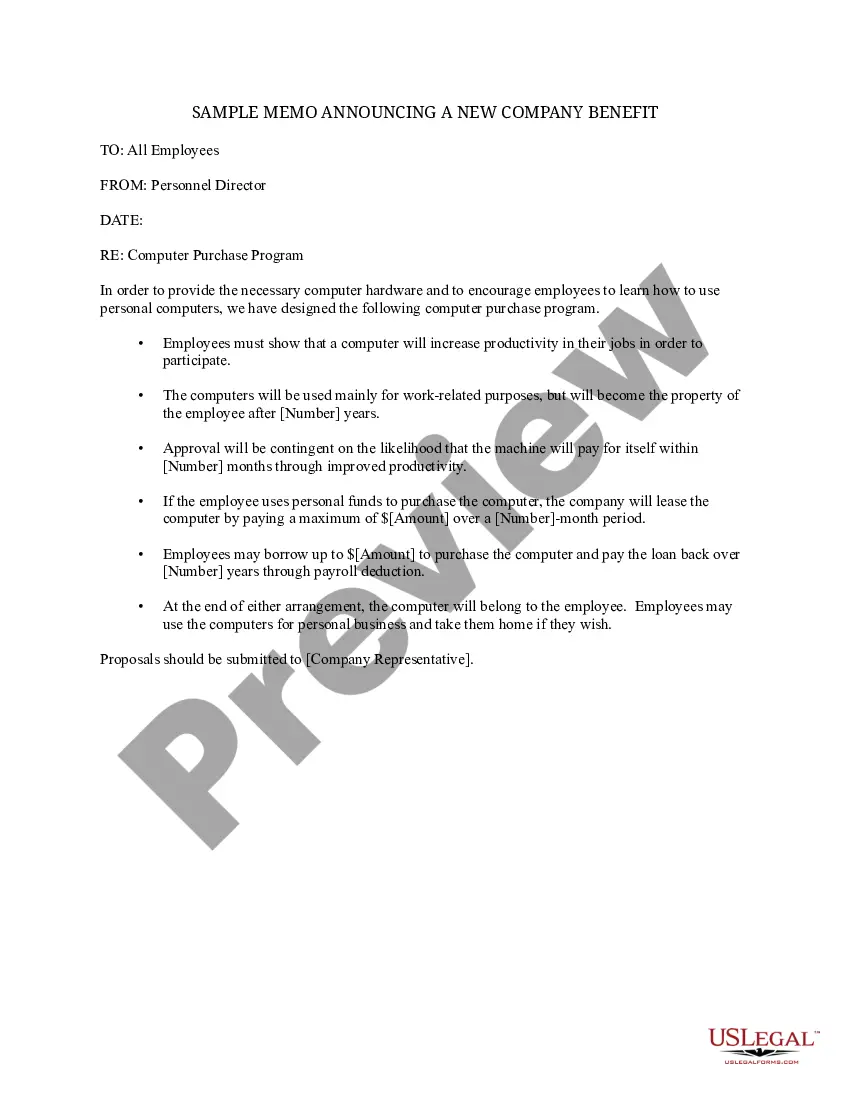
Sample Memo Company Template With Lines
Description
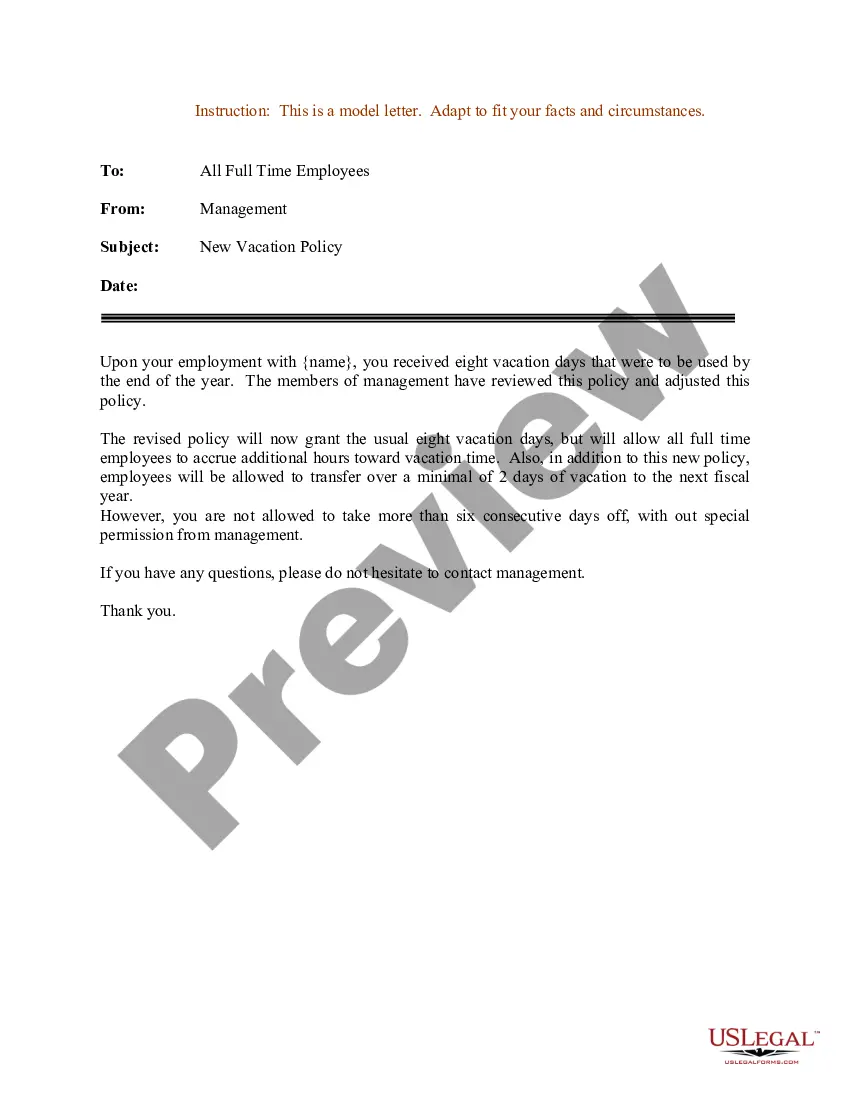
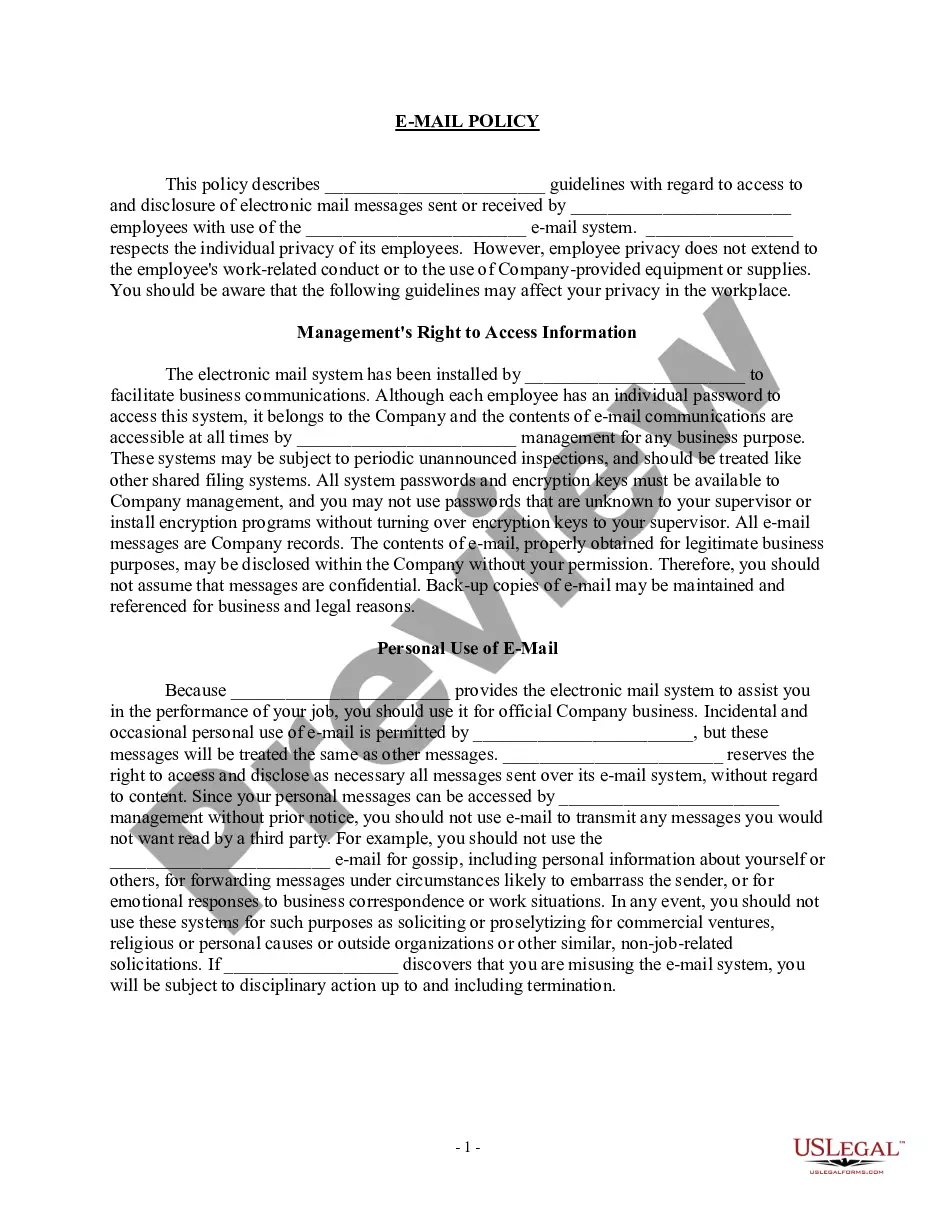
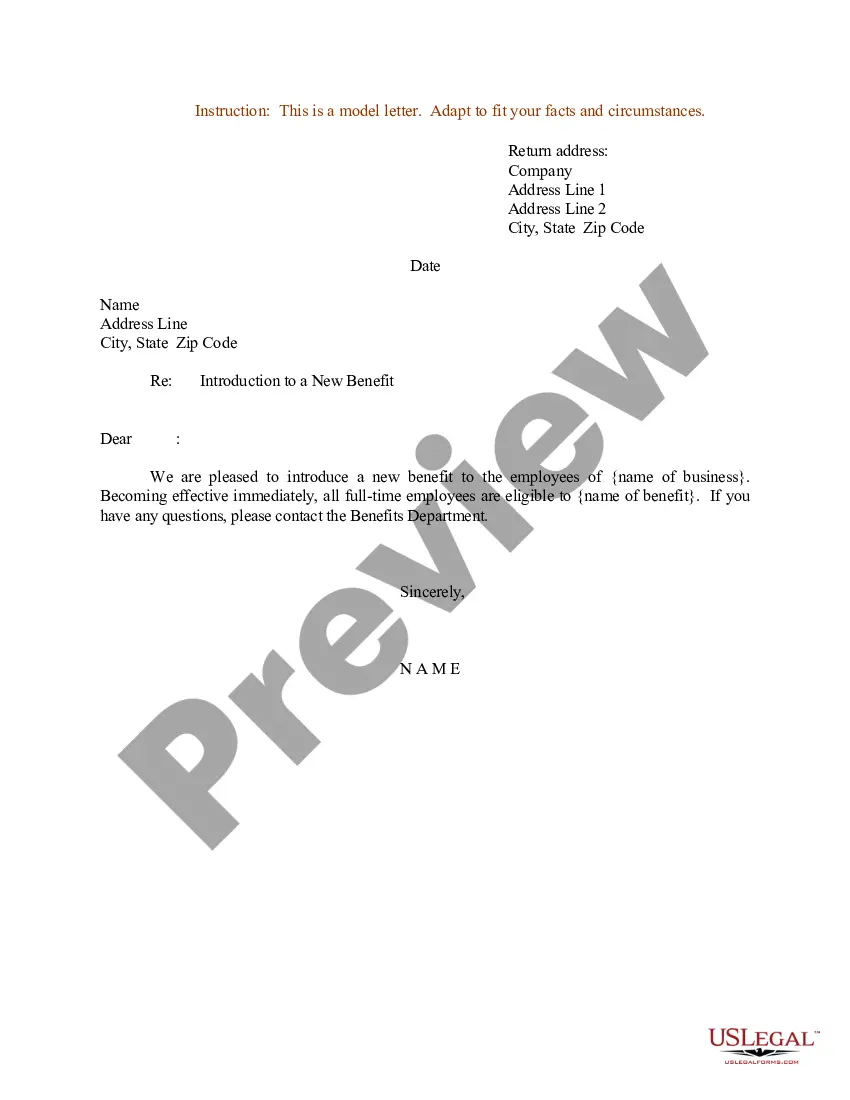
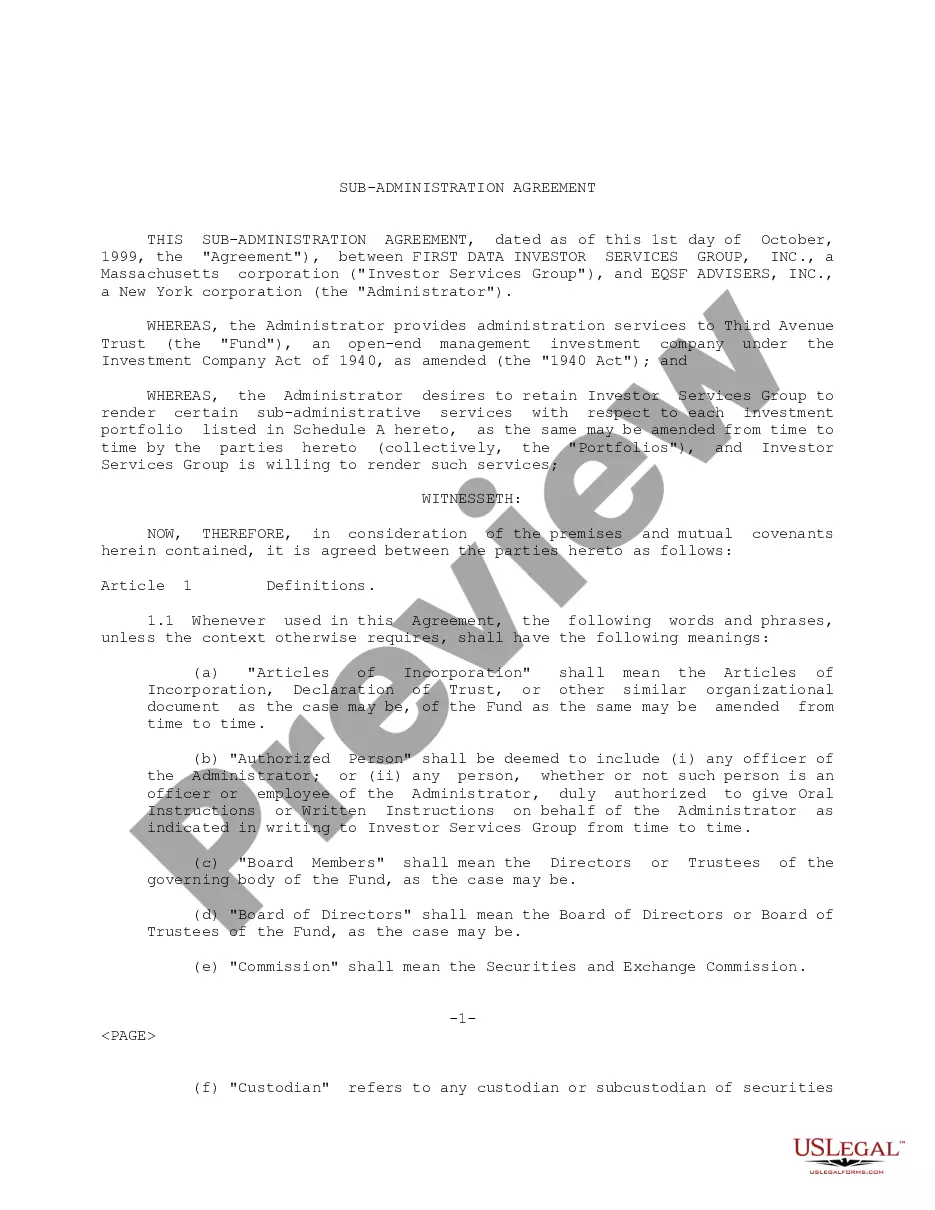
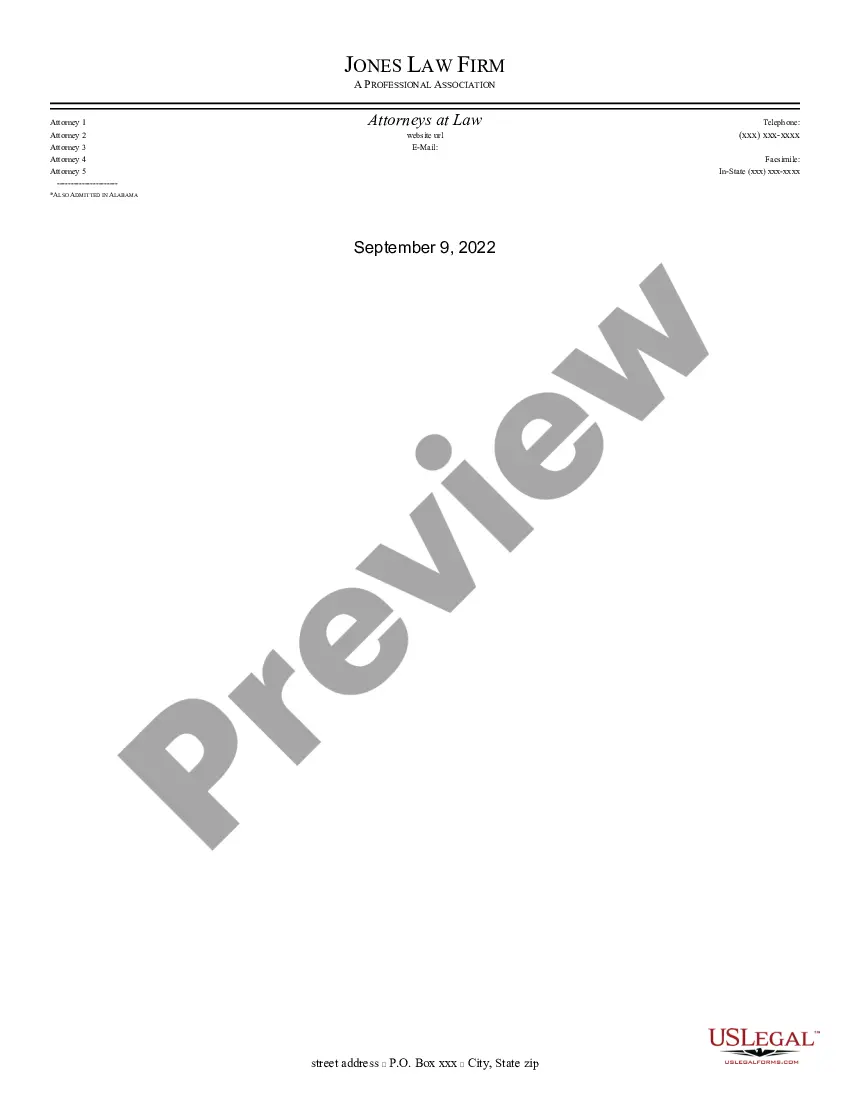
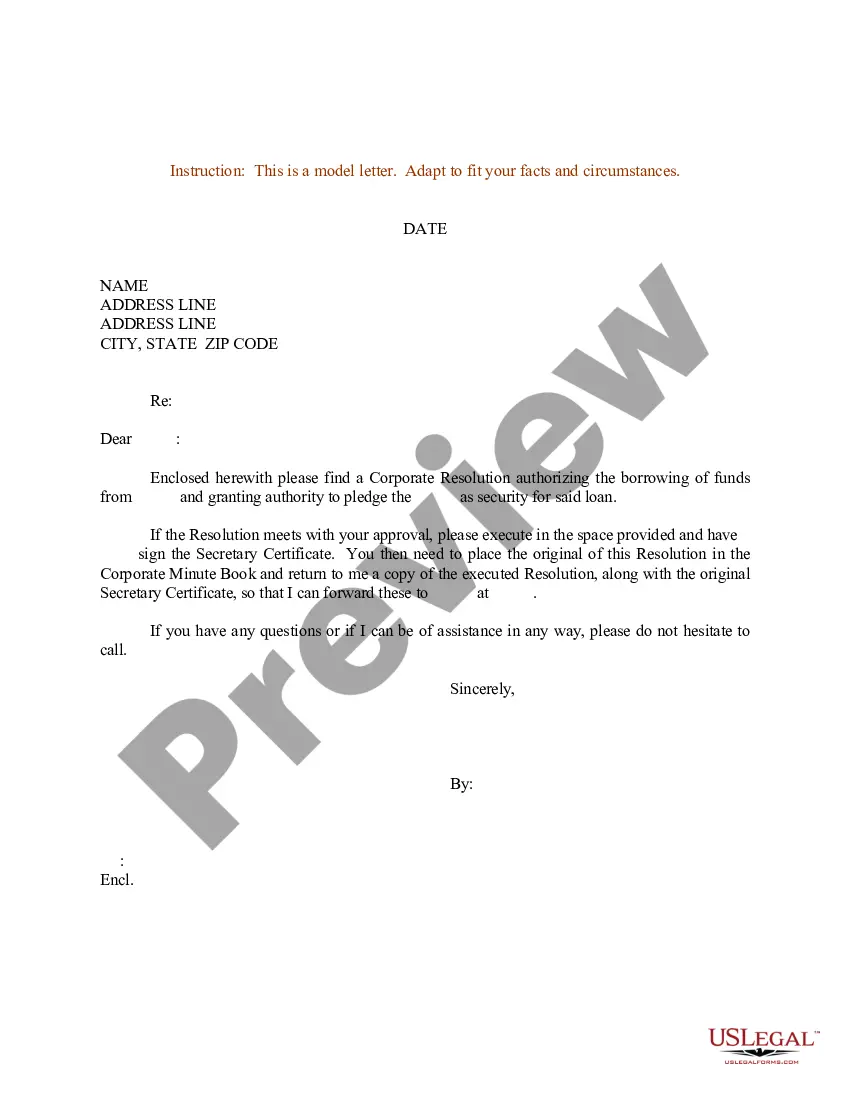

How to fill out Sample Memo Announcing A New Company Benefit?
Finding a reliable source to obtain the latest and suitable legal templates is a significant part of navigating bureaucracy.
Selecting the appropriate legal documents requires accuracy and meticulousness, which is why it is crucial to obtain samples of Sample Memo Company Template With Lines exclusively from trustworthy sources, such as US Legal Forms. An incorrect template can squander your time and stall your situation.
Once you have the form on your device, you can edit it with the editor or print it out and fill it manually. Eliminate the complications associated with your legal paperwork. Explore the extensive US Legal Forms library to find legal templates, assess their applicability to your situation, and download them instantly.
- Utilize the catalog navigation or search bar to locate your template.
- Examine the form’s details to ensure it meets the requirements of your jurisdiction.
- Preview the form, if an option, to confirm it is the correct form you need.
- Return to the search and find the right template if the Sample Memo Company Template With Lines does not fulfill your needs.
- When you are certain about the form’s relevance, proceed to download it.
- If you are a registered user, click Log in to verify and access your chosen forms in My documents.
- If you do not have an account, click Buy now to acquire the template.
- Select the pricing option that best fits your requirements.
- Continue with the registration to complete your purchase.
- Finalize your acquisition by choosing a payment method (credit card or PayPal).
- Select the file format to download Sample Memo Company Template With Lines.
Form popularity
FAQ
Headings: Center or flush left the label "MEMO" or "MEMORANDUM" at the top of the page. Leave a few line spaces, then have: "DATE:", "TO:", "FR:" (or "FROM:"), and "RE:" (or "SUBJECT:"). Be as specific as possible when writing the subject line. Sign your name or initials after your printed name on the "FR:" line.
A memo is usually a page or two long, single spaced and left justified. Instead of using indentations to show new paragraphs, skip a line between sentences. Business materials should be concise and easy to read. Therefore it is beneficial to use headings and lists to help the reader pinpoint certain information.
Heading. The heading of memorandums is designed to allow a reader to understand what he or she is looking at, and decide quickly whether he or she should read it. The heading has four or five parts, appearing in this order. ... purpose. summary. background/discussion. conclusion/action.
Maintain a professional, succinct style. To achieve such a style, use short, active sentences. Avoid jargon and pretentious language. Maintain a positive or neutral tone; avoid negative language if possible. In addition to making memos easier to read, a professional writing style also improves the writer's credibility.
A memo consists of two parts: the identifying information at the top, and the message itself. At the top, identify for whom the memo has been written, who is sending it, the subject, and the date. The subject line serves as the memo's title.