Self Employed Barber Contract With Insurance Company
Description
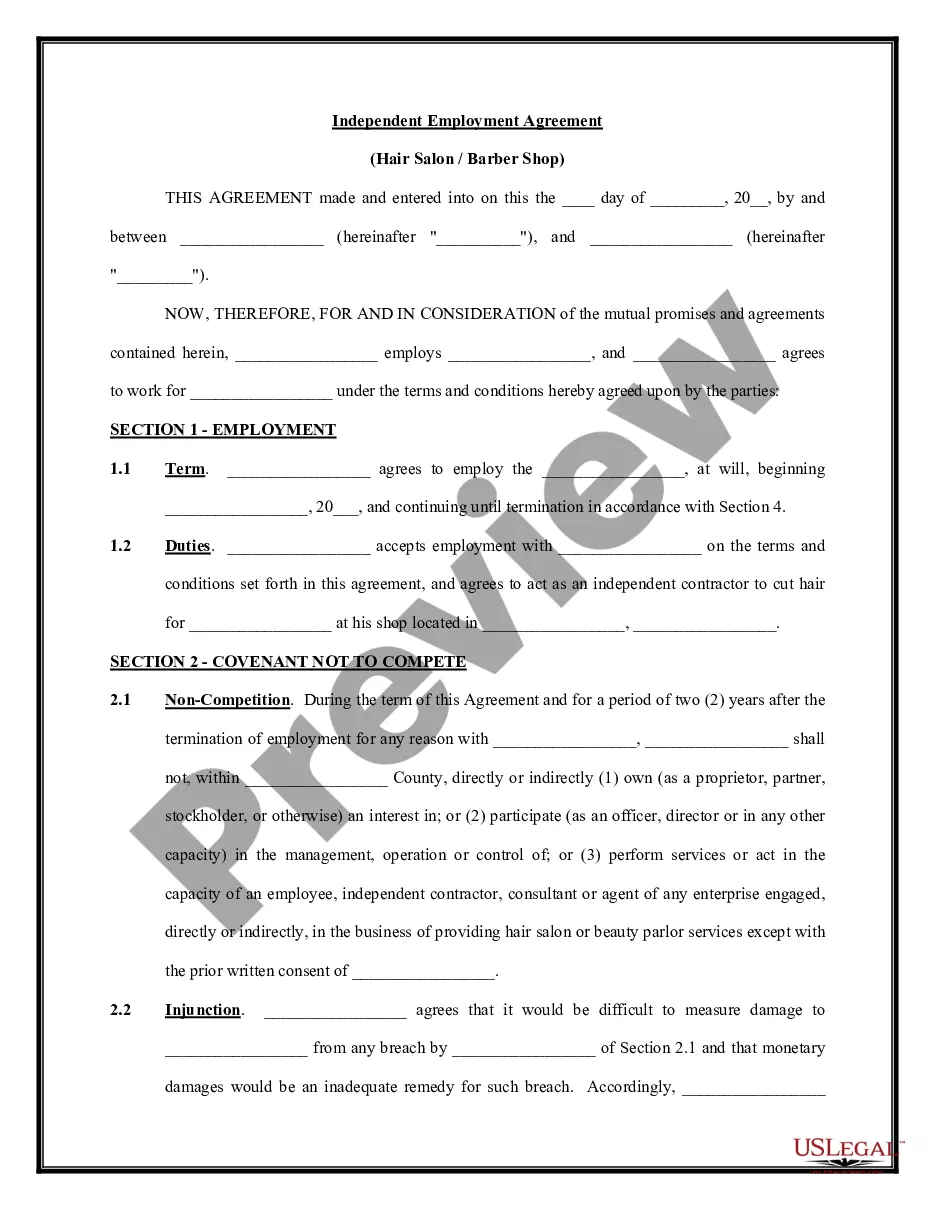
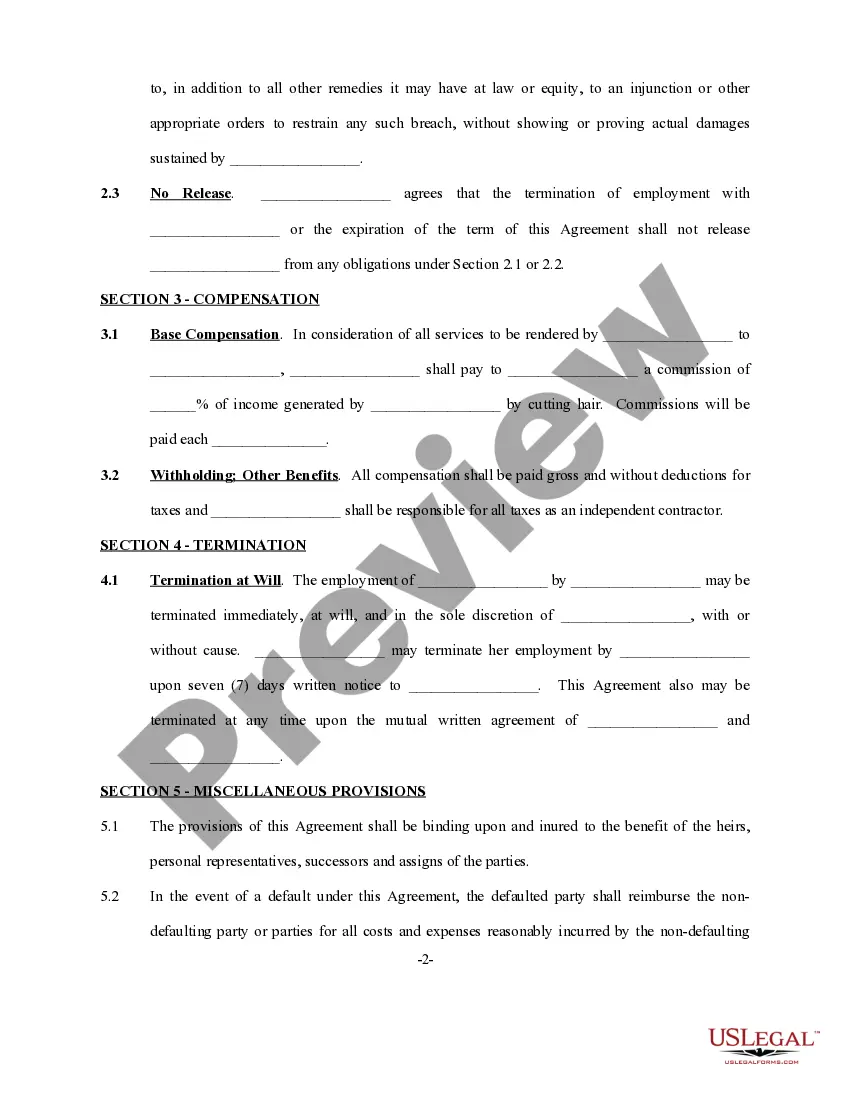
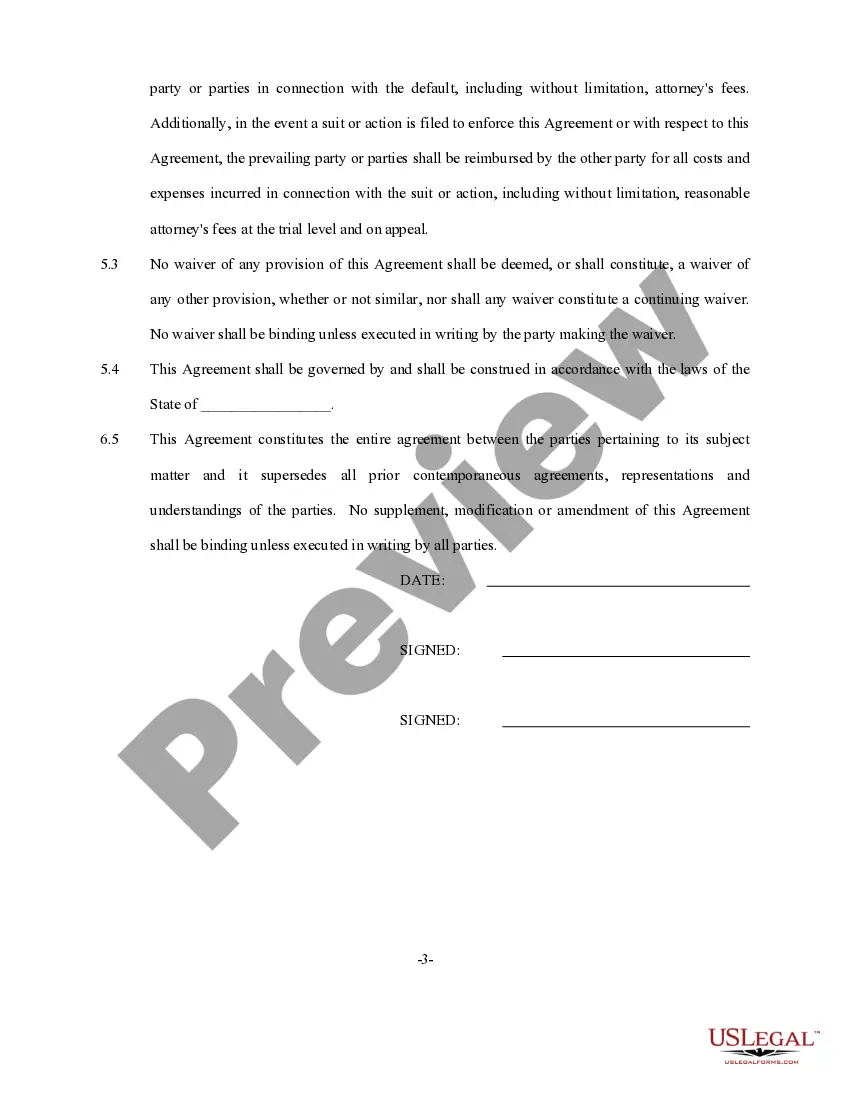
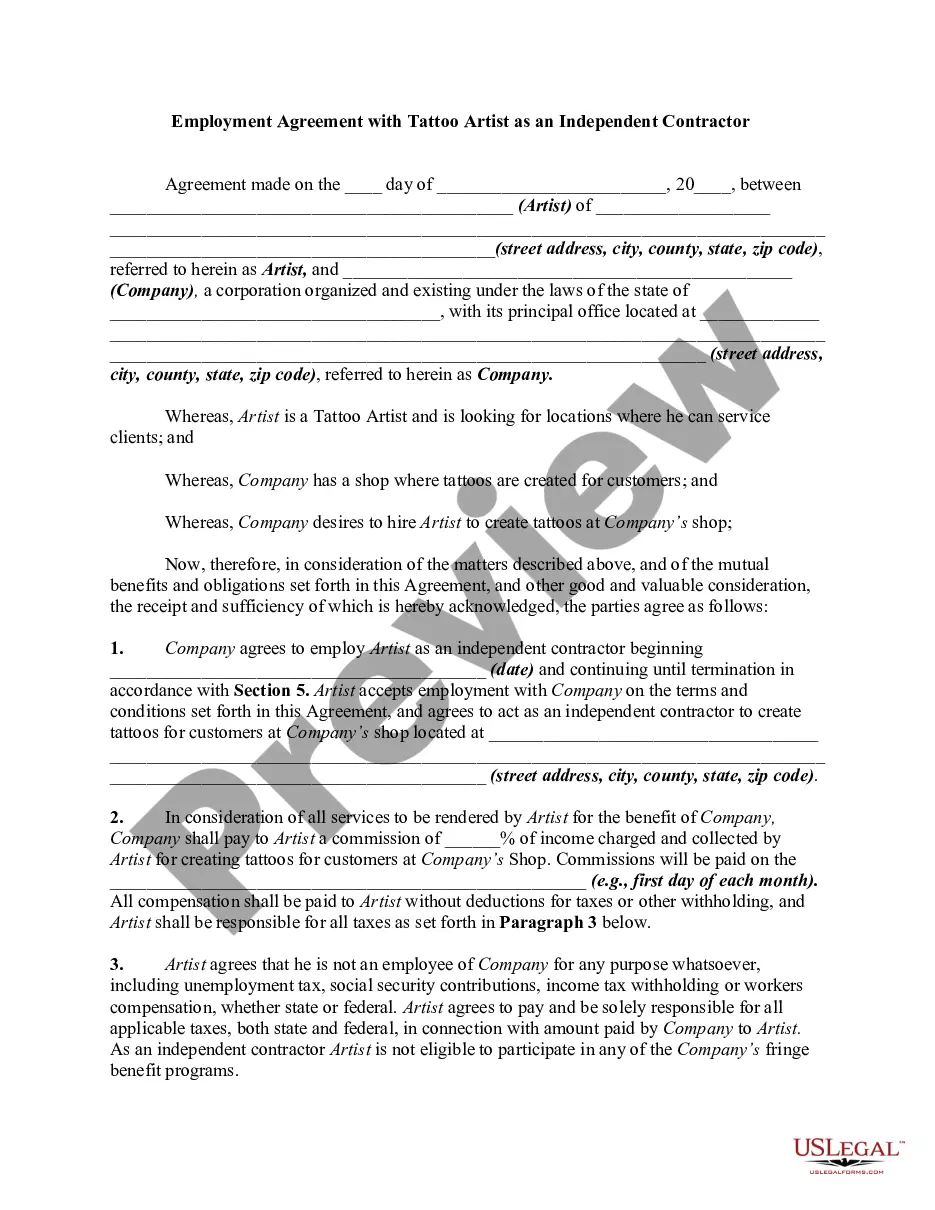
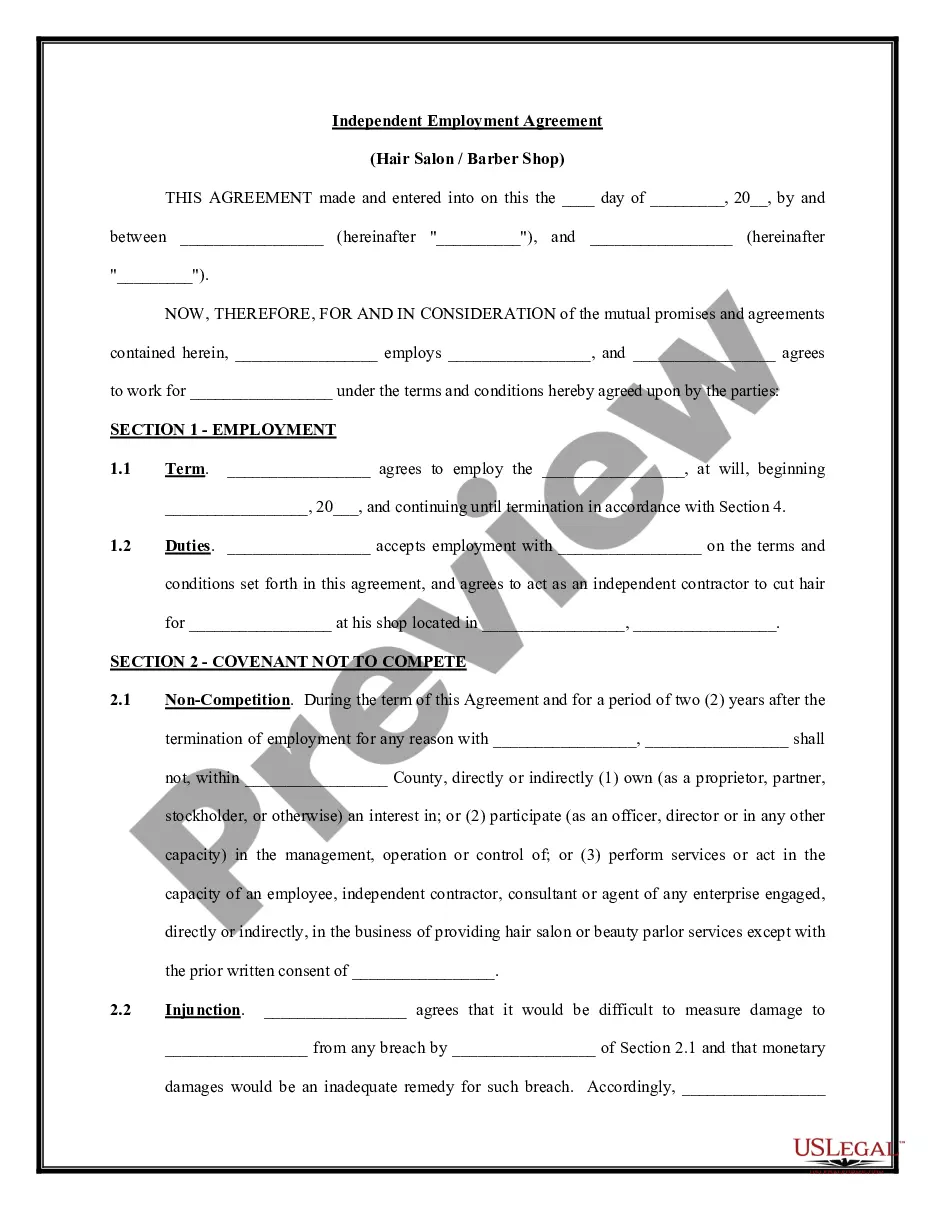
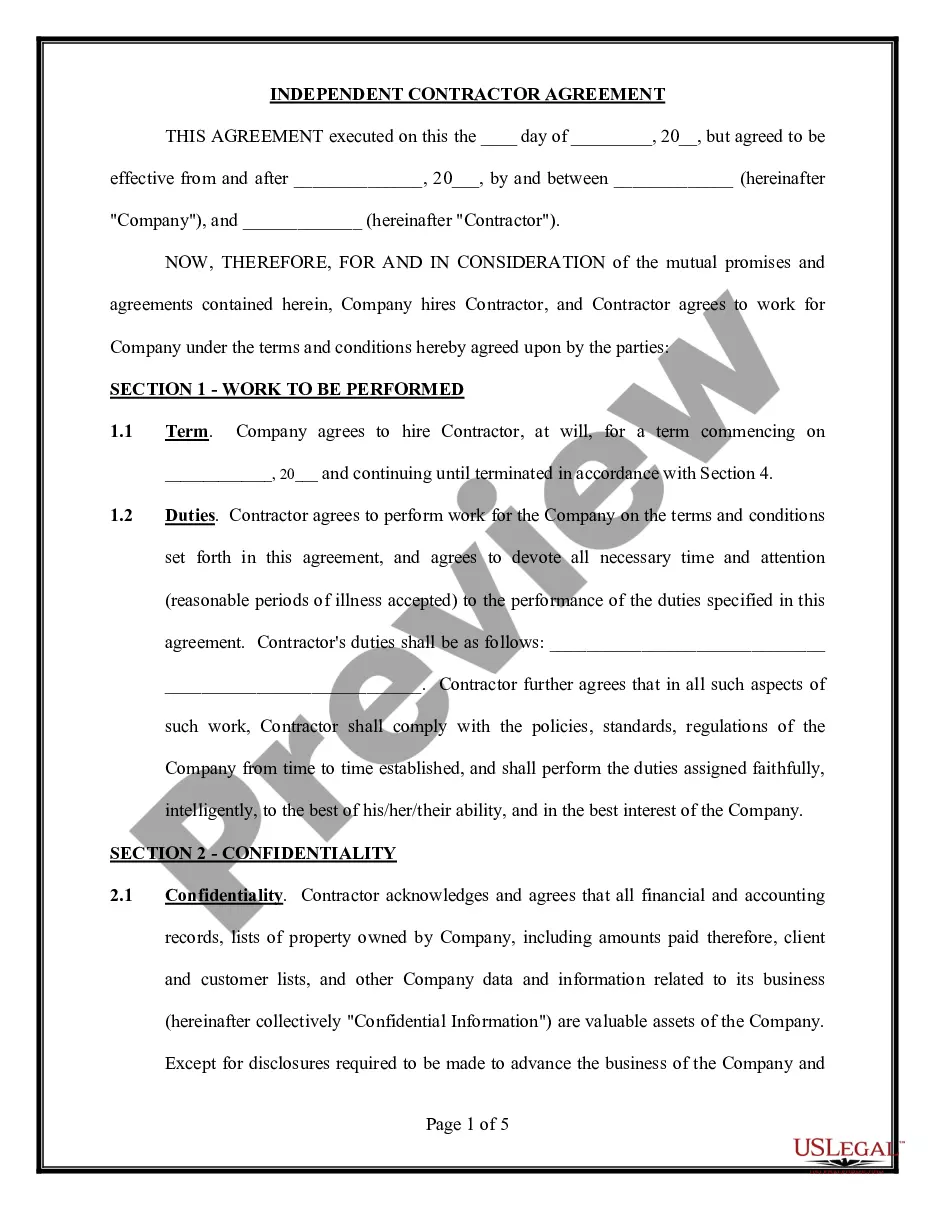
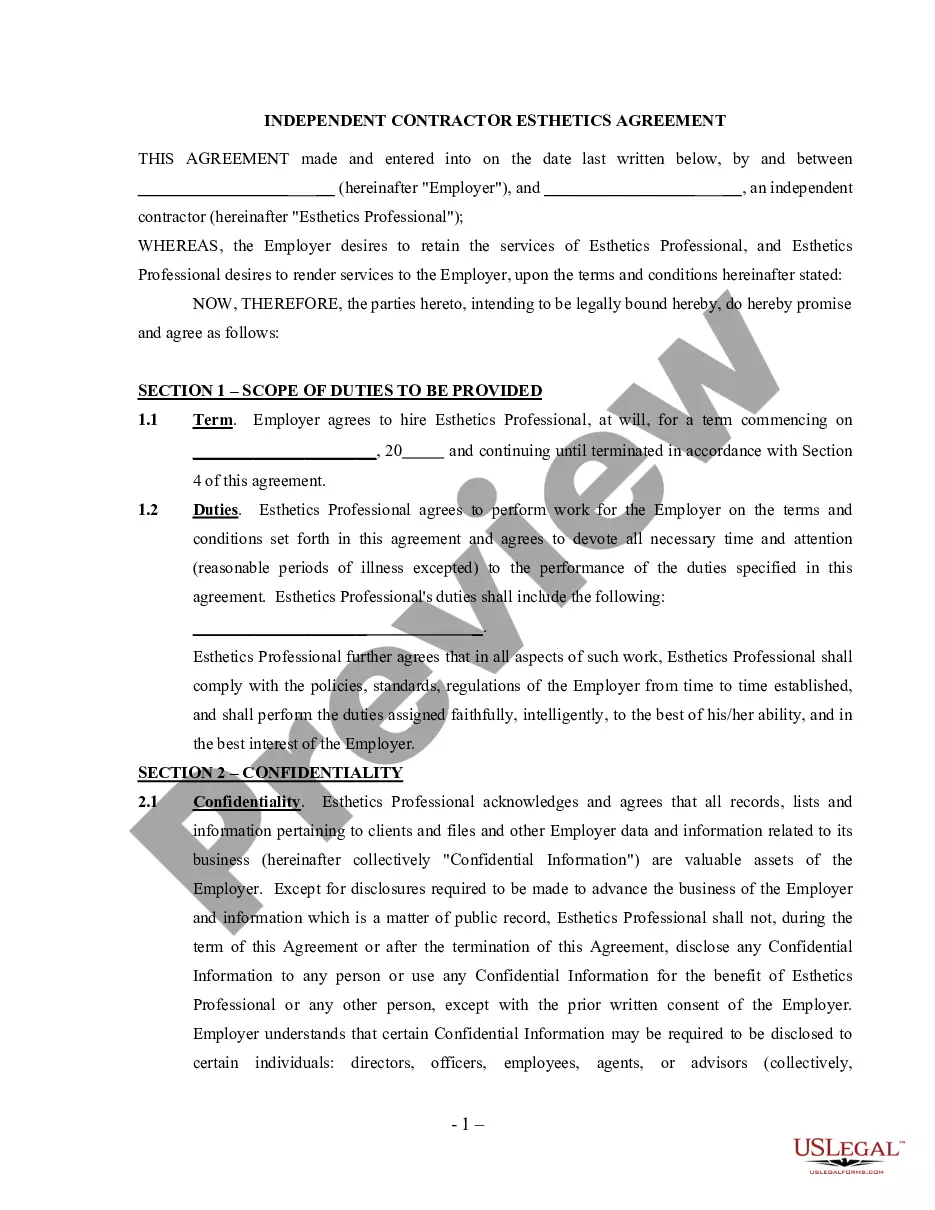
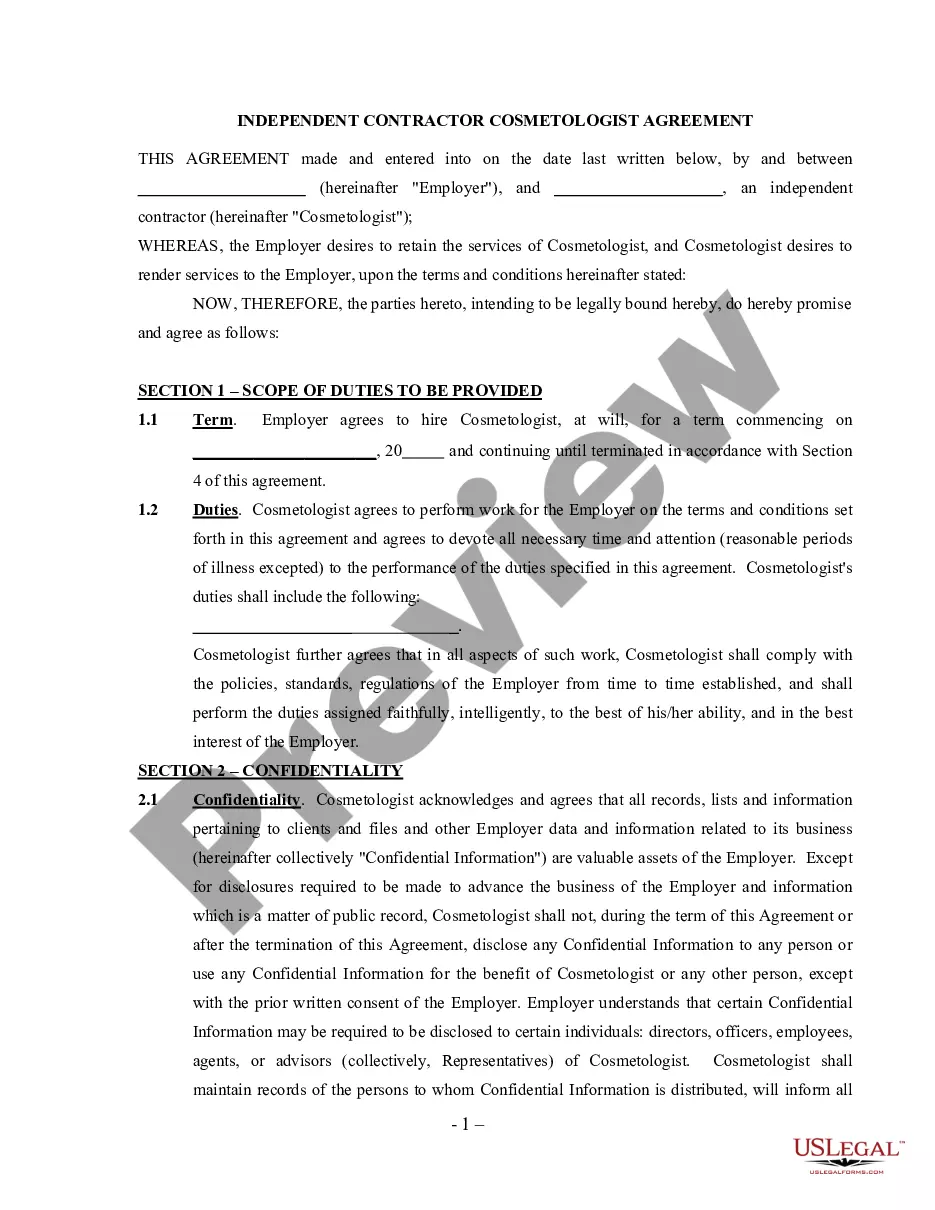
Get your form ready online
Our built-in tools help you complete, sign, share, and store your documents in one place.
Make edits, fill in missing information, and update formatting in US Legal Forms—just like you would in MS Word.
Download a copy, print it, send it by email, or mail it via USPS—whatever works best for your next step.
Sign and collect signatures with our SignNow integration. Send to multiple recipients, set reminders, and more. Go Premium to unlock E-Sign.
If this form requires notarization, complete it online through a secure video call—no need to meet a notary in person or wait for an appointment.
We protect your documents and personal data by following strict security and privacy standards.

Make edits, fill in missing information, and update formatting in US Legal Forms—just like you would in MS Word.

Download a copy, print it, send it by email, or mail it via USPS—whatever works best for your next step.

Sign and collect signatures with our SignNow integration. Send to multiple recipients, set reminders, and more. Go Premium to unlock E-Sign.

If this form requires notarization, complete it online through a secure video call—no need to meet a notary in person or wait for an appointment.

We protect your documents and personal data by following strict security and privacy standards.
Looking for another form?








How to fill out Self-Employed Independent Contractor Employment Agreement - Hair Salon Or Barber Shop?
It’s well known that transitioning into a legal expert cannot happen instantly, nor can you swiftly acquire the ability to draft a Self Employed Barber Agreement With Insurance Firm without a specific skill set.
Drafting legal documents is a labor-intensive task that necessitates specific training and competencies.
So why not entrust the creation of the Self Employed Barber Agreement With Insurance Firm to specialists.
View it (if available) and examine the accompanying description to see if the Self Employed Barber Agreement With Insurance Firm meets your needs.
If you need a different template, initiate your search again.
- With US Legal Forms, one of the largest legal document libraries around, you can find a variety of resources, ranging from court documents to templates for internal communications.
- We understand the importance of complying with federal and state regulations.
- This is why all our templates are tailored to your location and regularly updated.
- To get started, visit our website and access the form you require in just a few minutes.
- Use the search bar at the top of the webpage to locate the form you need.
Form popularity
FAQ
Self-employed hairstylists are required to pay estimated tax every three months and file an annual return. Depending on their location, they may also need to file local or state tax returns. First, you must report your business income and losses on IRS Form 1040 Schedule C.
Thankfully, barbering-related educational courses, certifications, and licenses are prime expenses to write off on your taxes. They are investments in your craft and business, making them integral to your success as a barber.
Certifications, Education, and Licenses Thankfully, barbering-related educational courses, certifications, and licenses are prime expenses to write off on your taxes.
Similar to makeup costs, hair care expenses only qualify as a tax deduction when they are specifically for work-related photoshoots or shows.
A barber contractor is responsible for reporting their income earned and any expenses accrued. For instance, a sole proprietorship should file a 1040 tax form using Schedule C to report business income, any expenses accrued and Schedule SE to report Self-Employment tax.