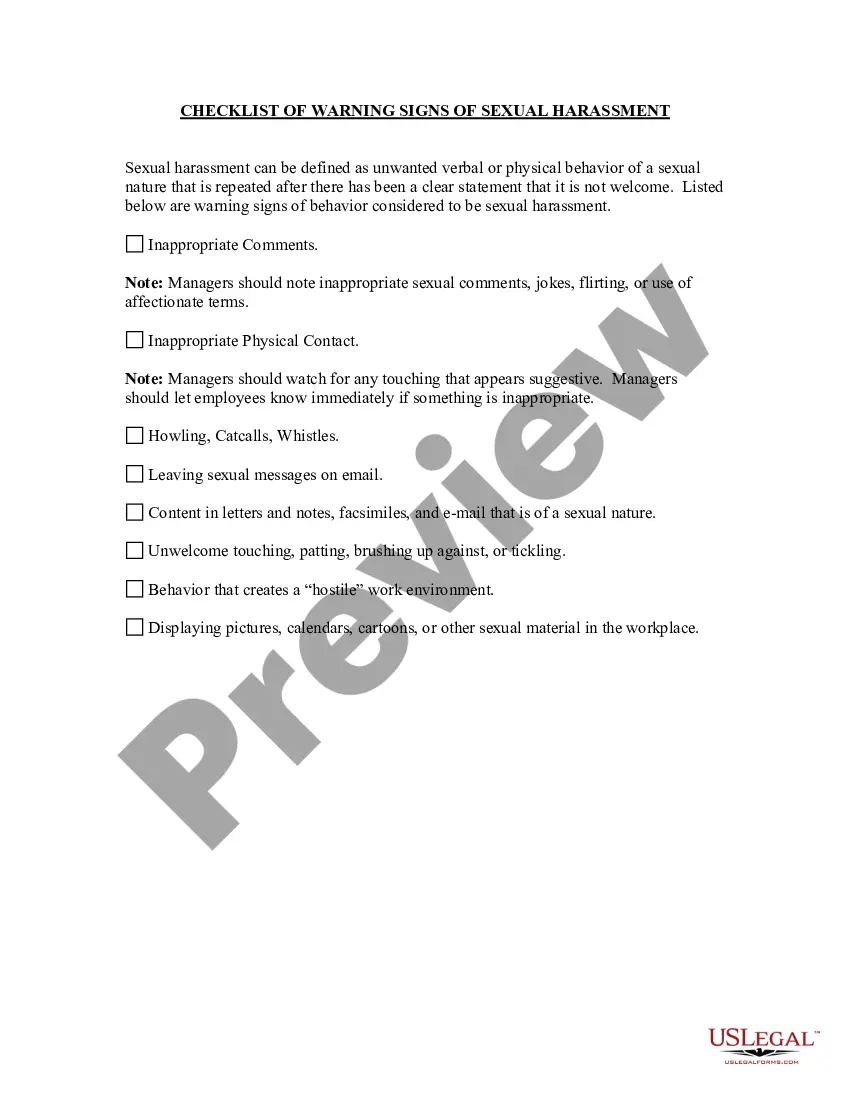
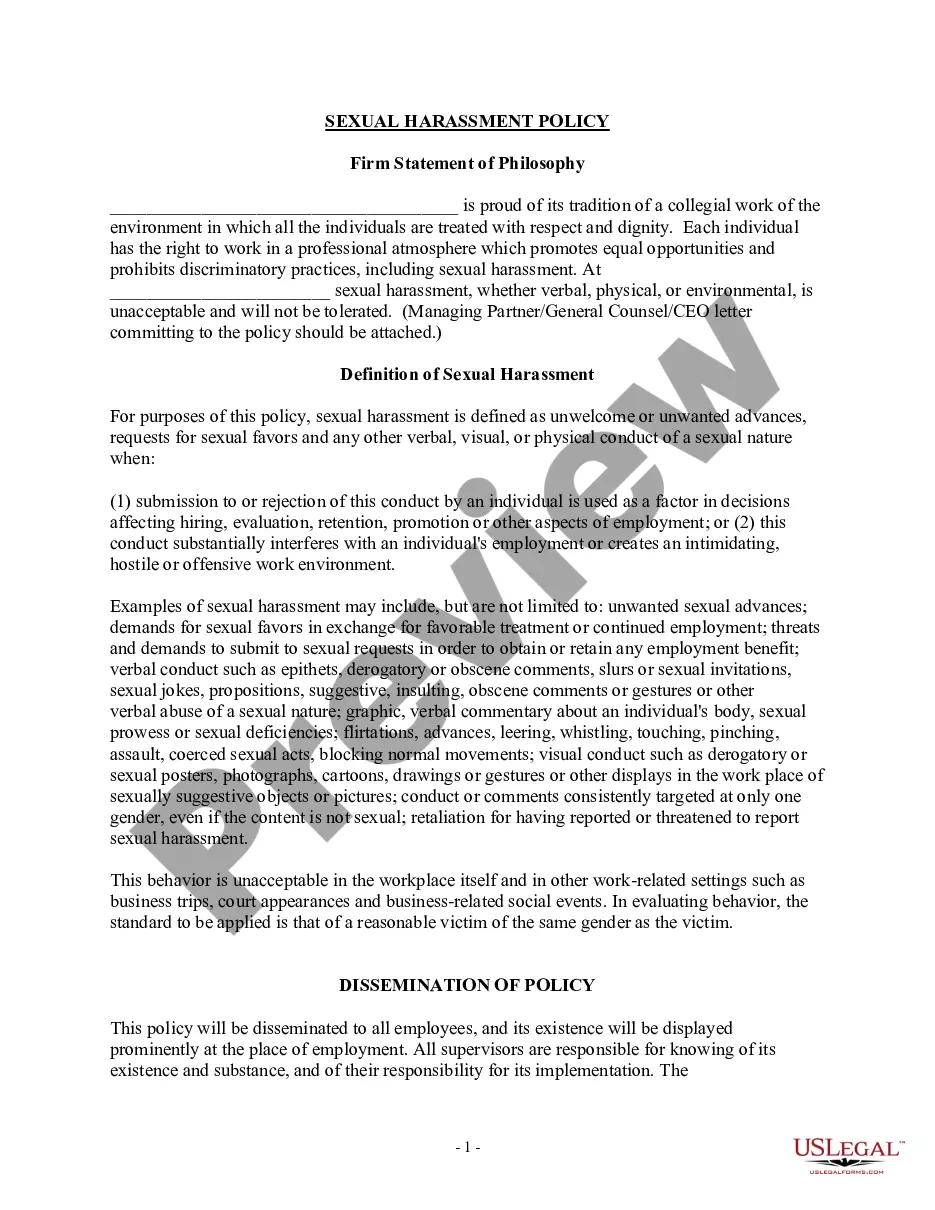
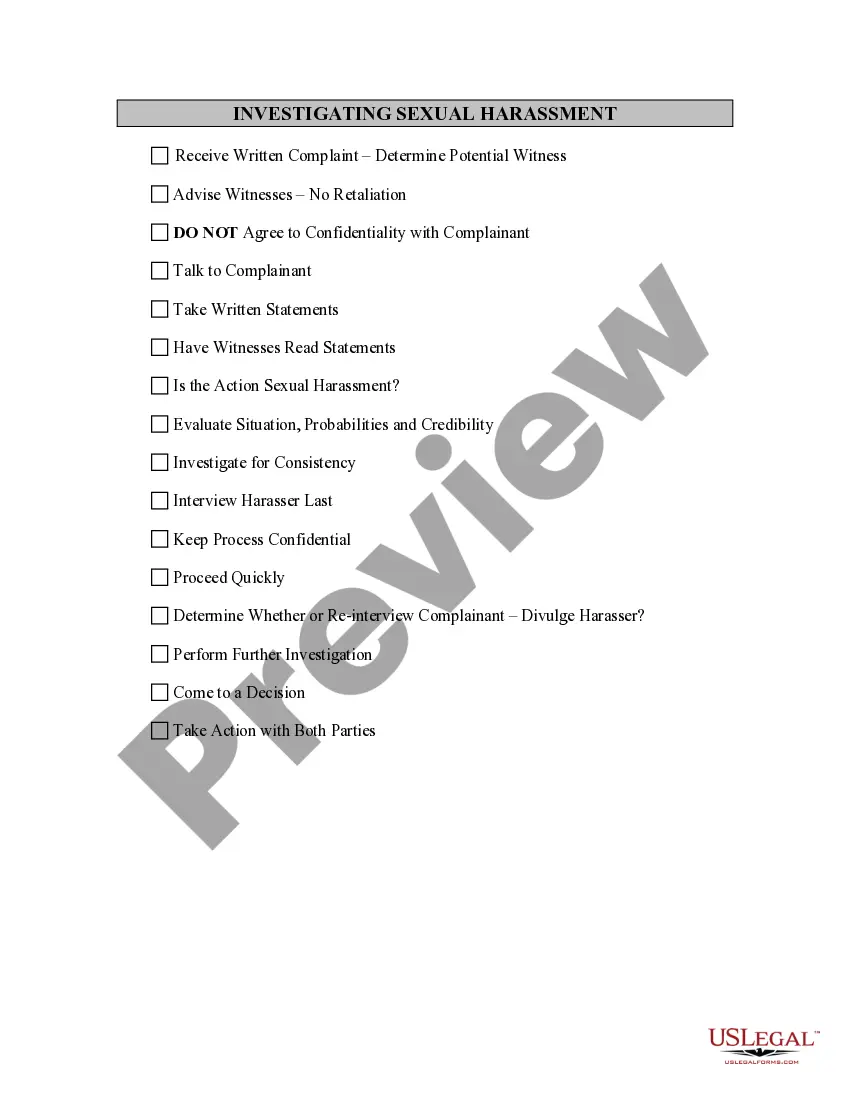
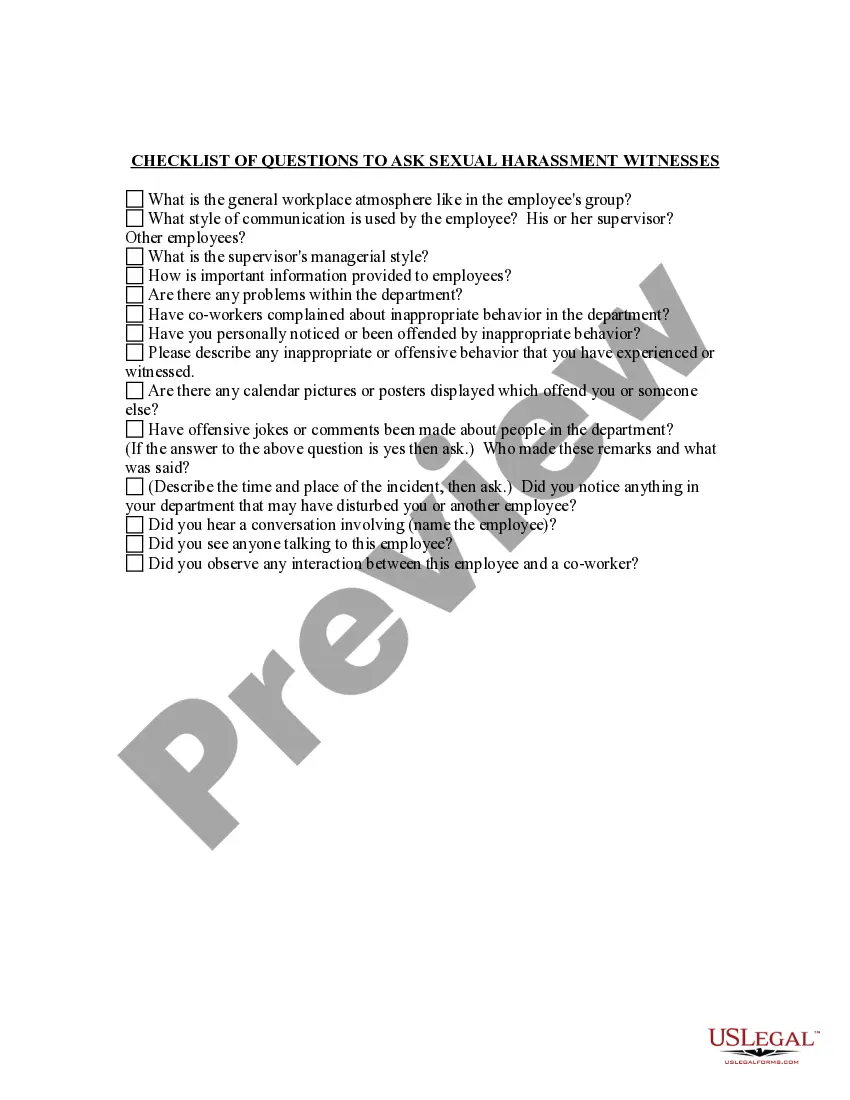
Warning Sexual Harassment For Schools
Description
Get your form ready online
Our built-in tools help you complete, sign, share, and store your documents in one place.
Make edits, fill in missing information, and update formatting in US Legal Forms—just like you would in MS Word.
Download a copy, print it, send it by email, or mail it via USPS—whatever works best for your next step.
Sign and collect signatures with our SignNow integration. Send to multiple recipients, set reminders, and more. Go Premium to unlock E-Sign.
If this form requires notarization, complete it online through a secure video call—no need to meet a notary in person or wait for an appointment.
We protect your documents and personal data by following strict security and privacy standards.

Make edits, fill in missing information, and update formatting in US Legal Forms—just like you would in MS Word.

Download a copy, print it, send it by email, or mail it via USPS—whatever works best for your next step.

Sign and collect signatures with our SignNow integration. Send to multiple recipients, set reminders, and more. Go Premium to unlock E-Sign.

If this form requires notarization, complete it online through a secure video call—no need to meet a notary in person or wait for an appointment.

We protect your documents and personal data by following strict security and privacy standards.
Looking for another form?





How to fill out Checklist Of Warning Signs Of Sexual Harassment - Workplace?
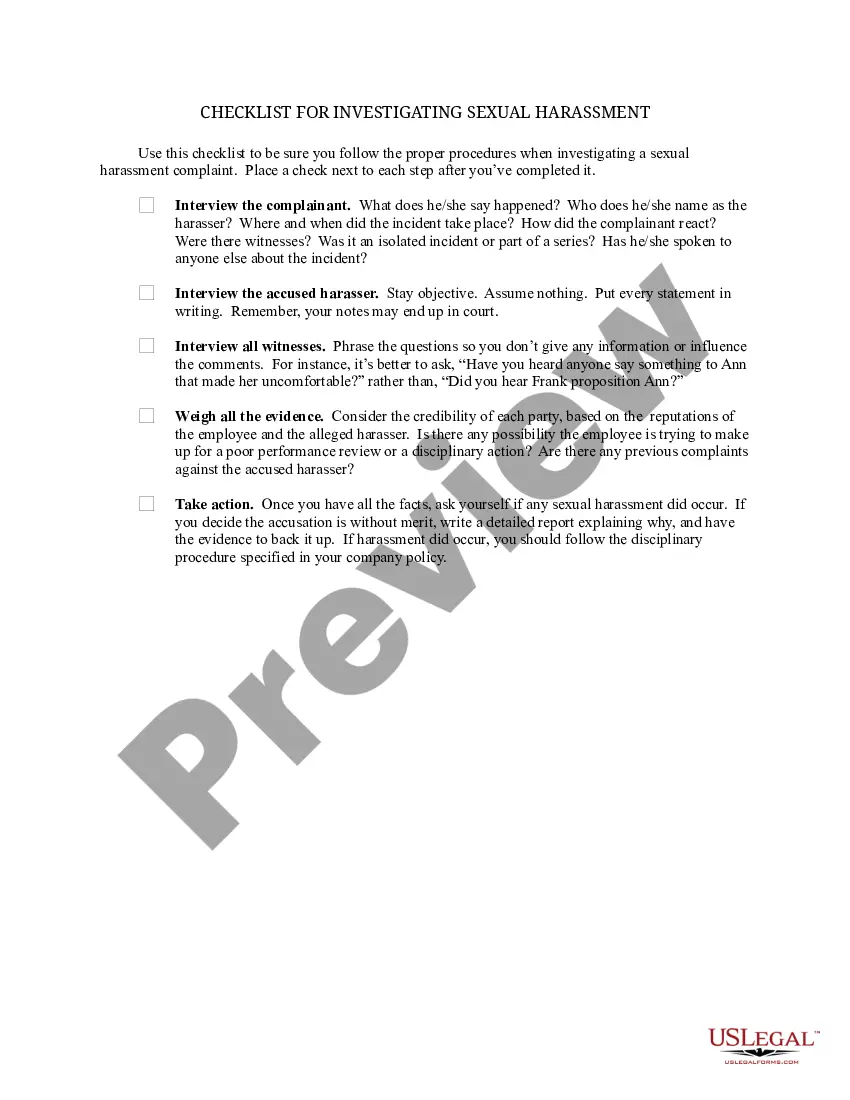
The Warning Sexual Harassment For Schools you see on this page is a multi-usable formal template drafted by professional lawyers in compliance with federal and local laws. For more than 25 years, US Legal Forms has provided individuals, companies, and attorneys with more than 85,000 verified, state-specific forms for any business and personal occasion. It’s the fastest, most straightforward and most reliable way to obtain the documents you need, as the service guarantees bank-level data security and anti-malware protection.
Obtaining this Warning Sexual Harassment For Schools will take you only a few simple steps:
- Browse for the document you need and check it. Look through the file you searched and preview it or review the form description to ensure it suits your requirements. If it does not, use the search option to get the appropriate one. Click Buy Now once you have located the template you need.
- Subscribe and log in. Choose the pricing plan that suits you and register for an account. Use PayPal or a credit card to make a prompt payment. If you already have an account, log in and check your subscription to proceed.
- Obtain the fillable template. Select the format you want for your Warning Sexual Harassment For Schools (PDF, Word, RTF) and save the sample on your device.
- Complete and sign the paperwork. Print out the template to complete it manually. Alternatively, utilize an online multi-functional PDF editor to quickly and accurately fill out and sign your form with a valid.
- Download your papers one more time. Utilize the same document once again whenever needed. Open the My Forms tab in your profile to redownload any earlier downloaded forms.
Sign up for US Legal Forms to have verified legal templates for all of life’s situations at your disposal.
Form popularity
FAQ
Here are just a few examples of sexual harassment that can be found in elementary, middle, and high school hallways: unwanted, unwelcome physical contact, such as touching, bumping, grabbing, or patting. sexually insulting remarks about race, gender, ability, or class.
Inappropriate personal questions or comments. belittling or patronising comments or nicknames. assault or other non-accidental physical contact, including disability aids. the display, sending or sharing of offensive letters, publications, objects, images or sounds.
The Supreme Court has interpreted Title IX in such a way that it is actually easy for school districts to stay out of trouble. As long as the school complies with the law by making reasonable efforts to stop the harassment after a complaint is made, the school is probably not liable -- even if the harassment continues.
HARASSMENT is when the speech or actions are so severe, pervasive, or targeted at particular people that it hinders the student's ability to get an education, significantly harms their well-being, substantially interferes with their rights, or intimidates the student because of their identity.
Workplace Harassment Examples Sending emails with offensive jokes or graphics about race or religion. Repeatedly requesting dates or sexual favors in person or through text. Asking about family history of illnesses or genetic disorders. Making derogatory comments about someone's disability or age.