Sexual Harassment With Example
Description
Get your form ready online
Our built-in tools help you complete, sign, share, and store your documents in one place.
Make edits, fill in missing information, and update formatting in US Legal Forms—just like you would in MS Word.
Download a copy, print it, send it by email, or mail it via USPS—whatever works best for your next step.
Sign and collect signatures with our SignNow integration. Send to multiple recipients, set reminders, and more. Go Premium to unlock E-Sign.
If this form requires notarization, complete it online through a secure video call—no need to meet a notary in person or wait for an appointment.
We protect your documents and personal data by following strict security and privacy standards.

Make edits, fill in missing information, and update formatting in US Legal Forms—just like you would in MS Word.

Download a copy, print it, send it by email, or mail it via USPS—whatever works best for your next step.

Sign and collect signatures with our SignNow integration. Send to multiple recipients, set reminders, and more. Go Premium to unlock E-Sign.

If this form requires notarization, complete it online through a secure video call—no need to meet a notary in person or wait for an appointment.

We protect your documents and personal data by following strict security and privacy standards.
Looking for another form?

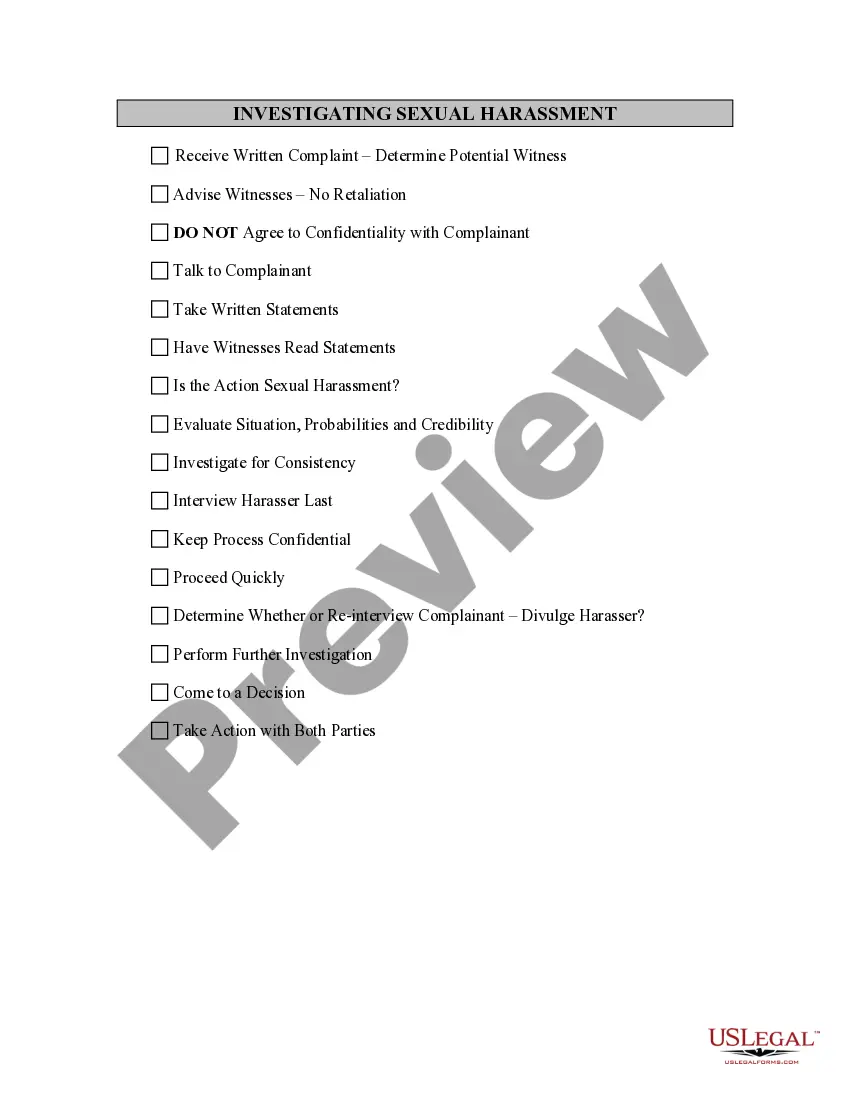
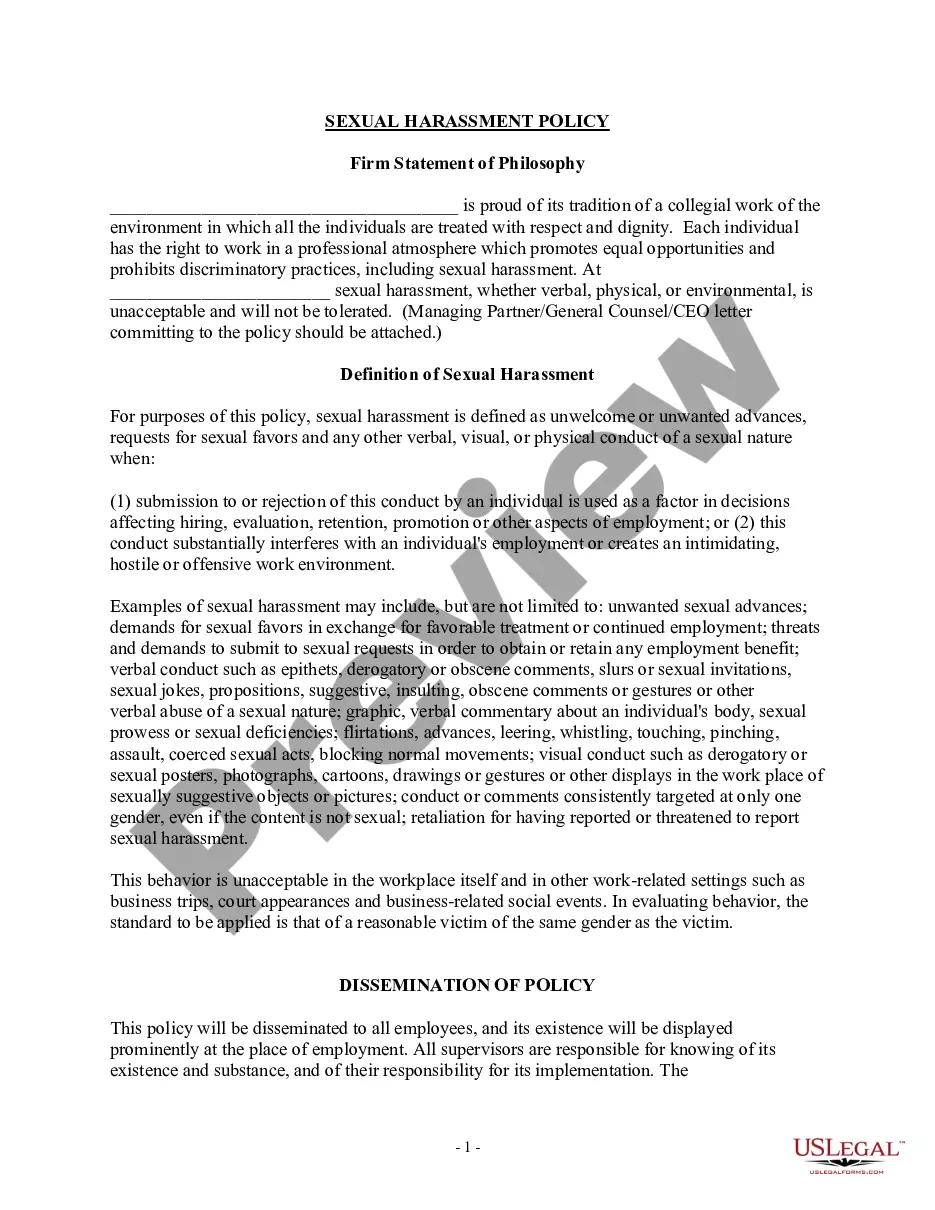
How to fill out Investigating Sexual Harassment Checklist - Workplace?
- Visit the US Legal Forms website. If you already have an account, simply log in to download your desired forms.
- Verify your subscription status. Ensure it is active; renew according to your payment plan if necessary.
- Explore the library and check the Preview mode for form descriptions. Confirm that the selected form aligns with your local jurisdiction and meets your specific requirements.
- Search for additional templates if needed. Utilize the Search tab to find forms that may better suit your situation.
- Select the form. Once you've found the appropriate document, click the Buy Now button and choose your subscription plan.
- Complete your purchase. Enter your payment information either via credit card or PayPal to secure your subscription.
- Download your document. Save it to your device and access completed forms later from the My Forms section of your profile.
By following these steps, you can effectively navigate the extensive resources available at US Legal Forms, which empowers users with a robust collection of over 85,000 editable legal documents.
Take action today to safeguard your rights and ensure you have the necessary tools to handle legal matters correctly. Start your journey with US Legal Forms now!
Form popularity
FAQ
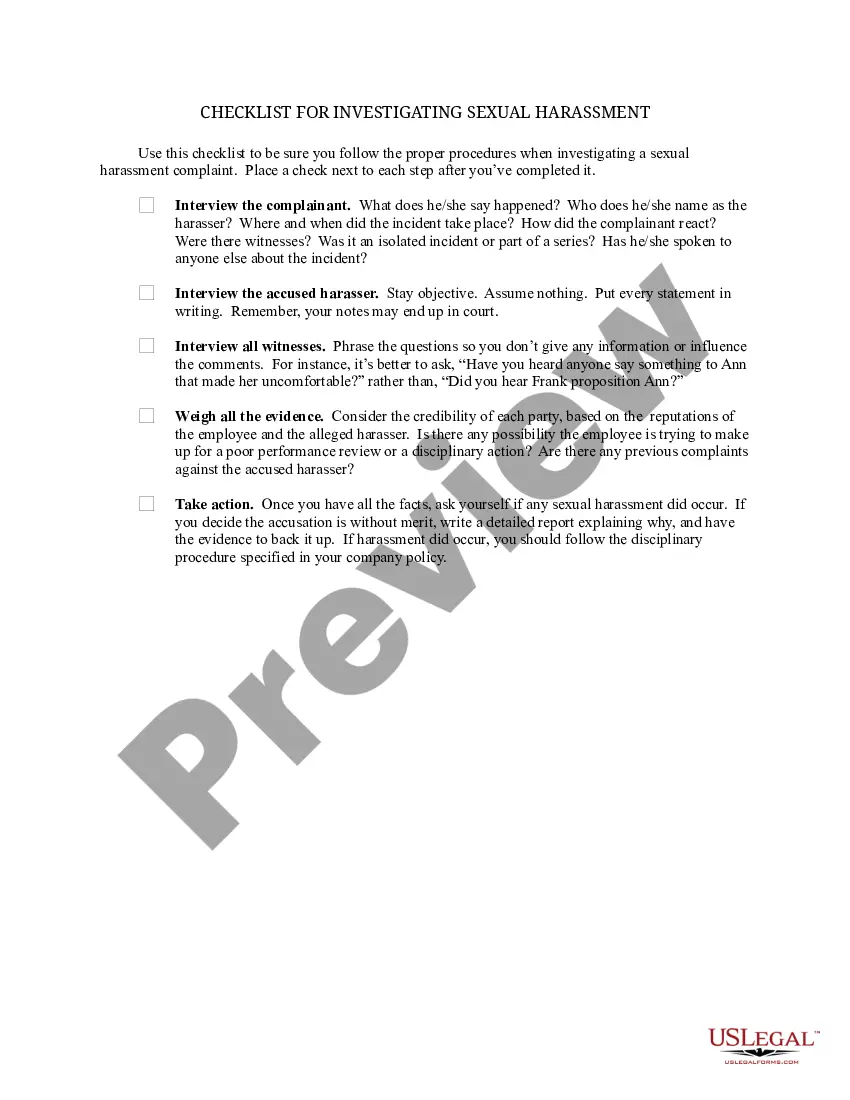
To write a harassment statement, begin with a description of the behavior or incident that you experienced or witnessed. Include specific details about the time, place, and nature of the actions, as well as how they affected the work environment. This approach transforms general instances into a clear interpretation of sexual harassment with example, enabling management to address concerns effectively.
When writing a statement of harassment, be clear, factual, and concise. Start by detailing the incident, including what occurred, when it happened, and who was involved. It is essential to convey the impact the incident had on you or others, thereby providing insight into the nature of sexual harassment with example and emphasizing the need for resolution.
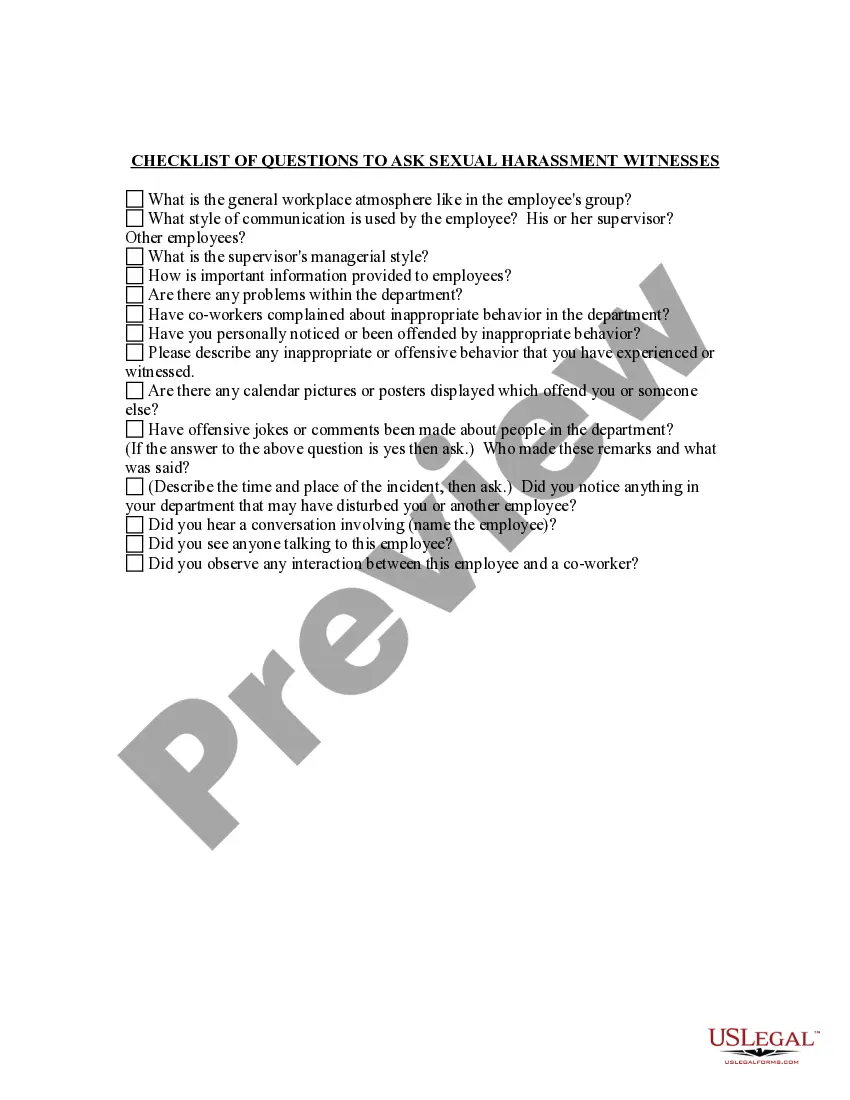
A harassment policy statement should clearly define what constitutes sexual harassment and express a zero-tolerance approach. For instance, 'Our organization prohibits all forms of sexual harassment and will take immediate action to investigate complaints. Employees are encouraged to report any incidents of sexual harassment with the assurance that they will be supported throughout the process.' This shows commitment to a safe workplace and addresses sexual harassment with example.
Sexual harassment refers to unwanted and inappropriate behavior of a sexual nature that creates a hostile environment. For example, a good sentence highlighting harassment could be: 'The employee filed a complaint stating she experienced sexual harassment when her supervisor made unwelcome comments about her appearance.' Clearly outlining the situation helps convey the seriousness of sexual harassment with example.
Examples of harassment statements can include comments like, 'You owe me because I helped you,' or, 'You’re not going to wear that around me, are you?' These phrases exemplify intimidation or guilt associated with sexual advances. By recognizing such language as sexual harassment with example, individuals can take necessary steps to report and address these behaviors. It's important to create a culture where these statements are not tolerated.
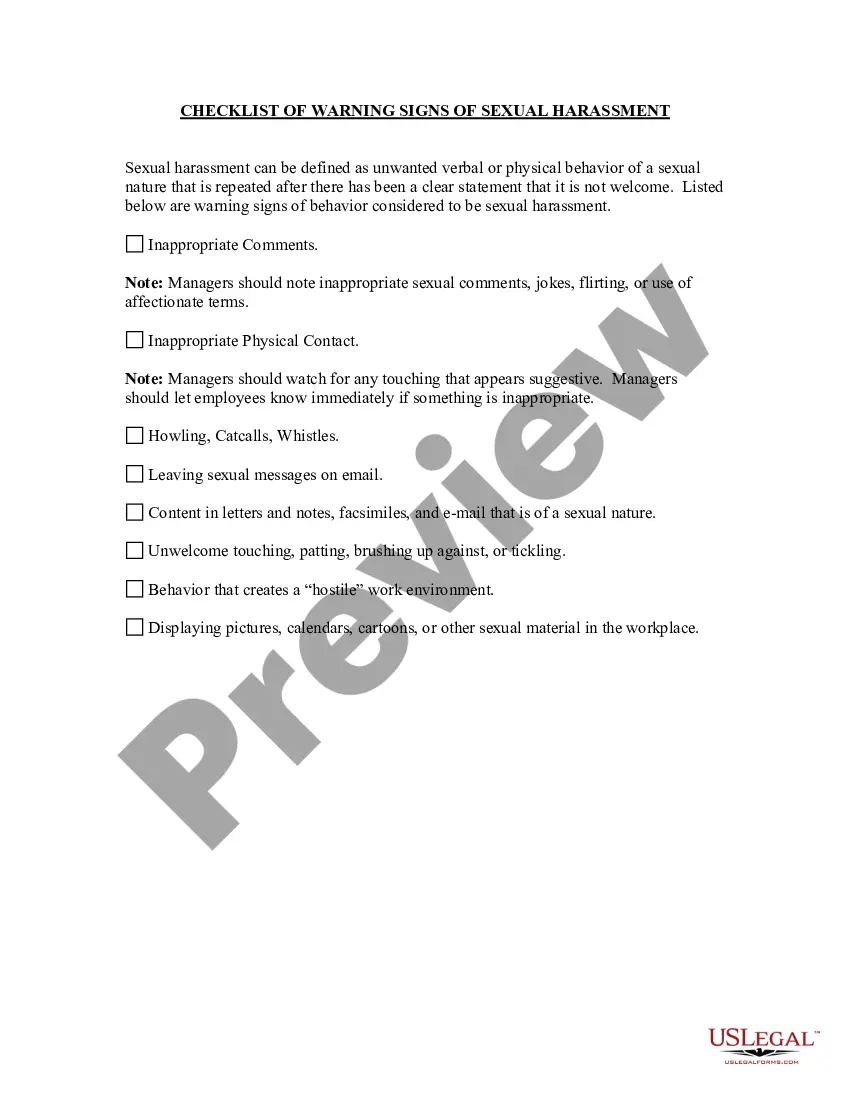
Three actions typically considered sexual harassment include making inappropriate jokes, sending unsolicited explicit images, and engaging in unwanted physical contact. Each of these actions contributes to creating an uncomfortable or hostile environment. Understanding what constitutes harassment is vital for prevention and response, especially for workplaces. Everyone deserves a safe and respectful space.
To write a harassment statement, first, clearly describe the specific incident, including dates and locations. Include any witnesses who may support your claims, and outline the impact the situation has had on you. Remember to state how this constitutes sexual harassment with example in your experience, providing context to strengthen your case. Clear documentation is key to addressing the issue effectively.
An example of a harassing message could be a text that states, 'I can't stop thinking about what we did last weekend; you should come over again.' This message suggests an unwanted romantic or sexual advance. In the context of sexual harassment with example, such messages create an uncomfortable environment. It is crucial to recognize and address these communications to ensure a safe space.
Sexual harassment with example can include various forms of written communication. For instance, unsolicited emails containing explicit content or suggestive comments can be considered harassment. Additionally, text messages that convey unwanted sexual advances or share inappropriate images also fall into this category. It is essential to address these written forms of harassment promptly.
Sexual harassment with example is categorized into three main types: verbal, non-verbal, and physical. Verbal harassment can include unwanted comments or questions of a sexual nature. Non-verbal harassment may involve inappropriate gestures or displaying offensive images. Physical harassment consists of unwanted touching or other physical advances, all of which are serious issues that need to be addressed.