Salary With Tax
Description
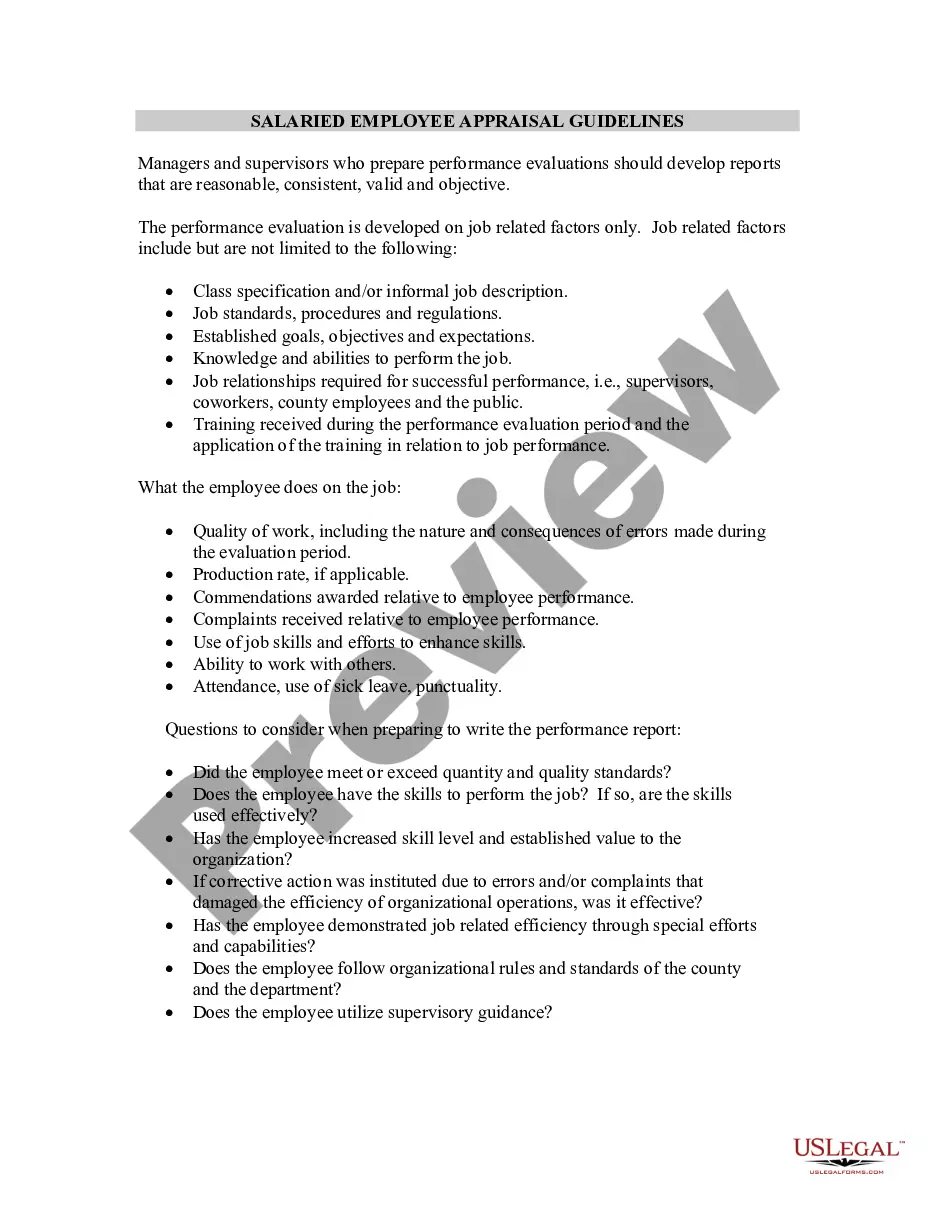
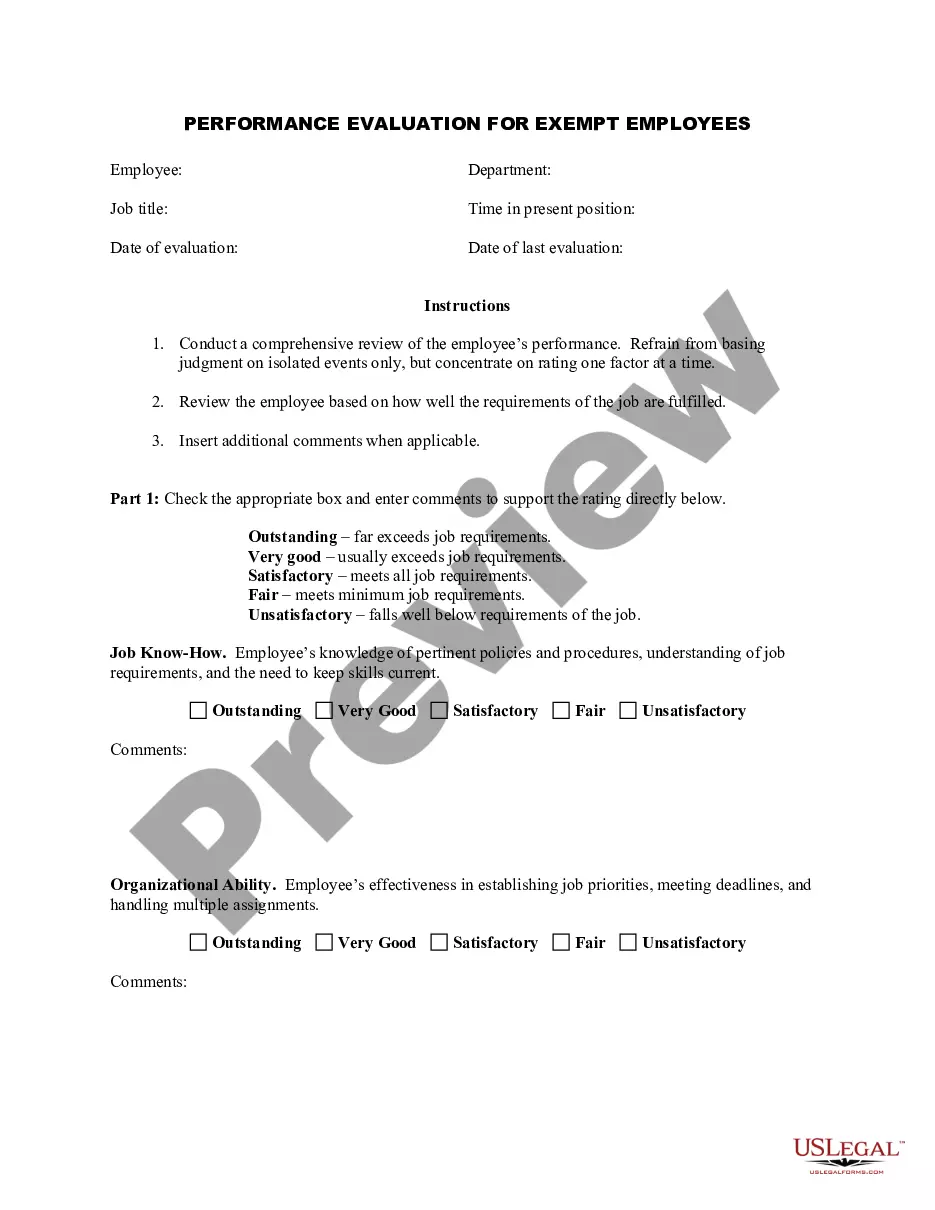
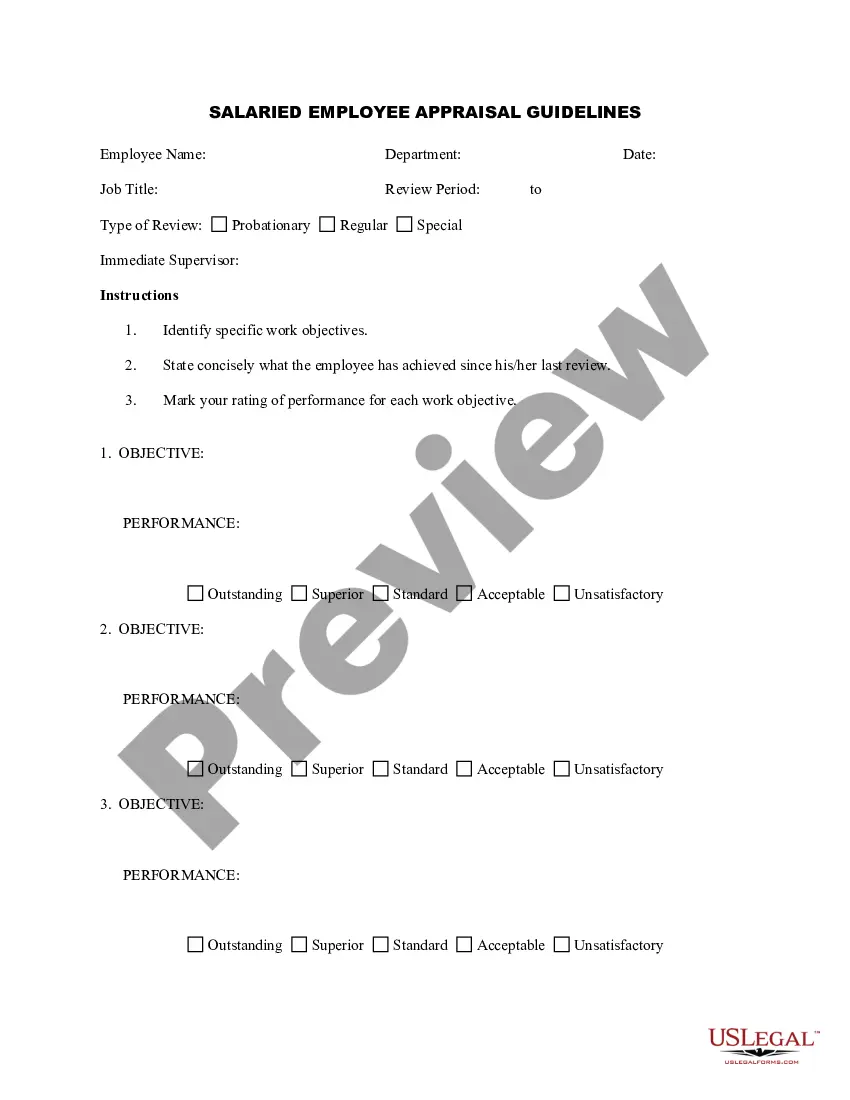



How to fill out Salaried Employee Appraisal Guidelines - General?
Regardless of whether it is for professional reasons or personal issues, each person must confront legal matters at some point in their lives.
Completing legal paperwork requires meticulous focus, starting with choosing the correct form sample.
With an extensive collection of US Legal Forms available, you do not have to waste time searching for the appropriate template online. Utilize the library’s straightforward navigation to find the correct template for any circumstance.
- Acquire the template you require by using the search field or browsing the catalog.
- Review the description of the form to confirm it aligns with your situation, jurisdiction, and area.
- Access the form’s preview to inspect it.
- If it is not the correct document, return to the search bar to find the Salary With Tax template you require.
- Obtain the file when it fits your requirements.
- If you already possess a US Legal Forms account, click Log in to retrieve any previously stored documents in My documents.
- If you do not have an account yet, you may download the form by clicking Buy now.
- Choose the appropriate payment option.
- Complete the account registration form.
- Select your payment method: you can utilize a credit card or a PayPal account.
- Choose the desired file format and download the Salary With Tax.
- After it has been saved, you can fill out the form using editing software or print it and complete it by hand.
Form popularity
FAQ
Calculating your salary can be simple or complex depending on bonuses, overtime, and deductions. Typically, your annual salary is derived from multiplying your hourly rate by the number of hours worked in a year or simply defined as a set amount for salaried roles. To incorporate tax aspects, you would then need to apply the relevant tax deductions to arrive at your net salary. Utilizing tools, like those offered on the US Legal Forms platform, can streamline this process, making it easier to understand your salary with tax implications.
The percentage of your salary that is taxable depends on multiple factors, including your total annual income and filing status. Federal income tax brackets dictate how much tax is charged at various income levels, so different portions of your salary may be taxed at different rates. It’s important to calculate your effective tax rate accurately to understand how much of your salary with tax goes to federal and state obligations.
Taxation on salary occurs through a withholding system where your employer takes out a portion of your earnings to cover federal and state tax obligations. The amount withheld may vary based on your income level, filing status, and any additional allowances you claimed. By managing your withholdings effectively, you can ensure that your salary with tax remains balanced throughout the year, potentially reducing your tax liabilities during tax season.
Taxes are typically deducted from your salary before you receive your paycheck. Employers withhold federal, state, and sometimes local taxes based on your W-4 form and the applicable tax tables. Additionally, payroll taxes for Social Security and Medicare are also deducted. This system ensures that your salary with tax includes necessary contributions to governmental programs.
Many people wonder whether a salary gets taxed more than hourly wages. Generally, the method of payment—salary or hourly—does not affect the tax rate directly. Instead, both types of income fall under the same federal and state tax brackets. Therefore, your overall tax liability depends more on your total income rather than the payment structure, making the topic of salary with tax nuanced.
The minimum salary to file tax returns varies, but for 2023, single filers under 65 typically need to file if they earn more than $12,950. Understanding these thresholds helps you assess your tax filing needs accurately. Remember, while you might not need to file based on your salary with tax, it can be beneficial to explore filing options for potential refunds.
Yes, there is a minimum income threshold that generally determines whether you must file a tax return. This threshold varies based on your filing status, age, and other factors. If your salary with tax falls below that minimum, you may not be required to file, but it’s important to assess your complete financial situation.
Yes, you must include all W-2s when filing your tax return, regardless of the tax withheld. Each W-2 reports your salary with tax from different employers and ignoring any may lead to incorrect reporting. By ensuring all your W-2 forms are included, you’ll have a clearer picture of your total income and tax obligations.
Generally, income under $600 does not need to be reported if it is not from a traditional employment source. However, it is important to consider the type of income and your total salary with tax for the year. Some exceptions apply, particularly related to self-employment or specific cases, so it's advisable to check the IRS guidelines.
Certain individuals, including those with low income, specific student statuses, or certain types of social security benefits, may not need to file a tax return. If your salary with tax falls below the IRS thresholds, you fall into this category. It is wise to review your circumstances, as there are cases where filing could lead to a refund.