Salaried Employee Guidelines Without Pay
Description
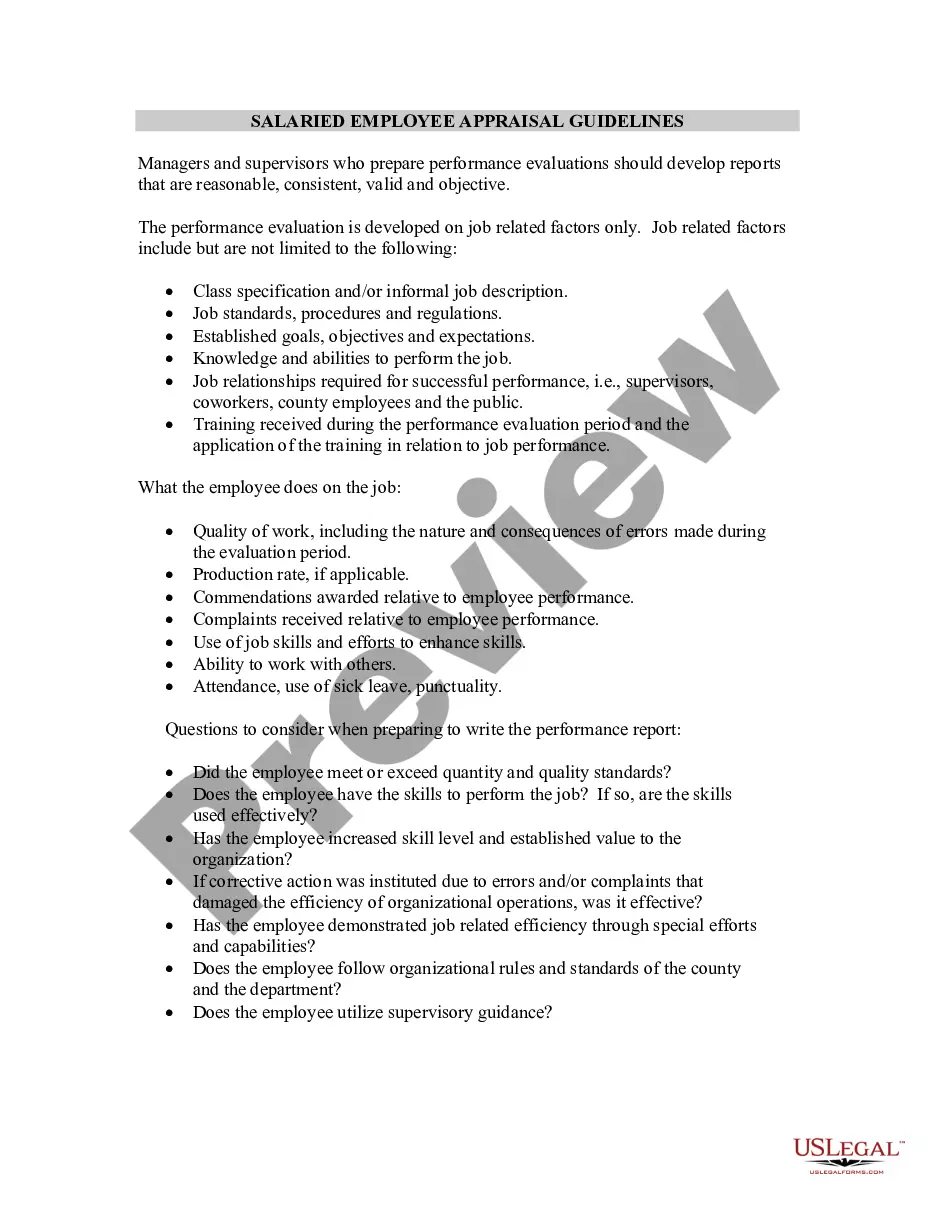
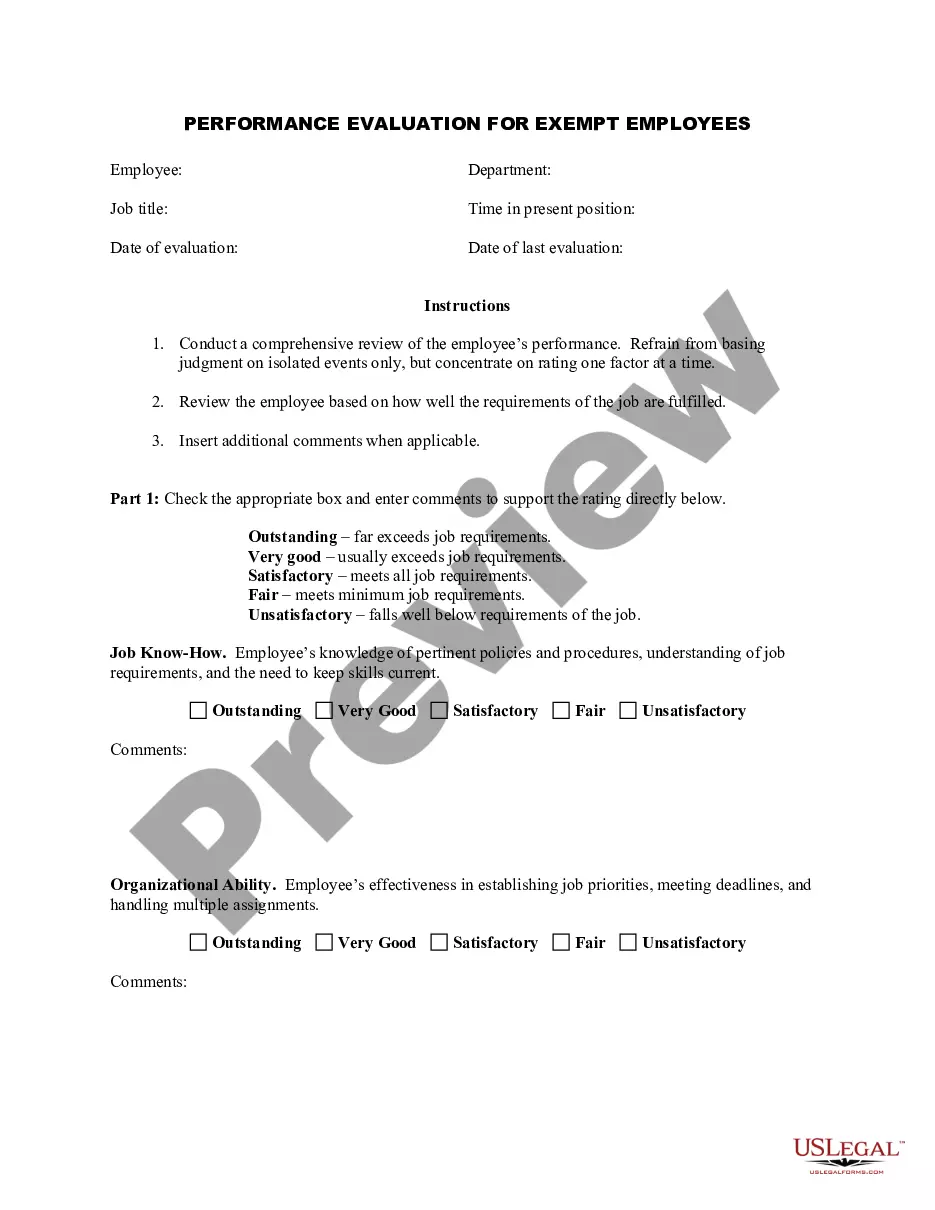
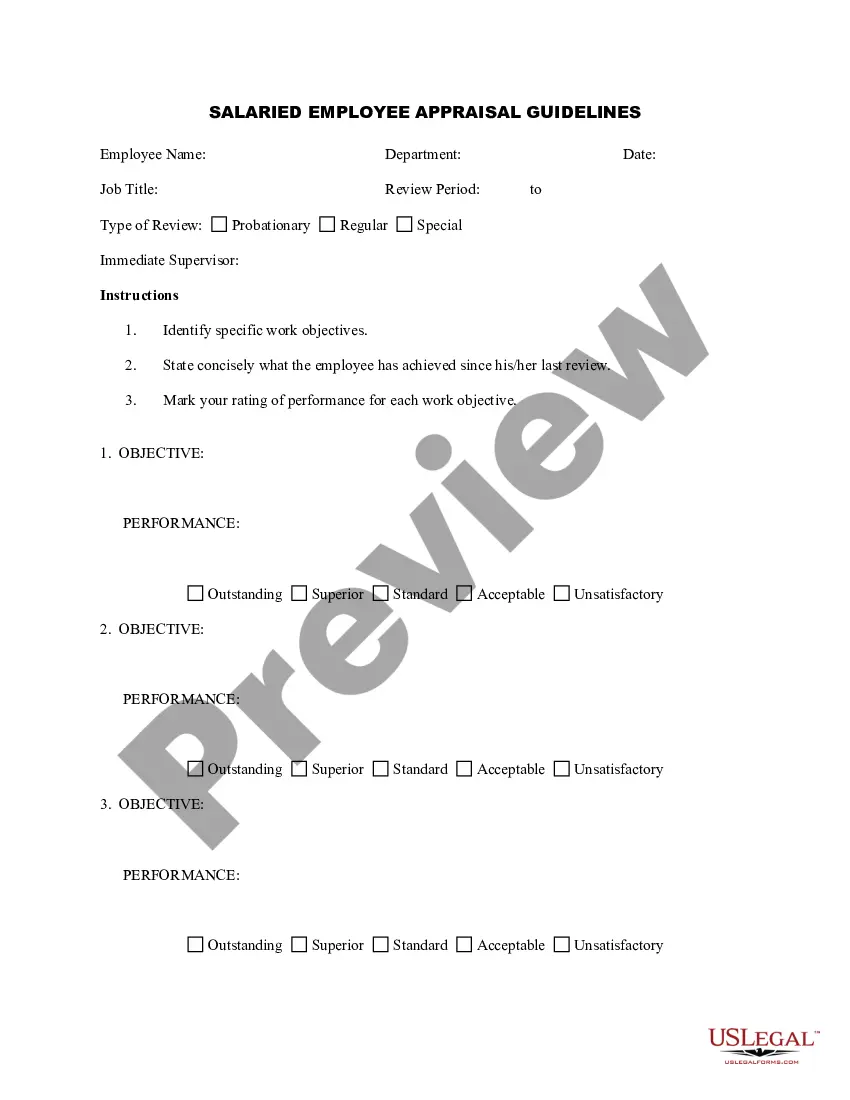
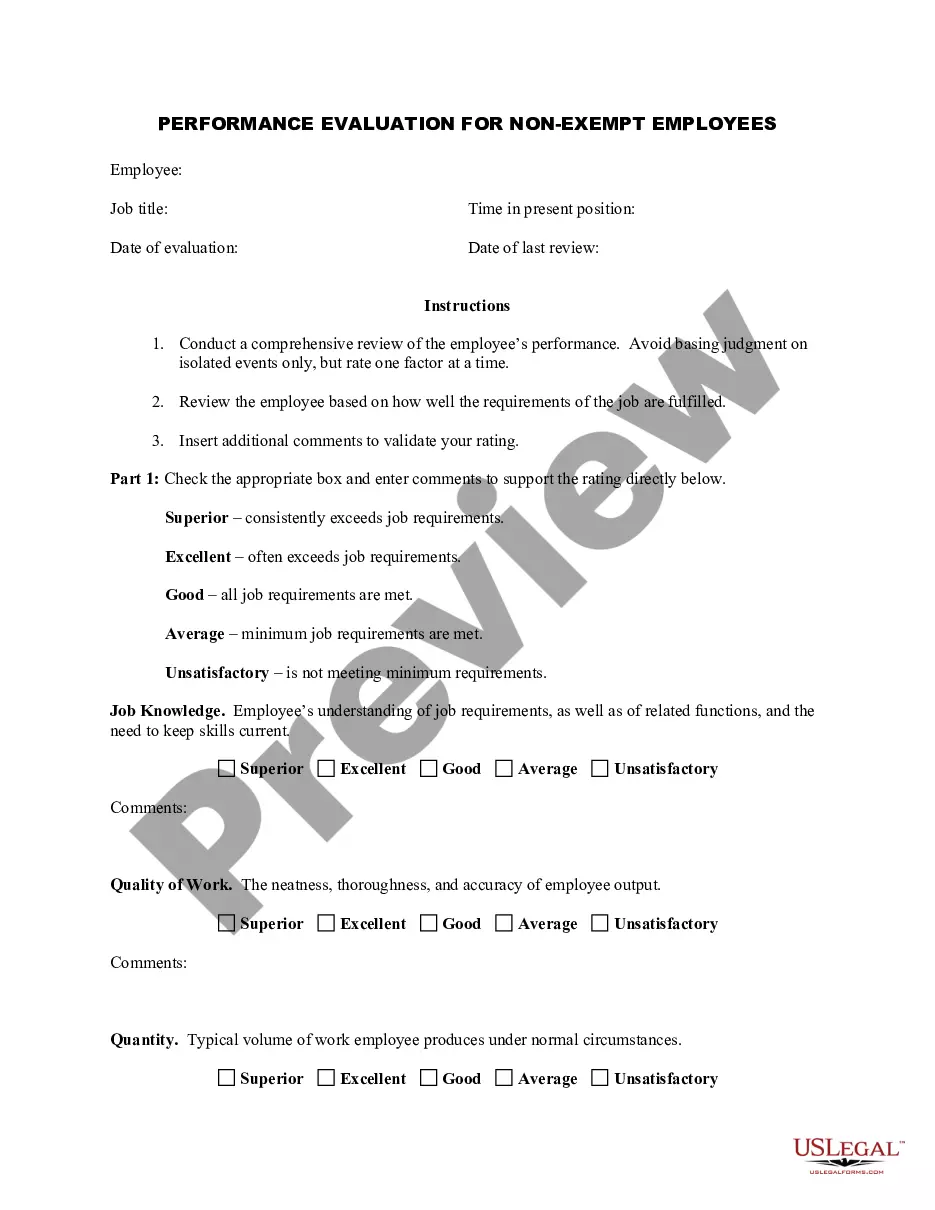




How to fill out Salaried Employee Appraisal Guidelines - General?
Finding a go-to place to access the most current and appropriate legal templates is half the struggle of handling bureaucracy. Discovering the right legal papers needs accuracy and attention to detail, which explains why it is very important to take samples of Salaried Employee Guidelines Without Pay only from reputable sources, like US Legal Forms. A wrong template will waste your time and hold off the situation you are in. With US Legal Forms, you have very little to be concerned about. You can access and view all the details concerning the document’s use and relevance for the situation and in your state or region.
Consider the following steps to finish your Salaried Employee Guidelines Without Pay:
- Use the catalog navigation or search field to locate your sample.
- Open the form’s description to ascertain if it matches the requirements of your state and region.
- Open the form preview, if there is one, to ensure the form is definitely the one you are searching for.
- Go back to the search and look for the appropriate document if the Salaried Employee Guidelines Without Pay does not fit your requirements.
- If you are positive regarding the form’s relevance, download it.
- When you are a registered user, click Log in to authenticate and access your picked templates in My Forms.
- If you do not have an account yet, click Buy now to get the form.
- Select the pricing plan that fits your requirements.
- Proceed to the registration to complete your purchase.
- Finalize your purchase by picking a payment method (credit card or PayPal).
- Select the document format for downloading Salaried Employee Guidelines Without Pay.
- Once you have the form on your gadget, you can modify it using the editor or print it and complete it manually.
Remove the inconvenience that comes with your legal documentation. Check out the extensive US Legal Forms catalog where you can find legal templates, check their relevance to your situation, and download them immediately.
Form popularity
FAQ
In many situations, knowing how many hours an employee spent on a task defines how the work will be paid. As long as the employee doesn't deduct amounts from your paycheck based on hours you tracked, it is okay to require salaried employees to fill in timesheets.
State laws may prohibit these actions. For instance, California law forbids docking an employee's pay for any reason.
Is It Legal to Work 60 Hours a Week on Salary? If an employee is exempt from FLSA and any state, local, or union overtime laws, then it is legal to work 60 hours a week on salary. Some employers do pay exempt employees for overtime work through time-and-a-half, bonuses, or extra time off.
Hear this out loud PauseSome employers may expect as many hours of work from their salaried employees as it takes to perform the job well, but exempt salaried employees have typically contracted to work between 40 and 50 hours per week.
Yes. Even when a position qualifies for exempt status an employer may prospectively change the status to nonexempt to help cure an attendance problem. As with all nonexempt positions, however, the employer will need to track the hours worked and pay overtime as appropriate.