Salaried Employee Guidelines For Overtime
Description
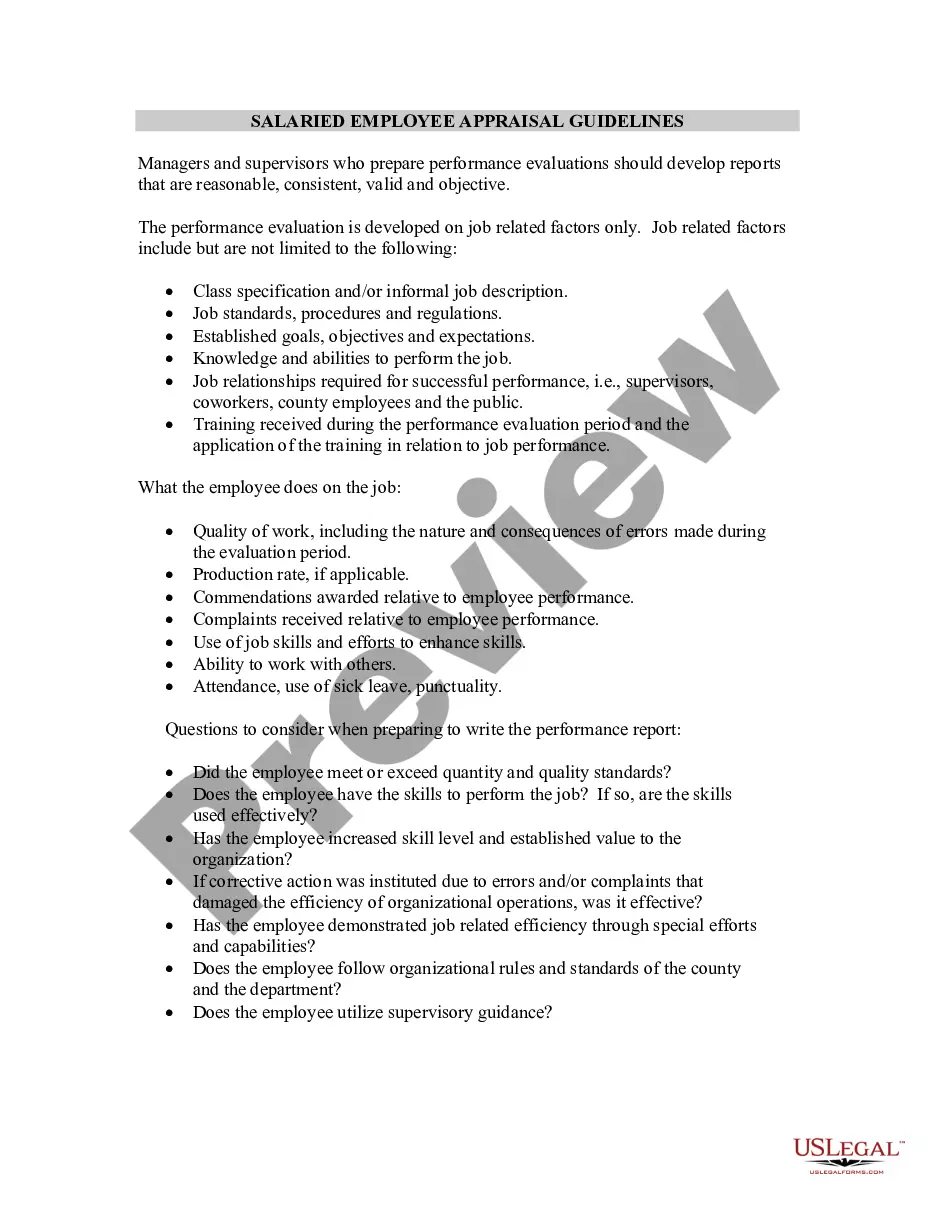
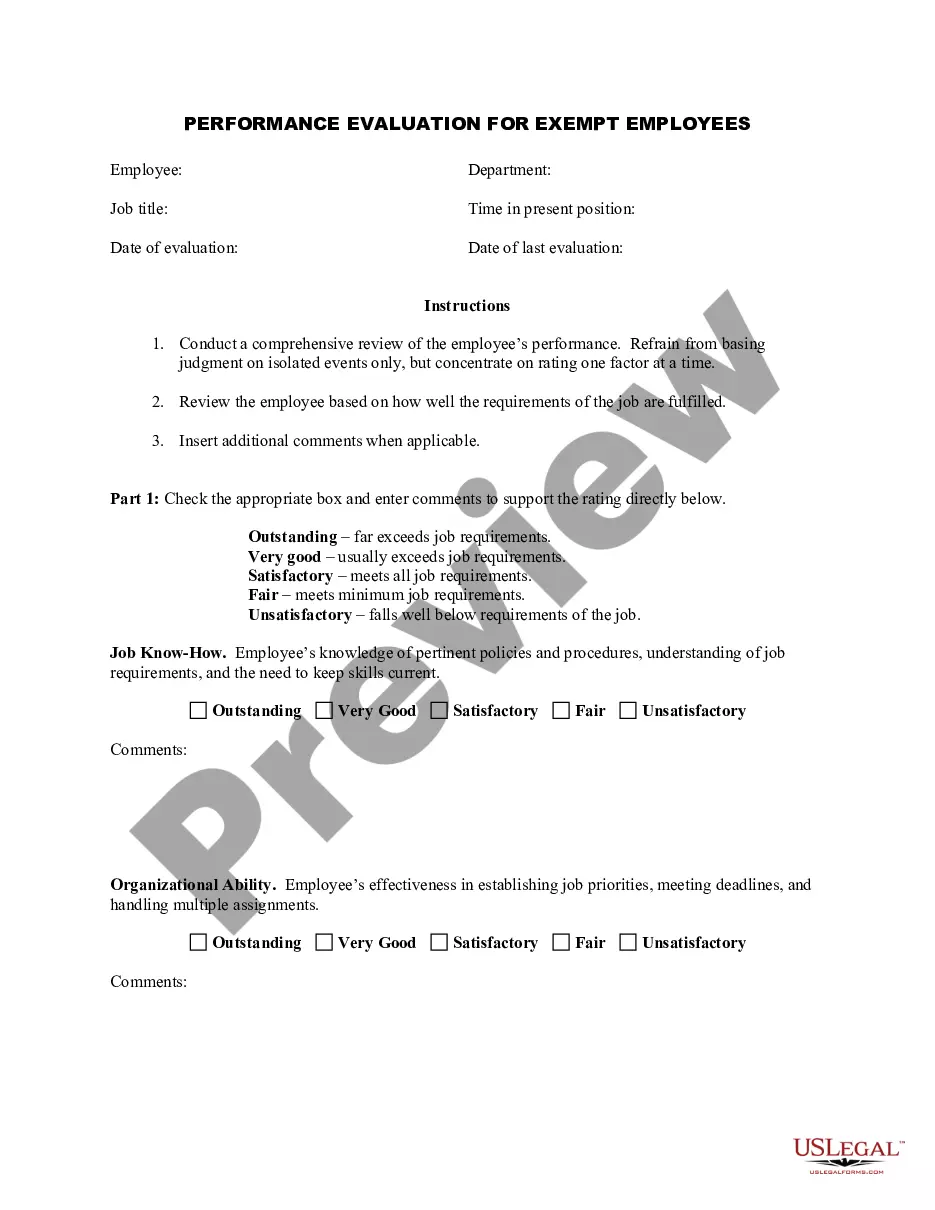
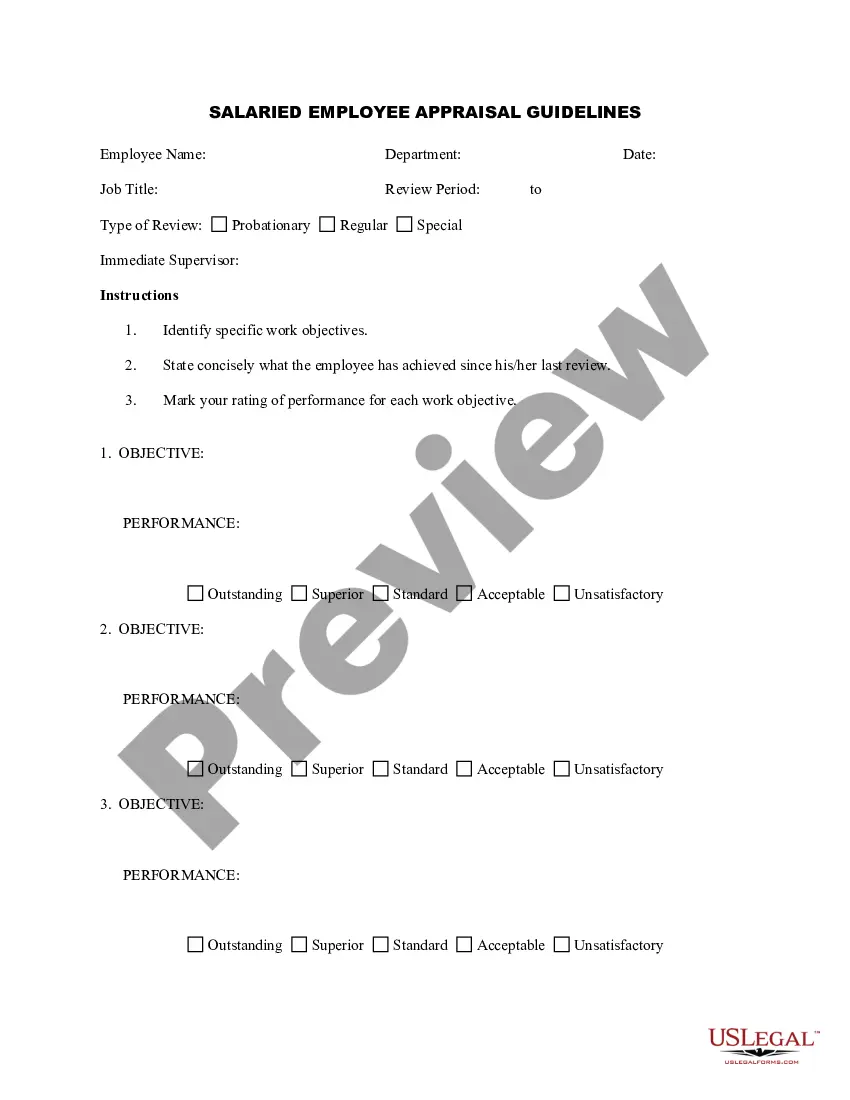
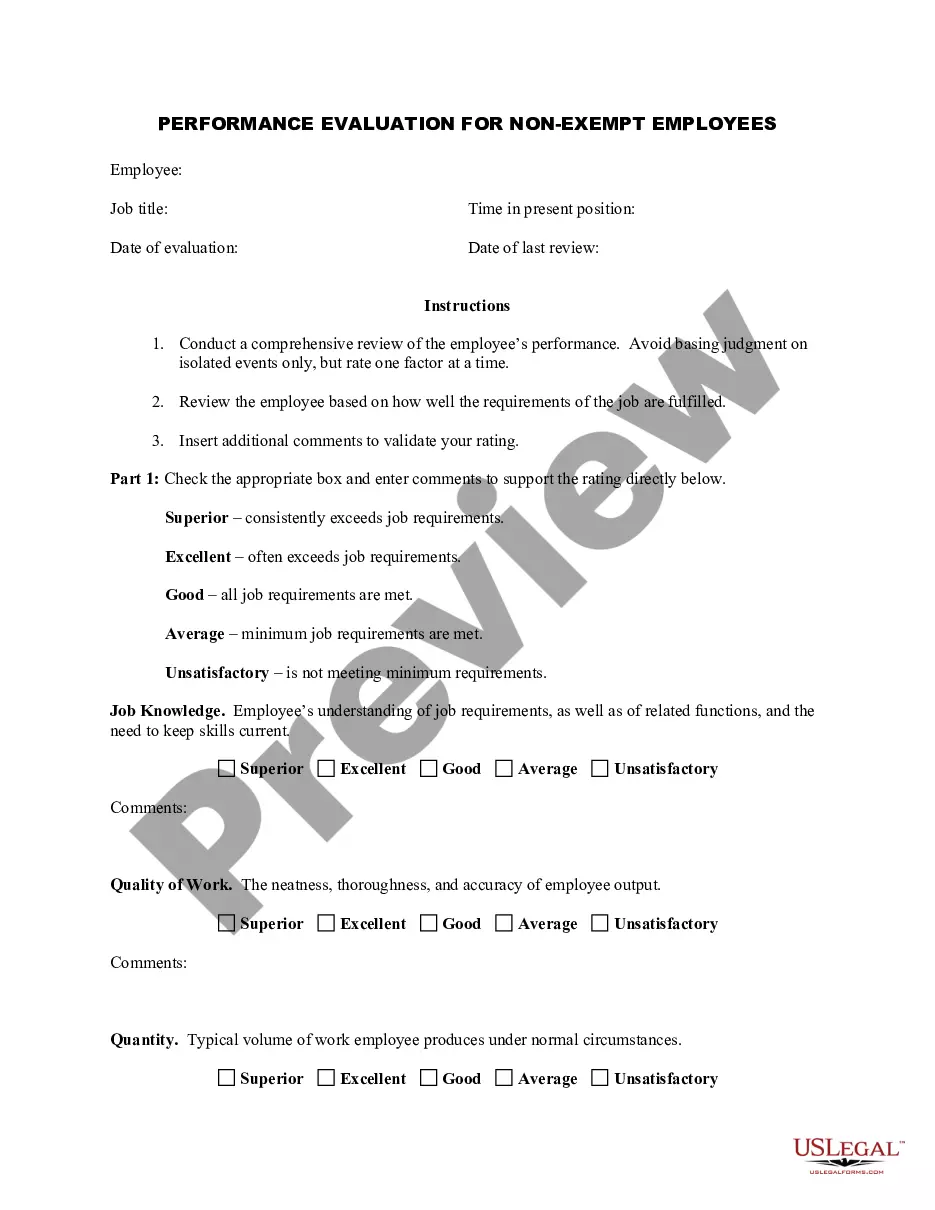







How to fill out Salaried Employee Appraisal Guidelines - General?
Whether for business purposes or for personal matters, everyone has to manage legal situations at some point in their life. Filling out legal papers requires careful attention, starting with picking the right form template. For instance, when you choose a wrong version of a Salaried Employee Guidelines For Overtime, it will be rejected when you send it. It is therefore important to have a trustworthy source of legal files like US Legal Forms.
If you have to get a Salaried Employee Guidelines For Overtime template, follow these simple steps:
- Get the template you need by utilizing the search field or catalog navigation.
- Look through the form’s information to ensure it suits your case, state, and county.
- Click on the form’s preview to examine it.
- If it is the incorrect document, get back to the search function to find the Salaried Employee Guidelines For Overtime sample you need.
- Get the file if it matches your requirements.
- If you have a US Legal Forms account, simply click Log in to access previously saved files in My Forms.
- If you do not have an account yet, you may download the form by clicking Buy now.
- Pick the correct pricing option.
- Finish the account registration form.
- Pick your payment method: you can use a bank card or PayPal account.
- Pick the file format you want and download the Salaried Employee Guidelines For Overtime.
- When it is downloaded, you are able to fill out the form by using editing software or print it and complete it manually.
With a substantial US Legal Forms catalog at hand, you do not need to spend time searching for the right template across the web. Utilize the library’s easy navigation to get the right template for any occasion.
Form popularity
FAQ
Under the FLSA, overtime pay is determined by multiplying the employee's ?straight time rate of pay? by all overtime hours worked PLUS one-half of the employee's ?hourly regular rate of pay? times all overtime hours worked. All overtime work that is ordered or approved must be compensated.
Is It Legal to Work 60 Hours a Week on Salary? If an employee is exempt from FLSA and any state, local, or union overtime laws, then it is legal to work 60 hours a week on salary. Some employers do pay exempt employees for overtime work through time-and-a-half, bonuses, or extra time off.
One of the most important is whether you will offer them a salaried or hourly position. Salaried employees are usually paid the same amount each pay period, based on their total salary. An hourly worker, on the other hand, earns a set payment for each hour they work.
Hear this out loud PauseSome employers may expect as many hours of work from their salaried employees as it takes to perform the job well, but exempt salaried employees have typically contracted to work between 40 and 50 hours per week.
The FLSA requires that covered, nonexempt employees in the United States be paid at least the Federal minimum wage for all hours worked and receive overtime pay at one and one-half times the employee's regular rate of pay for all hours worked after 40 hours of work in a workweek.