Warning Notice Writing With Question
Description
Get your form ready online
Our built-in tools help you complete, sign, share, and store your documents in one place.
Make edits, fill in missing information, and update formatting in US Legal Forms—just like you would in MS Word.
Download a copy, print it, send it by email, or mail it via USPS—whatever works best for your next step.
Sign and collect signatures with our SignNow integration. Send to multiple recipients, set reminders, and more. Go Premium to unlock E-Sign.
If this form requires notarization, complete it online through a secure video call—no need to meet a notary in person or wait for an appointment.
We protect your documents and personal data by following strict security and privacy standards.

Make edits, fill in missing information, and update formatting in US Legal Forms—just like you would in MS Word.

Download a copy, print it, send it by email, or mail it via USPS—whatever works best for your next step.

Sign and collect signatures with our SignNow integration. Send to multiple recipients, set reminders, and more. Go Premium to unlock E-Sign.

If this form requires notarization, complete it online through a secure video call—no need to meet a notary in person or wait for an appointment.

We protect your documents and personal data by following strict security and privacy standards.
Looking for another form?





How to fill out Employee Warning Notice?
Regardless of whether it is for corporate reasons or personal matters, everyone eventually encounters legal circumstances at some stage in their life.
Completing legal paperwork demands meticulous care, starting from selecting the appropriate form template.
With an extensive US Legal Forms catalog available, you never have to waste time hunting for the suitable template online. Take advantage of the library’s straightforward navigation to find the correct template for any circumstance.
- Obtain the template you require by using the search bar or catalog browsing.
- Review the form’s description to confirm it caters to your situation, jurisdiction, and locality.
- Click on the form’s preview to scrutinize it.
- If it is the incorrect form, return to the search tool to locate the Warning Notice Writing With Question template you need.
- Download the document if it satisfies your needs.
- If you possess a US Legal Forms account, simply click Log in to access previously saved files in My documents.
- In case you do not have an account yet, you may acquire the form by clicking Buy now.
- Select the appropriate pricing option.
- Complete the account registration form.
- Choose your payment method: you can utilize a credit card or PayPal account.
- Select the file format you desire and download the Warning Notice Writing With Question.
- After it is saved, you can fill out the form using editing software or print it and complete it by hand.
Form popularity
FAQ
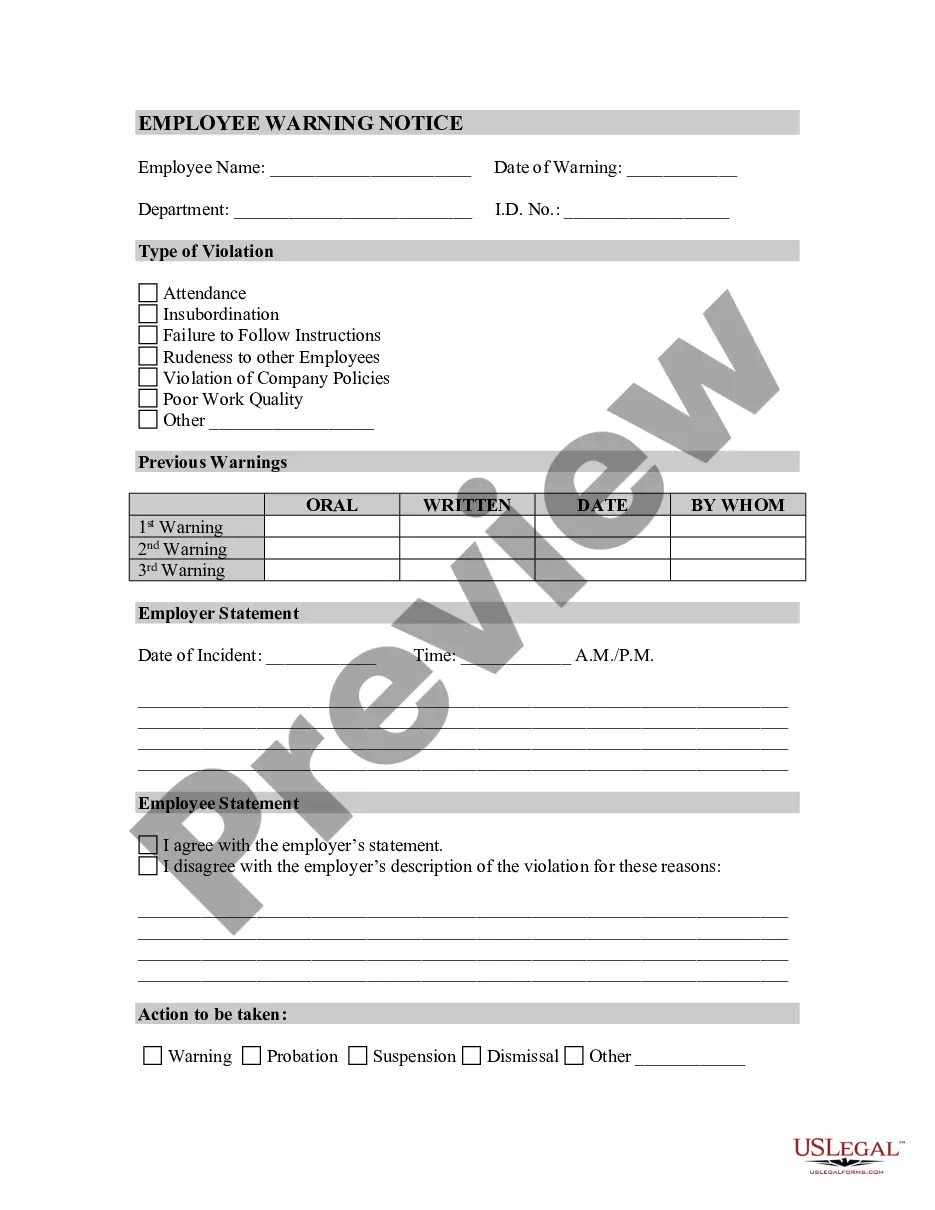
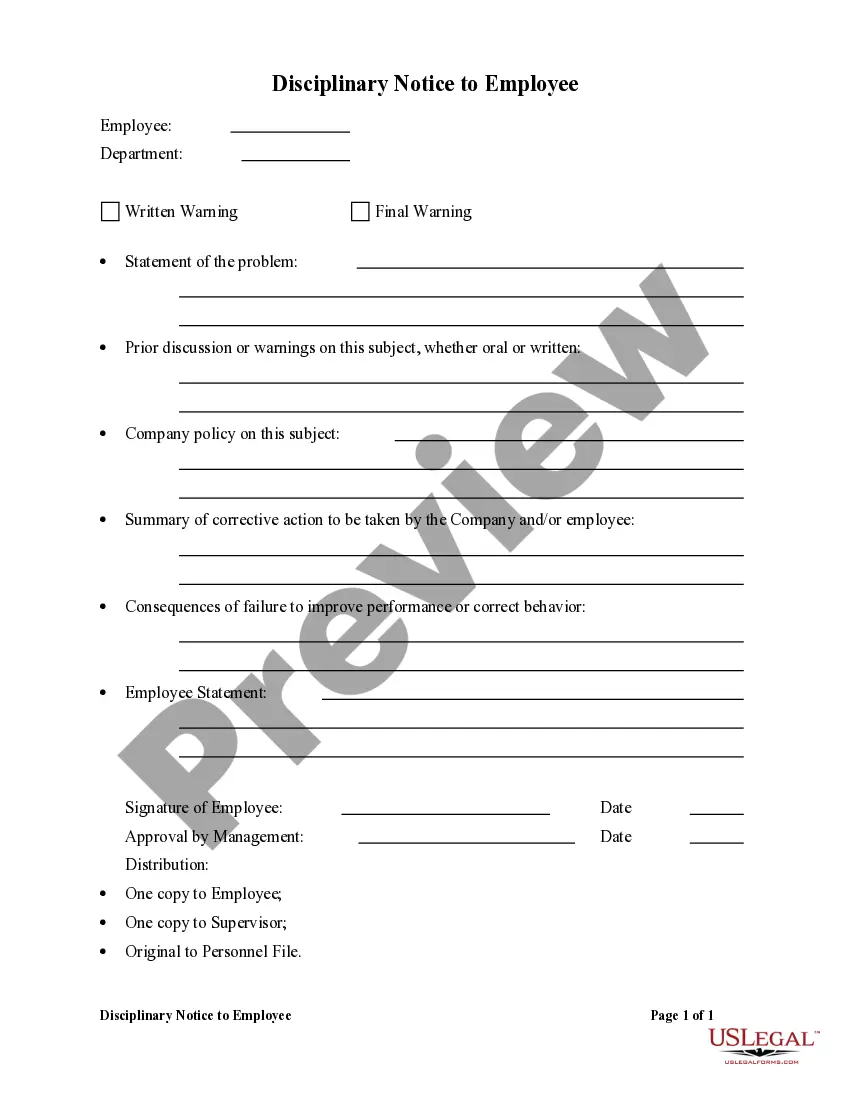
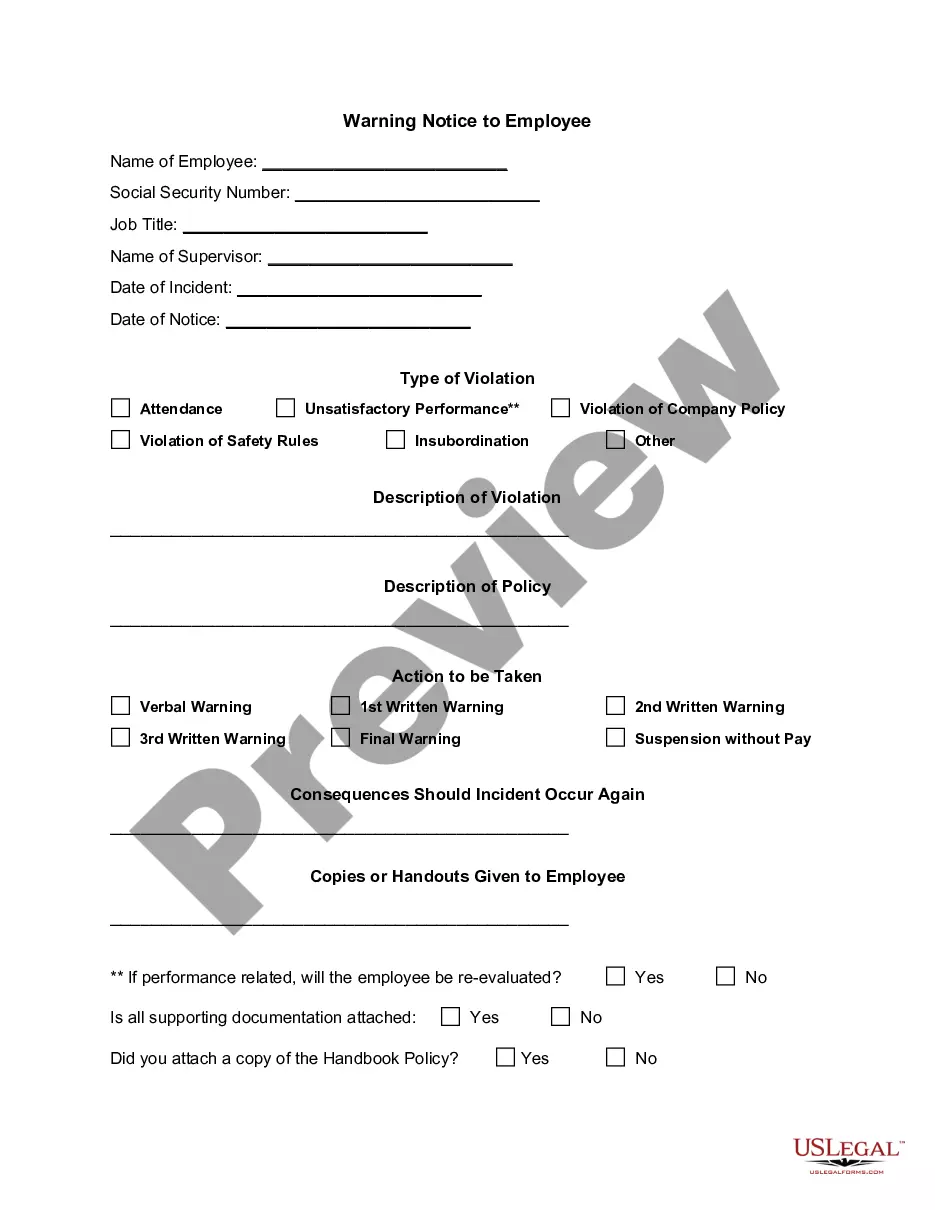
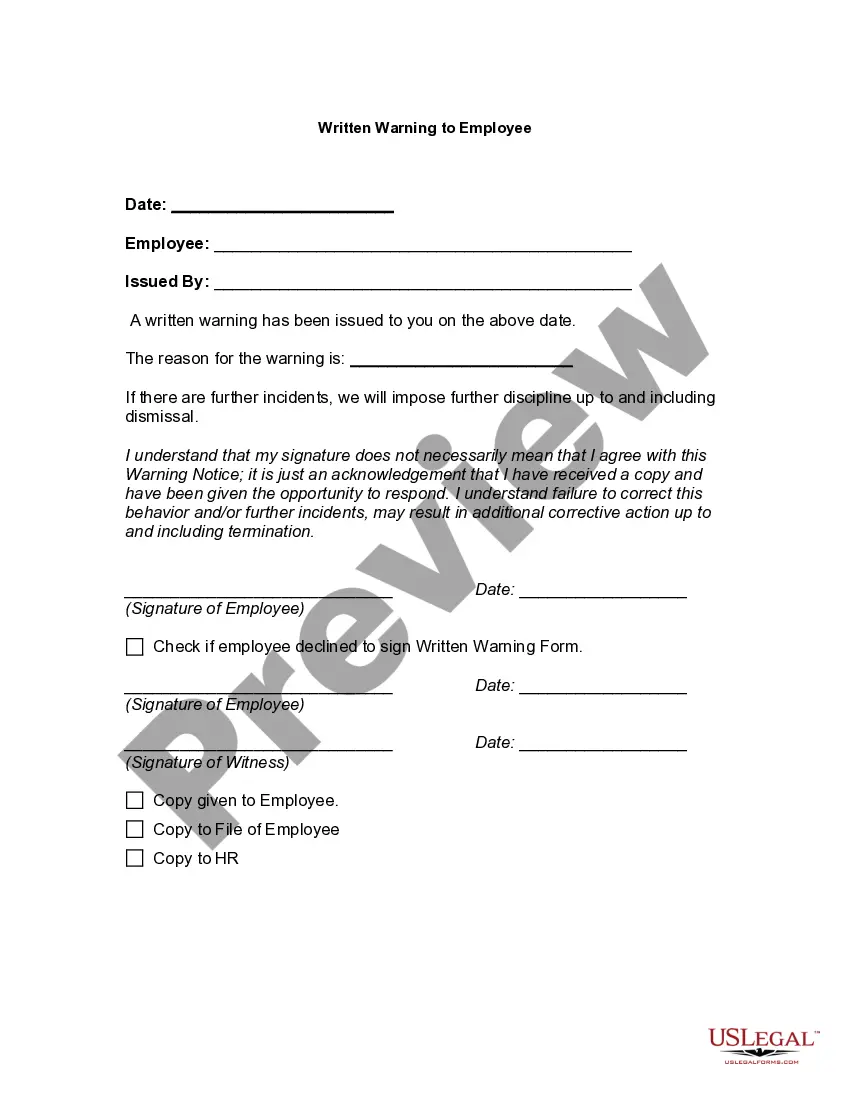
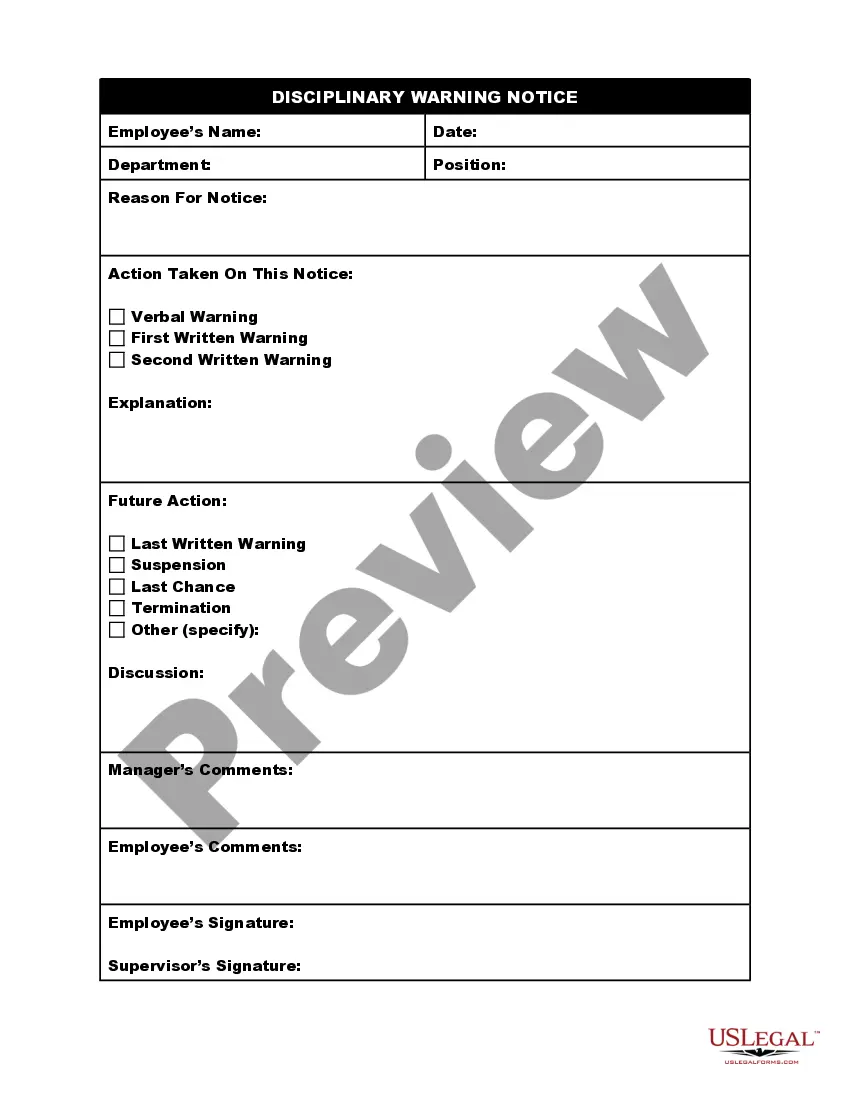
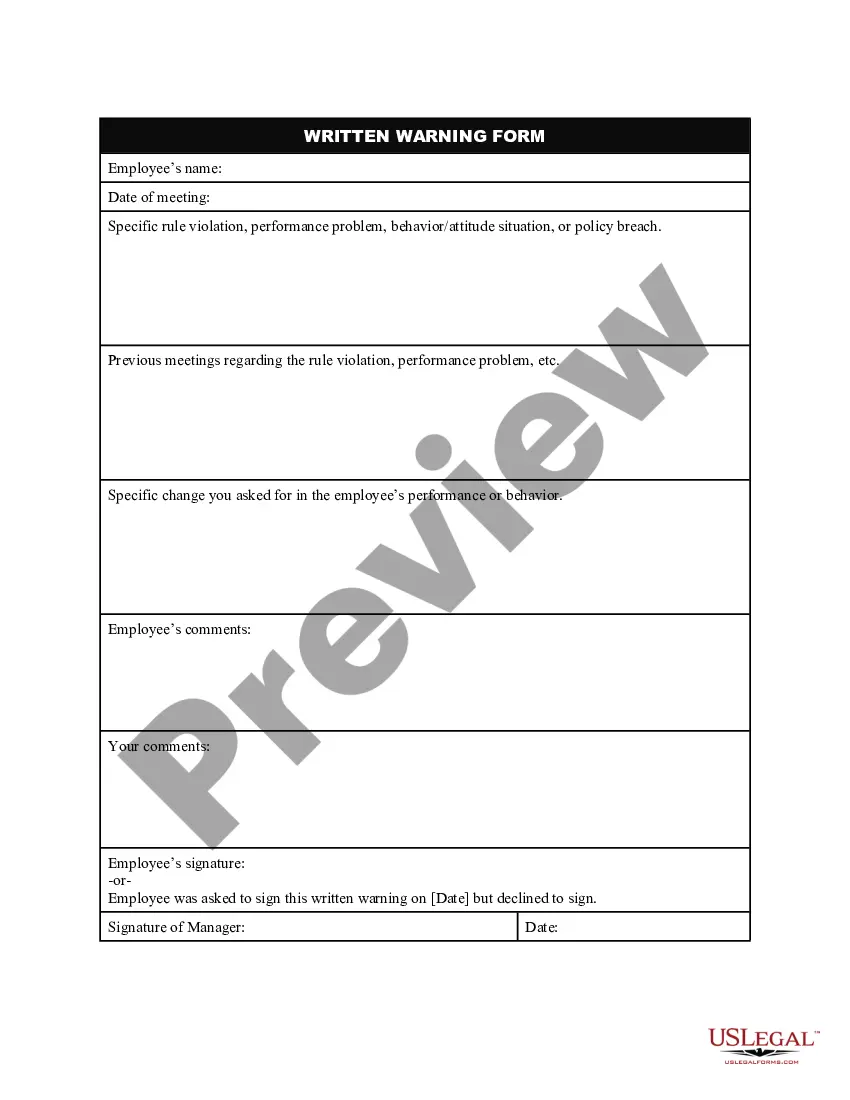
Structuring a written warning typically involves several key elements. Start with the date and recipient information, followed by a clear statement of the issue at hand. Include a description of previous discussions, if any, and conclude with the consequences of not addressing the behavior. This logical structure is essential for creating effective warning notice writing.
Writing a professional warning email requires a clear subject and a respectful tone throughout. Begin with a formal salutation, clearly state the purpose, and provide details regarding the issue. Ensure you end with a summary of expectations or next steps, so that the recipient has a complete understanding of their responsibilities. Clarity and professionalism are key components in warning notice writing.
When writing a letter explaining a warning, it is important to maintain a respectful tone and provide clear context. Start with a brief introduction, describe the behavior that led to the warning, and explain why it is an issue. Finally, offer guidance or resources on how to rectify the situation, emphasizing improvement. This method is critical to effective warning notice writing.
Written warnings typically appear as formal, structured documents outlining concerns about behavior or performance. They often have a heading, date, recipient information, and a series of paragraphs that detail the issue. A well-formatted warning also includes the consequences of failing to improve. Knowing what written warnings look like will improve your warning notice writing skills.
To write a warning message, clearly address the individual, specify the issue, and present necessary details succinctly. Use simple language that conveys your message without ambiguity. Conclude with a call to action or next steps, so the recipient understands their responsibilities going forward. This approach enhances your effectiveness in warning notice writing.
A written warning should maintain a professional tone and structure. Begin with an introduction that states the purpose of the warning, then detail the concerns clearly and factually. Conclude by mentioning the expectations moving forward, while also offering any supportive resources, if applicable. Mastering this structure is essential in warning notice writing.
An example of a written warning might include a formal notice regarding an employee's poor performance or violation of company policy. This document should outline the behavior that prompted the warning, reference any prior discussions, and convey the consequences if the behavior continues. Such examples are pivotal for anyone learning about effective warning notice writing.
Writing a good warning involves clarity and directness. Start with a clear subject heading, followed by the specifics of the issue. Ensure you include the date and any relevant details that will help the receiver understand the situation better. By focusing on concise language and factual information, you facilitate effective warning notice writing.
Writing an employee warning notice involves following a structured approach. Be clear about the reasons for the warning, the expected changes in behavior, and potential consequences of continued infractions. Remember, your goal is to promote improvement, making clarity a priority in your warning notice writing.
Starting a written warning conversation should be done thoughtfully and respectfully. Begin by stating the importance of the meeting and the topic at hand. Clearly express the purpose of discussing the employee’s performance, ensuring a constructive tone during your warning notice writing to facilitate effective communication.