Warning Letter For Absent Without Notice
Description
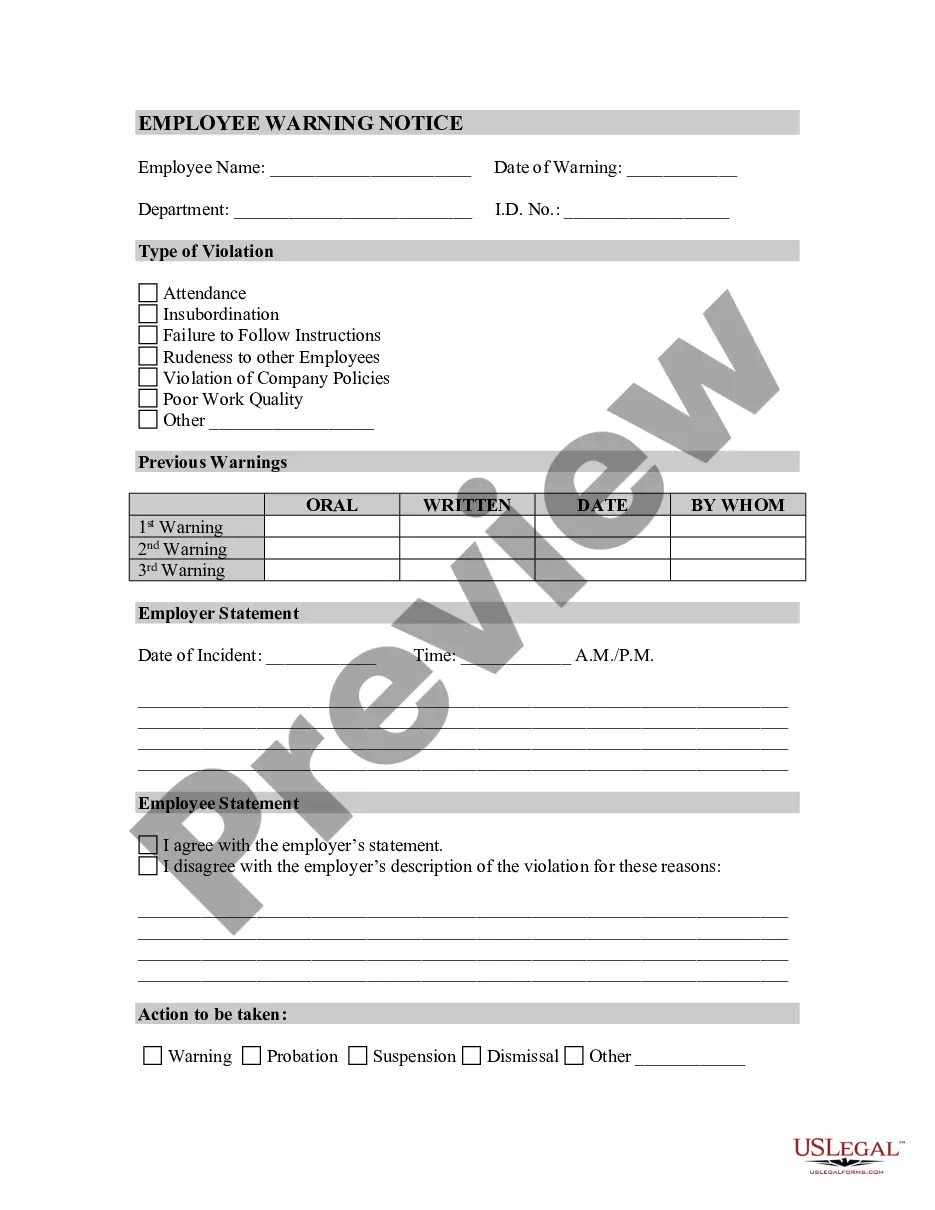
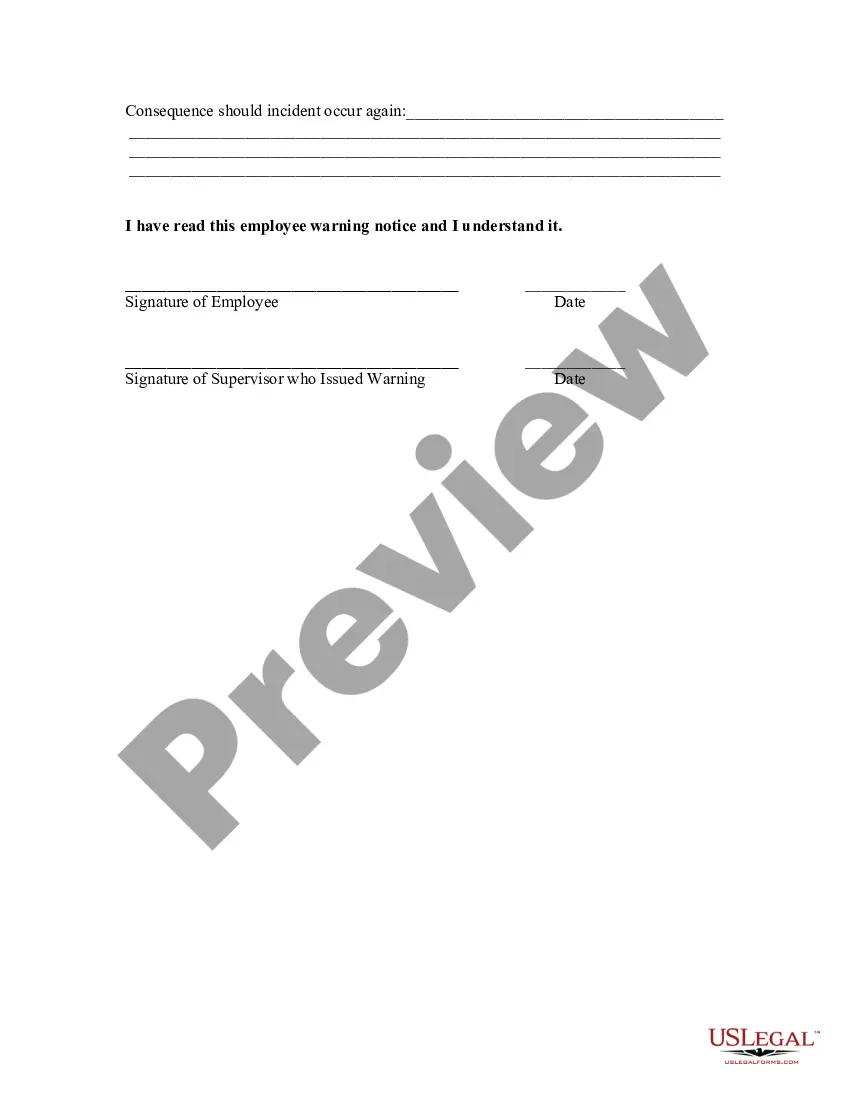
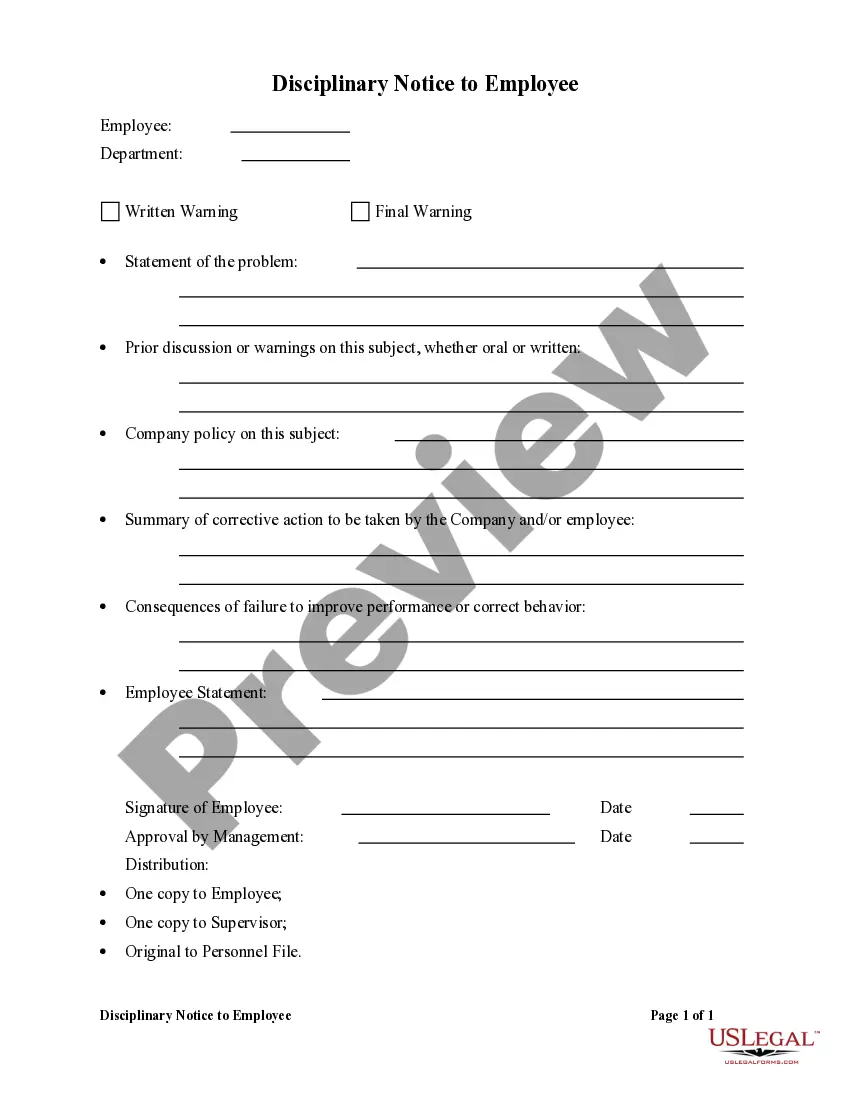
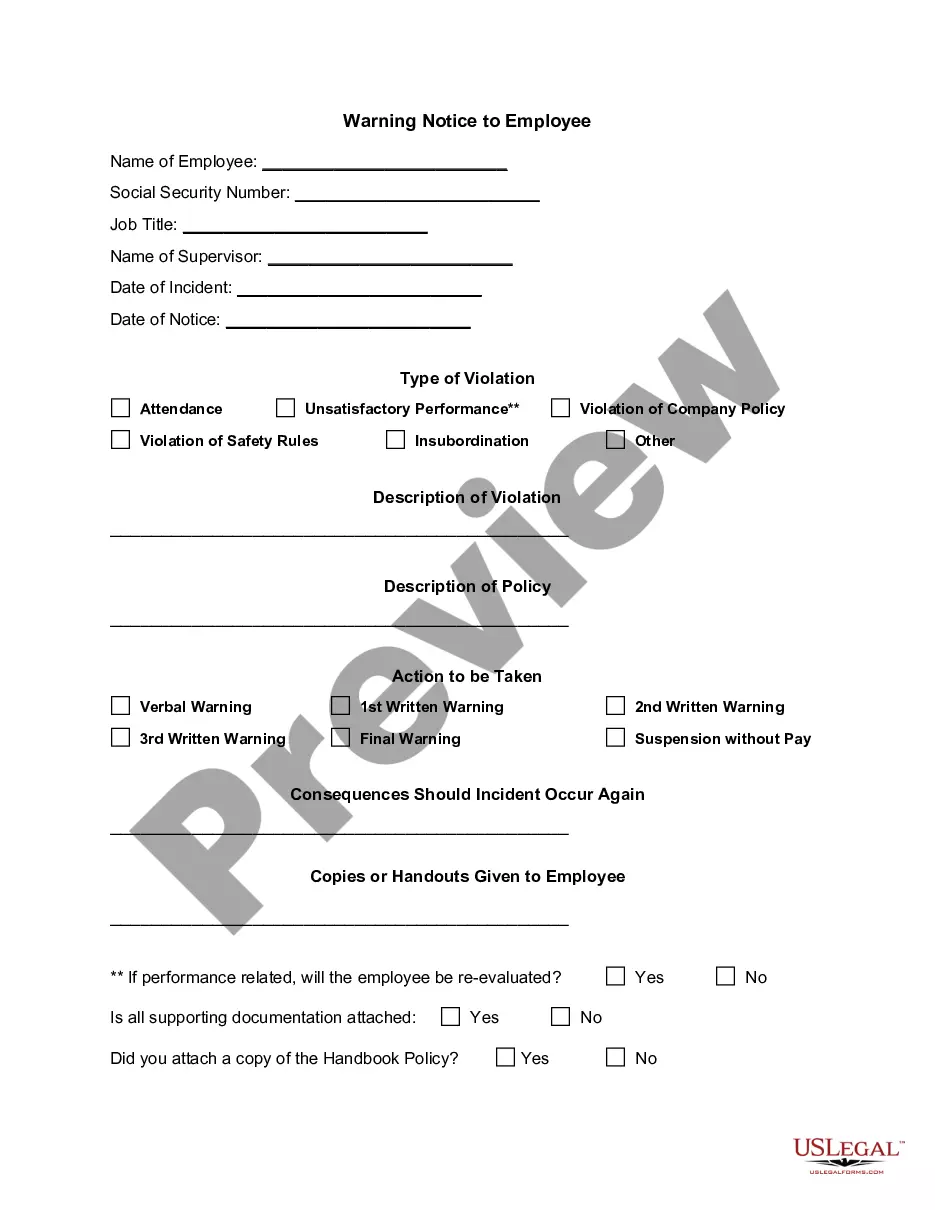
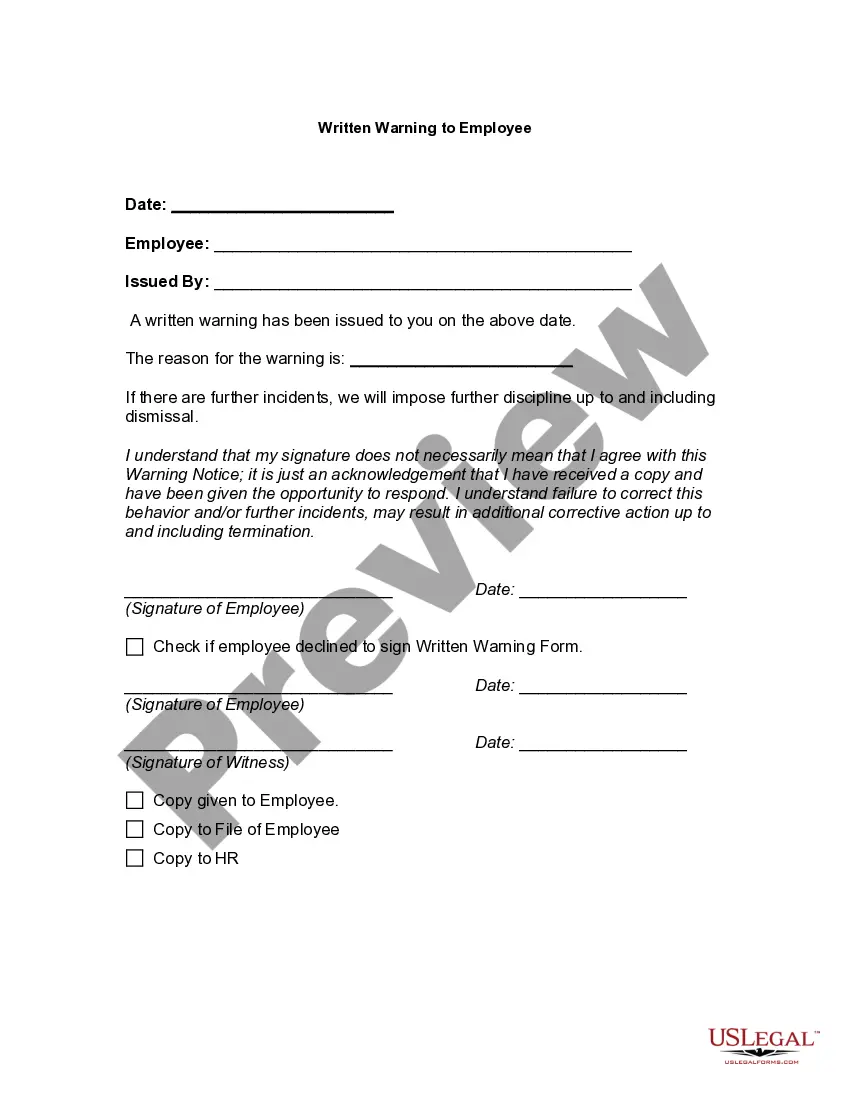
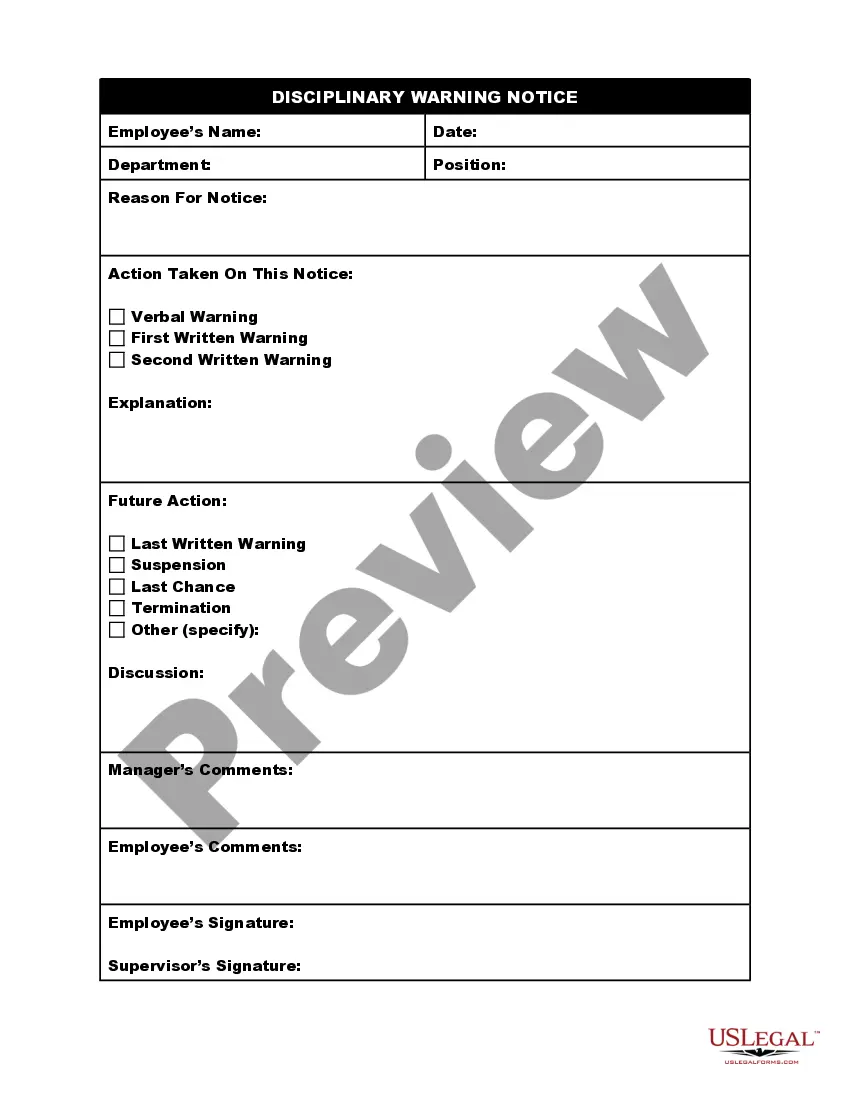
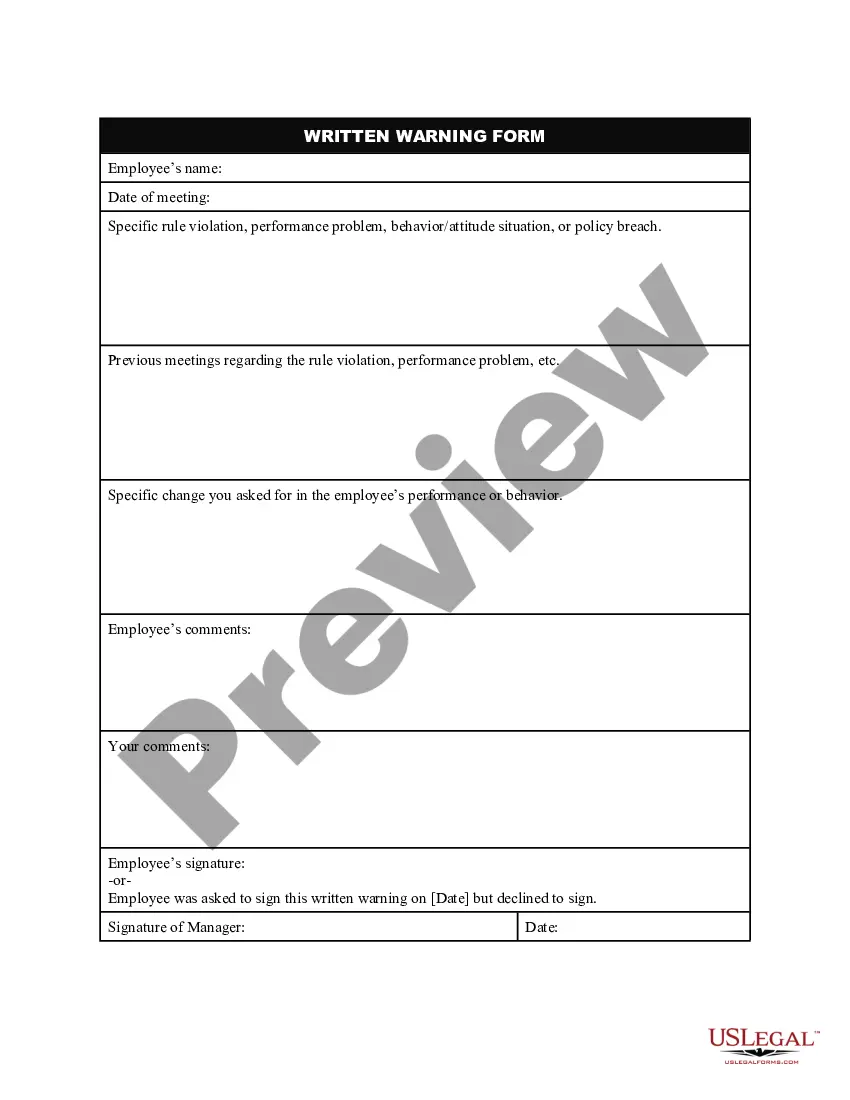
Get your form ready online
Our built-in tools help you complete, sign, share, and store your documents in one place.
Make edits, fill in missing information, and update formatting in US Legal Forms—just like you would in MS Word.
Download a copy, print it, send it by email, or mail it via USPS—whatever works best for your next step.
Sign and collect signatures with our SignNow integration. Send to multiple recipients, set reminders, and more. Go Premium to unlock E-Sign.
If this form requires notarization, complete it online through a secure video call—no need to meet a notary in person or wait for an appointment.
We protect your documents and personal data by following strict security and privacy standards.

Make edits, fill in missing information, and update formatting in US Legal Forms—just like you would in MS Word.

Download a copy, print it, send it by email, or mail it via USPS—whatever works best for your next step.

Sign and collect signatures with our SignNow integration. Send to multiple recipients, set reminders, and more. Go Premium to unlock E-Sign.

If this form requires notarization, complete it online through a secure video call—no need to meet a notary in person or wait for an appointment.

We protect your documents and personal data by following strict security and privacy standards.
Looking for another form?








How to fill out Employee Warning Notice?
Identifying a reliable location to obtain the latest and most pertinent legal samples is a significant portion of navigating bureaucracy. Locating the correct legal documents requires accuracy and meticulousness, which is why it’s essential to source Warning Letter For Absent Without Notice exclusively from trustworthy providers, such as US Legal Forms. An incorrect template will squander your time and prolong the circumstance you are facing.
With US Legal Forms, your concerns are minimal. You can view and verify all the specifics regarding the document’s applicability and significance for your situation and within your state or locality.
Eliminate the stress associated with your legal paperwork. Explore the extensive US Legal Forms catalog to discover legal samples, evaluate their applicability to your situation, and download them immediately.
- Utilize the library navigation or search function to find your sample.
- Access the form’s details to confirm it aligns with the requirements of your state and locality.
- View the form preview, if accessible, to verify that the template is the one you need.
- Return to the search for the correct template if the Warning Letter For Absent Without Notice does not meet your criteria.
- If you are confident about the form’s suitability, download it.
- As an authorized user, click Log in to verify your identity and access your selected templates in My documents.
- If you don’t possess an account yet, click Buy now to acquire the form.
- Choose the pricing plan that meets your needs.
- Proceed with the registration to finalize your purchase.
- Complete your purchase by selecting a payment method (credit card or PayPal).
- Choose the file format for downloading the Warning Letter For Absent Without Notice.
- Once the form is on your device, you can edit it using the editor or print it to fill out manually.
Form popularity
FAQ
To write a short excuse letter for being absent, clearly state your name, the date of absence, and a brief explanation for your absence. Be honest and concise, keeping the tone professional. Conclude with an acknowledgment of your responsibility and express your commitment to keeping in touch, reinforcing the importance of communication in your workplace.
Being absent from duty without information refers to situations when employees do not show up for work and fail to communicate their absence in advance. This lack of notice disrupts workplace efficiency and can lead to disciplinary actions. Companies often address such behavior with a formal warning letter for absent without notice to clarify expectations and establish accountability.
Writing a warning letter for absenteeism without notice involves stating the facts clearly. Begin by mentioning the employee's name and the specific dates they did not attend work. Include a reminder of the company's absence policy and emphasize the importance of notifying management about absences. Encourage open communication to resolve any underlying issues and prevent future occurrences.
To create a warning template for not showing up to work, start with a clear subject line, such as 'Warning Letter for Absence Without Notice.' Include a brief introduction explaining the purpose of the letter and specify the date of the employee's absence. Be sure to state the company's policy on attendance and the potential consequences of continued absenteeism, urging the employee to respond and discuss the situation.
To write a disciplinary letter, start with a clear subject line highlighting the purpose of the letter. State the employee’s name, the nature of the violation, and the specific company policies involved. Include consequences for continued infractions and offer support from the company to help resolve any underlying issues.
When emailing an employee who is absent without notice, keep the tone professional and direct. Start with a clear subject line such as 'Attendance Issue' to set the context. In the email, mention the specific dates they were absent and express concern about their well-being, while also reminding them of the need to communicate with supervisors in such situations.
To write a warning for absenteeism, outline the employee's attendance issues, including the dates of absence without notice. Clearly state the consequences of repeated absenteeism, referencing company policy. It’s also important to remind the employee of the importance of communication regarding their attendance.
A disciplinary letter for absence should include the employee's name, position, and a detailed account of their absences. Explain the company attendance policy, citing specific rules that have been violated. Encourage the employee to improve their attendance and mention any support the company may provide to help them do so.
To write a warning for being absent from work, start with a statement of the issue, mentioning the employee's absence dates. Emphasize the impact that their lack of communication has on team dynamics and productivity. Also, mention the company's attendance policy and any necessary steps the employee must take moving forward.
When writing a warning letter for excessive absence, first identify the employee and list the specific dates they missed work. Clearly communicate your concerns about their attendance patterns and how it impacts the team. Finally, provide a chance for the employee to address their situation, reminding them of the policies that govern attendance at your company.