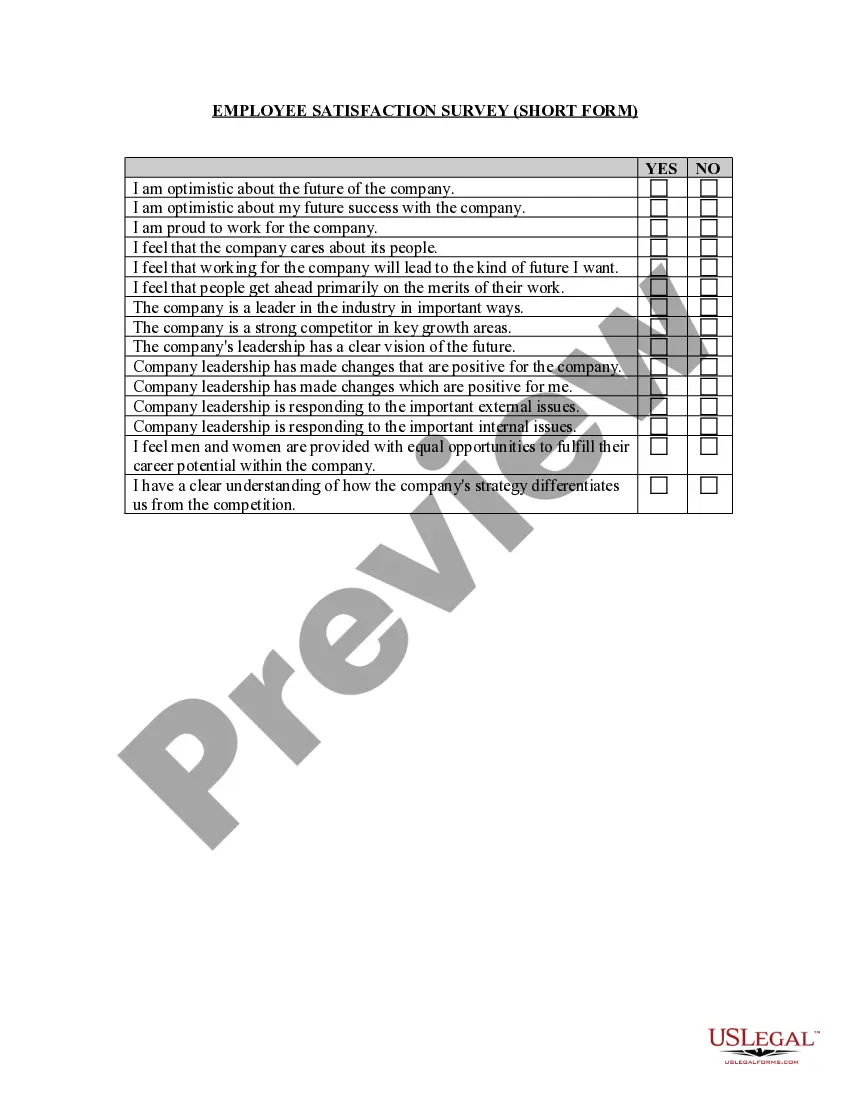
Satisfaction Survey For Teachers
Description
Get your form ready online
Our built-in tools help you complete, sign, share, and store your documents in one place.
Make edits, fill in missing information, and update formatting in US Legal Forms—just like you would in MS Word.
Download a copy, print it, send it by email, or mail it via USPS—whatever works best for your next step.
Sign and collect signatures with our SignNow integration. Send to multiple recipients, set reminders, and more. Go Premium to unlock E-Sign.
If this form requires notarization, complete it online through a secure video call—no need to meet a notary in person or wait for an appointment.
We protect your documents and personal data by following strict security and privacy standards.

Make edits, fill in missing information, and update formatting in US Legal Forms—just like you would in MS Word.

Download a copy, print it, send it by email, or mail it via USPS—whatever works best for your next step.

Sign and collect signatures with our SignNow integration. Send to multiple recipients, set reminders, and more. Go Premium to unlock E-Sign.

If this form requires notarization, complete it online through a secure video call—no need to meet a notary in person or wait for an appointment.

We protect your documents and personal data by following strict security and privacy standards.
Looking for another form?



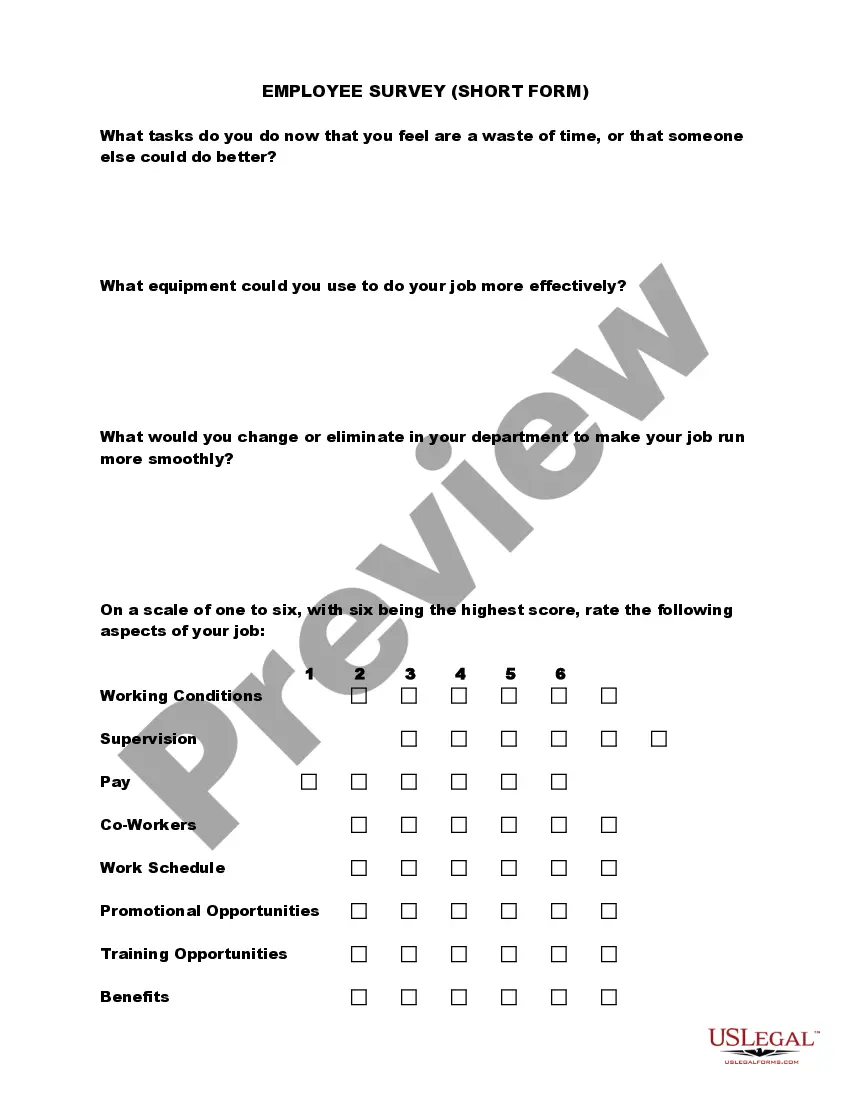
How to fill out Employee Satisfaction Survey - Short Form?
- Log into your US Legal Forms account. If you're returning, simply access your profile. If this is your first time, create an account.
- Explore the extensive library of templates. Use the Preview mode to verify you select the right satisfaction survey form that aligns with your local jurisdiction.
- Check for alternative templates if necessary. If the chosen option doesn’t meet your needs, use the Search tab to find suitable alternatives.
- Choose your document. Click on the 'Buy Now' button to select a subscription plan that fits your requirements.
- Complete your purchase. Enter your payment details via credit card or PayPal to finalize your subscription.
- Download your satisfaction survey form. Save it to your device for easy access and completion whenever required.
Utilizing US Legal Forms not only simplifies the approach to creating legal documents but provides access to a vast library that offers over 85,000 customizable forms. This ensures your surveys are thorough and compliant.
Start gathering vital feedback from your teachers today. Explore the resources available at US Legal Forms and empower your education initiatives!
Form popularity
FAQ
Good survey comments in a satisfaction survey for teachers often emphasize strengths and areas for improvement. Examples include, "The teacher explains concepts clearly," or, "I would love more group activities in class." These comments provide essential insight while remaining balanced and constructive.
To write effective feedback for a teacher, focus on specific observations and constructive suggestions. Mention what they did well, and then provide ideas for improvement. For instance, you can say, "I appreciated your interactive activities, but consider incorporating more technology to engage different learning styles."
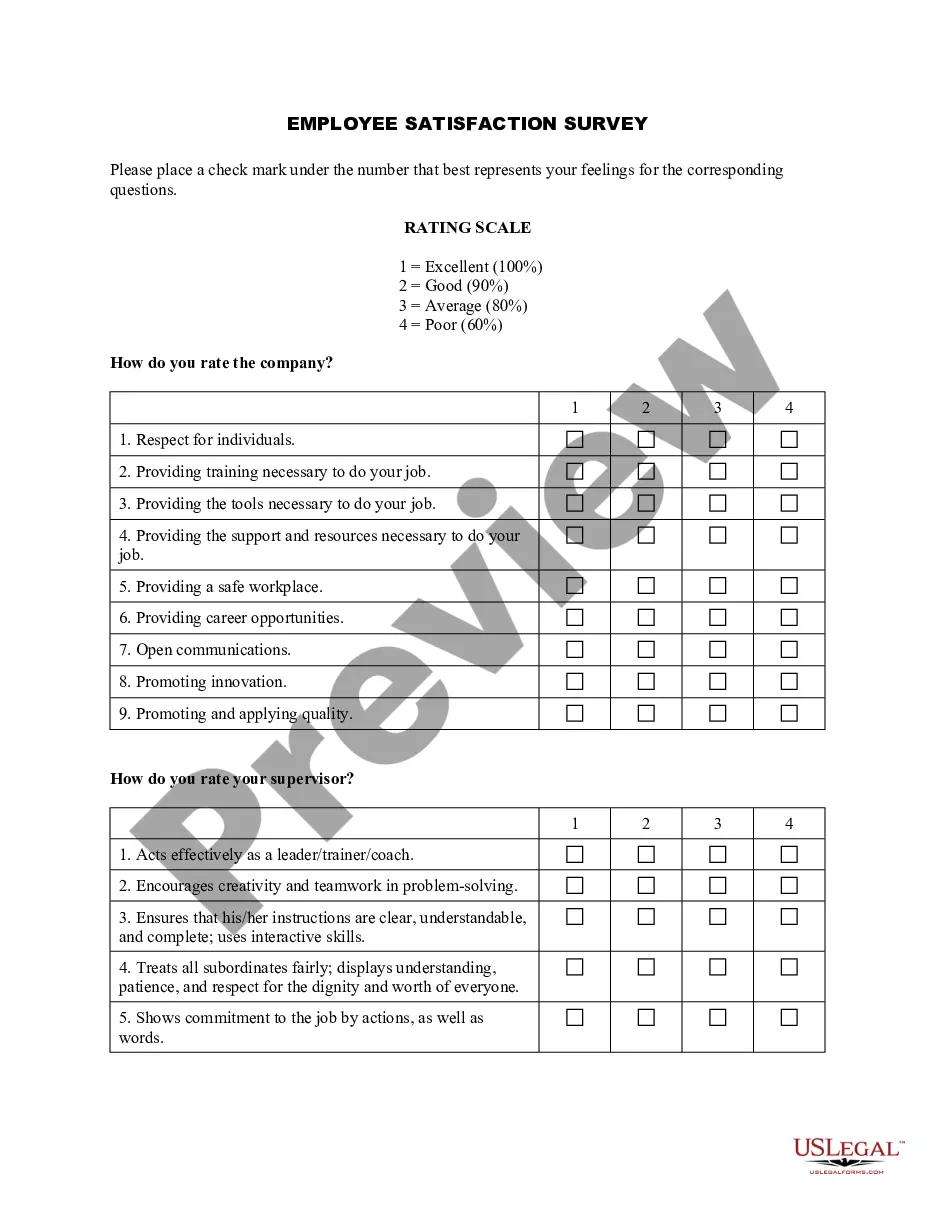
Good survey questions for teachers should cover various aspects of the classroom experience. Include questions about lesson effectiveness, classroom environment, student engagement, and support from staff. For example, ask, "What resources do you find most helpful in your teaching?" This approach ensures you gather comprehensive feedback.
Positive feedback for teachers in a satisfaction survey can highlight their dedication and effectiveness. For instance, comments like, "The teacher makes learning fun and engaging," or "I appreciate the personalized support we receive," indicate satisfaction. Such feedback can inspire teachers to continue their excellent work.
An example of a satisfaction survey for teachers could include questions about lesson clarity, engagement, and support from administration. You might ask, "How satisfied are you with the resources provided for your lessons?" This format allows for actionable insights to improve the teaching environment.
Writing a good satisfaction survey for teachers involves crafting clear and focused questions. Use simple language and avoid ambiguity. Consider including both multiple-choice and open-ended questions to gather diverse feedback. Always pilot your survey to make sure it resonates with teachers.
To create an effective satisfaction survey for teachers, start by identifying your goals. Consider what specific feedback you want to gather. Ensure that your questions are easy to understand and relevant to the teaching experience. Finally, keep your survey concise to encourage more responses.
Good satisfaction survey questions for teachers focus on clarity and relevance to their roles. You might ask how well they feel their contributions are recognized, what barriers prevent them from achieving their best performance, and how effective the school’s support systems are. Tailoring these questions within your satisfaction survey for teachers will yield actionable feedback and facilitate positive change in the educational setting.
When designing a satisfaction survey for teachers, consider asking about their overall job satisfaction, their opinion on professional development opportunities, and the quality of communication within the school. It's also valuable to inquire about their engagement with students and the challenges they face in the classroom. This information offers insights to improve teacher experiences and enhance student learning.
In a satisfaction survey for teachers, you often find questions that assess various aspects of their experience. Common inquiries may include evaluating course content, the effectiveness of instructional methods, and the level of support from administration. It's essential to ask about the resources available to teachers and how these resources impact their teaching. Understanding these factors helps create a better educational environment.