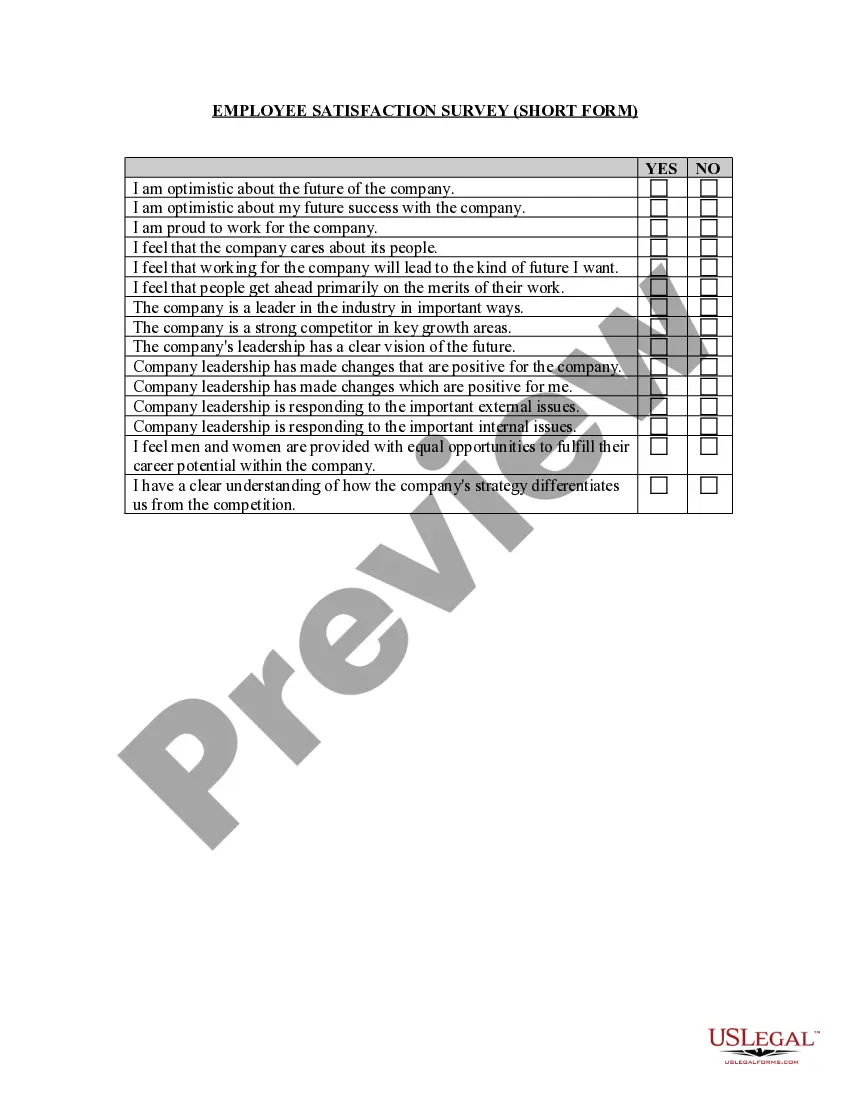
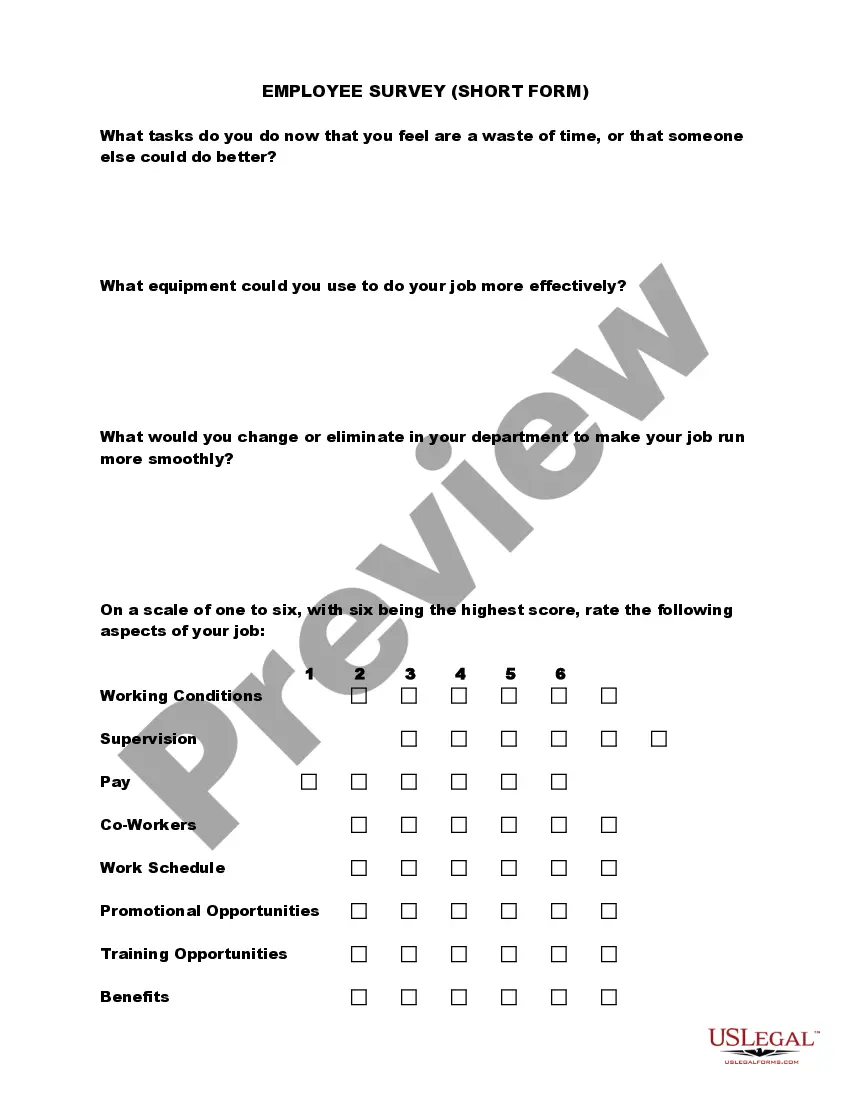
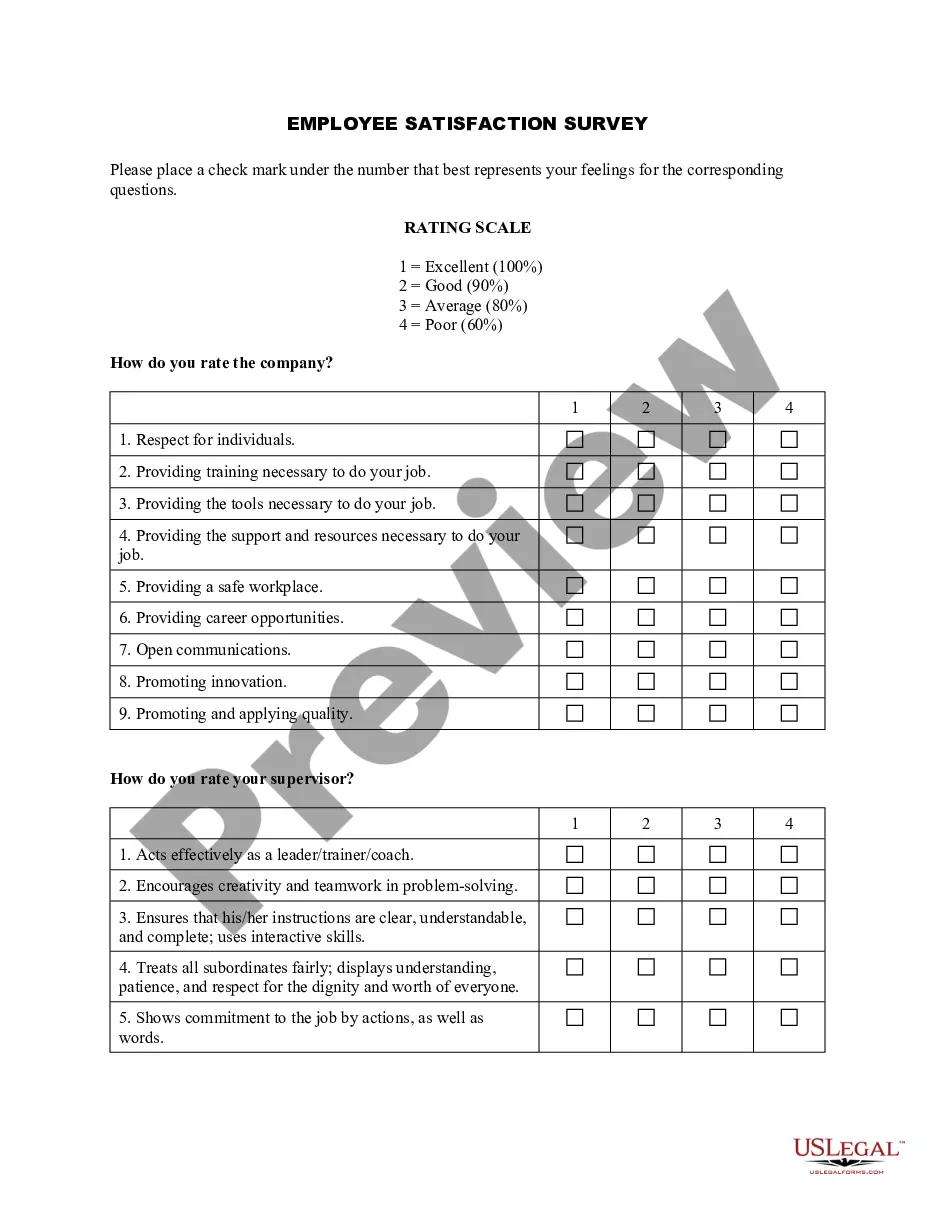
Encuesta Formato Formula
Description
Get your form ready online
Our built-in tools help you complete, sign, share, and store your documents in one place.
Make edits, fill in missing information, and update formatting in US Legal Forms—just like you would in MS Word.
Download a copy, print it, send it by email, or mail it via USPS—whatever works best for your next step.
Sign and collect signatures with our SignNow integration. Send to multiple recipients, set reminders, and more. Go Premium to unlock E-Sign.
If this form requires notarization, complete it online through a secure video call—no need to meet a notary in person or wait for an appointment.
We protect your documents and personal data by following strict security and privacy standards.

Make edits, fill in missing information, and update formatting in US Legal Forms—just like you would in MS Word.

Download a copy, print it, send it by email, or mail it via USPS—whatever works best for your next step.

Sign and collect signatures with our SignNow integration. Send to multiple recipients, set reminders, and more. Go Premium to unlock E-Sign.

If this form requires notarization, complete it online through a secure video call—no need to meet a notary in person or wait for an appointment.

We protect your documents and personal data by following strict security and privacy standards.
Looking for another form?
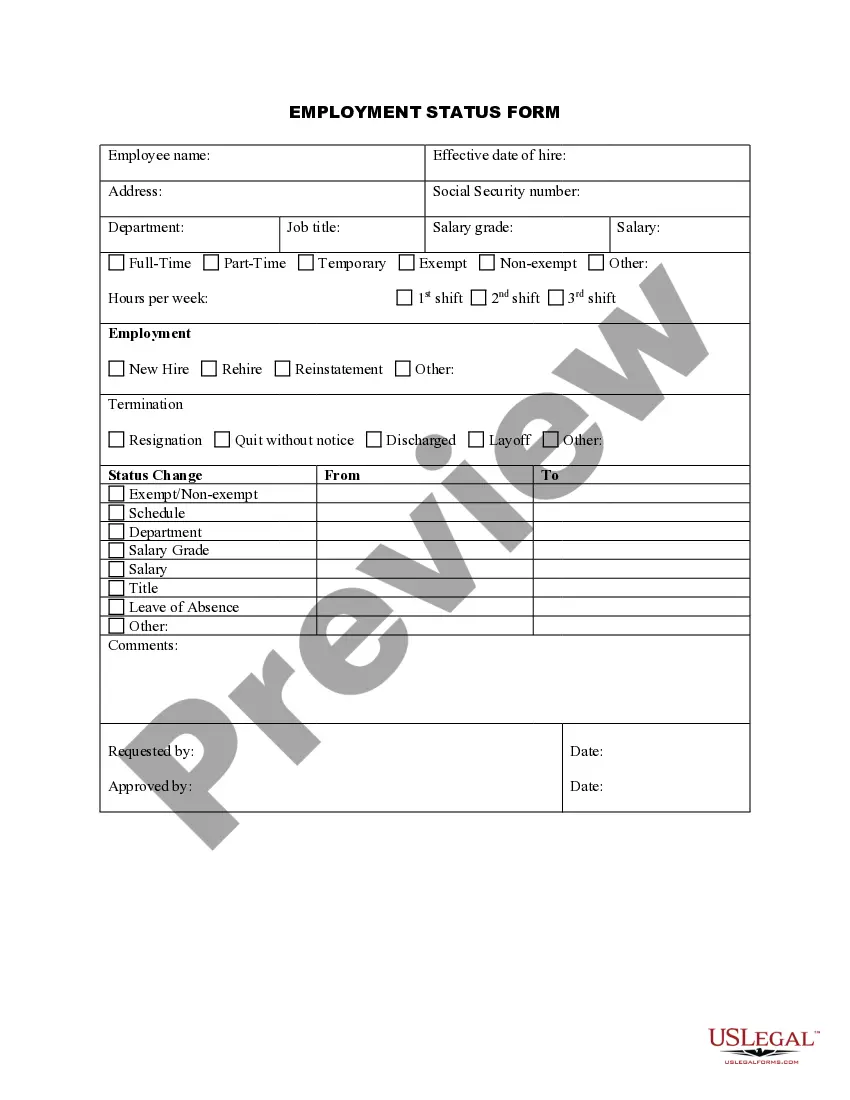
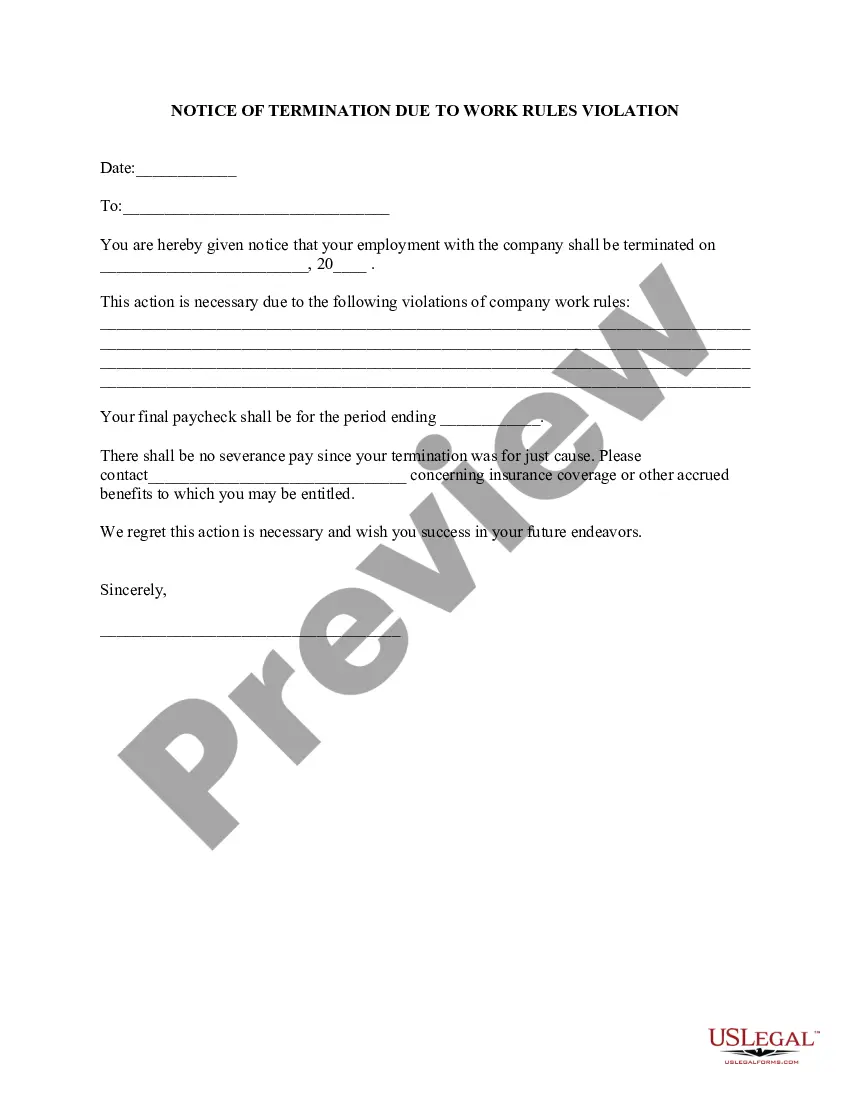
How to fill out Employee Satisfaction Survey - Short Form?
Whether for professional reasons or personal matters, everyone must deal with legal issues at some point during their lifetime.
Completing legal documentation requires meticulous attention, starting with selecting the appropriate template.
Once it is saved, you can fill out the form using editing software or print it and complete it by hand. With a vast US Legal Forms inventory available, you won't need to spend time searching for the correct template across the web. Utilize the library’s simple navigation to discover the right form for any situation.
- Obtain the template you need by using the search box or browsing the catalog.
- Review the form's description to ensure it aligns with your situation, jurisdiction, and area.
- Click on the form's preview to examine it.
- If this is the incorrect document, return to the search feature to find the Encuesta Formato Formula template you need.
- Download the document if it meets your specifications.
- If you already possess a US Legal Forms account, simply click Log in to access your previously saved documents in My documents.
- If you do not yet have an account, you can download the document by clicking Buy Now.
- Choose the appropriate pricing option.
- Complete the profile registration form.
- Select your payment method: use a credit card or PayPal account.
- Choose the document format you desire and download the Encuesta Formato Formula.
Form popularity
FAQ
Specifically, Rule 5 of the South Carolina Rules of Criminal Procedure provides that, upon request by you, the prosecution has to provide you with or let you inspect any statements you've made, your prior criminal history, any books, papers, documents, photographs, tangible objects, buildings or places, which are under ...
In mediation, a qualified person called a mediator assists the parties in resolving the dispute. A mediator has the education, training and experience required to help the parties settle the matter. The parties make the decisions, not the mediator. The mediator does not coerce or force a party to take a position.
Who Pays for the Mediator? Rule 9(c), SCADR, specifies that the mediator's fees are to be divided equally between the parties to the case unless agreed or ordered otherwise.
First, an individual must complete a 40-hour mediation training program that is approved by the South Carolina Board of Arbitrator and Mediator Certification. This training program covers topics such as conflict resolution, communication skills, and negotiation techniques.
Any settlement is voluntary, and the parties lose none of their rights to trial by judge or jury in the absence of voluntary settlement. The mediator has no authority to make a decision or impose a settlement.
Mediation TypeAdministrative FeeHourly RateFamily Mediation$50.00See Sliding ScaleCommunity Mediation$25.00Free (2 hours)Workplace Mediation$50.00$75.00Business Mediation$50.00*Starting $125.001 more row
After agreeing to a mediation settlement, the parties formalize and sign a binding contract. Once finalized, each party usually receives a copy of the document. This document outlines the settlement terms.
Mediation is Mandatory in South Carolina Either party can terminate the mediation at any time, as can the mediator. The mediator's goal, however, is to assist the parties in arriving at a mutually acceptable and lasting divorce agreement.