Working Conditions With Examples
Description
Get your form ready online
Our built-in tools help you complete, sign, share, and store your documents in one place.
Make edits, fill in missing information, and update formatting in US Legal Forms—just like you would in MS Word.
Download a copy, print it, send it by email, or mail it via USPS—whatever works best for your next step.
Sign and collect signatures with our SignNow integration. Send to multiple recipients, set reminders, and more. Go Premium to unlock E-Sign.
If this form requires notarization, complete it online through a secure video call—no need to meet a notary in person or wait for an appointment.
We protect your documents and personal data by following strict security and privacy standards.

Make edits, fill in missing information, and update formatting in US Legal Forms—just like you would in MS Word.

Download a copy, print it, send it by email, or mail it via USPS—whatever works best for your next step.

Sign and collect signatures with our SignNow integration. Send to multiple recipients, set reminders, and more. Go Premium to unlock E-Sign.

If this form requires notarization, complete it online through a secure video call—no need to meet a notary in person or wait for an appointment.

We protect your documents and personal data by following strict security and privacy standards.
Looking for another form?






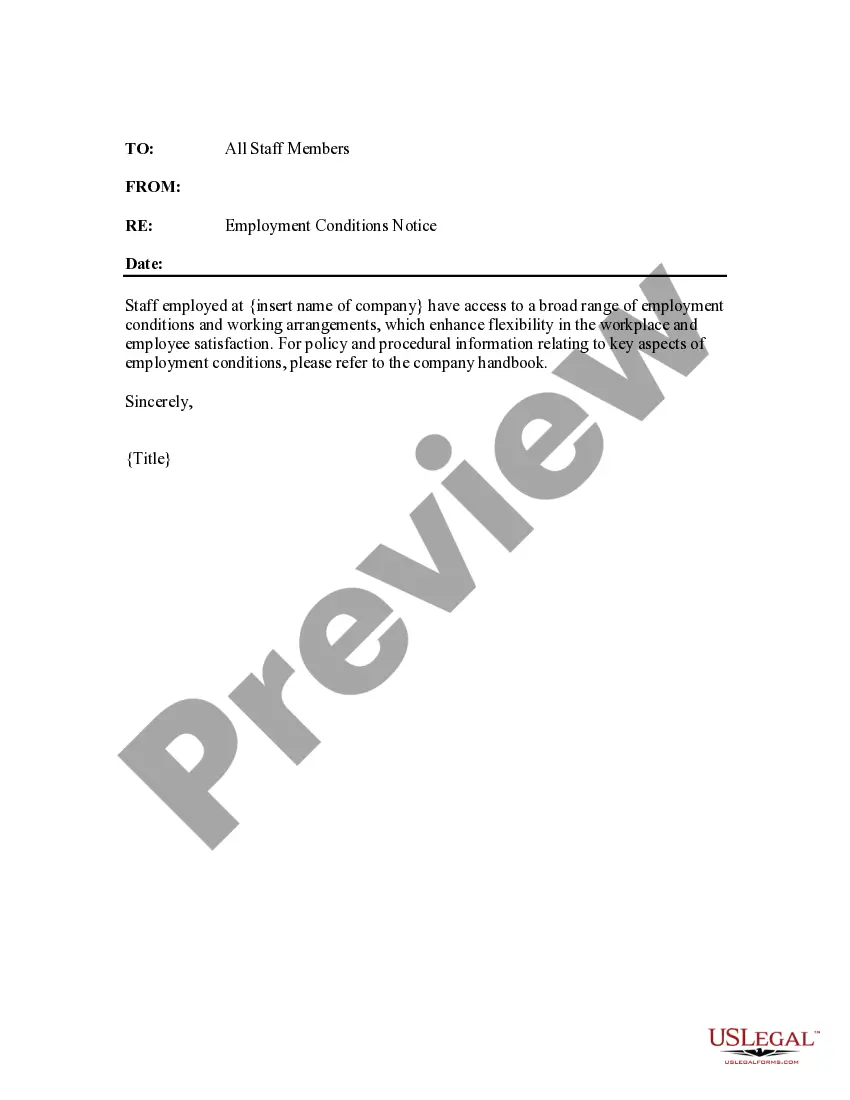
How to fill out Employment Conditions Notice - Notice To Existing Employees Of Flexibility In Working Arrangements?
It’s clear that becoming a legal specialist doesn't happen instantly, nor can you swiftly understand how to effectively create Working Conditions With Examples without possessing a trained skill set.
Compiling legal documents is a lengthy process that demands specific training and expertise. Therefore, why not entrust the development of the Working Conditions With Examples to the experts.
With US Legal Forms, one of the most extensive legal document databases, you can obtain anything from court forms to templates for intra-company communication.
You can revisit your documents from the My documents section whenever needed. If you’re already a customer, you can simply Log In and find and download the template from the same section.
Regardless of the reasons behind your paperwork—whether financial, legal, or personal—our platform caters to your needs. Give US Legal Forms a try today!
- Find the document you need using the search feature at the top of the website.
- View it (if this feature is available) and check the accompanying description to see if Working Conditions With Examples meets your requirements.
- Start your search anew if you’re looking for a different document.
- Sign up for a no-cost account and select a subscription plan to purchase the document.
- Click Buy now. After the transaction is completed, you can download the Working Conditions With Examples, fill it out, print it, and send or mail it to the appropriate individuals or organizations.
Form popularity
FAQ
To describe working conditions, focus on the specifics that create the work environment. Mention key features such as the workplace setting, safety guidelines, and support systems in place for employees. Using clear, straightforward language minimizes confusion and sets clear expectations. Remember, when you describe working conditions with examples, you enhance understanding and attract suitable talent to your team.
Working conditions encompass various aspects of an employee's environment, including physical, mental, and social elements. For example, a clean and quiet workspace fosters productivity, while flexible hours cater to work-life balance. Additionally, safe practices and supportive management significantly boost employee morale. By illustrating working conditions with examples, you create a clearer vision of what candidates can expect.
The working conditions for a job description can include the job's physical location, hours of work, and the nature of the work environment. It's vital to specify factors such as remote versus in-office settings, noise levels, and the type of equipment used. Each aspect contributes to overall job satisfaction. Highlighting these working conditions with examples aids candidates in making informed decisions about their applications.
To write working conditions in a job description, clearly outline the environment in which employees will operate. Use specific language to describe hours, safety protocols, and any physical requirements associated with the job. Including examples helps potential candidates understand what is expected. Ultimately, a well-crafted section on working conditions with examples attracts the right candidates who value a supportive workplace.
A good working condition refers to an environment that supports employee health and well-being. It includes factors like clean facilities, reasonable hours, safety measures, and proper equipment. Additionally, good working conditions promote fair wages and access to resources. In essence, working conditions with examples often highlight how positive environments lead to happier, more productive employees.
To prove a toxic work environment, you need to gather evidence that shows a pattern of harmful behaviors, such as harassment or discrimination. Document instances of negative behavior, including dates, times, and involved parties. Additionally, witness statements from colleagues can strengthen your case. Understanding how to identify working conditions with examples aids in recognizing and addressing toxic elements in your workplace.
Working condition describes various factors that influence an employee's work experience, including physical, psychological, and environmental aspects. It encompasses everything from air quality and noise levels to company culture and management practices. Simplifying working conditions with examples allows individuals to understand their rights and responsibilities in the workplace. It also highlights the importance of fostering a healthy work environment.
Acceptable working conditions typically include safe environments, fair wages, and reasonable working hours. These conditions ensure that employees can perform their tasks without undue stress or health risks. Examples of acceptable working conditions are proper ventilation, access to safety equipment, and clear policies against harassment. Recognizing these elements helps both employees and employers create a more supportive workplace.
A working condition refers to the environment in which an employee performs their job duties. For instance, a comfortable office space with ergonomic furniture is one example of a positive working condition. In contrast, a factory with inadequate ventilation illustrates a poor working condition. Understanding working conditions with examples helps individuals recognize what to expect in different job settings.
To assess the working conditions environment in a company, consider conducting employee surveys, interviews, and focus groups. This feedback will provide insight into employee perceptions of safety, management support, and overall workplace culture. Additionally, reviewing compliance with safety regulations and organizational policies is essential. This comprehensive approach helps you identify real working conditions with examples that can be improved.