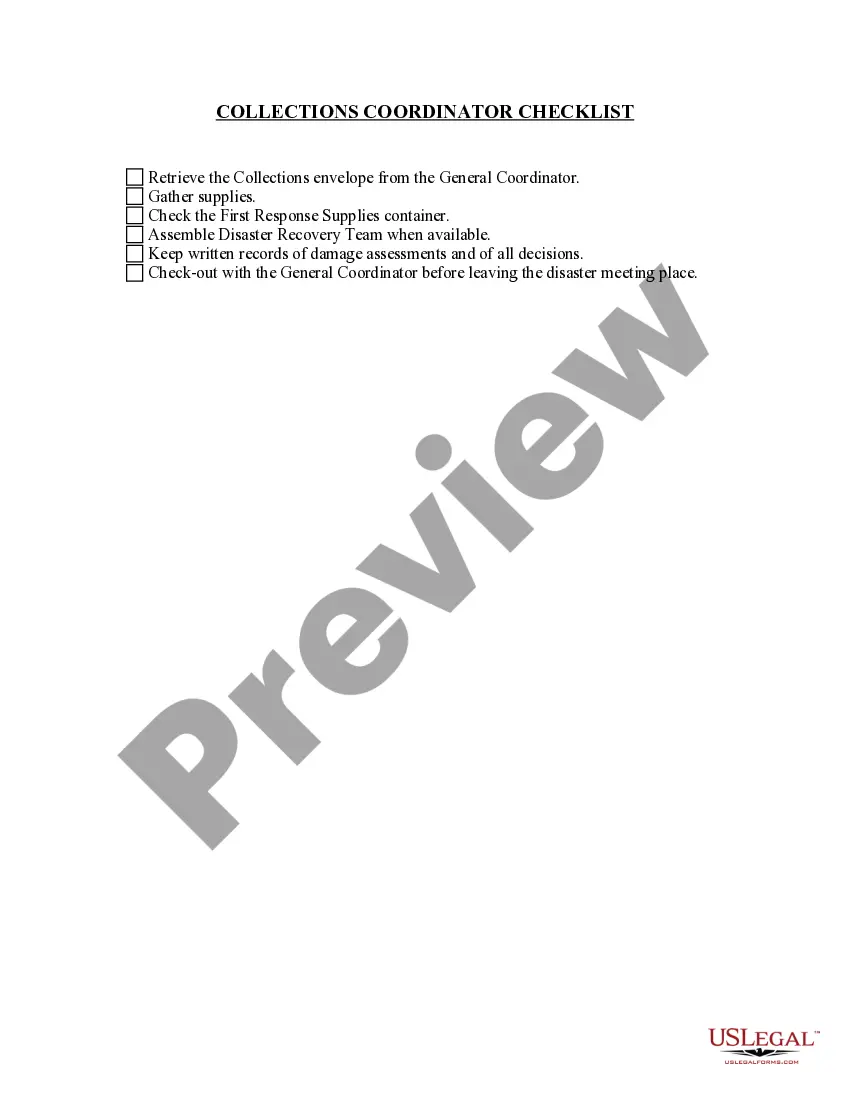
Collections Checklist With Time
Description
Get your form ready online
Our built-in tools help you complete, sign, share, and store your documents in one place.
Make edits, fill in missing information, and update formatting in US Legal Forms—just like you would in MS Word.
Download a copy, print it, send it by email, or mail it via USPS—whatever works best for your next step.
Sign and collect signatures with our SignNow integration. Send to multiple recipients, set reminders, and more. Go Premium to unlock E-Sign.
If this form requires notarization, complete it online through a secure video call—no need to meet a notary in person or wait for an appointment.
We protect your documents and personal data by following strict security and privacy standards.

Make edits, fill in missing information, and update formatting in US Legal Forms—just like you would in MS Word.

Download a copy, print it, send it by email, or mail it via USPS—whatever works best for your next step.

Sign and collect signatures with our SignNow integration. Send to multiple recipients, set reminders, and more. Go Premium to unlock E-Sign.

If this form requires notarization, complete it online through a secure video call—no need to meet a notary in person or wait for an appointment.

We protect your documents and personal data by following strict security and privacy standards.
Looking for another form?





How to fill out Collections Coordinator Checklist?
It's clear that you cannot instantly become a legal expert, nor can you understand how to swiftly create a Collections Checklist With Time without having a dedicated background.
Drafting legal documents is an extensive procedure that demands specific training and expertise. Therefore, why not entrust the creation of the Collections Checklist With Time to the experts.
With US Legal Forms, one of the most extensive libraries of legal templates, you can find everything from court documents to forms for internal corporate communication. We recognize the significance of complying with federal and state statutes and regulations. That’s why all forms on our site are location-specific and current.
You can regain access to your documents from the My documents tab at any time. If you are an existing client, you can simply Log In, and locate and download the template from the same tab.
Regardless of the purpose of your documents—whether they are financial and legal, or personal—our platform has you covered. Give US Legal Forms a try now!
- Locate the document you require by utilizing the search bar at the top of the page.
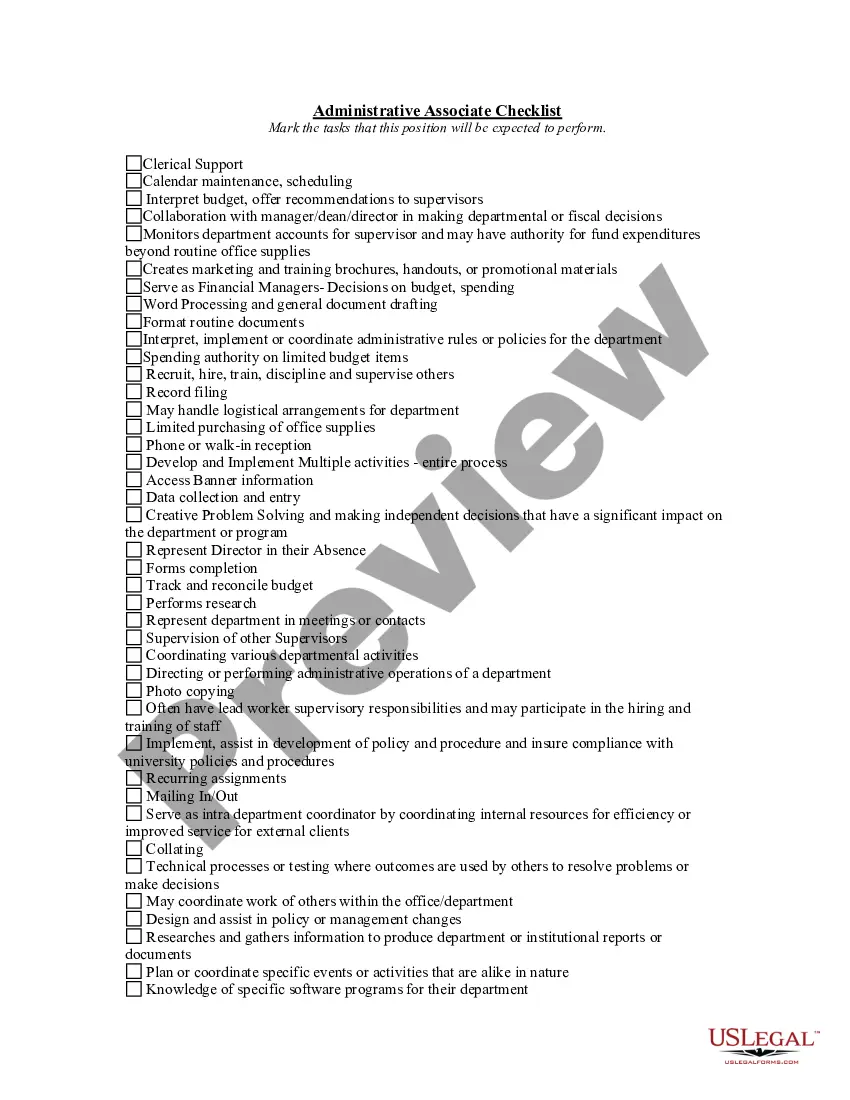
- Preview it (if this option is available) and verify the supporting description to ascertain whether the Collections Checklist With Time is what you need.
- Start your search again if you need a different form.
- Sign up for a free account and select a subscription option to purchase the form.
- Select Buy now. Once the payment is completed, you can download the Collections Checklist With Time, fill it out, print it, and send or mail it to the intended recipients or organizations.
Form popularity
FAQ
To create an effective collections checklist with time, start by defining your goals clearly. Break down tasks into manageable steps, ensuring each item is specific and actionable. Prioritize the items based on urgency and importance, while also considering deadlines. By following a structured format, you can maximize efficiency and ensure that each task in your collections checklist with time contributes to a streamlined process.
A data collection checklist is a structured tool that guides you through the necessary steps and information needed for effective data gathering. It ensures that you account for all relevant data, fostering thoroughness and accuracy. By following a collections checklist with time, you can minimize errors and optimize your collection process. Platforms such as USLegalForms offer customizable templates that can aid in creating a comprehensive data collection checklist.
You can check collections through your credit report or by reaching out to creditors or collection agencies. It is vital to keep all documentation of payments and communications related to collections. Employing a collections checklist with time can streamline this process, enabling you to stay informed about your financial status. Consider using resources from platforms like USLegalForms to maintain your records effectively.
Yes, to check if you have anything in collections, review credit reports or contact collection agencies directly. Keeping your financial records organized can help identify any overdue accounts or items in collections. Utilizing a collections checklist with time can further assist in tracking potential collections, ensuring that nothing slips through the cracks. Platforms like USLegalForms can also provide templates to document and follow up on these accounts.
To find all of your collections, check any digital accounts, files, or storage spaces where you've documented these items. Additionally, reviewing receipts, invoices, and previous communications related to purchases can provide vital information. Keeping a collections checklist with time is beneficial, as it encourages regular updates, making retrieval and tracking more efficient. You might also consider using platforms like USLegalForms for structured record-keeping.
To inventory a collection, start by listing each item along with its details, like condition, value, and date acquired. Make sure to organize items systematically, perhaps by category or date. Utilizing a collections checklist with time can help simplify this process, ensuring you track essential information over periods. Consider using digital tools to create and maintain your inventory easily.
A basic checklist serves as a simple tool to organize necessary tasks in a specific order. It commonly includes items such as initial outreach, payment arrangements, and documentation for records. This type of checklist can help you stay focused on objectives and ensure all tasks are completed systematically. For better results, consider using a comprehensive Collections checklist with time that addresses each stage clearly.
A time management checklist outlines tasks needed to effectively manage your collection efforts. It helps you prioritize activities, allocate sufficient time for follow-ups, and track deadlines. By using this checklist, you can ensure that no important step is overlooked while optimizing your workflow. Incorporating a Collections checklist with time can enhance your efficiency in meeting obligations.
The stages of collection typically include identification, communication, negotiation, and resolution. First, identify uncollected debts and prioritize them based on urgency. Next, communicate with the debtor to understand their situation. Then, negotiate a settlement that works for both parties, leading to a resolution. Utilizing our Collections checklist with time can help streamline this process.
Debt collectors cannot threaten you or use abusive language when seeking payment. They also cannot call you outside of reasonable hours, typically before 8 AM or after 9 PM. Knowing these limitations is key, and a collections checklist with time can help you monitor their actions. If they violate your rights, consider consulting US Legal Forms for guidance on how to proceed legally.