Hipaa Form In Medical Billing
Description
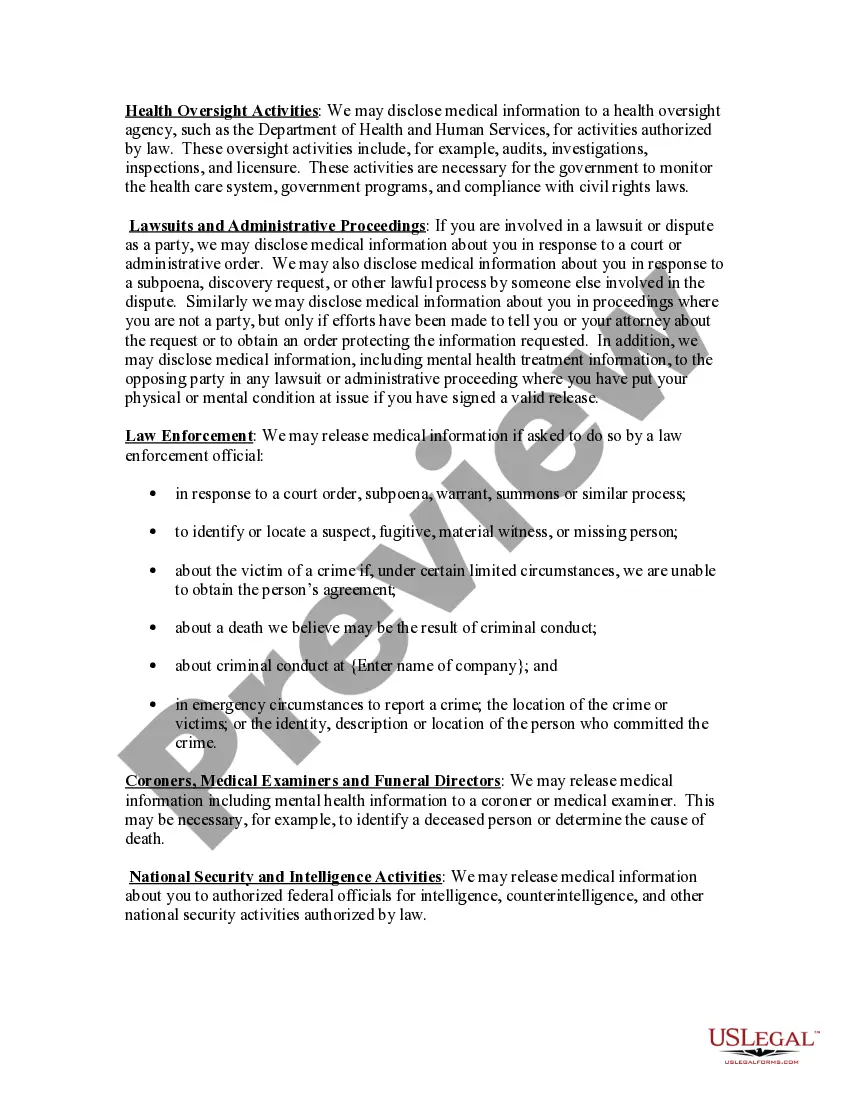
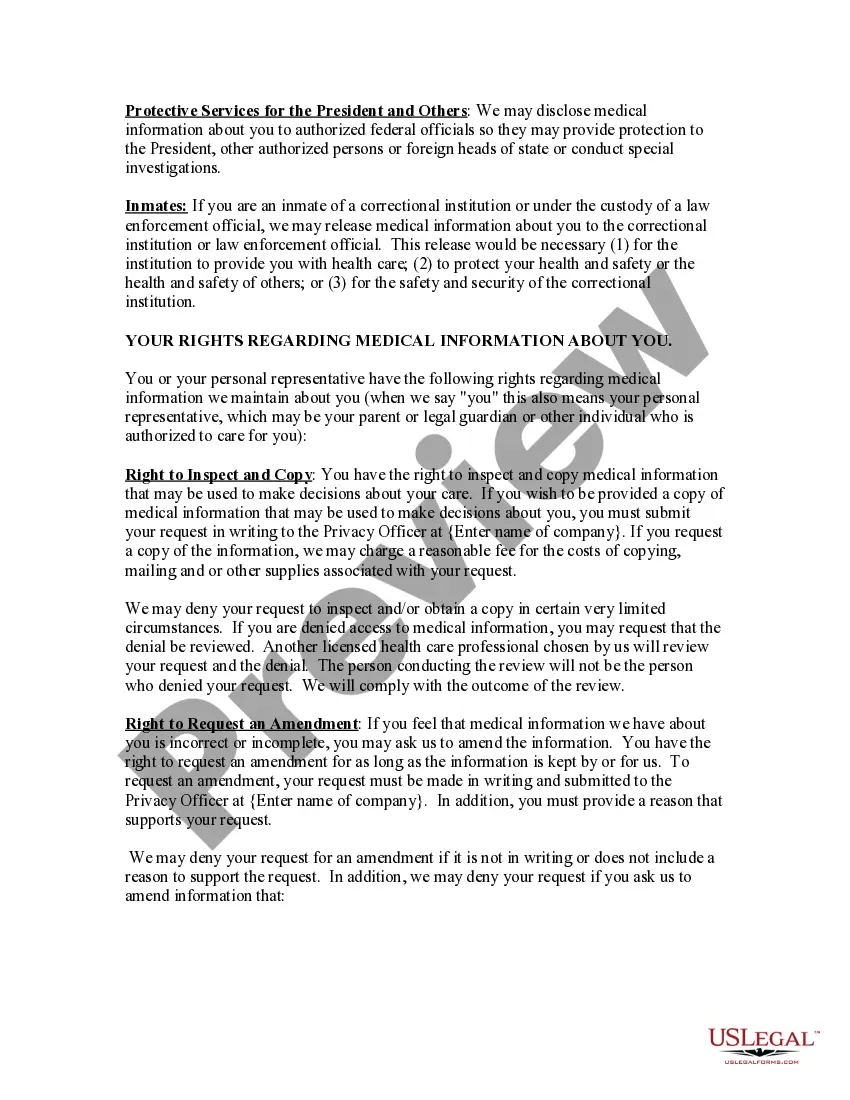
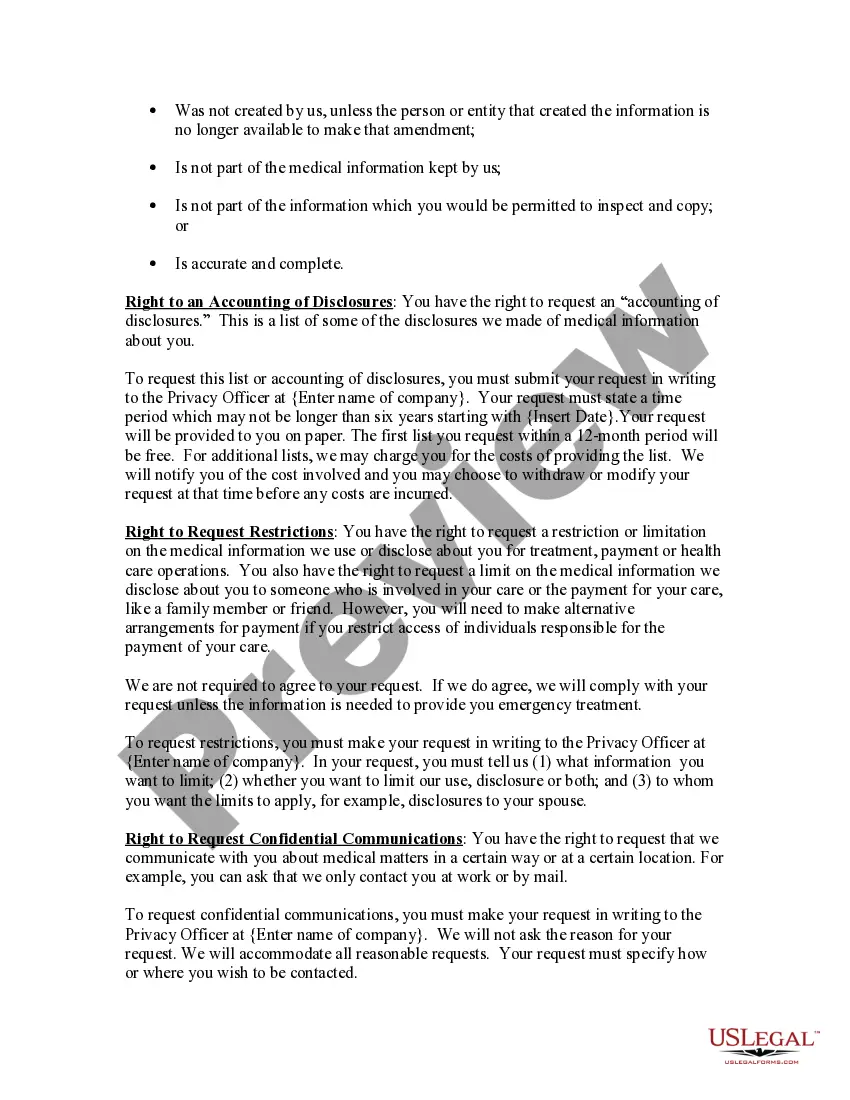
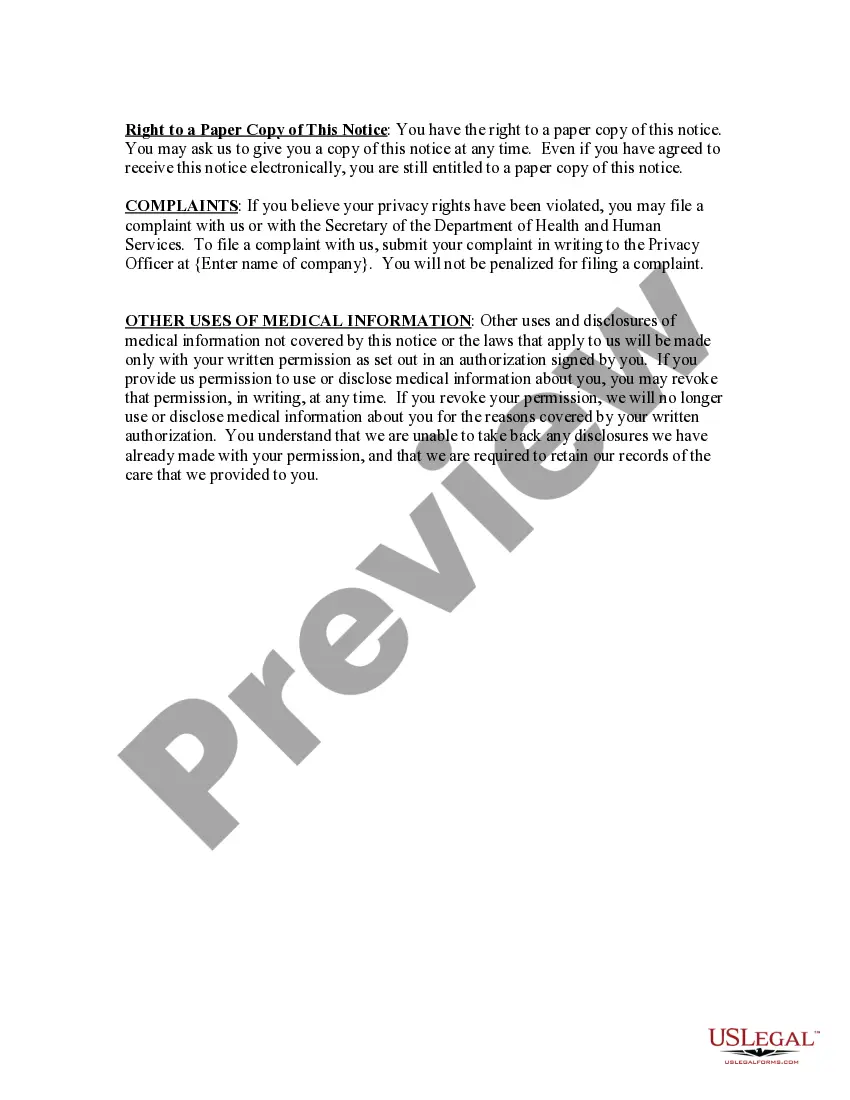

Get your form ready online
Our built-in tools help you complete, sign, share, and store your documents in one place.
Make edits, fill in missing information, and update formatting in US Legal Forms—just like you would in MS Word.
Download a copy, print it, send it by email, or mail it via USPS—whatever works best for your next step.
Sign and collect signatures with our SignNow integration. Send to multiple recipients, set reminders, and more. Go Premium to unlock E-Sign.
If this form requires notarization, complete it online through a secure video call—no need to meet a notary in person or wait for an appointment.
We protect your documents and personal data by following strict security and privacy standards.

Make edits, fill in missing information, and update formatting in US Legal Forms—just like you would in MS Word.

Download a copy, print it, send it by email, or mail it via USPS—whatever works best for your next step.

Sign and collect signatures with our SignNow integration. Send to multiple recipients, set reminders, and more. Go Premium to unlock E-Sign.

If this form requires notarization, complete it online through a secure video call—no need to meet a notary in person or wait for an appointment.

We protect your documents and personal data by following strict security and privacy standards.
Looking for another form?
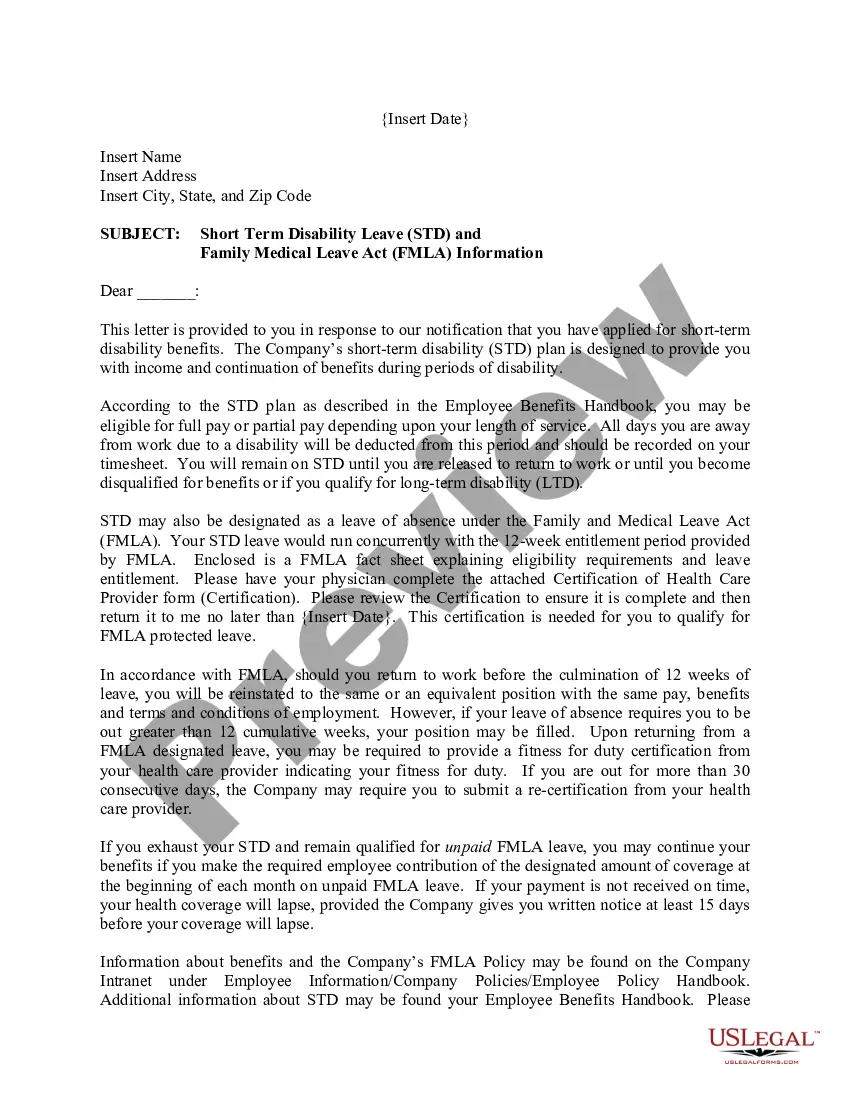
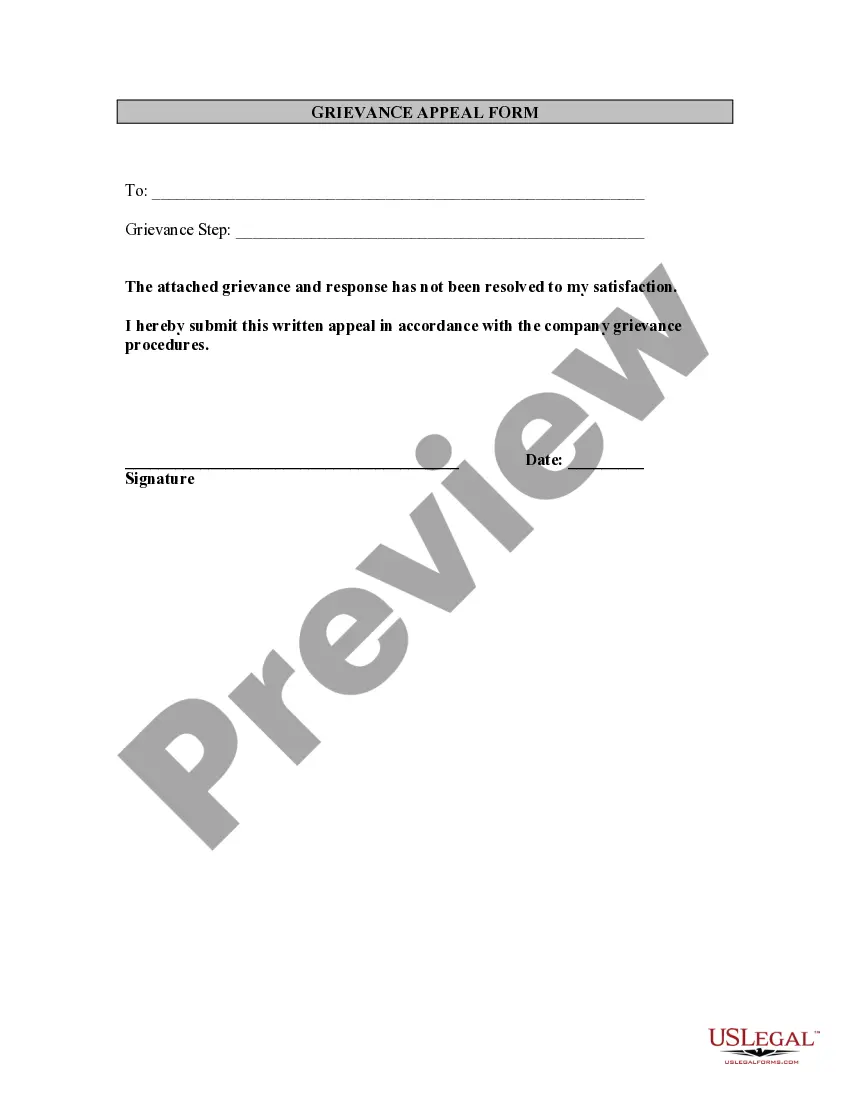
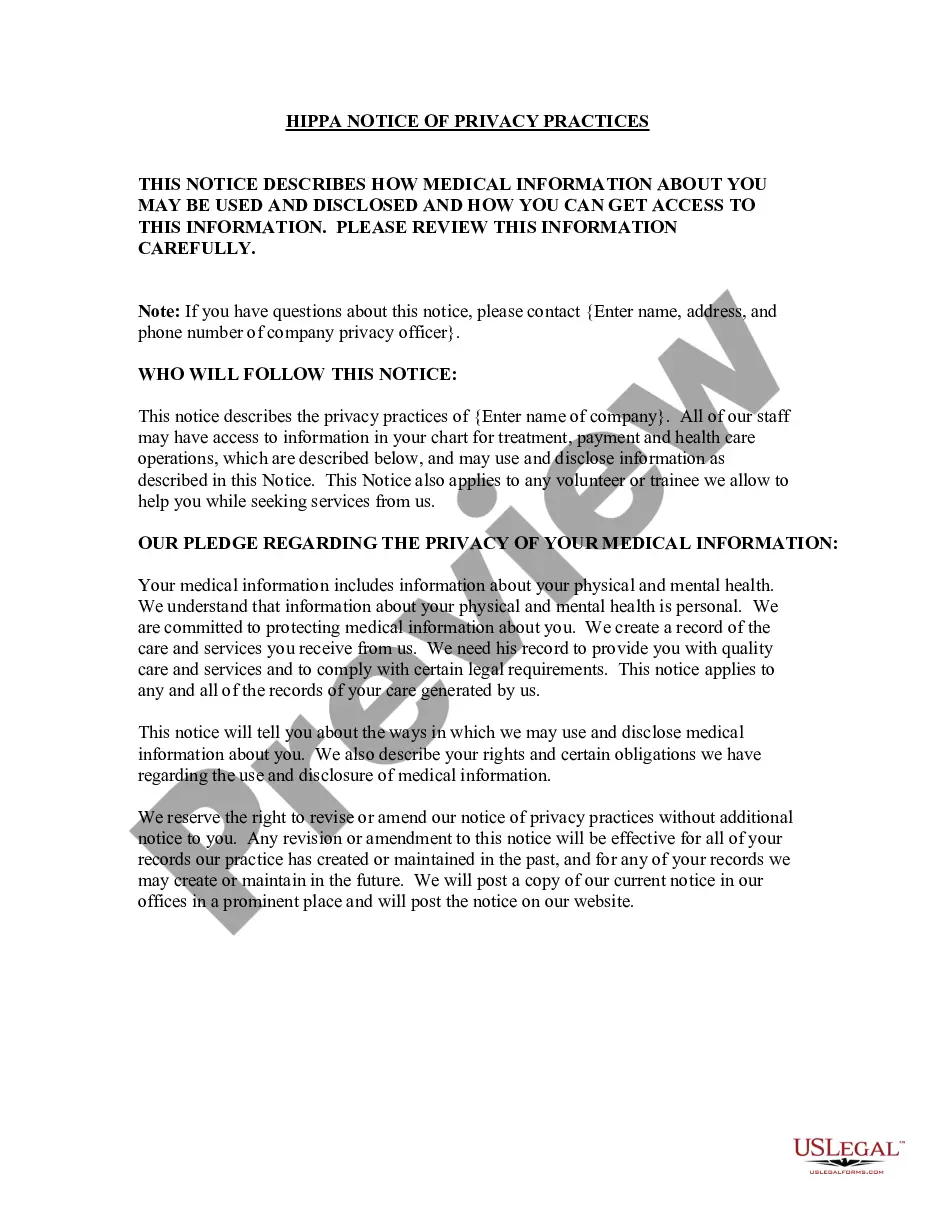
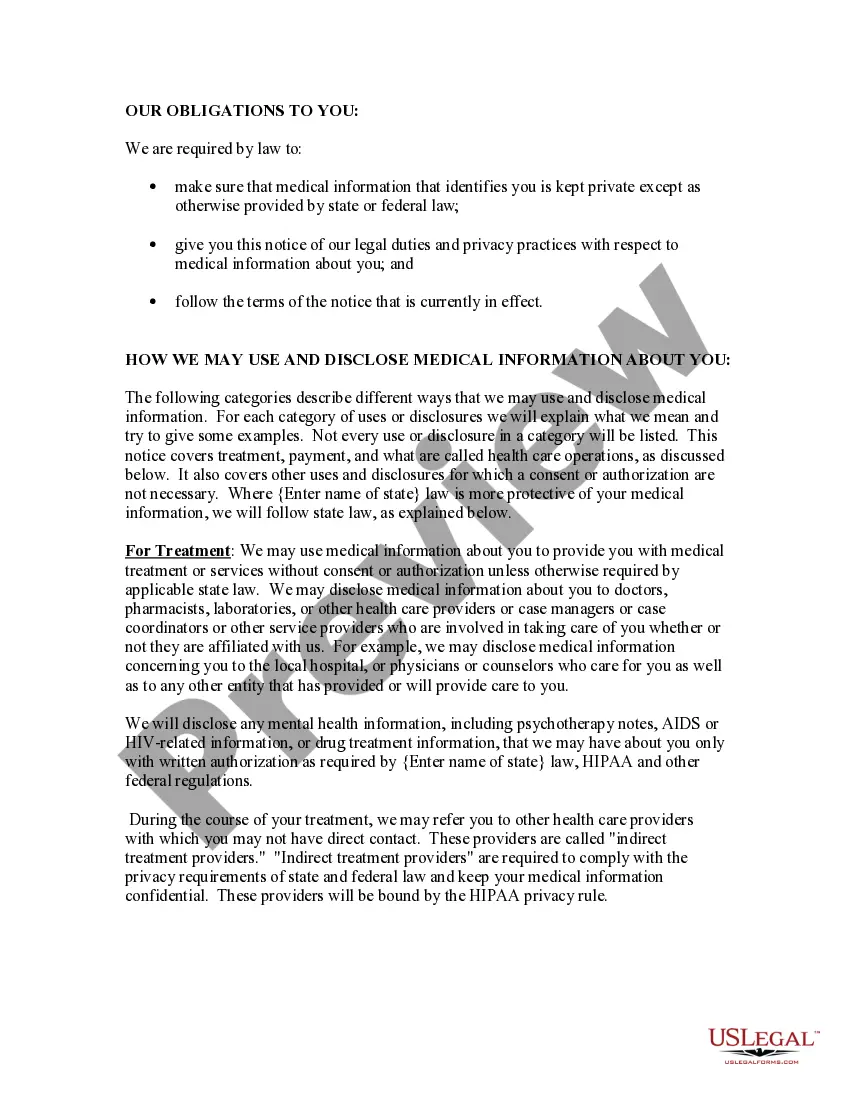
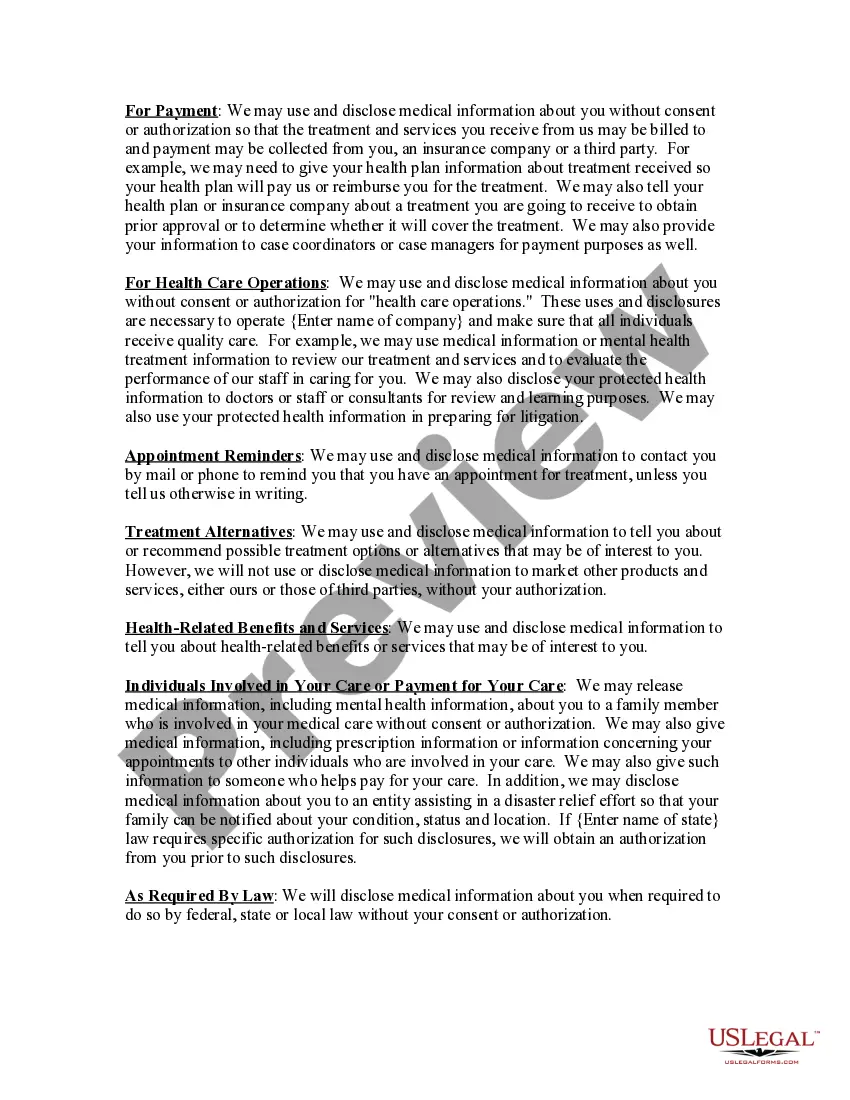
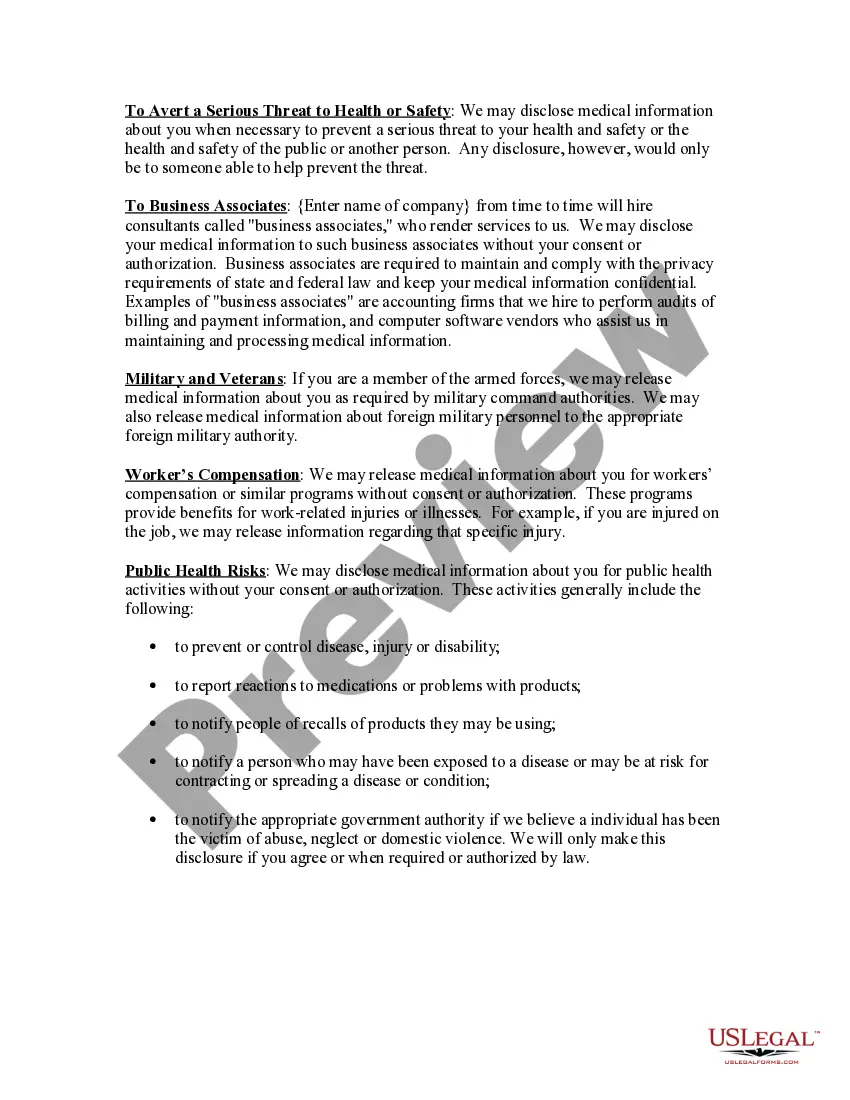
How to fill out HIPAA Notice Of Privacy Practices?
Identifying a reliable source for the latest and pertinent legal forms is a significant part of navigating bureaucratic processes.
Selecting the appropriate legal documents requires accuracy and careful consideration, which is why it is vital to obtain samples of the Hipaa Form In Medical Billing exclusively from trusted providers, such as US Legal Forms.
Once you have the form on your device, you can edit it using a text editor or print it and complete it manually. Alleviate the stress associated with your legal documents. Explore the vast collection at US Legal Forms where you can discover legal templates, assess their suitability for your situation, and download them immediately.
- Utilize the catalog browsing or search feature to find your template.
- Examine the details of the form to ensure it aligns with the specifications of your state and locality.
- Preview the form, if accessible, to confirm it is the document you seek.
- Return to the search and find the correct template if the Hipaa Form In Medical Billing does not suit your needs.
- If you are confident about the form's applicability, download it.
- As an authorized user, click Log in to verify and access your selected forms in My documents.
- If you haven't created an account yet, click Buy now to acquire the form.
- Choose the payment plan that meets your needs.
- Continue to the registration to finalize your purchase.
- Conclude your transaction by selecting a payment method (credit card or PayPal).
- Choose the file format for downloading the Hipaa Form In Medical Billing.
Form popularity
FAQ
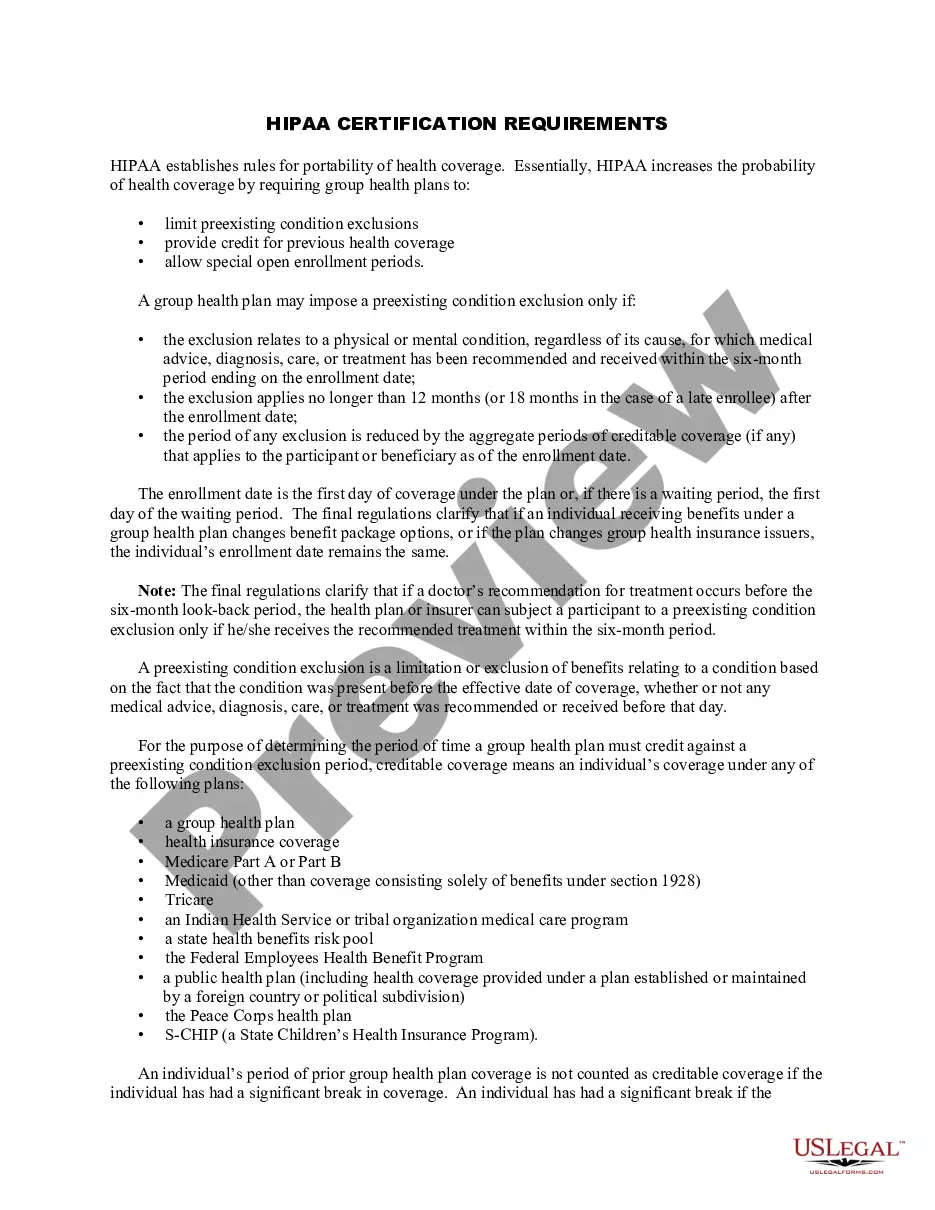
HIPAA guidelines regarding billing focus on protecting patient data during financial transactions. These guidelines require healthcare providers to implement secure systems for processing billing information. Understanding these requirements and utilizing the HIPAA form in medical billing can significantly minimize the risk of data breaches and enhance the overall integrity of your billing practices.
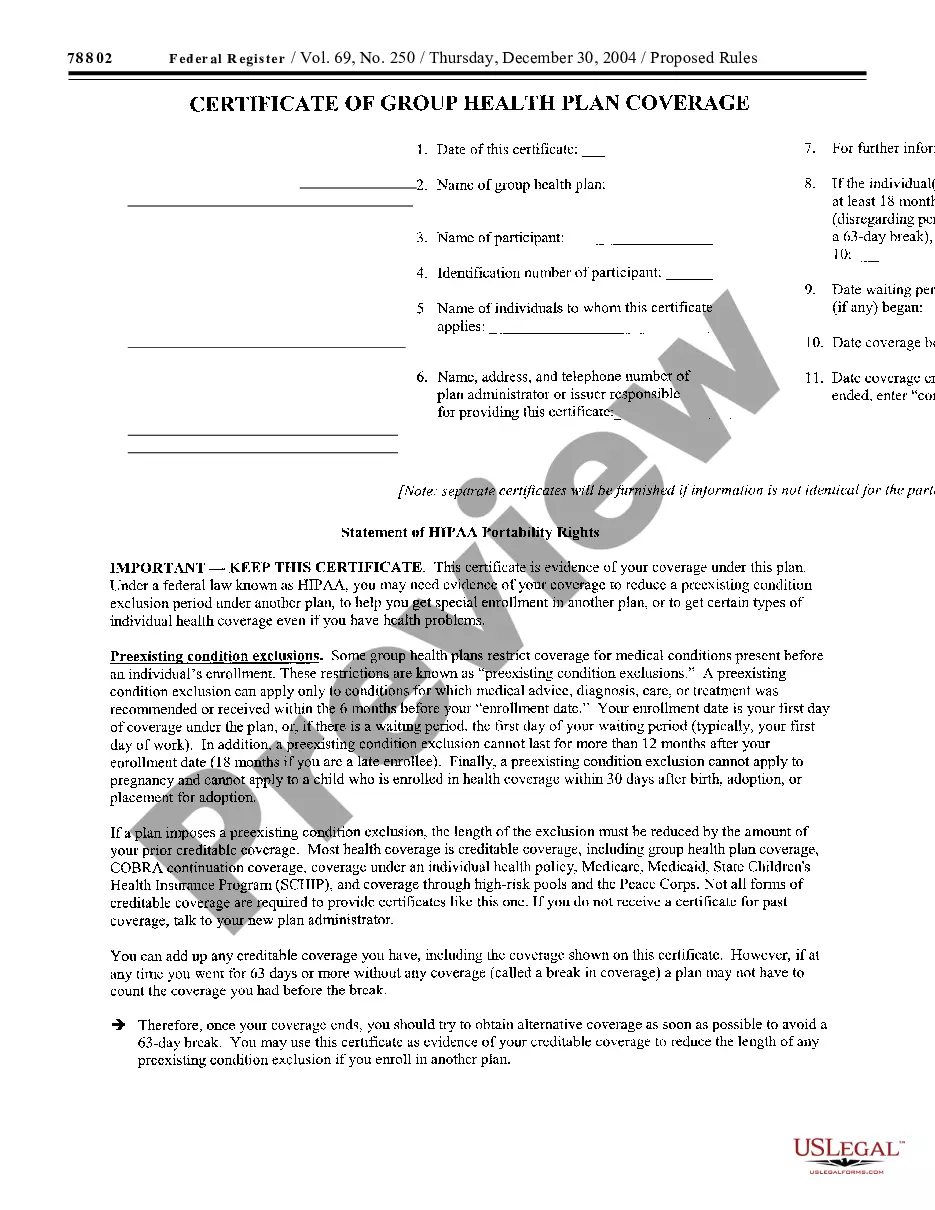
A HIPAA compliance form is a document that ensures all parties involved in healthcare adhere to HIPAA regulations. This form outlines how protected health information is handled, shared, and stored within billing processes. By completing a HIPAA form in medical billing, providers demonstrate their commitment to safeguarding patient information and maintaining compliance.
In medical billing, HIPAA refers specifically to the Health Insurance Portability and Accountability Act. This act outlines necessary protocols for handling medical data accurately and securely. Utilizing the HIPAA form in medical billing not only complies with regulations but also enhances trust between healthcare providers and patients.
HIPAA stands for the Health Insurance Portability and Accountability Act. This law establishes standards to protect sensitive patient information and ensures that personal health data remains confidential. In the realm of medical billing, understanding HIPAA is crucial for creating and managing the HIPAA form in medical billing, which safeguards your privacy while streamlining billing processes.
Yes, HIPAA does include billing and governs how healthcare organizations handle and share billing information. The regulations ensure that patient data, including billing details, is managed securely. Compliance with HIPAA in medical billing helps maintain patient trust and minimizes the risk of data breaches.
Documents considered HIPAA under the law include any records containing protected health information (PHI). This can range from medical history forms to billing documentation and consent forms, like HIPAA forms in medical billing. Proper handling of these documents is critical to maintain compliance with federal regulations and to protect patient confidentiality.
Under HIPAA, a medical record includes any information created or received by a healthcare provider that relates to a patient’s medical history and treatment. This encompasses notes, test results, billing information, and HIPAA forms in medical billing. Understanding what constitutes a medical record is essential for compliance and ensuring patient privacy.
A HIPAA certification form is a document that confirms an organization's adherence to HIPAA regulations. This form helps organizations demonstrate that they meet the required standards to protect patient information. Obtaining HIPAA certification can be an essential step for any entity involved in medical billing, fostering trust with patients and stakeholders.
An example of HIPAA in healthcare includes the use of notice forms that inform patients about their rights and the entities that will access their health information. These HIPAA forms in medical billing help ensure transparency and regulatory compliance. Such forms play a vital role in informing patients about how their information will be used and shared.
You should carefully consider whether to accept or decline HIPAA authorization based on your specific circumstances. Accepting the authorization allows for lawful sharing of medical information that may be necessary for billing and treatment purposes. However, it's important to ensure that the authorization form is complete and meets all the legal requirements to protect patient information.