Policies Employee Leave For Work
Description
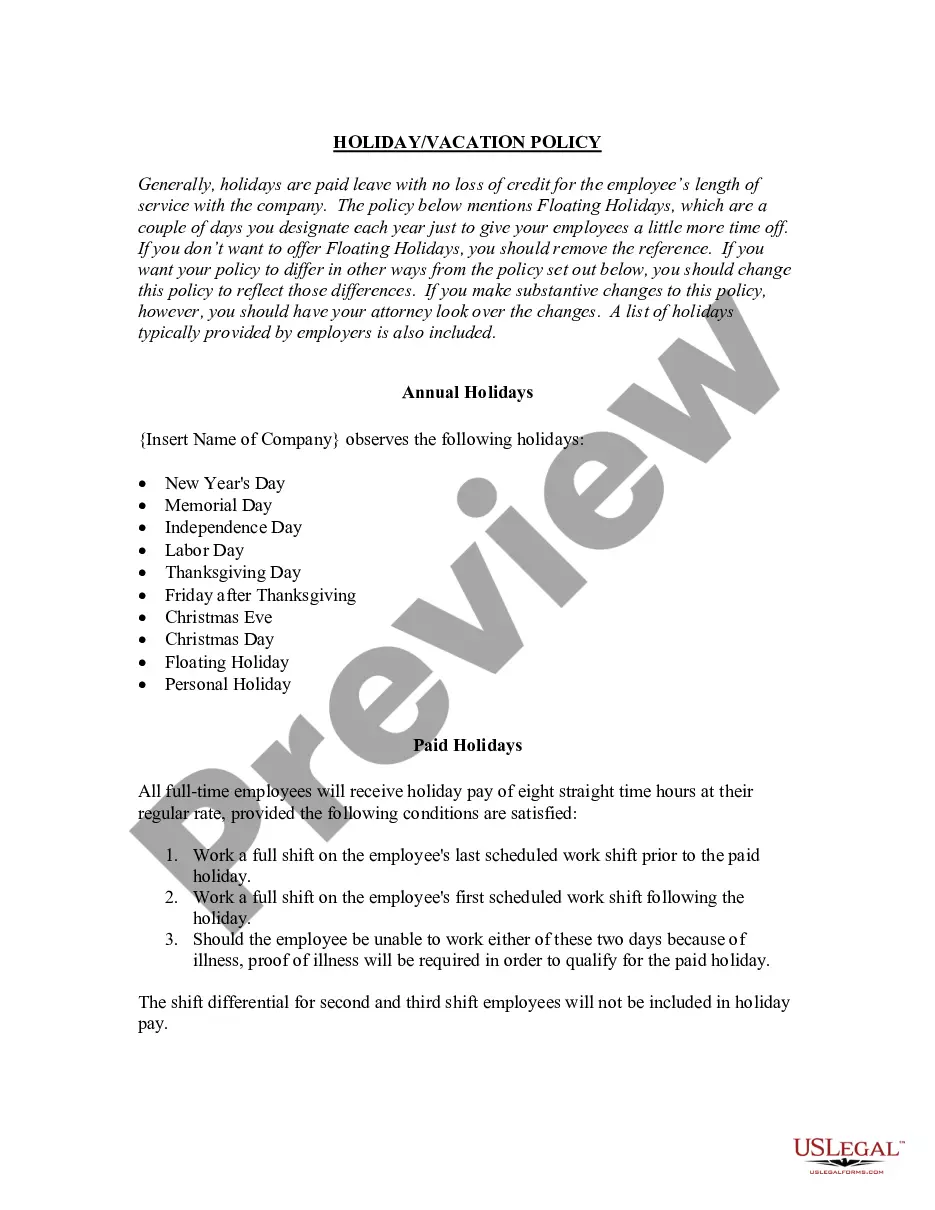
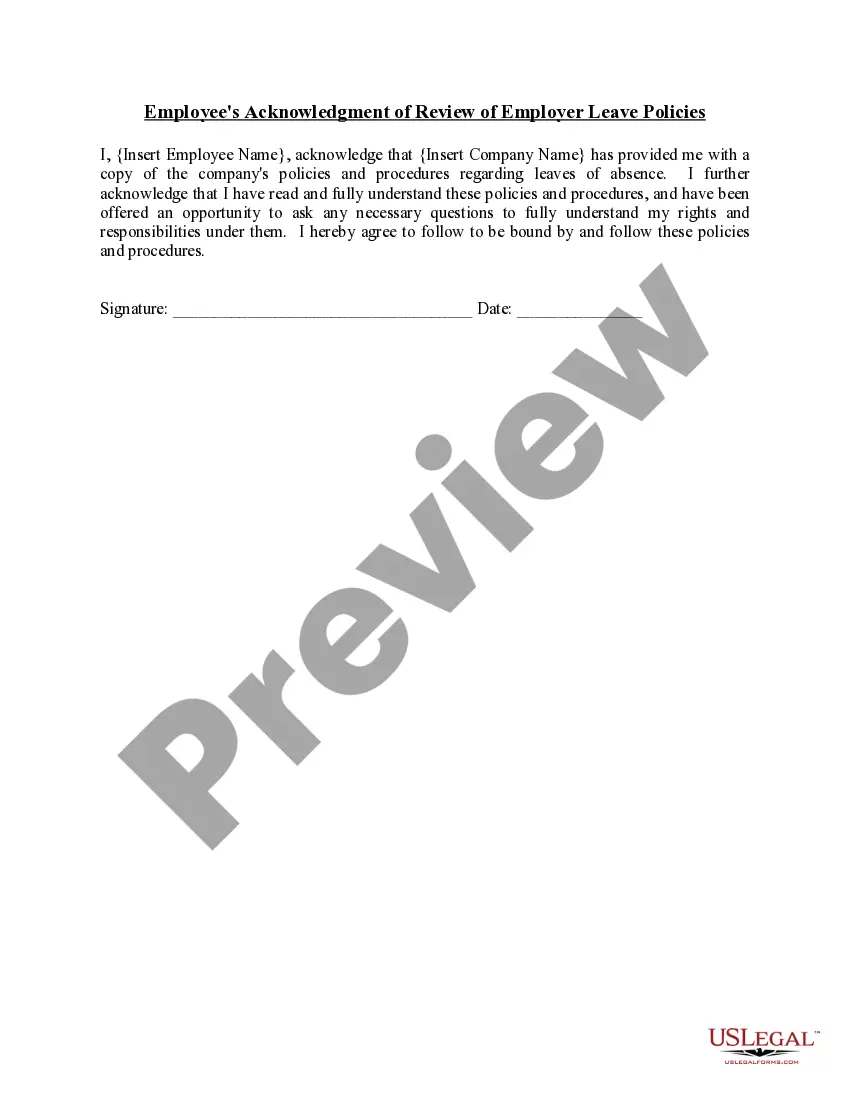
How to fill out Employee's Acknowledgment Of Review Of Employer Leave Policies?
The Policies Employee Leave For Work that you observe on this page is a reusable legal template created by expert attorneys in compliance with federal and local regulations.
For over 25 years, US Legal Forms has supplied individuals, companies, and legal experts with more than 85,000 authenticated, state-specific documents for any business and personal event. It’s the fastest, simplest, and most dependable method to acquire the forms you require, as the service ensures bank-level data protection and anti-malware security.
Choose the format you prefer for your Policies Employee Leave For Work (PDF, Word, RTF) and save the sample on your device. Fill out and sign the document. Print the template to complete it by hand. Alternatively, use an online multi-functional PDF editor to quickly and accurately fill out and sign your form with a valid signature. Download your documents once again whenever required. Utilize the same document again at any time needed. Open the My documents tab in your profile to redownload any previously purchased forms. Register for US Legal Forms to access verified legal templates for all of life’s circumstances at your fingertips.
- Search for the document you require and review it.
- Browse through the file you sought and preview it or examine the form description to confirm it meets your requirements. If it doesn’t, utilize the search bar to find the suitable one. Click Buy Now once you have located the template you need.
- Subscribe and Log In.
- Select the pricing plan that fits you and create an account. Use PayPal or a credit card for a swift payment. If you already possess an account, Log In and verify your subscription to continue.
- Obtain the editable template.
Form popularity
FAQ
Federal law and/or state laws govern a mandatory leave of absence. These include medical leaves of absence governed by the Family and Medical Leave Act (FMLA) and Americans with Disabilities Act (ADA), military leave, jury duty and other state-mandated leaves.
For example, an employee could take four months pregnancy disability leave for her disability, and 12 weeks of CFRA leave to bond with the baby, or to bond with an adopted or foster child, or to care for a parent, spouse or child with a serious health condition, or for the employee's own serious health condition.
Paid time off includes sick days, paid vacation, etc. On the other hand, a leave of absence is an unpaid time off requested by employees to deal with special circumstances such as illness in the family or the birth of a child.
How to develop a leave of absence policy Review legal and compliance requirements. ... Determine types of leave to be covered in the policy. ... Define eligibility criteria. ... Outline request and approval procedures. ... Establish leave compensation. ... Communicate the policy to employees. ... Review and update.
Personal leave of absence reasons include: Experiencing a medical condition that makes you chronically ill or in pain. Having a baby and taking maternity leave. Address mental health issues or mental illness. Supporting a loved one or family member in need. Undergoing major life changes like moving cities or getting married.