Fmla Without Pay
Description
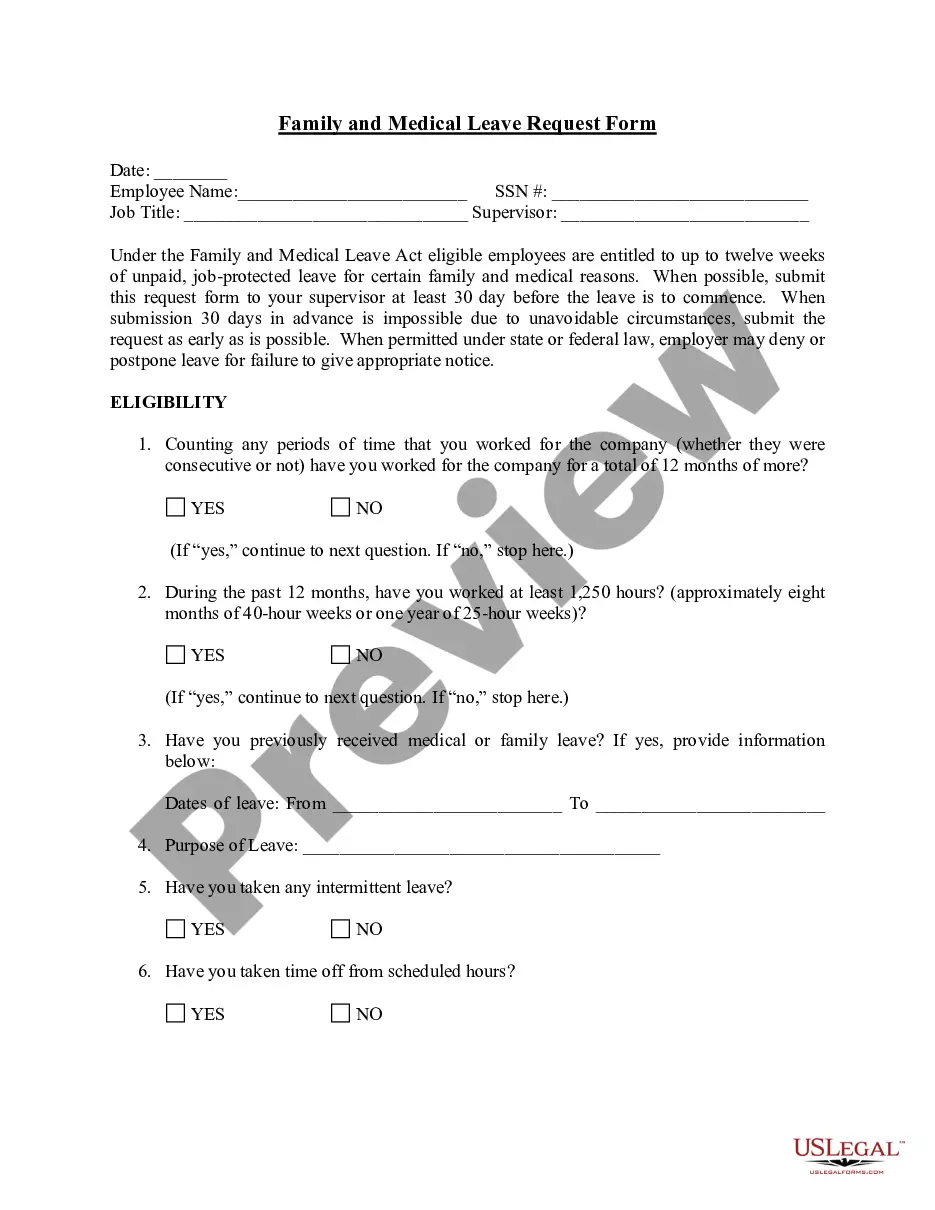
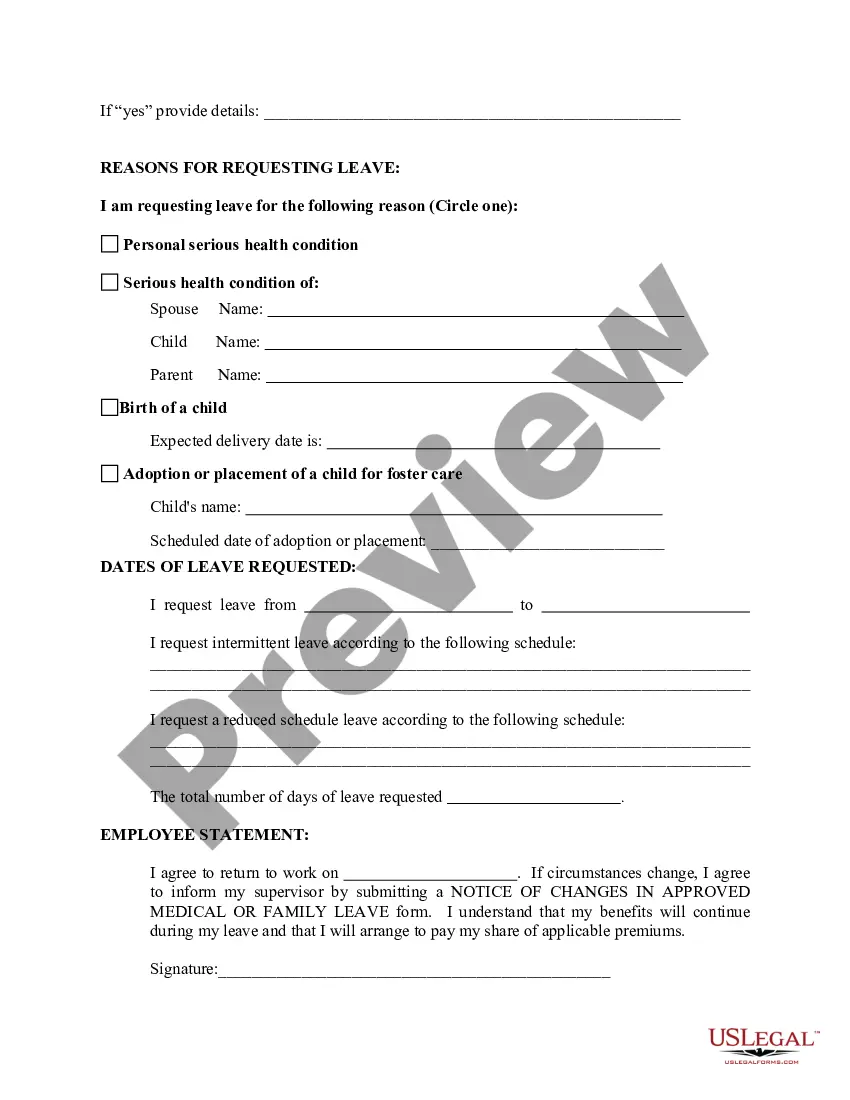
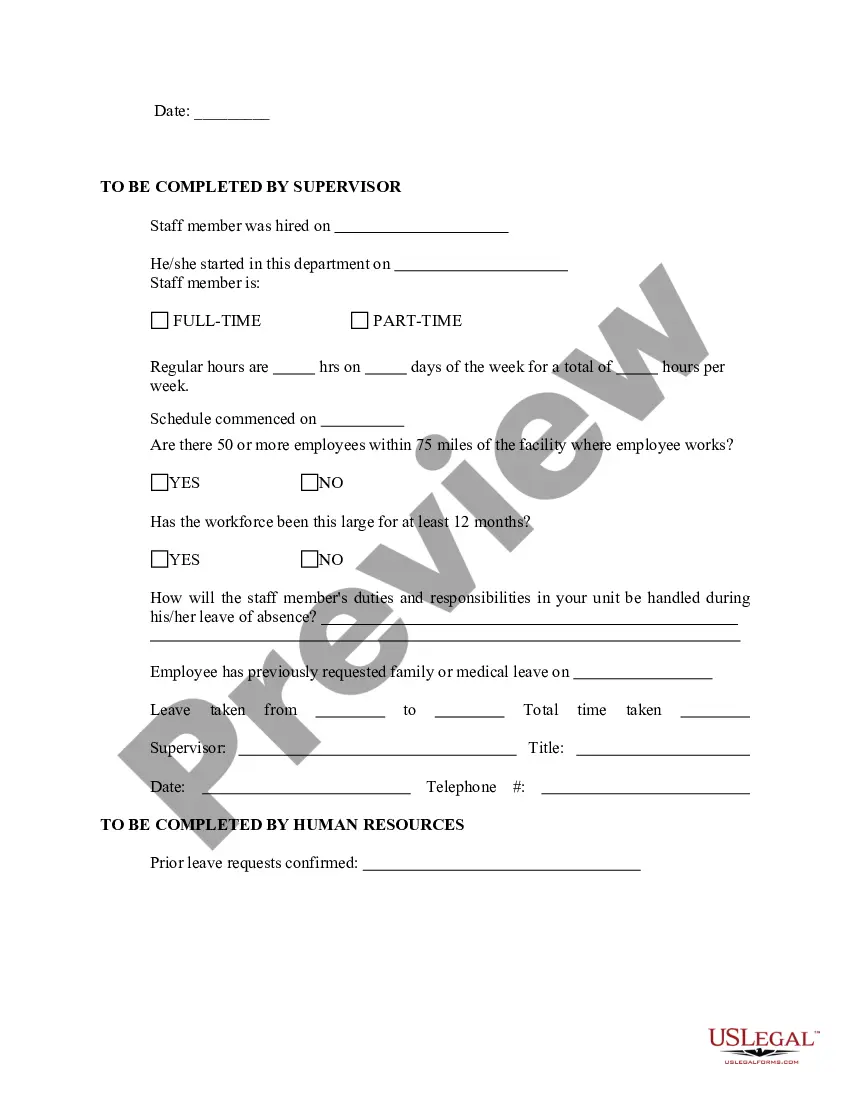
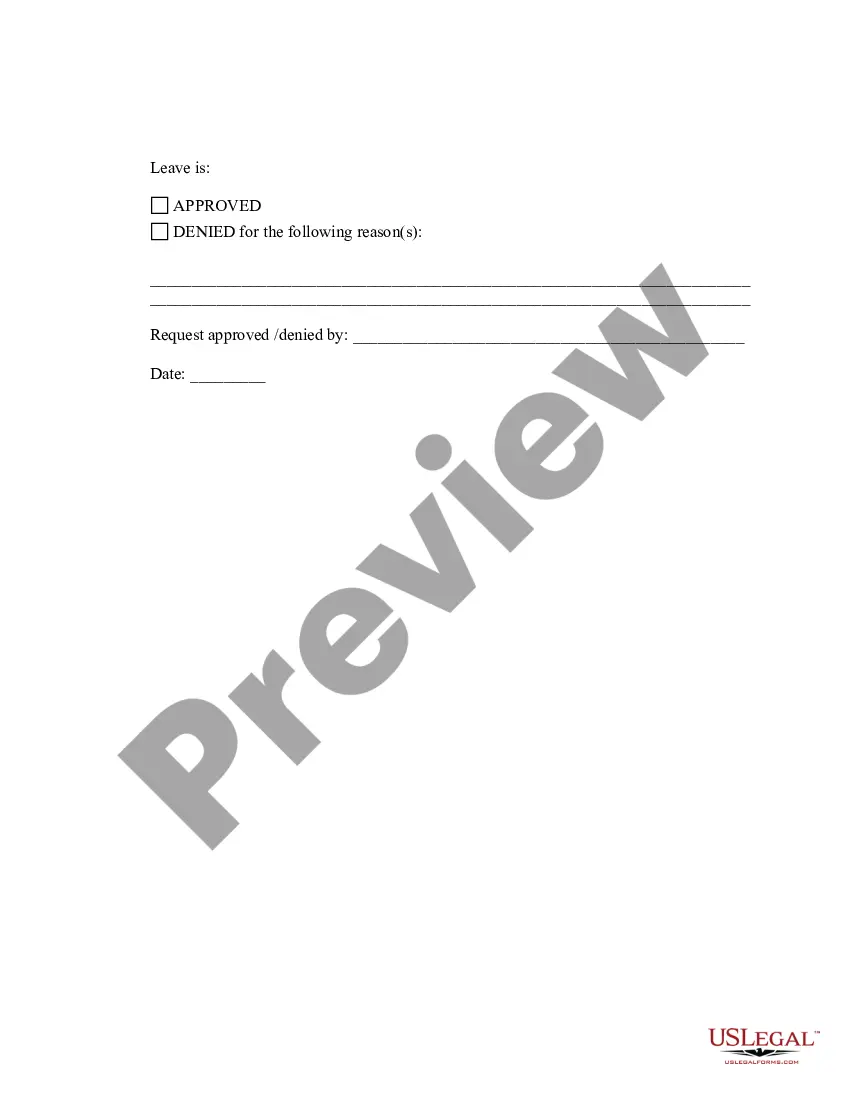
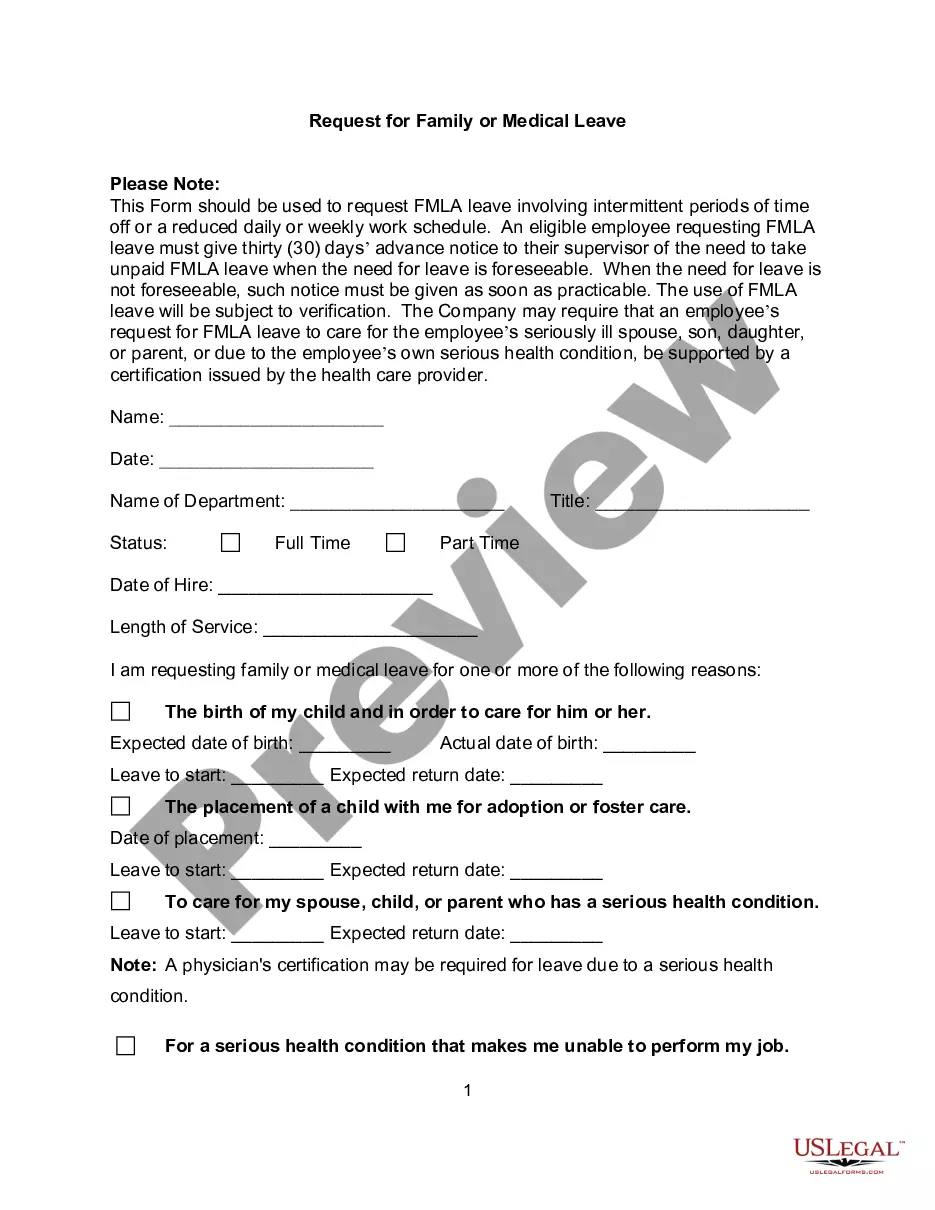
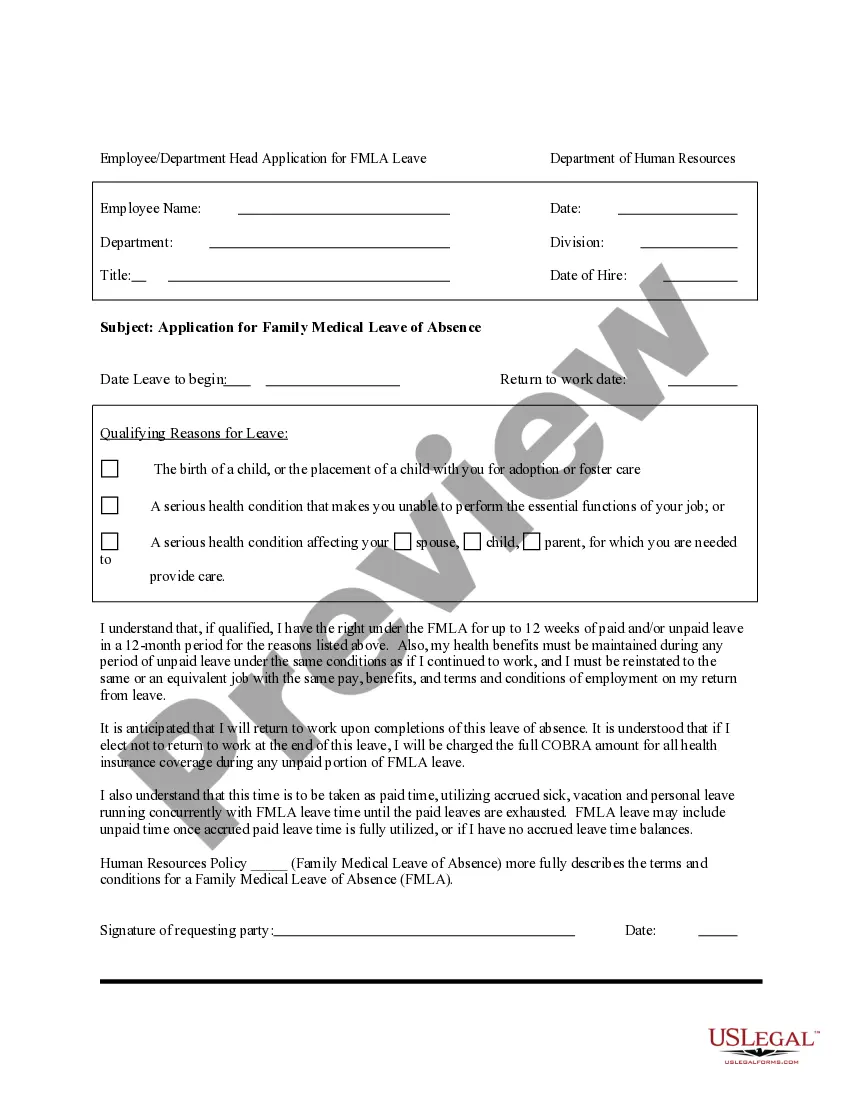
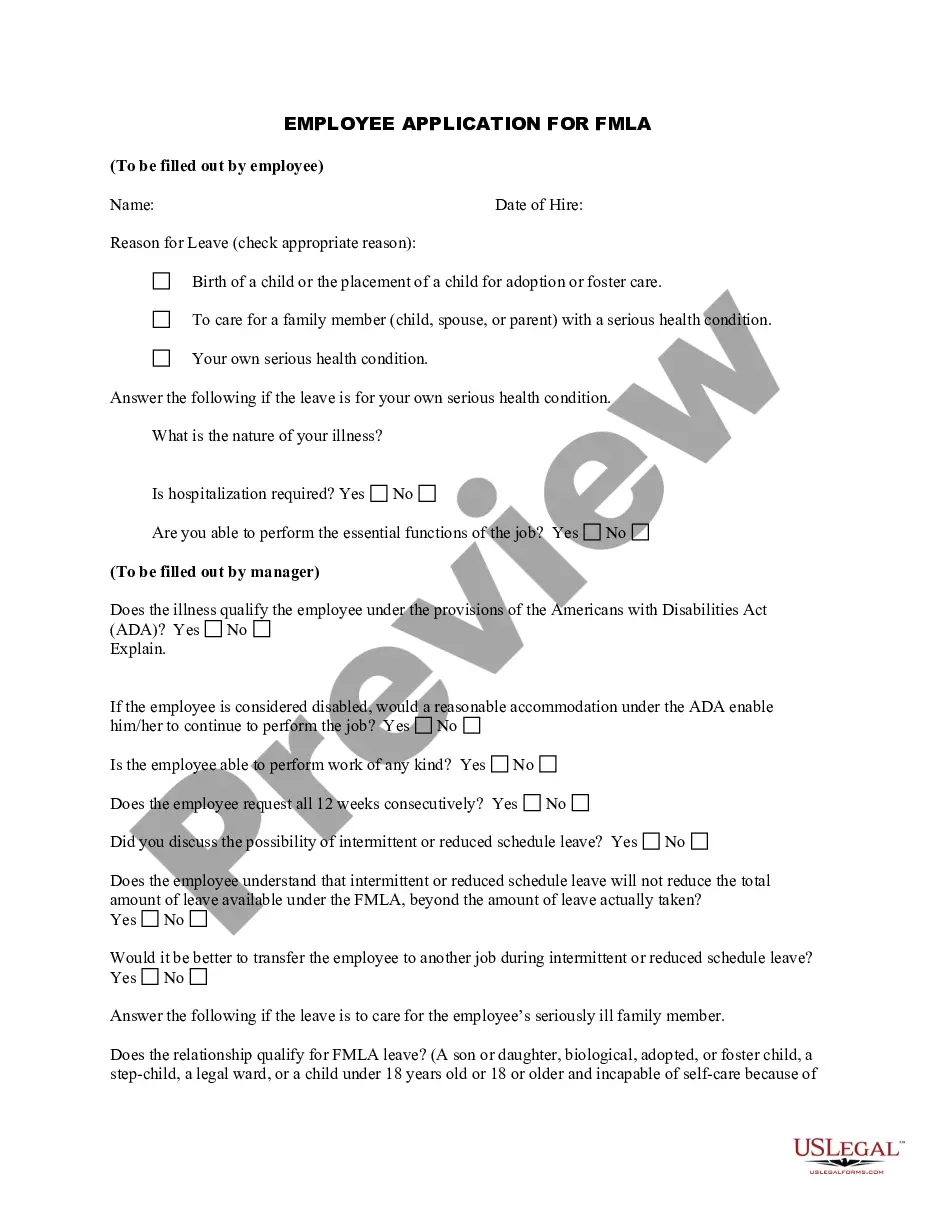
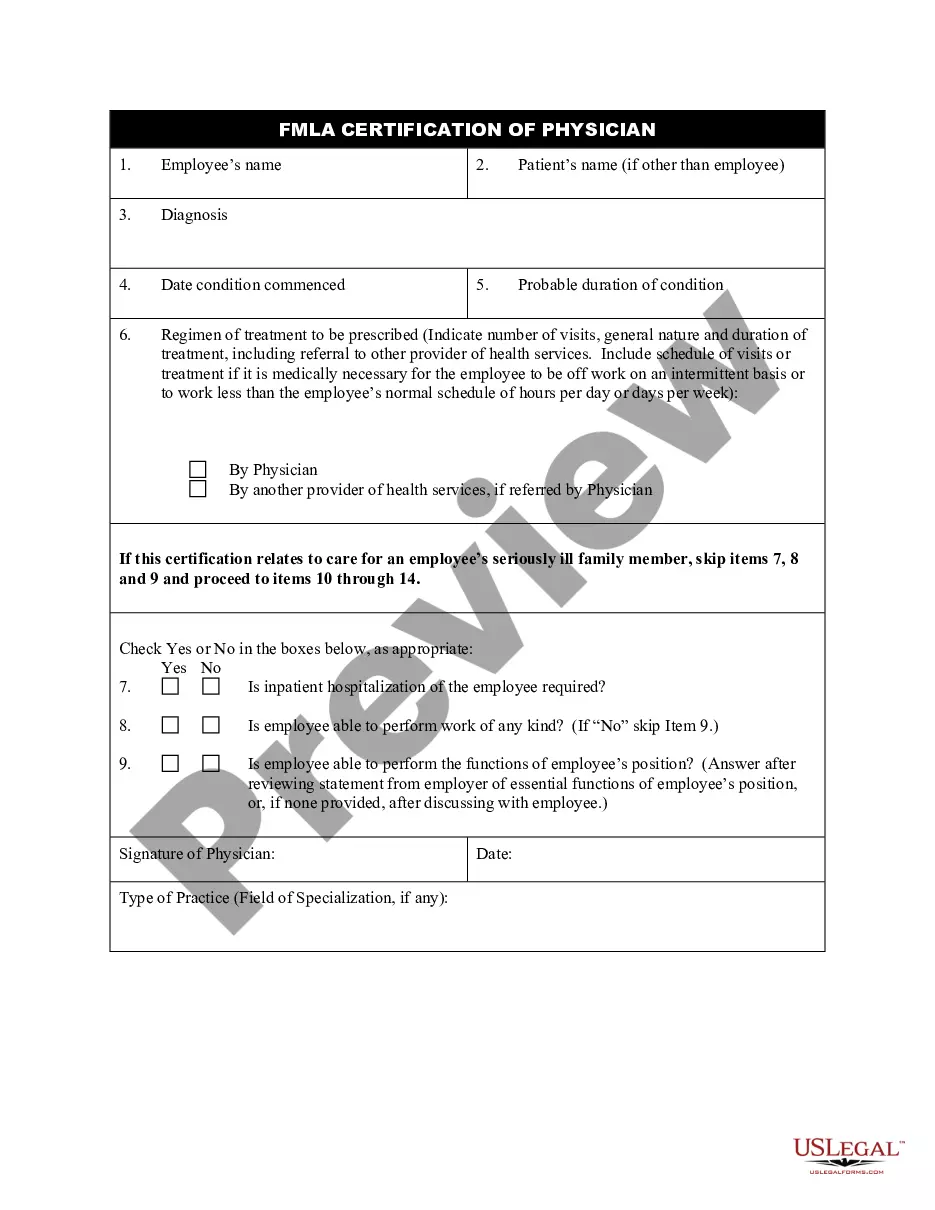
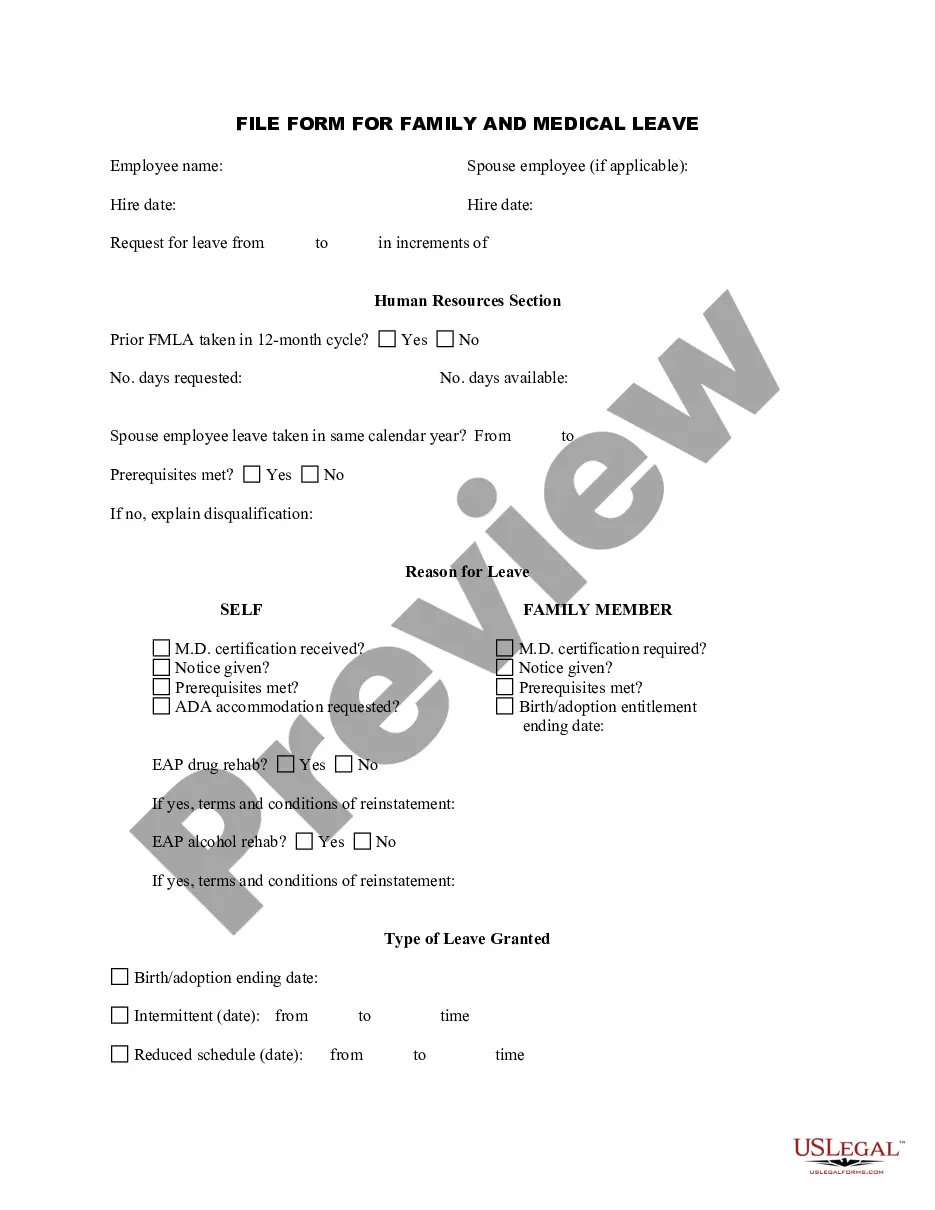


How to fill out Family And Medical Leave Request Form?
It’s clear that you cannot transform into a legal expert instantly, nor can you learn to swiftly generate Fmla Without Pay without having a specialized background.
Drafting legal documents is a lengthy process that necessitates specific training and competencies.
So why not entrust the development of the Fmla Without Pay to the experts.
You can re-access your forms from the My documents section any time. If you’re an existing customer, you can simply Log In and find and download the template from the same section.
Regardless of the intent behind your forms—whether financial, legal, or personal—our platform has you covered. Experience US Legal Forms now!
- Locate the document you need using the search bar at the top of the page.
- Preview it (if this option is available) and review the accompanying description to see if Fmla Without Pay is what you’re looking for.
- Initiate your search again if you require any other template.
- Sign up for a free account and select a subscription plan to buy the template.
- Select Buy now. After the transaction is completed, you can download the Fmla Without Pay, complete it, print it, and send it or mail it to the necessary individuals or organizations.
Form popularity
FAQ
If you prefer not to use FMLA, you can discuss alternative leave options with your employer. Requesting a flexible work arrangement or a different type of leave might meet your needs. Keep in mind that platforms like USLegalForms may offer additional insights on your rights and options, ensuring you make informed decisions.
If you don’t qualify for FMLA, exploring options such as short-term disability, personal leave, or unpaid leave might be beneficial. Additionally, you can talk to your employer about their leave policies or consider consulting legal resources like USLegalForms to determine your next steps. Remember, there are alternative resources available to support you.
The ADA, or Americans with Disabilities Act, and FMLA serve different purposes. The ADA protects employees with disabilities, ensuring they receive reasonable accommodations. In contrast, FMLA provides eligible employees the right to take unpaid leave for specific family and medical reasons, allowing you to balance work and personal needs without fear of losing your job.
If your employer denies your request for FMLA, it’s important to understand your rights. First, ask for clarification about the denial and review the reasons they provided. If you still believe you qualify, consider seeking advice from legal experts or platforms like USLegalForms to help you navigate the situation effectively.
Being put on unpaid leave means your employer has granted you time away from work without salary or wages. This can occur for various reasons, including personal matters, medical issues, or company policy. While on unpaid leave, your job may be secure if it's covered under policies like FMLA, but you should always confirm this with your employer. Knowing your rights and options is essential, and using tools like US Legal Forms can help clarify any uncertainties.
Yes, you can fill out your own FMLA paperwork, but be prepared to provide the necessary documentation that supports your need for leave. It’s advisable to consult your employer’s guidelines to ensure you complete all required forms accurately. You might find using a platform like US Legal Forms helpful, as it provides the necessary forms and guidance to navigate the FMLA process smoothly. Taking this step ensures your leave is processed correctly so you can focus on your health or family needs.
This includes purchasing and selling property, managing bank accounts, paying bills, et cetera. In most cases, a conservator of a person with dementia will assume both of these responsibilities. Most often, it is a family member who takes on the responsibility of being a loved one's conservator.
Health information Current prescriptions (be sure to update this regularly) Living will. Durable power of attorney for health care. Copies of any medical orders or forms you have (for example, a do-not-resuscitate order) Health insurance information with policy and phone numbers.
A Montana medical power of attorney is a document that allows a principal to appoint an ?agent? or ?attorney-in-fact? to handle health care decisions on their behalf. The principal may also select ?successor agents? in the event the agent is not able to perform their duties (agents may not act together).
Montana power of attorney forms are documents that allow a person to designate another person to make decisions on their behalf. The person giving authority (?principal?) has the option to transfer financial, medical, or any other type of affair handled by the representative of their choice (?agent?).