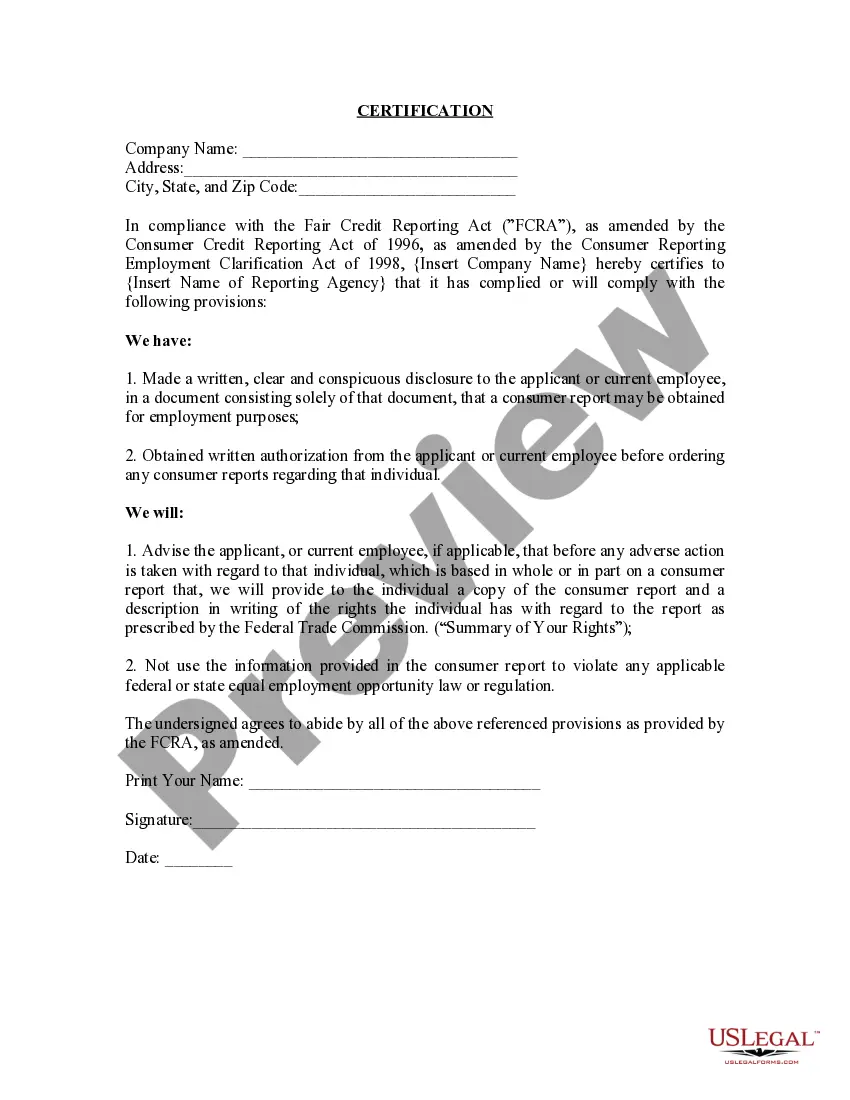
Fcra Sharing Information With Affiliates
Description
Get your form ready online
Our built-in tools help you complete, sign, share, and store your documents in one place.
Make edits, fill in missing information, and update formatting in US Legal Forms—just like you would in MS Word.
Download a copy, print it, send it by email, or mail it via USPS—whatever works best for your next step.
Sign and collect signatures with our SignNow integration. Send to multiple recipients, set reminders, and more. Go Premium to unlock E-Sign.
If this form requires notarization, complete it online through a secure video call—no need to meet a notary in person or wait for an appointment.
We protect your documents and personal data by following strict security and privacy standards.

Make edits, fill in missing information, and update formatting in US Legal Forms—just like you would in MS Word.

Download a copy, print it, send it by email, or mail it via USPS—whatever works best for your next step.

Sign and collect signatures with our SignNow integration. Send to multiple recipients, set reminders, and more. Go Premium to unlock E-Sign.

If this form requires notarization, complete it online through a secure video call—no need to meet a notary in person or wait for an appointment.

We protect your documents and personal data by following strict security and privacy standards.
Looking for another form?




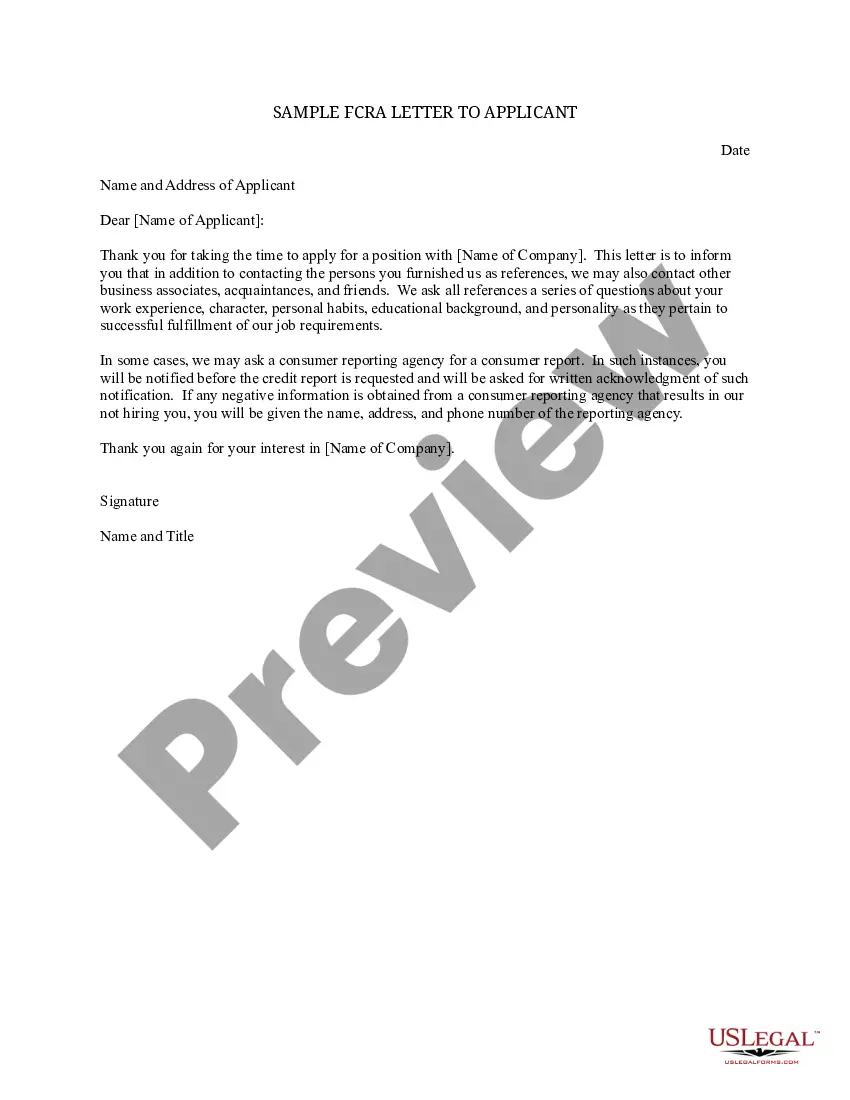
How to fill out FCRA Certification Letter To Consumer Reporting Agency?
- If you are a returning user, log in to your account and download the required form by clicking the Download button. Ensure your subscription is active; if not, renew it according to your plan.
- For first-time users, begin by browsing through the extensive library. Utilize the Preview mode and descriptions to find forms that meet your needs and adhere to your jurisdiction's regulations.
- If the desired form is not suitable, use the Search tab to discover other templates that might be a better fit.
- Once you find the right document, click on the Buy Now button, select your subscription plan, and create an account to access the full library.
- Complete your purchase by entering your payment details or opting for PayPal.
- After purchase, download the form to your device. You can access it later in the My Forms section of your profile.
US Legal Forms offers a robust collection of legal documents—more than many competitors—with over 85,000 editable forms available at competitive prices. This means you're equipped with the resources needed for efficient legal compliance.
For expert assistance and to ensure your forms are completed correctly, consider reaching out to their premium experts. Start your simplified legal journey today!
Form popularity
FAQ
An affiliate can share information with another affiliate under the Fair Credit Reporting Act (FCRA) when there is a legitimate business need. This need often arises for purposes such as verifying consumer identities or providing services related to credit transactions. It's crucial that both affiliates adhere to the compliance requirements outlined in the FCRA to ensure proper handling of shared data. By using the USLegalForms platform, affiliates can better understand their obligations and avoid potential pitfalls when sharing information.
Yes, banks are allowed to share information, especially when it pertains to services offered by affiliates. However, they must comply with the FCRA, ensuring they uphold consumer rights and privacy. Understanding these regulations can help customers navigate how their financial information is used and shared.
Yes, a financial institution can share information with its affiliates, but it must follow the rules set by the FCRA. This sharing typically includes transaction details and can support business functions but must prioritize consumer privacy. Customers should always check institutions' privacy policies for transparency on information sharing practices.
Information sharing between a financial institution and an affiliate is permitted when it is consistent with the FCRA guidelines. This usually occurs when the sharing enhances services, such as loans or credit products. Clear communication from the institution ensures customers are aware of when and how their information may be shared with affiliates.
Yes, consumers generally have the right to opt out of sharing their creditworthiness with affiliates. Under the FCRA, financial institutions must provide customers with a clear process for opting out. Utilizing tools from platforms like US Legal Forms can help you understand your rights and facilitate your opt-out requests more easily.
Yes, a financial institution can share transaction information with an affiliate under certain conditions. The provisions of the FCRA allow institutions to share information that is relevant and necessary for business purposes, as long as they comply with consumer privacy regulations. Customers have the right to be informed about such information sharing practices to make informed decisions.
An affiliate can share credit reporting information with another affiliate when specific conditions are met under the FCRA. This includes instances where the sharing is necessary for evaluation of credit or insurance applications, or for other legitimate business interests. It's essential that affiliates maintain transparent processes and obtain necessary consumer permissions. To ensure you’re following all required guidelines on FCRA sharing information with affiliates, you can consult with USLegalForms for detailed support.
The Gramm-Leach-Bliley Act (GLBA) regulates the sharing of nonpublic personal information between financial institutions and their affiliates. Under this law, data such as income, account numbers, and credit histories are considered regulated information. Organizations must provide consumers with privacy notices that explain their data-sharing practices, ensuring consumers are aware of their rights. If you're looking for guidance on GLBA compliance, USLegalForms can help you navigate these complex regulations.
Yes, affiliates can share customer information, but they must comply with the regulations set forth in the FCRA. This law specifies conditions under which sharing is permissible, primarily focusing on consumer consent and the purpose of the information share. It’s crucial for affiliates to understand these guidelines thoroughly to avoid potential legal issues. For more clarity on FCRA sharing information with affiliates, consider using resources from USLegalForms to ensure compliance.
Under the FCRA, an affiliate sharing opt-out remains effective for five years from the date of the consumer's request. This means that consumers have the option to prevent their information from being shared among affiliates within this period. Affiliates must respect this choice and provide clear instructions on how to opt out, promoting transparency. If you need assistance managing these preferences, USLegalForms can offer helpful resources.