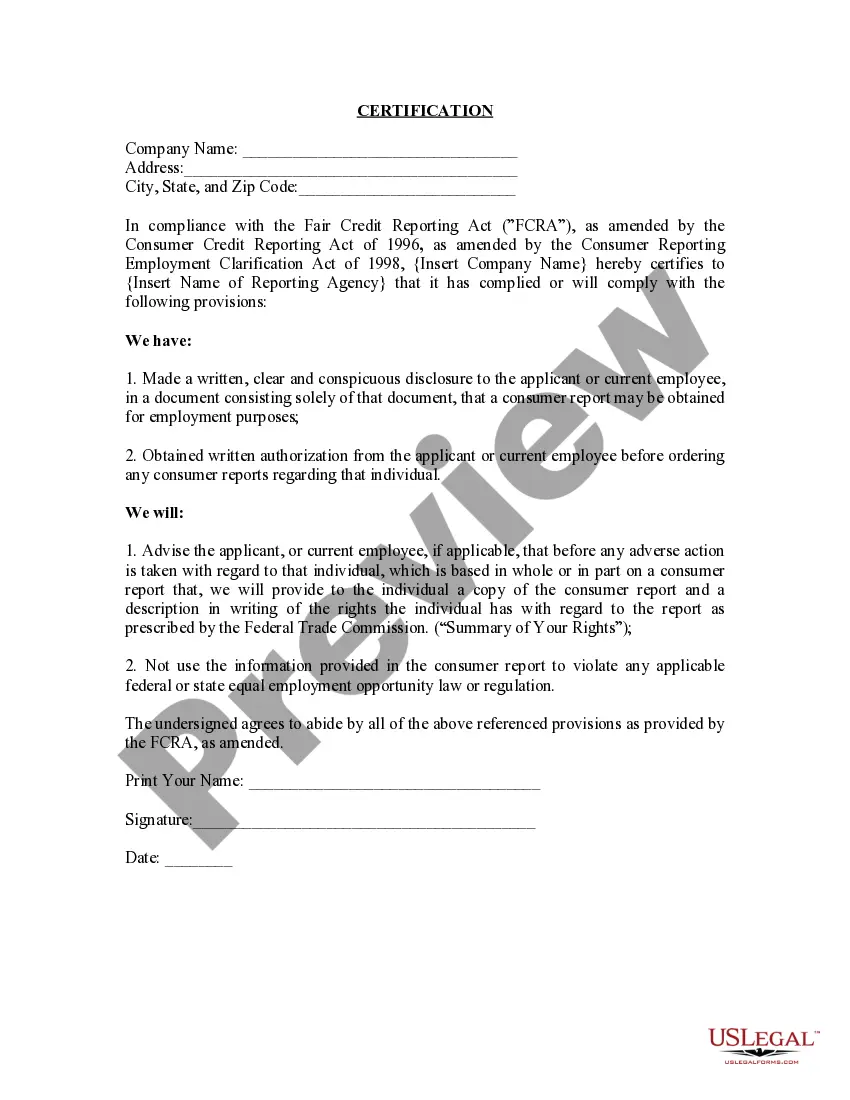
Fcra For Credit Repair Specialists
Description
Get your form ready online
Our built-in tools help you complete, sign, share, and store your documents in one place.
Make edits, fill in missing information, and update formatting in US Legal Forms—just like you would in MS Word.
Download a copy, print it, send it by email, or mail it via USPS—whatever works best for your next step.
Sign and collect signatures with our SignNow integration. Send to multiple recipients, set reminders, and more. Go Premium to unlock E-Sign.
If this form requires notarization, complete it online through a secure video call—no need to meet a notary in person or wait for an appointment.
We protect your documents and personal data by following strict security and privacy standards.

Make edits, fill in missing information, and update formatting in US Legal Forms—just like you would in MS Word.

Download a copy, print it, send it by email, or mail it via USPS—whatever works best for your next step.

Sign and collect signatures with our SignNow integration. Send to multiple recipients, set reminders, and more. Go Premium to unlock E-Sign.

If this form requires notarization, complete it online through a secure video call—no need to meet a notary in person or wait for an appointment.

We protect your documents and personal data by following strict security and privacy standards.
Looking for another form?



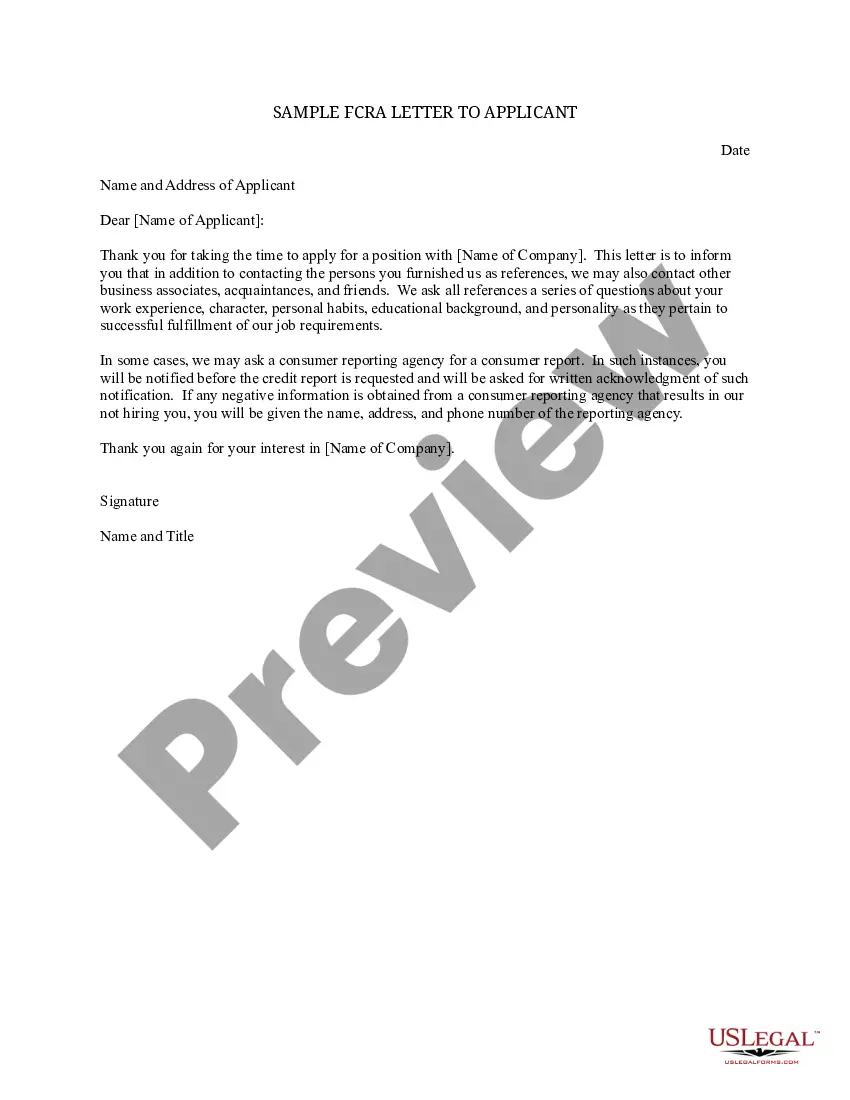
How to fill out FCRA Certification Letter To Consumer Reporting Agency?
- Log in to your existing account on US Legal Forms. If you are new, create an account to gain access to the forms.
- Browse the library and utilize the preview mode to find the specific FCRA form you need for credit repair.
- If the desired form doesn't seem to match your requirements, use the search feature to explore other suitable templates.
- Select your preferred subscription plan to purchase the document. Ensure your selected plan meets your needs effectively.
- Provide payment information to finalize your subscription and complete the purchase.
- Download the form directly to your device. You can always find this document later in the 'My Forms' section of your account.
By following these steps, credit repair specialists can easily navigate and acquire the necessary legal forms to enhance their services. This user-friendly platform empowers them to manage legal documentation efficiently.
Take action now and explore the vast collection of forms available at US Legal Forms to optimize your credit repair operations!
Form popularity
FAQ
In a letter of explanation for bad credit, start by detailing the reasons behind your poor credit history in a straightforward manner. Be honest and transparent about your situation, and describe how you have taken steps to improve your financial habits. Additionally, reference the FCRA for credit repair specialists to emphasize your efforts towards correcting your credit standing.
To write a credit repair letter, you need to begin with your contact information and the details of the credit bureau or creditor you are addressing. Clearly outline your dispute, and include any supporting documents to reinforce your case. Ensure your letter adheres to the guidelines set forth by the FCRA for credit repair specialists, as this will strengthen your request for correction.
609 letters refer to a section of the FCRA that allows consumers to request the removal of negative information from their credit reports. While many still use these letters, their effectiveness can vary depending on the accuracy of information within your report. For best results, combine the use of 609 letters with other legitimate credit repair strategies that comply with FCRA for credit repair specialists.
Writing a letter to improve your credit score begins with acknowledging the mistakes or inaccuracies on your credit report. Clearly state your desired result, and support your claims with relevant evidence. Under the FCRA for credit repair specialists, it's crucial to keep your tone professional and provide any necessary documentation to validate your request.
To comply with the FCRA for credit repair specialists, lenders must accurately report credit information, including payment history and account balances. They also have to ensure they provide correct identification of consumers when reporting data. Familiarizing yourself with these requirements will enable you to give your clients accurate guidance and help them navigate their credit repair journey.
A 623 letter is a formal request sent to creditors under section 623 of the FCRA for credit repair specialists. This letter allows you to dispute inaccurate information that a creditor has reported to credit bureaus. By using this letter, you can ensure that your credit report reflects accurate and up-to-date information, which is crucial for maintaining a good credit score.
Becoming a credit repair agent involves understanding credit laws, especially the FCRA for credit repair specialists. You can start by taking online courses to gain knowledge about credit repair strategies and compliance. Additionally, consider pursuing certifications that will enhance your credibility in the field, allowing you to better assist clients with their credit needs.
To write an effective letter to remove hard inquiries, start with a polite introduction and clearly state your request. Include your personal information, such as your name and address, and specify the inquiries you wish to dispute. It’s essential to mention that under the FCRA for credit repair specialists, you have the right to request the removal of incorrect or unauthorized inquiries.
If you believe a credit repair company has acted in violation of the FCRA for credit repair specialists, you may consider suing them. Start by gathering all relevant documentation, evidence, and correspondence related to your case. Consult with a legal expert who can guide you through the process and help determine the best course of action. Additionally, using resources like USLegalForms can provide you with templates and insights to support your case.
The potential income from credit repair varies, but many specialists can earn between $50,000 and $100,000 per year. As a provider in the market, you help clients navigate the FCRA for credit repair specialists, which increases your value in this industry. Your earnings depend on your client base, service offerings, and marketing efforts. Establish a strong reputation, and your income will likely grow.