Employee Time Vacation For Physical Therapist
Description
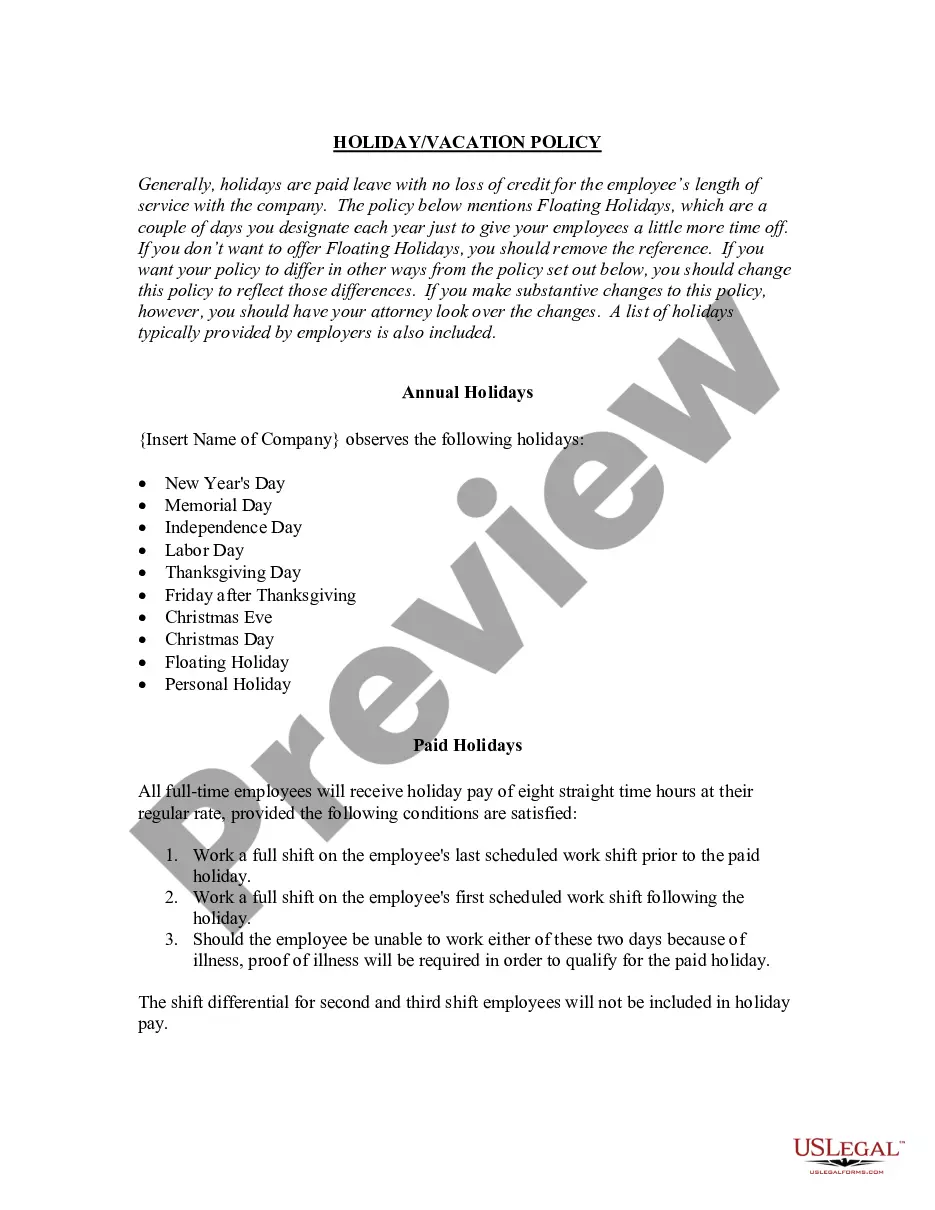
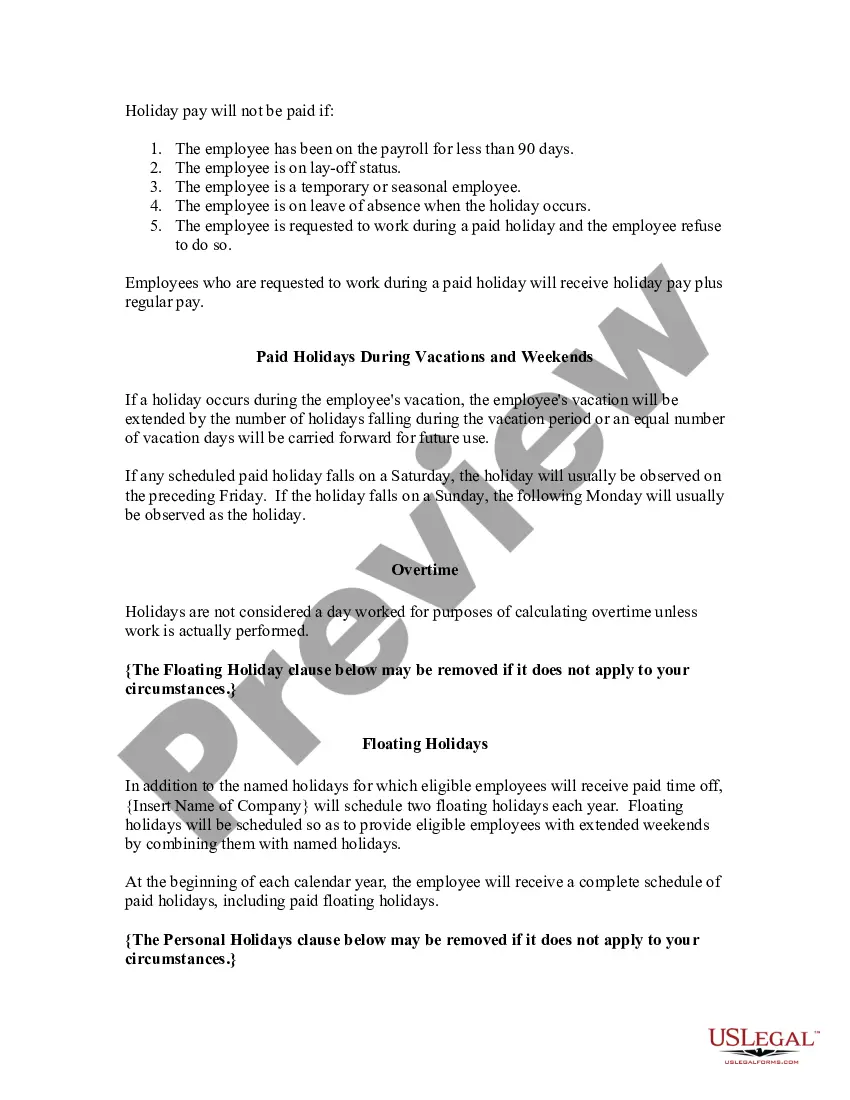
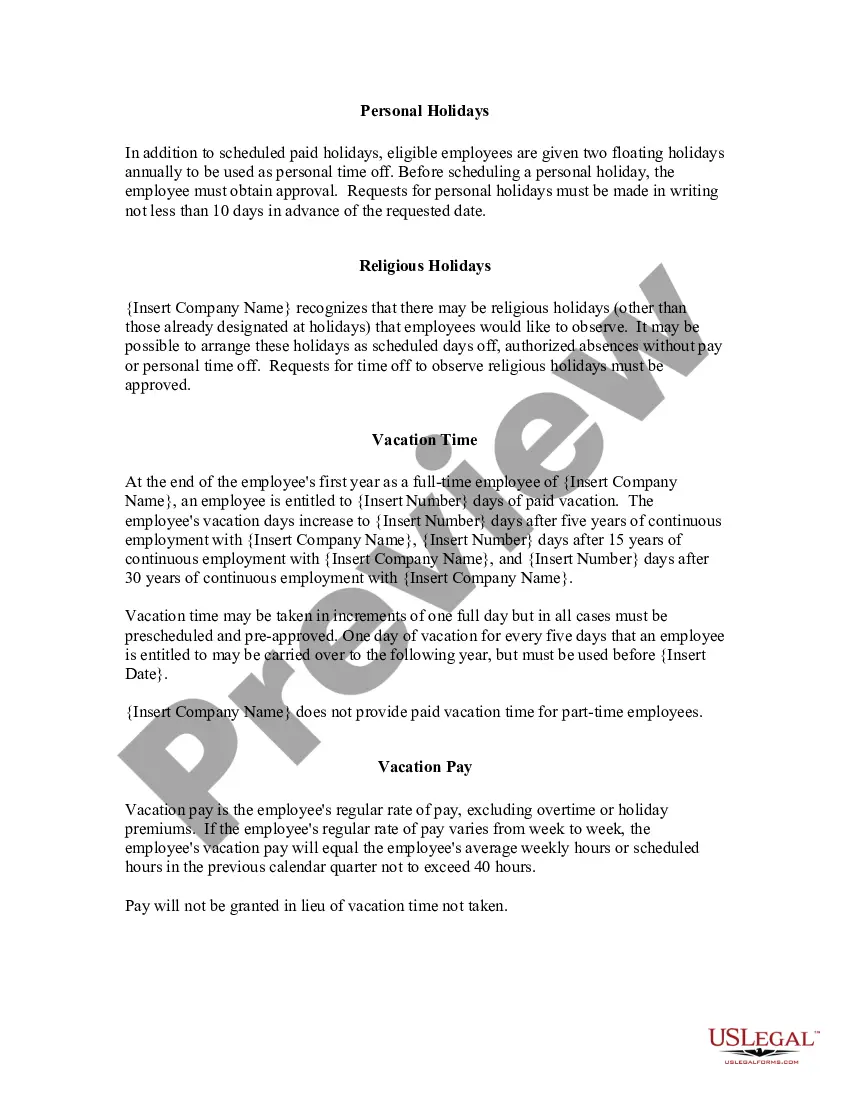
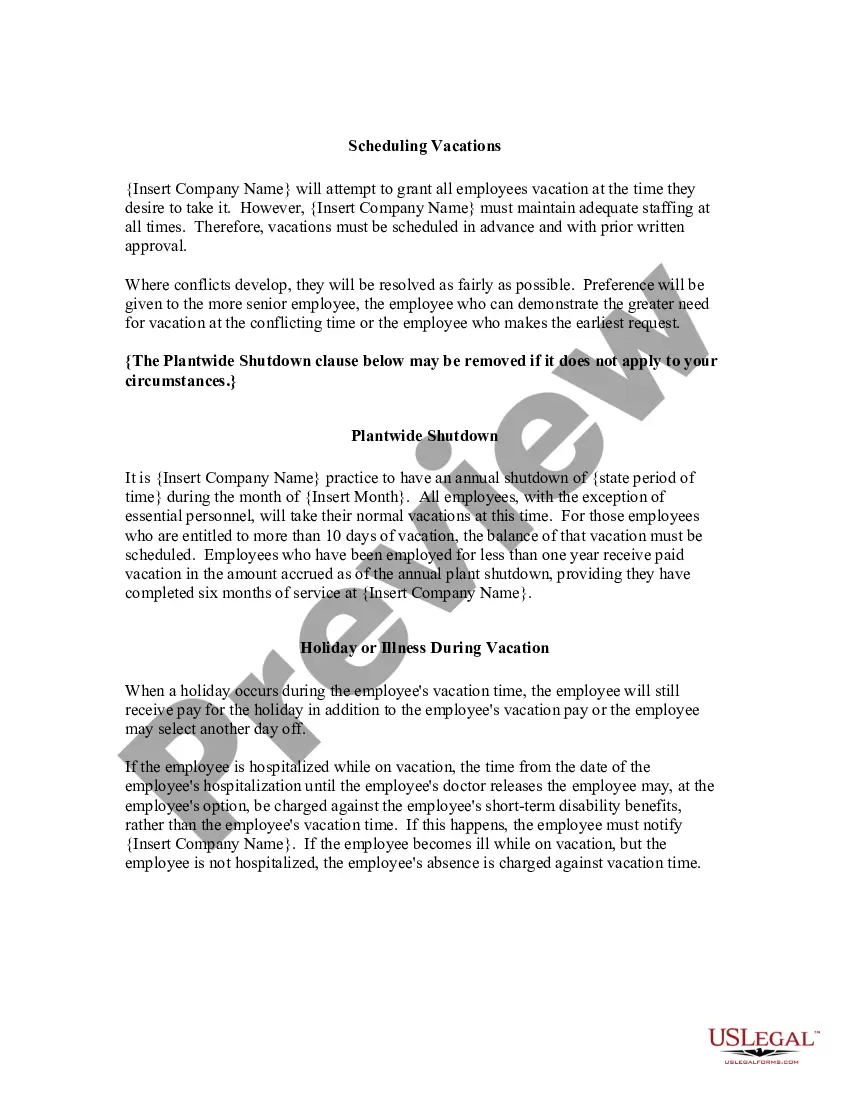


Get your form ready online
Our built-in tools help you complete, sign, share, and store your documents in one place.
Make edits, fill in missing information, and update formatting in US Legal Forms—just like you would in MS Word.
Download a copy, print it, send it by email, or mail it via USPS—whatever works best for your next step.
Sign and collect signatures with our SignNow integration. Send to multiple recipients, set reminders, and more. Go Premium to unlock E-Sign.
If this form requires notarization, complete it online through a secure video call—no need to meet a notary in person or wait for an appointment.
We protect your documents and personal data by following strict security and privacy standards.

Make edits, fill in missing information, and update formatting in US Legal Forms—just like you would in MS Word.

Download a copy, print it, send it by email, or mail it via USPS—whatever works best for your next step.

Sign and collect signatures with our SignNow integration. Send to multiple recipients, set reminders, and more. Go Premium to unlock E-Sign.

If this form requires notarization, complete it online through a secure video call—no need to meet a notary in person or wait for an appointment.

We protect your documents and personal data by following strict security and privacy standards.
Looking for another form?
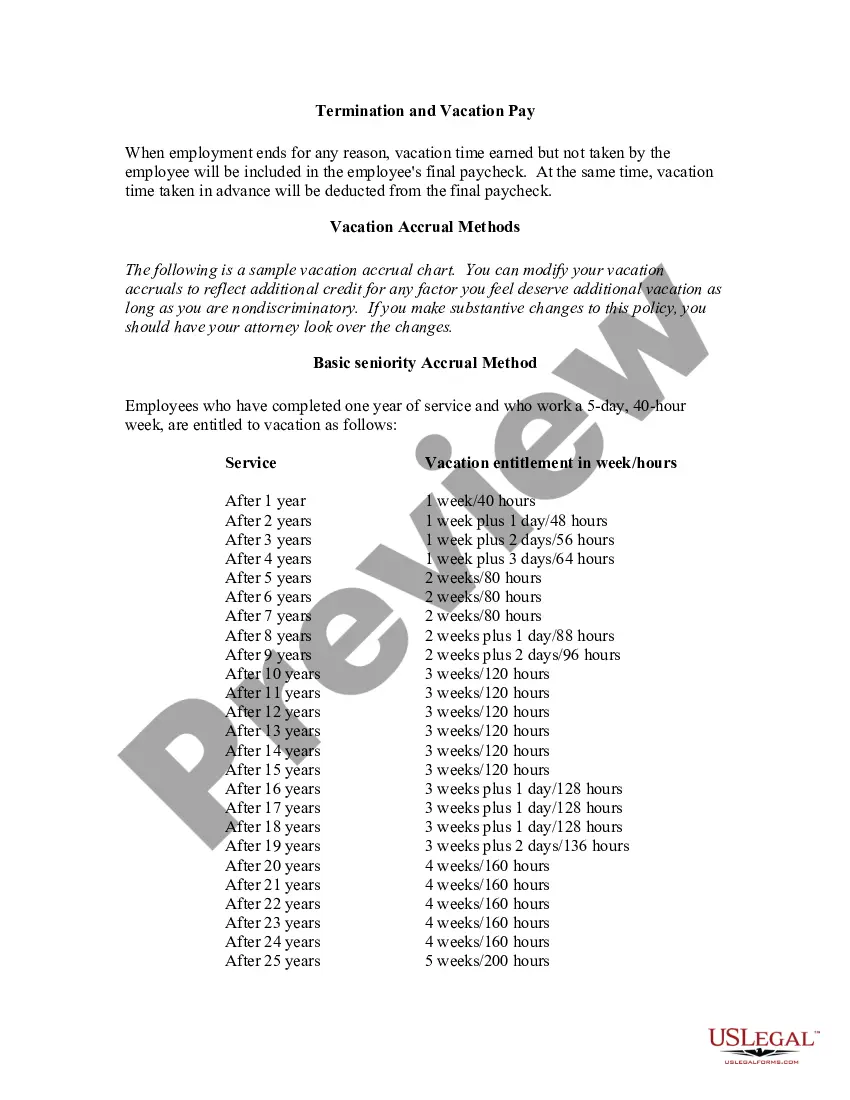
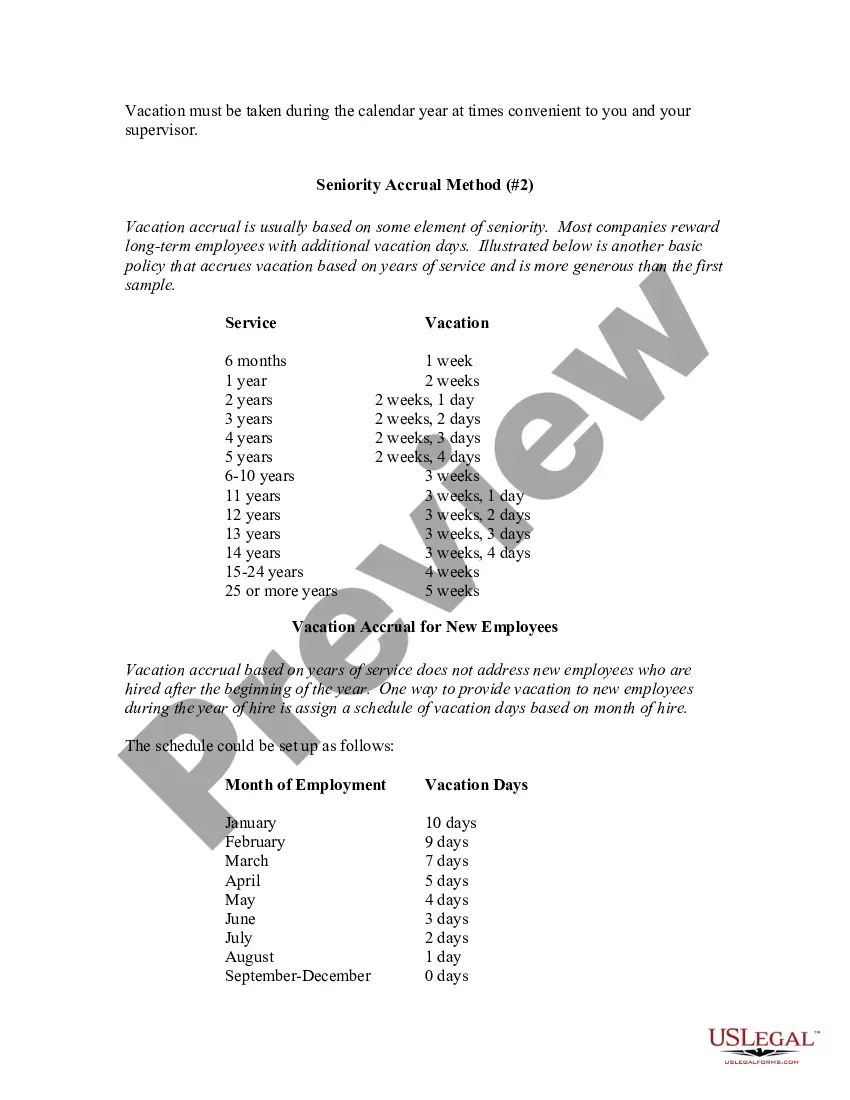
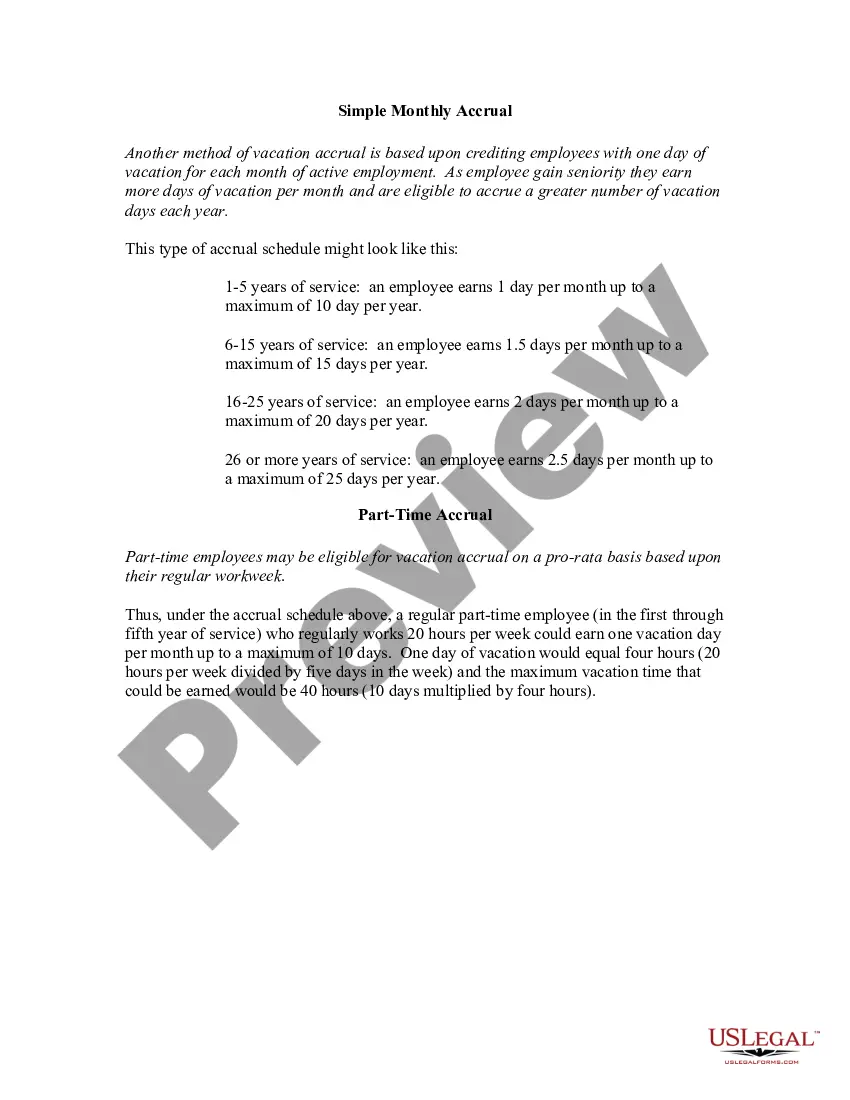
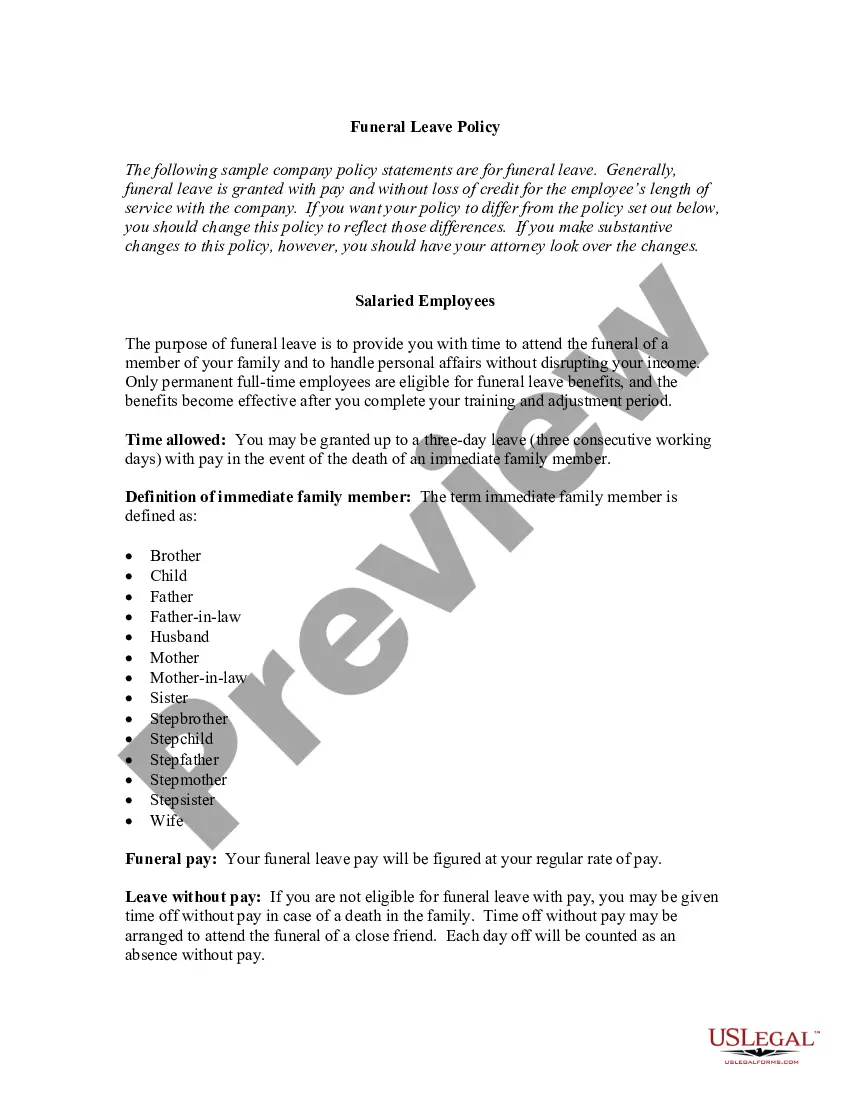
How to fill out Holiday Vacation Policy?
It’s well known that you cannot turn into a legal specialist instantly, nor can you acquire the ability to swiftly assemble Employee Time Vacation For Physical Therapist without possessing a particular skill set.
Compiling legal documents is an arduous task that demands specific education and expertise. Therefore, why not entrust the preparation of the Employee Time Vacation For Physical Therapist to the experts.
With US Legal Forms, one of the most extensive legal document collections, you can locate everything from judicial papers to templates for internal communication.
If you need a different template, start your search anew.
Establish a free account and select a subscription plan to purchase the template.
- We understand the importance of compliance and conformity to federal and state regulations.
- That’s why, on our platform, all templates are location-specific and current.
- Here’s commence with our website and obtain the document you need in just minutes.
- Discover the document you require using the search bar at the top of the page.
- Preview it (if this option is available) and review the supporting description to determine if Employee Time Vacation For Physical Therapist is what you seek.
Form popularity
FAQ
In California, employees earn vacation time based on their work hours. For physical therapists, time off is usually calculated as a percentage of hours worked, ensuring fair access to vacation time. It's important to note that unused vacation days generally do not expire, allowing you to accumulate your employee time vacation for physical therapist roles. To navigate these rules effectively, consider using US Legal Forms, which offers resources to help ensure you understand your rights and benefits.
Calculating employee vacation time for a physical therapist involves understanding the organization's vacation policy. Typically, it is based on the length of service, accruing a certain number of hours or days per year. Consider factors like whether unused vacation hours roll over into the next year. For accurate tracking and management, you might explore tools offered by USLegalForms that can streamline this process.
Yes, many physical therapists receive vacation time as part of their employment benefits package. This employee time vacation for physical therapists helps them rejuvenate and manage work-related stress. Vacation policies can differ between organizations, so it’s wise for therapists to confirm their vacation benefits with their employer. Embracing this time off is crucial for maintaining high-quality care for their patients and promoting overall well-being.
The amount of vacation time a physical therapist receives can vary based on their employer's policies and the specific region they practice in. Generally, many therapists enjoy around two to four weeks of employee time vacation for physical therapists annually. Additionally, some employers offer vacation time that increases with longer service, promoting work-life balance. It's essential for therapists to review their contracts or discuss with their employer to understand their specific vacation benefits.
A normal work schedule for a physical therapist often includes full-time hours, typically ranging from 35 to 40 hours per week. Many physical therapists work during standard business hours, but some may also provide evening or weekend sessions to accommodate patients' needs. It's essential for physical therapists to manage their employee time vacation effectively, ensuring they balance work demands with personal time off. Tools like US Legal Forms can help streamline scheduling and vacation requests, allowing therapists to focus more on patient care.
A paid time off (PTO) policy typically incorporates personal days and vacation. All vacation is PTO but not all PTO is vacation. PTO includes parental leave, jury duty, sick leave, holiday pay, bereavement leave and disability leave.
Paid Time Off (PTO) is a period of time, such as days or weeks, an employee is legally entitled to take off from work while still receiving pay from their employer. It is also known as statutory leave or annual leave.
Ing to the US Bureau of Labor Statistics, the average number of paid vacation days is 11 days. This average is based on a US employee working in the private sector, with 1 year of service. Taking weekends into account, this works out to just over 2 full weeks of vacation leave per year.
Paid time off (PTO) is a benefit an employer provides their employees that allows them to receive payment for the time they take off work for vacation, personal days, sick time and holidays.
Paid time off (PTO) is a human resource management (HRM) policy that provides employees with a pool of bankable hours that can be used for any purpose. Also known as personal time off, the acronym PTO is generally used to describe any period of time that an employee is paid while taking leave from work.