Domestic Partnership Vs Living With Partner
Description
Get your form ready online
Our built-in tools help you complete, sign, share, and store your documents in one place.
Make edits, fill in missing information, and update formatting in US Legal Forms—just like you would in MS Word.
Download a copy, print it, send it by email, or mail it via USPS—whatever works best for your next step.
Sign and collect signatures with our SignNow integration. Send to multiple recipients, set reminders, and more. Go Premium to unlock E-Sign.
If this form requires notarization, complete it online through a secure video call—no need to meet a notary in person or wait for an appointment.
We protect your documents and personal data by following strict security and privacy standards.

Make edits, fill in missing information, and update formatting in US Legal Forms—just like you would in MS Word.

Download a copy, print it, send it by email, or mail it via USPS—whatever works best for your next step.

Sign and collect signatures with our SignNow integration. Send to multiple recipients, set reminders, and more. Go Premium to unlock E-Sign.

If this form requires notarization, complete it online through a secure video call—no need to meet a notary in person or wait for an appointment.

We protect your documents and personal data by following strict security and privacy standards.
Looking for another form?



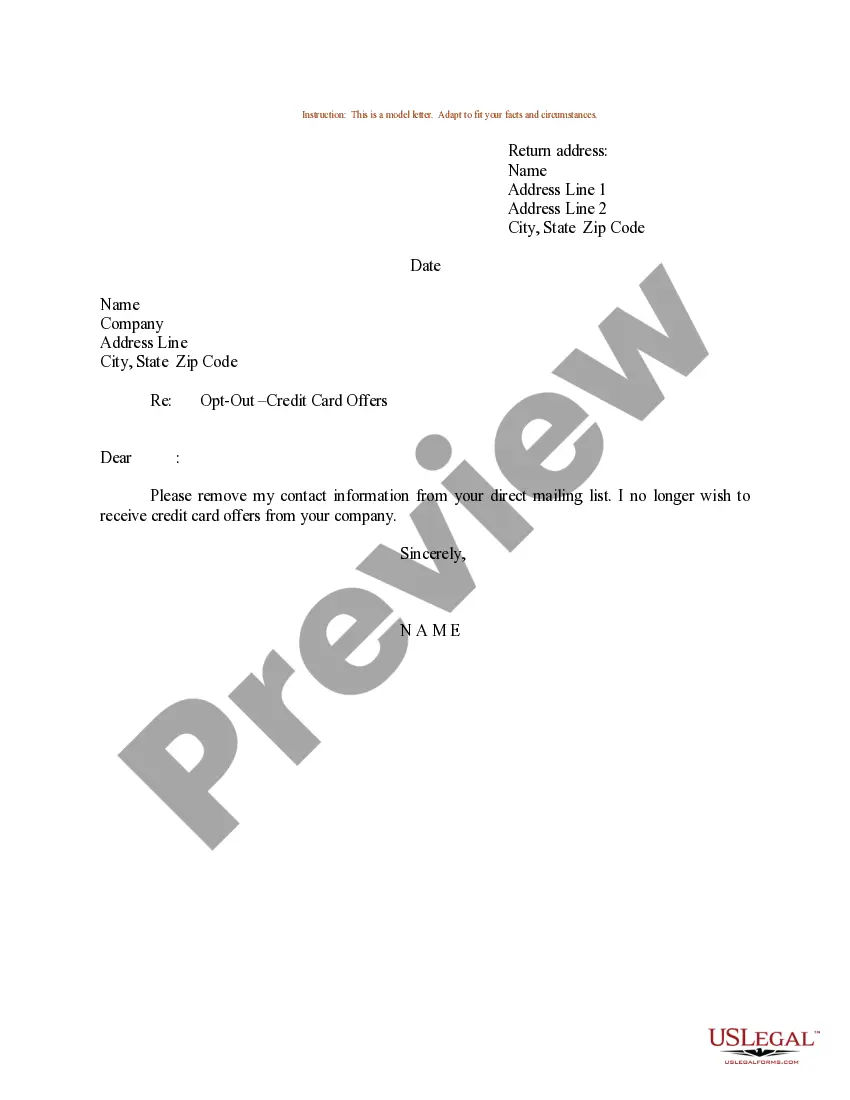



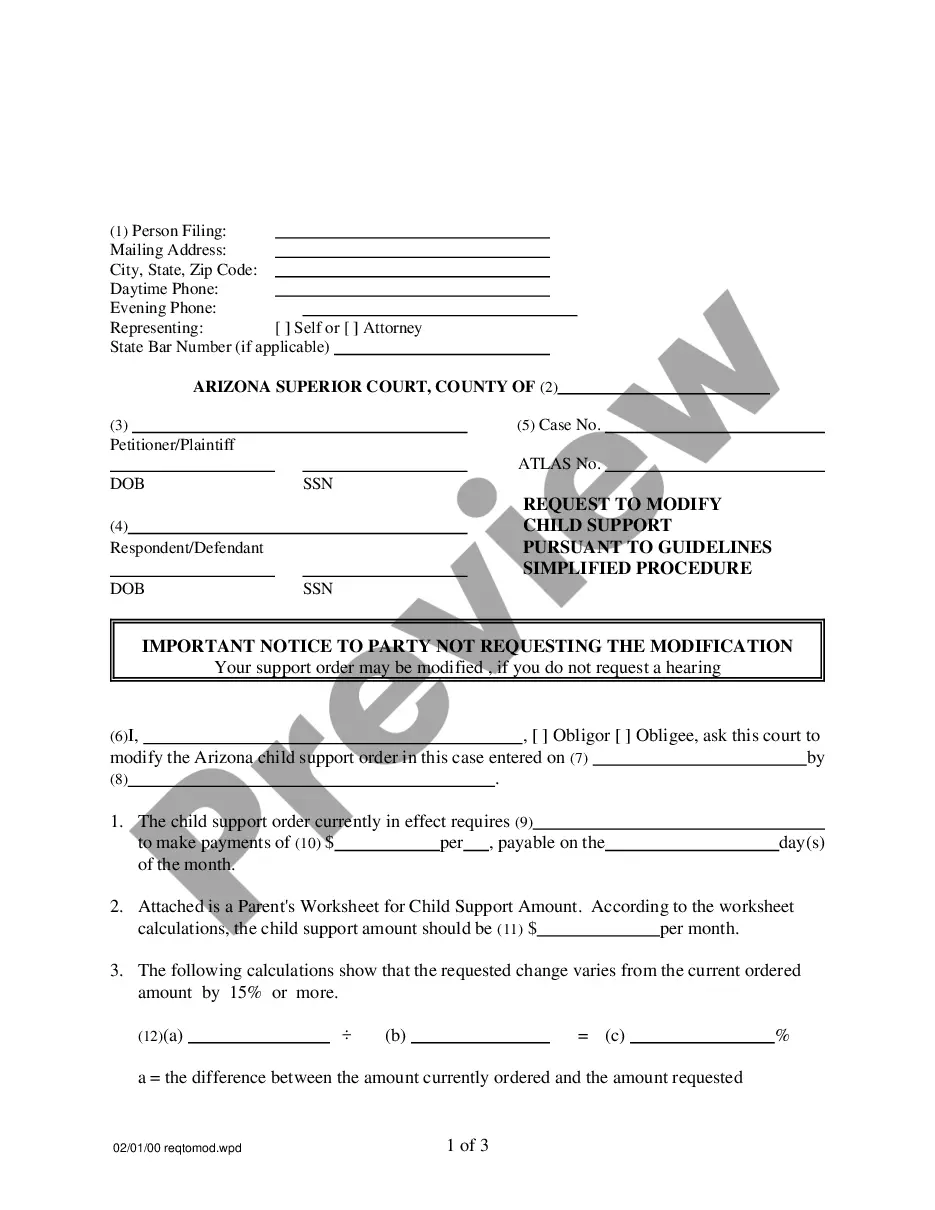


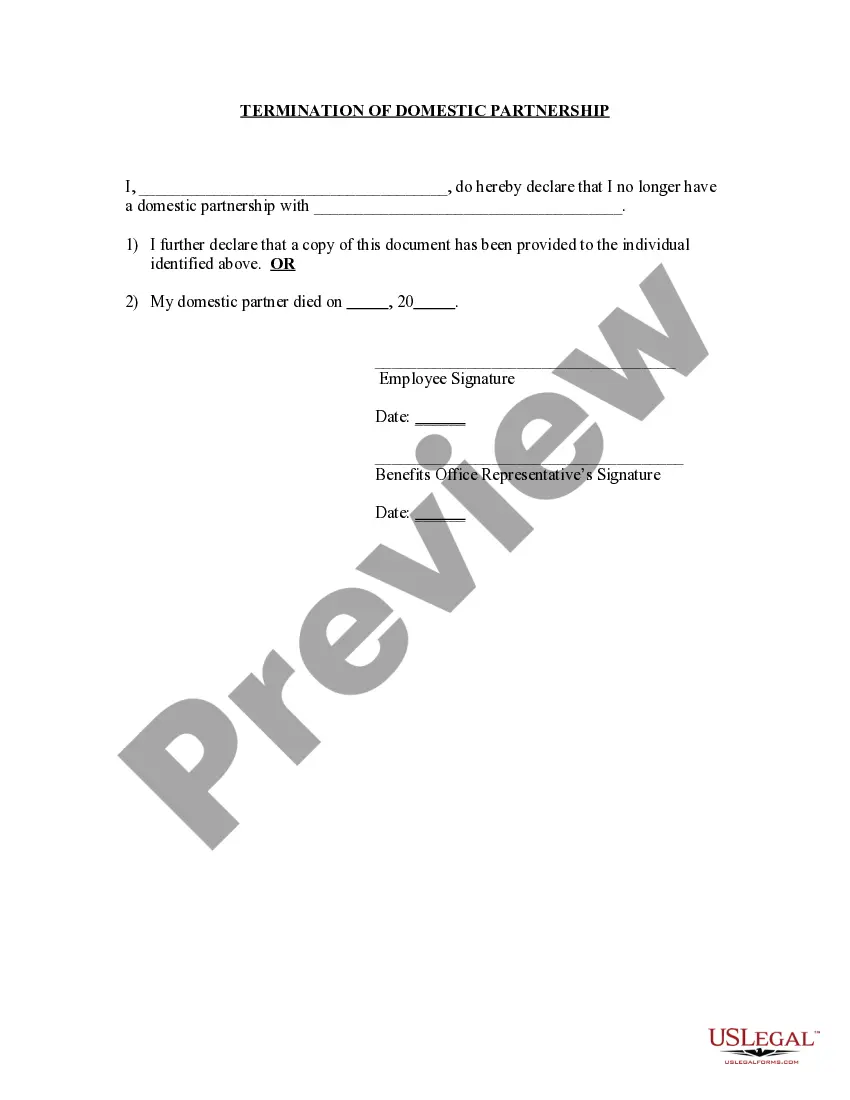
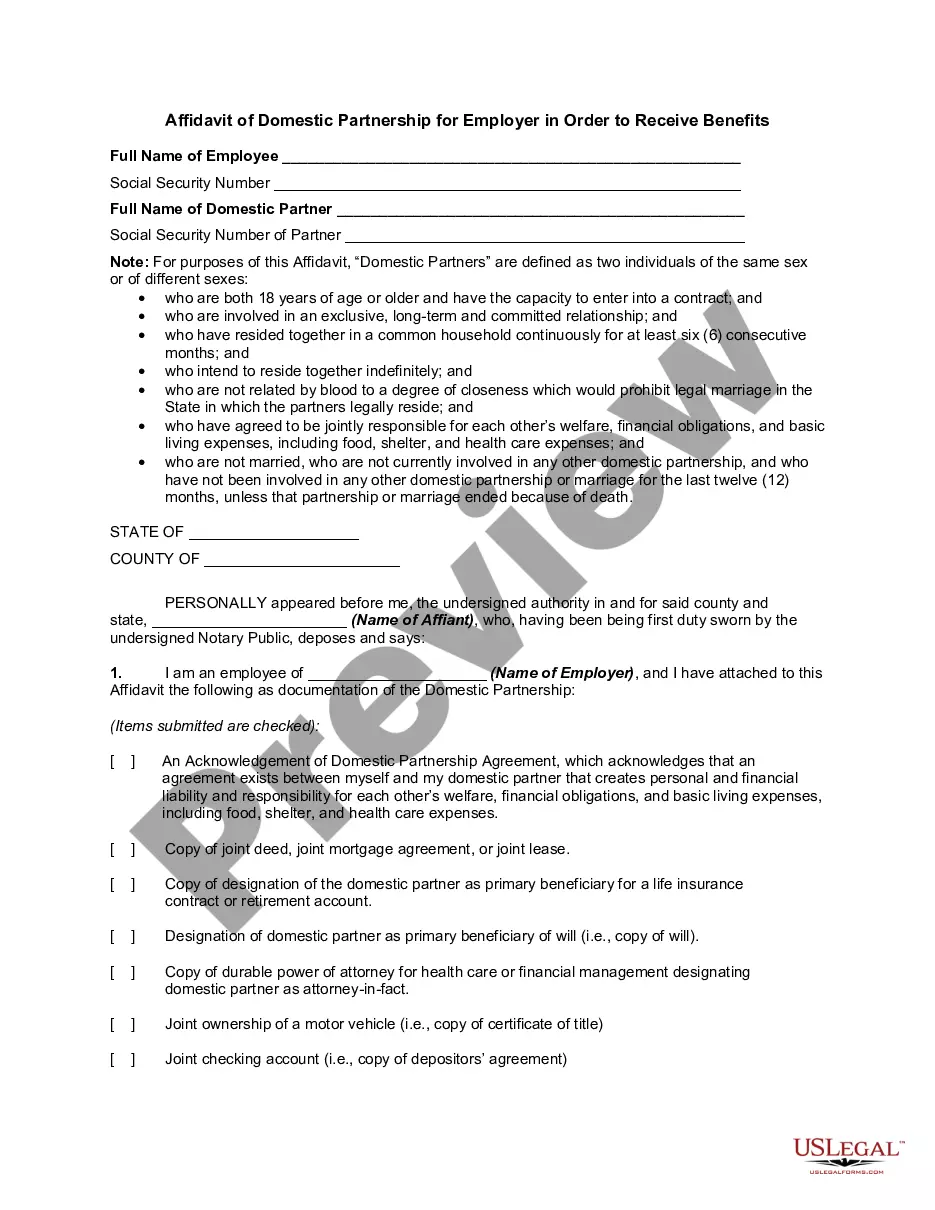
How to fill out Termination Of Domestic Partnership?
- If you've previously used US Legal Forms, log in to your account and ensure your subscription is active. If it's expired, renew according to your chosen plan.
- For first-time users, start by browsing the available templates. Check the Preview mode and description to ensure you select the form that aligns with your needs and jurisdiction.
- If you need a different form, utilize the Search tab to find the right document. Make sure it meets your specific requirements before proceeding.
- To purchase the document, click on the Buy Now button and select your preferred subscription plan. You'll need to create an account for full access.
- Finalize your purchase by entering your payment details or using PayPal for a quick transaction.
- Download your completed form directly to your device. You can access it anytime in the My Forms section of your profile.
In conclusion, understanding the distinctions between domestic partnership vs living with partner is essential for legal clarity. US Legal Forms streamlines this process, providing extensive resources for seamless document acquisition.
Start your journey toward legal protection today by exploring our vast library!
Form popularity
FAQ
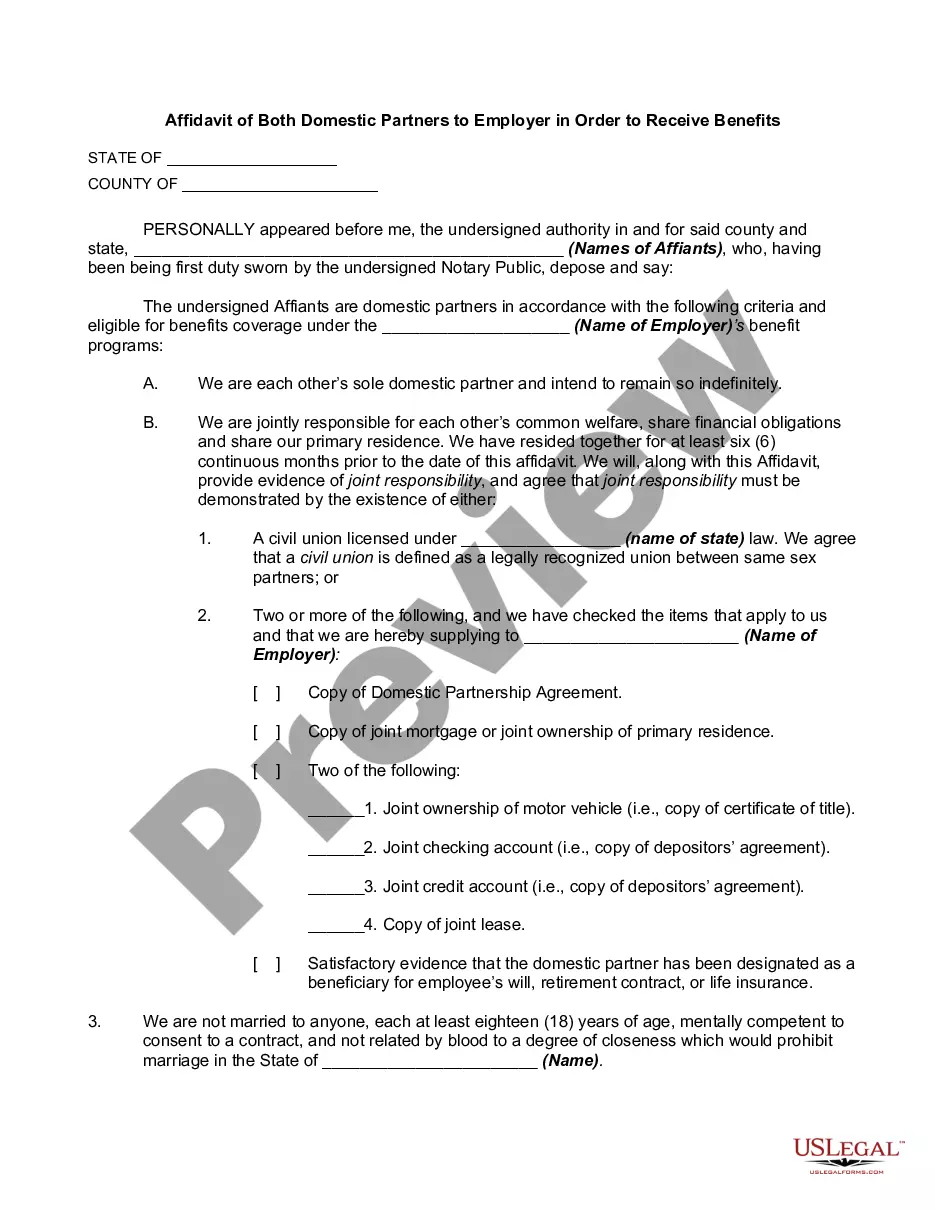
While domestic partnership often includes living together, it also entails a committed relationship with legal recognition. This can provide various benefits, including health insurance and inheritance rights. Thus, although living together is typical, being a domestic partner encompasses more elements. Knowing the differences between domestic partnership vs living with partner is essential for fully grasping the scope of your relationship.
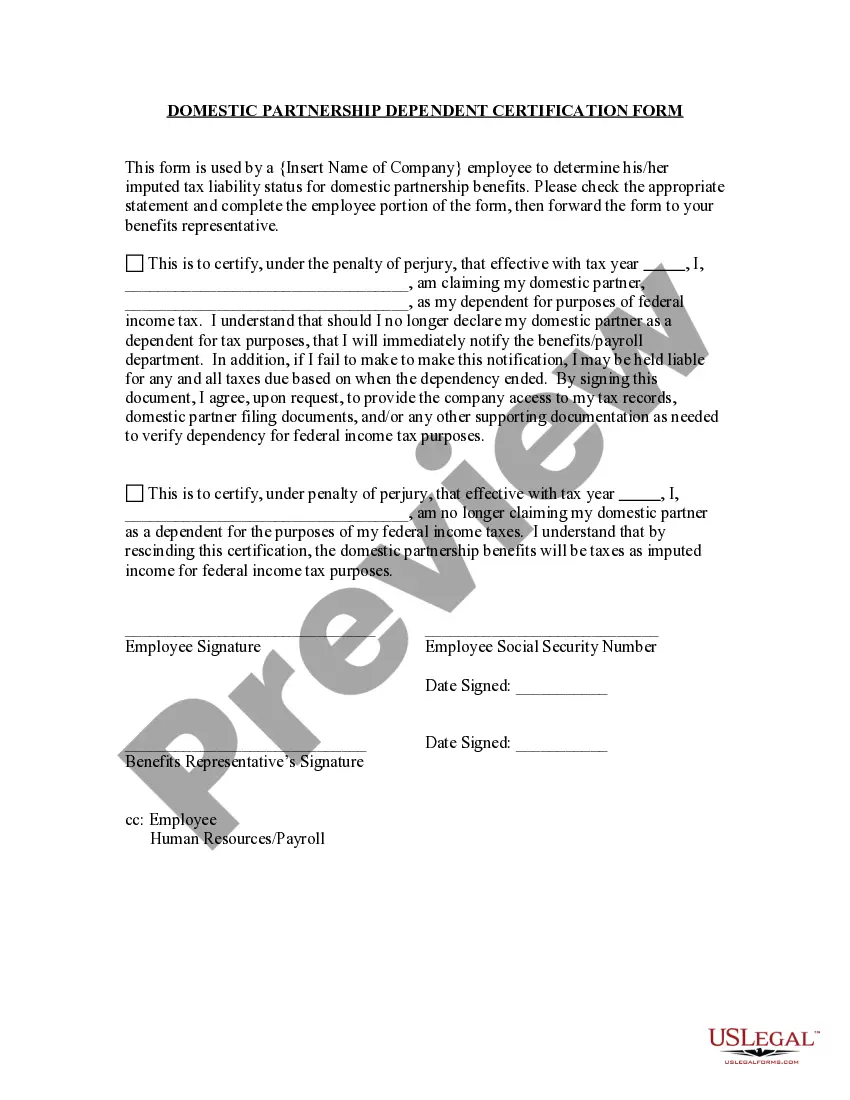
Your girlfriend could count as a domestic partner if you meet specific criteria set by your state. Often, these criteria include living together, sharing finances, and having a mutual commitment. This classification not only affects personal life but can also have legal and financial implications. Understanding domestic partnership vs living with partner can therefore provide clarity on your relationship standing.
A domestic partnership signifies a legally recognized relationship that often involves living together, but they are not strictly the same. Living together is a common aspect of a domestic partnership, but legal aspects can differ significantly. Exploring domestic partnership vs living with partner reveals important differences, especially regarding rights, benefits, and recognition in various states.
According to the IRS, domestic partners can often include individuals in a committed relationship who share a residence and financial responsibilities. However, the IRS does not uniformly recognize domestic partnerships for all tax benefits, which can depend on state laws. It's beneficial to consult a tax professional to fully understand domestic partnership vs living with partner in the context of tax implications.
The duration required to file for a domestic partnership can differ by state. Many jurisdictions require couples to live together for a period ranging from six months to a year. This time helps demonstrate commitment and shared life. Be sure to check your local laws regarding domestic partnership vs living with partner for the specific requirements.
Yes, a girlfriend you live with may qualify as a domestic partner, depending on specific definitions used in your state. A domestic partnership typically refers to a committed relationship where partners share a home and life together. While the legal recognition varies, living together often supports this classification. Understanding domestic partnership vs living with partner helps clarify these distinctions.
When comparing domestic partnership vs living with partner, it is important to understand the potential drawbacks of a domestic partnership. One significant disadvantage is that not all states recognize domestic partnerships, which can lead to a lack of legal rights and benefits in some areas. Additionally, domestic partnerships might not provide the same legal protections in matters like inheritance and tax benefits that marriage does. Furthermore, dissolving a domestic partnership can sometimes involve legal complexities, which is not as straightforward as simply ending a cohabitative relationship.
Whether your live-in girlfriend is considered a domestic partner depends on state laws and the specifics of your relationship. If you share responsibilities, finances, and a commitment, you may qualify as domestic partners. However, informal arrangements without legal documentation may not provide the same protections. To clarify your status and rights, consider reviewing the differences between domestic partnership vs living with partner and check resources like US Legal Forms for guidance.
In the US, a domestic partner typically needs to fulfill several criteria established by state laws, such as living together, sharing finances, and having a mutual commitment similar to marriage. Many states require couples to register as domestic partners to gain legal recognition. This differs from simply living together, as domestic partnerships often provide specific legal benefits. It's essential to explore the distinctions between domestic partnership vs living with partner to fully understand your rights.
To be recognized as domestic partners, many states require couples to live together for a specific period, often ranging from six months to a year. However, you must also meet certain legal criteria that may vary depending on your state. Documentation, such as a domestic partnership agreement, can help establish your status. Understanding the differences between domestic partnership vs living with partner is crucial in navigating these requirements.