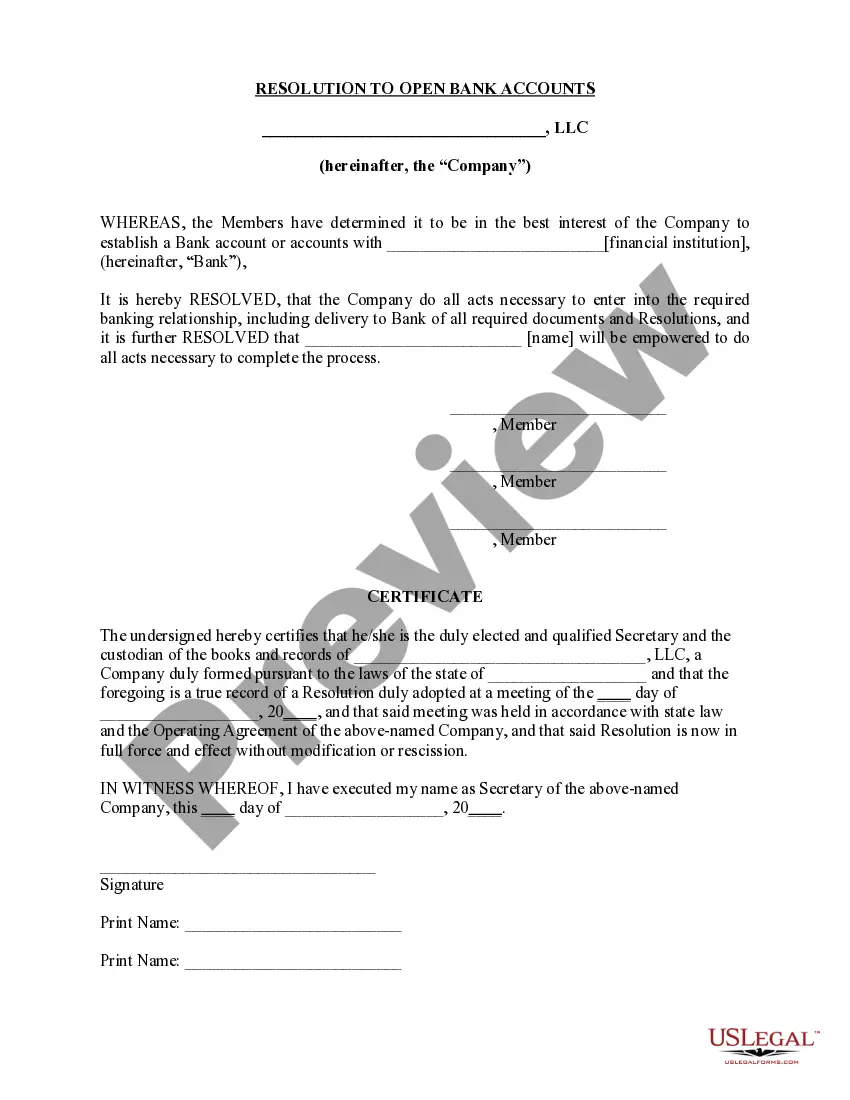
Llc For Bank
Description
Get your form ready online
Our built-in tools help you complete, sign, share, and store your documents in one place.
Make edits, fill in missing information, and update formatting in US Legal Forms—just like you would in MS Word.
Download a copy, print it, send it by email, or mail it via USPS—whatever works best for your next step.
Sign and collect signatures with our SignNow integration. Send to multiple recipients, set reminders, and more. Go Premium to unlock E-Sign.
If this form requires notarization, complete it online through a secure video call—no need to meet a notary in person or wait for an appointment.
We protect your documents and personal data by following strict security and privacy standards.

Make edits, fill in missing information, and update formatting in US Legal Forms—just like you would in MS Word.

Download a copy, print it, send it by email, or mail it via USPS—whatever works best for your next step.

Sign and collect signatures with our SignNow integration. Send to multiple recipients, set reminders, and more. Go Premium to unlock E-Sign.

If this form requires notarization, complete it online through a secure video call—no need to meet a notary in person or wait for an appointment.

We protect your documents and personal data by following strict security and privacy standards.
Looking for another form?

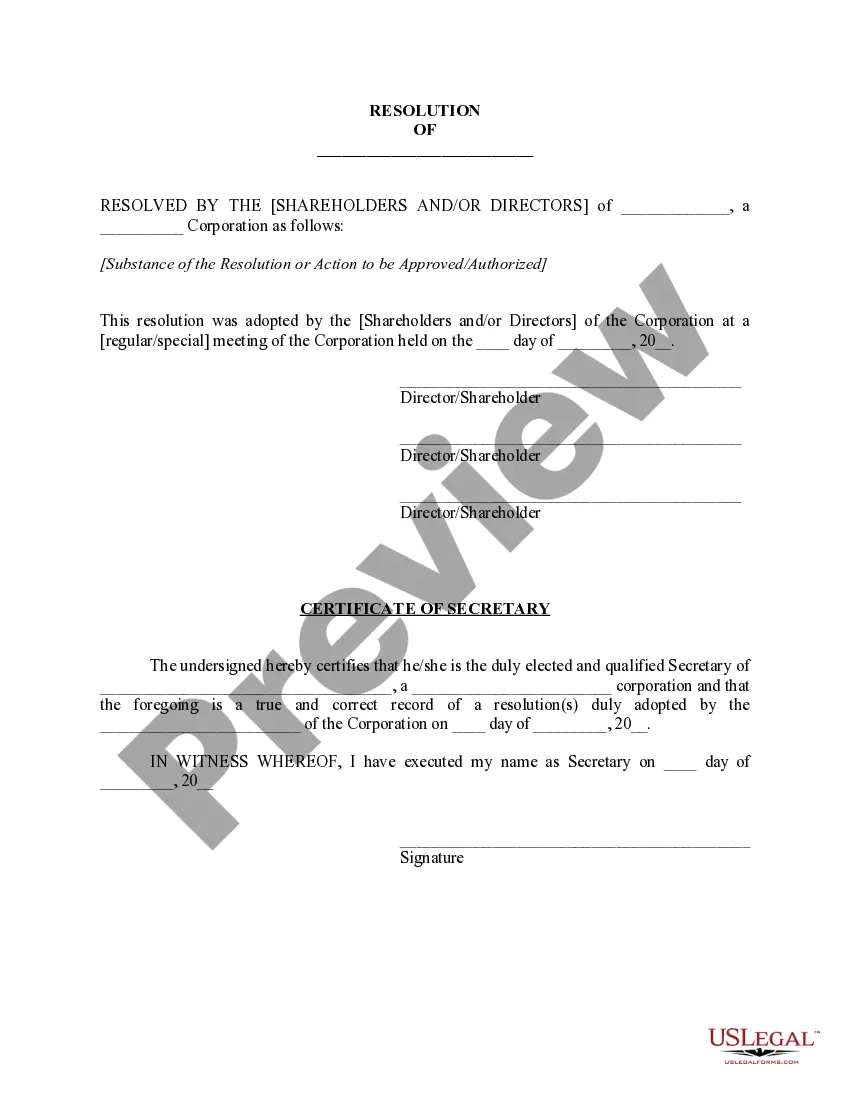
How to fill out Resolution Of Meeting Of LLC Members To Open Bank Accounts?
- If you're a returning user, log into your US Legal Forms account and locate the desired LLC template. Click the Download button once verified your subscription is active. If expired, renew it as needed.
- For first-time users, start by browsing the extensive online library. Use the Preview option to ensure the selected form suits your jurisdiction's requirements.
- Should you find discrepancies or require another type of form, utilize the Search bar to quickly find the correct document.
- After finding the right form, click the Buy Now button. Choose the subscription plan that meets your needs, and create an account for access.
- Complete your purchase using credit card information or your PayPal account to pay for the subscription.
- Finally, download the form directly to your device, or access it anytime via the My Forms section in your profile.
Utilizing US Legal Forms offers a robust collection of legal documents, allowing users to access over 85,000 editable forms. This extensive library provides the necessary resources to create precise and legally sound documents.
Start your LLC journey today with US Legal Forms. Access the tools you need to secure your banking processes and elevate your business strategy!
Form popularity
FAQ
The downside of an LLC often includes initial setup costs and the ongoing requirement of compliance. Some states impose higher fees for LLCs, which can add to your expenses. Moreover, while LLCs protect your personal assets, they may not be as credible as corporations in the eyes of some banks or investors. Thoroughly researching these potential downsides will help you make an informed choice regarding forming an LLC for bank purposes.
Determining whether an LLC is worth it depends on your business objectives and financial situation. An LLC can provide limited liability protection, potential tax benefits, and enhanced credibility with customers and suppliers. Additionally, it offers flexibility in management and ownership structure. Therefore, if these advantages align with your goals, forming an LLC for bank functions can be quite beneficial.
The primary risk associated with an LLC involves maintaining the separation between personal and business assets. If you fail to uphold this distinction, you risk personal liability for business debts. Additionally, specific state requirements may impose additional regulatory risks. However, overall, forming an LLC for bank-related activities can significantly mitigate risks compared to sole proprietorships.
When a bank is formed as an LLC, it means that the bank operates under the limited liability company structure. This arrangement protects the personal assets of the bank owners while allowing for greater flexibility in management. Creating a bank as an LLC can enhance financial stability and operational efficiency. Understanding this structure can help you better navigate the banking landscape for your LLC needs.
While LLCs offer many benefits, there can be negative aspects as well. Some potential downsides include the requirement for ongoing paperwork and fees, which may vary by state. Additionally, securing bank financing might be more challenging for LLCs compared to corporations due to perceived risks. Therefore, it's vital to weigh both the positives and negatives when considering forming an LLC for bank purposes.
Many entrepreneurs worry about taxes when forming an LLC. However, LLCs often provide tax flexibility, allowing you to choose how you want to be taxed, whether as a sole proprietor, partnership, or corporation. While some states impose annual fees or taxes on LLCs, they typically allow for pass-through taxation, which can be beneficial. Therefore, an LLC for bank services may not be bad for taxes but can offer several advantages.
When choosing a bank account for your LLC, prioritize those that offer low fees, easy online access, and good customer service. A business checking account specifically designed for LLCs can help you manage your finances effectively while keeping personal and business funds separate. Furthermore, look for accounts that provide useful integrations, such as accounting software, to simplify your bookkeeping. Ultimately, selecting the right bank account for your LLC will ensure better financial management.
To open an LLC bank account, you will generally need your LLC's formation documents, an EIN, and valid personal identification. Be prepared to present your operating agreement, as it may outline the authority of members in your LLC. Providing these documents ensures a smoother application process and allows you to effectively manage your LLC for bank.
Technically, a bank can own an LLC, though such cases are rare and typically involve business interests rather than individual banking. Banks often utilize LLCs to manage assets, limit liability, and handle various investment ventures. Understanding how banks interact with LLCs can help you navigate the complexities of business ownership.
Opening a bank account for your LLC usually requires an EIN, as this number identifies your business for tax purposes. However, some banks may allow accounts under certain conditions, particularly for single-member LLCs. It is advisable to obtain an EIN to ensure you meet the bank's requirements and facilitate smoother financial transactions.