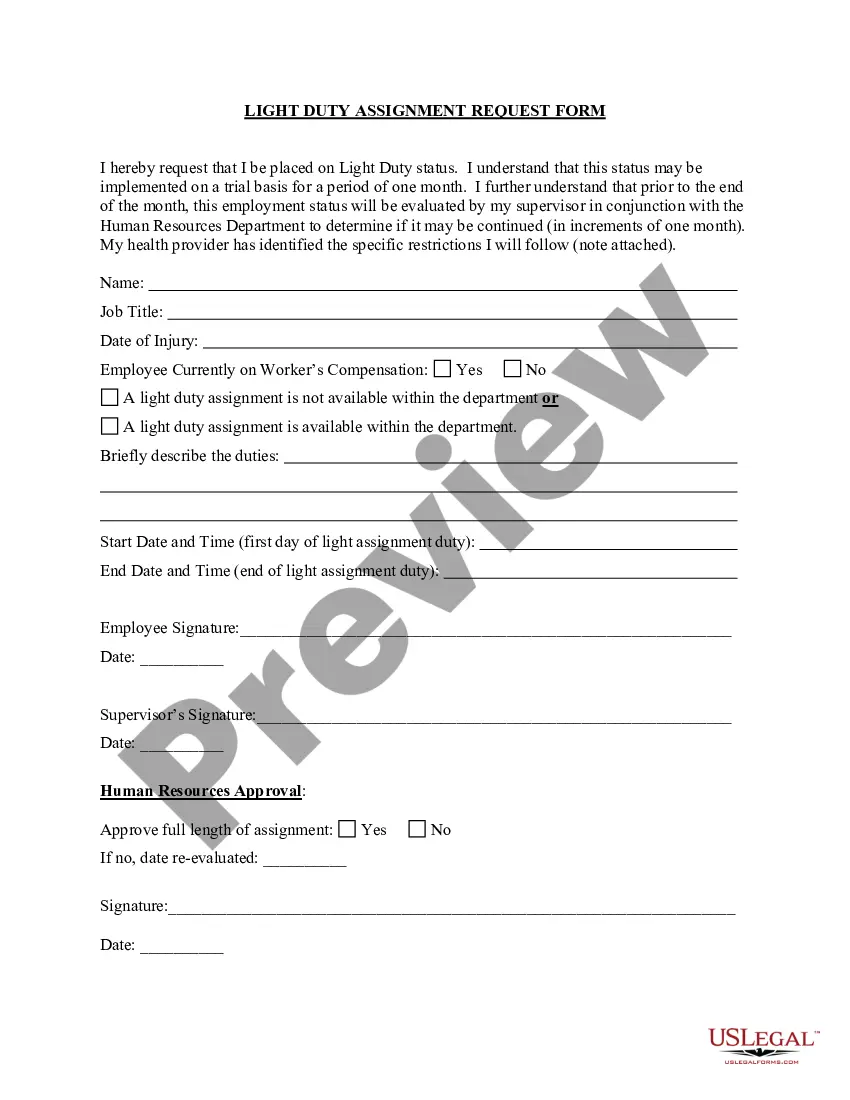
Light Duty For Pregnant Employees
Description

Get your form ready online
Our built-in tools help you complete, sign, share, and store your documents in one place.
Make edits, fill in missing information, and update formatting in US Legal Forms—just like you would in MS Word.
Download a copy, print it, send it by email, or mail it via USPS—whatever works best for your next step.
Sign and collect signatures with our SignNow integration. Send to multiple recipients, set reminders, and more. Go Premium to unlock E-Sign.
If this form requires notarization, complete it online through a secure video call—no need to meet a notary in person or wait for an appointment.
We protect your documents and personal data by following strict security and privacy standards.

Make edits, fill in missing information, and update formatting in US Legal Forms—just like you would in MS Word.

Download a copy, print it, send it by email, or mail it via USPS—whatever works best for your next step.

Sign and collect signatures with our SignNow integration. Send to multiple recipients, set reminders, and more. Go Premium to unlock E-Sign.

If this form requires notarization, complete it online through a secure video call—no need to meet a notary in person or wait for an appointment.

We protect your documents and personal data by following strict security and privacy standards.
Looking for another form?

Form popularity
FAQ
The number of hours a pregnant woman should work can vary based on her health and comfort. Many health professionals recommend flexible schedules, especially when considering light duty for pregnant employees. Balancing work hours with rest is essential to support both the mother and the developing baby.
Standing for 8 hours can pose risks during pregnancy, particularly in the later stages. Prolonged standing may lead to fatigue, swelling, and discomfort. Implementing light duty for pregnant employees can help mitigate these issues by offering flexible work options that enhance comfort and well-being.
Light duty while pregnant involves adapting a pregnant employee’s work responsibilities to support her needs. It can include tasks that require less physical effort, allowing her to work safely throughout her pregnancy. It's a supportive practice that promotes a healthy work environment and addresses potential challenges.
Light duty for pregnant employees refers to modified work assignments that accommodate the physical demands of pregnancy. Employers may offer tasks that are less strenuous, reducing risks associated with more physically demanding duties. This approach helps ensure the health and comfort of the pregnant employee while maintaining productivity.
Yes, you can go on active duty while pregnant, but specific regulations apply. It's important to consult your commanding officer and review your rights regarding light duty for pregnant employees. Typically, your safety and health, along with your baby's, are prioritized during your service.
Yes, service members can be both active duty and pregnant, with certain restrictions in place. Many branches support pregnant employees by allowing light duty assignments, which accommodate their needs while maintaining operational readiness. It's essential to understand both your rights and responsibilities during this time. Planning ahead and utilizing resources like uslegalforms can help navigate legal aspects of military service during pregnancy.
Pregnancy typically results in non-deployable status for military personnel. This means pregnant service members cannot be deployed until they give birth and meet health requirements for return to duty. The military provides various options, including light duty for pregnant employees, so that they can continue to serve in a limited capacity during their pregnancy. It’s important to follow the established guidelines and seek support when needed.
Yes, you can request to leave the Army if you are pregnant. Service members may apply for a leave of absence during their pregnancy to focus on their health and family. It's crucial to communicate with your command, as each situation may require different considerations. Many find that light duty for pregnant employees offers a comfortable alternative to leaving the military altogether.
Pregnant women should ideally aim for a work schedule that prioritizes their health and comfort. While standard full-time schedules are common, many pregnant employees benefit from reduced hours or light duty assignments. It's essential for both employees and employers to discuss any concerns related to workload and adjust accordingly. Light duty for pregnant employees can serve as a valuable solution to balance work obligations with physical well-being.
The timeframe for joining the military after having a baby varies by branch, but it generally ranges from six weeks to six months postpartum. It is essential to check specific branch policies regarding readiness and health requirements. Many women successfully transition back to military life, utilizing light duty for pregnant employees if needed. This approach eases the transition while prioritizing the well-being of the new mother.