Drug Test For Employment Thc
Description
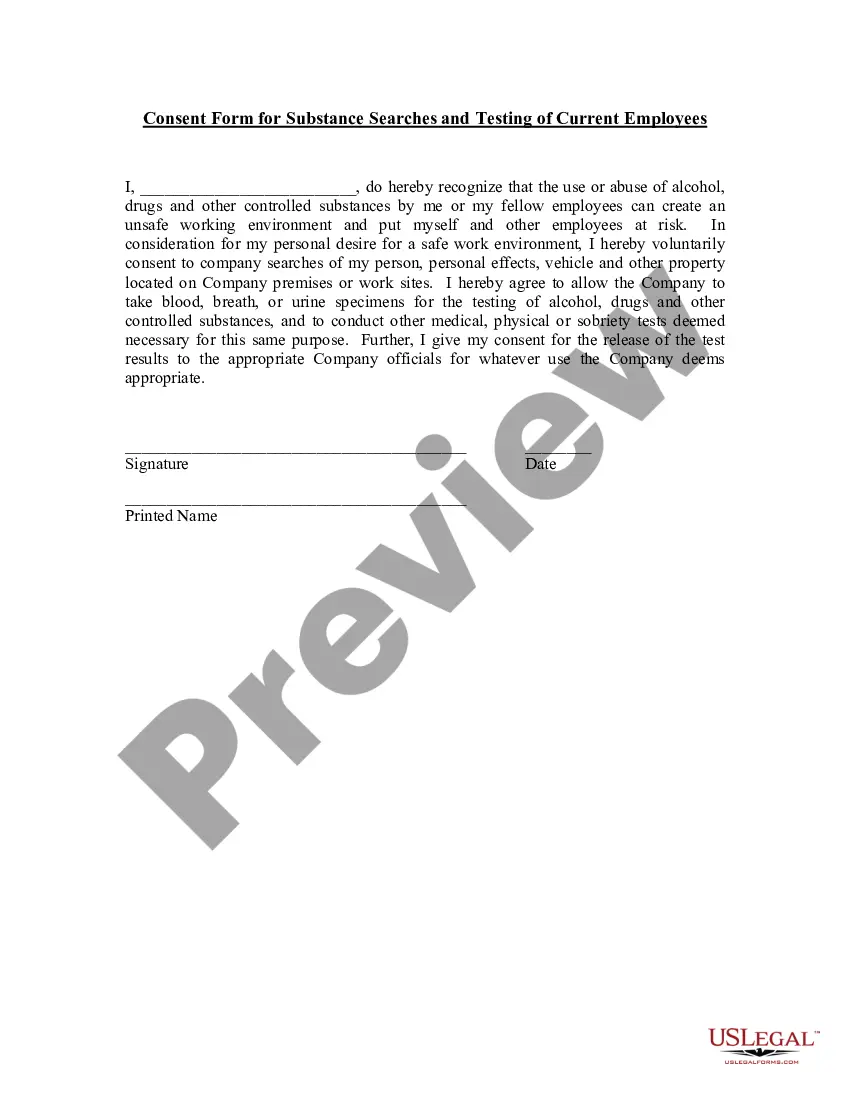
Get your form ready online
Our built-in tools help you complete, sign, share, and store your documents in one place.
Make edits, fill in missing information, and update formatting in US Legal Forms—just like you would in MS Word.
Download a copy, print it, send it by email, or mail it via USPS—whatever works best for your next step.
Sign and collect signatures with our SignNow integration. Send to multiple recipients, set reminders, and more. Go Premium to unlock E-Sign.
If this form requires notarization, complete it online through a secure video call—no need to meet a notary in person or wait for an appointment.
We protect your documents and personal data by following strict security and privacy standards.

Make edits, fill in missing information, and update formatting in US Legal Forms—just like you would in MS Word.

Download a copy, print it, send it by email, or mail it via USPS—whatever works best for your next step.

Sign and collect signatures with our SignNow integration. Send to multiple recipients, set reminders, and more. Go Premium to unlock E-Sign.

If this form requires notarization, complete it online through a secure video call—no need to meet a notary in person or wait for an appointment.

We protect your documents and personal data by following strict security and privacy standards.
Looking for another form?



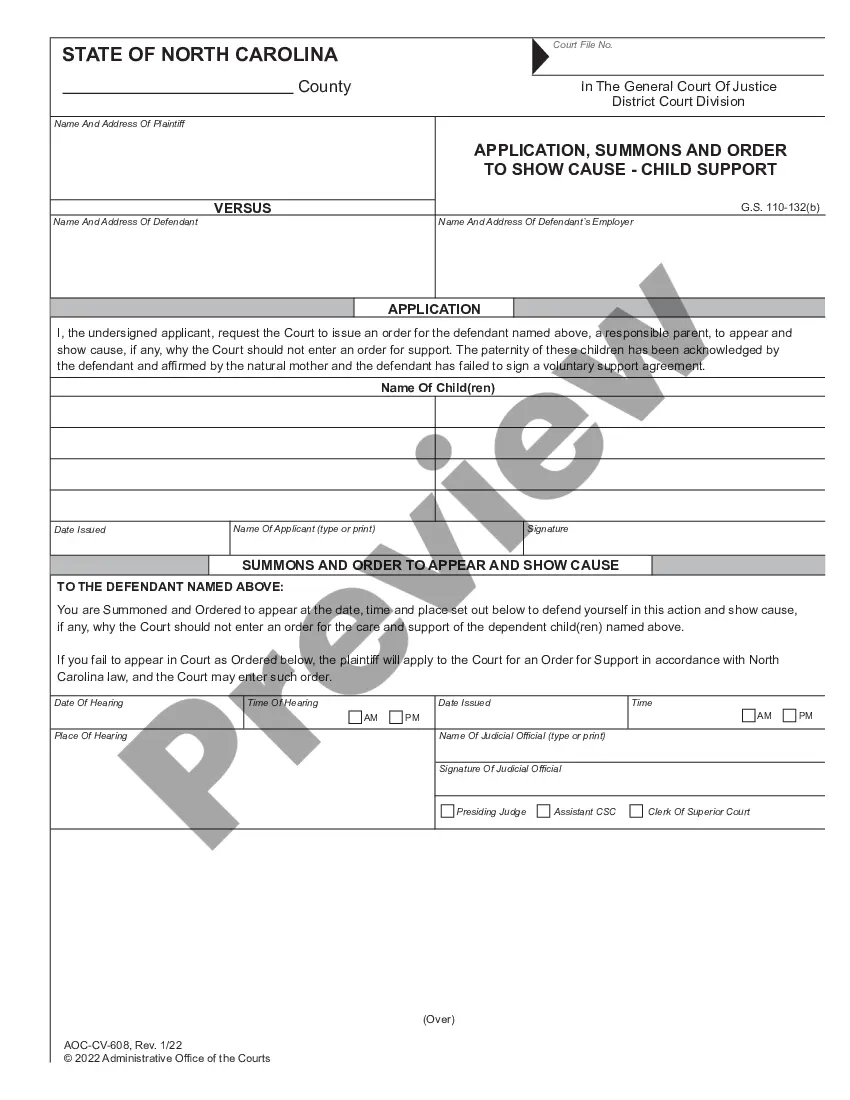






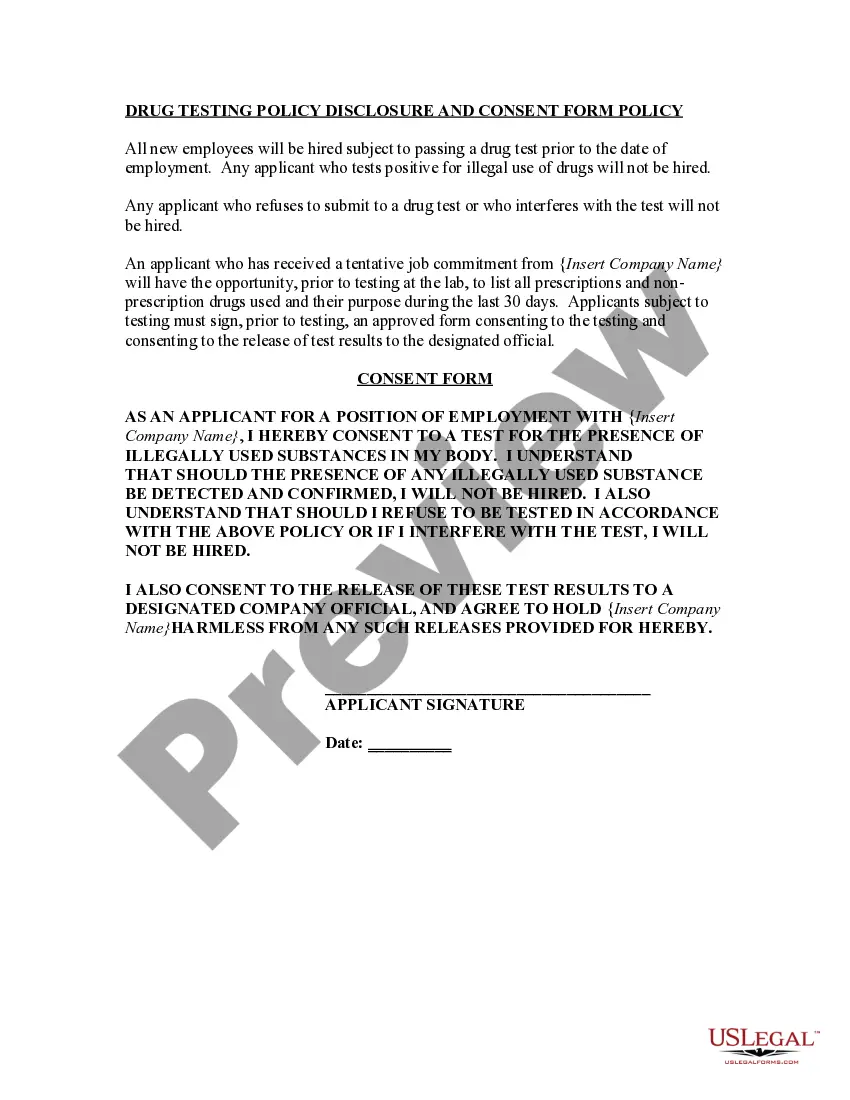
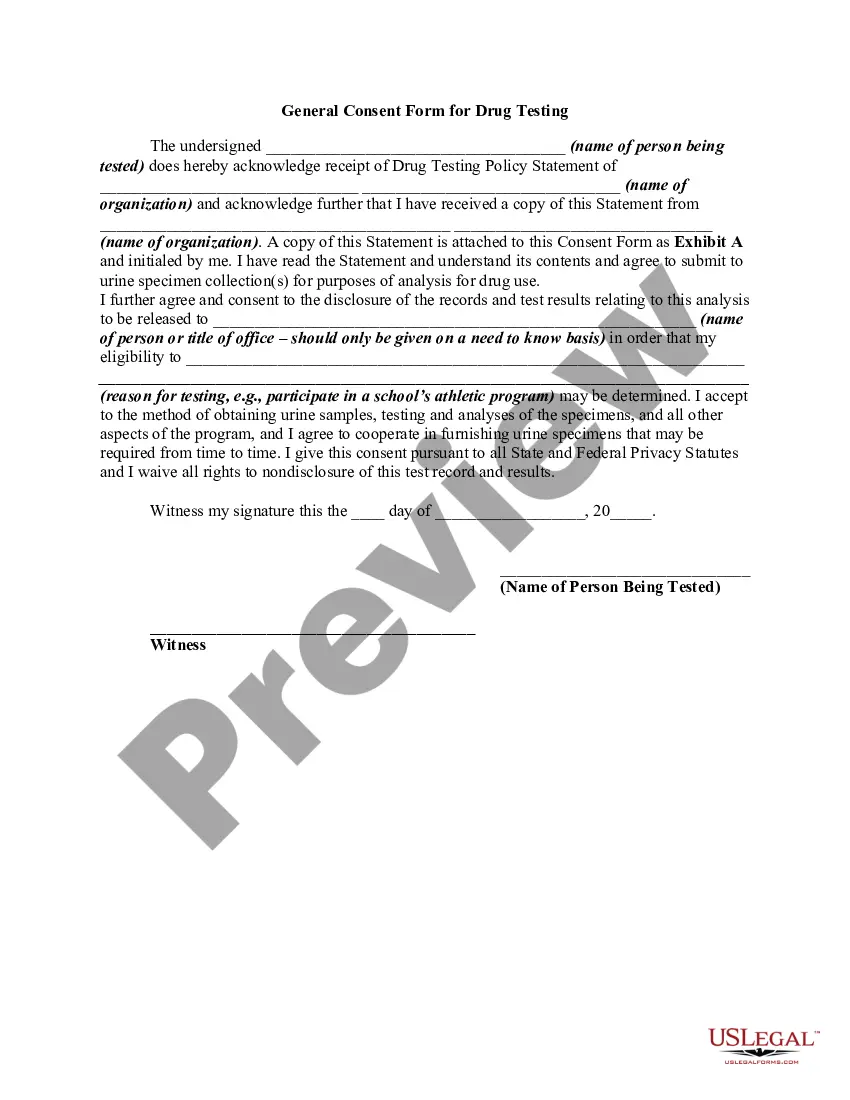
How to fill out Drug Testing Policy Disclosure And Consent Form?
Locating a reliable source for the latest and suitable legal templates is a significant part of navigating bureaucracy. Securing the correct legal documents requires accuracy and meticulousness, which is why it's essential to obtain Drug Test For Employment Thc samples solely from trustworthy providers, such as US Legal Forms. An incorrect template can squander your time and hinder your current situation. With US Legal Forms, you have little to worry about. You can access and verify all details regarding the document’s applicability and relevance for your case and in your state or area.
Consider the following steps to complete your Drug Test For Employment Thc.
Remove the inconvenience associated with your legal documentation. Explore the extensive US Legal Forms library to find legal templates, verify their relevance to your case, and download them instantly.
- Use the library navigation or search tool to find your template.
- Review the form’s description to determine if it meets your state and county criteria.
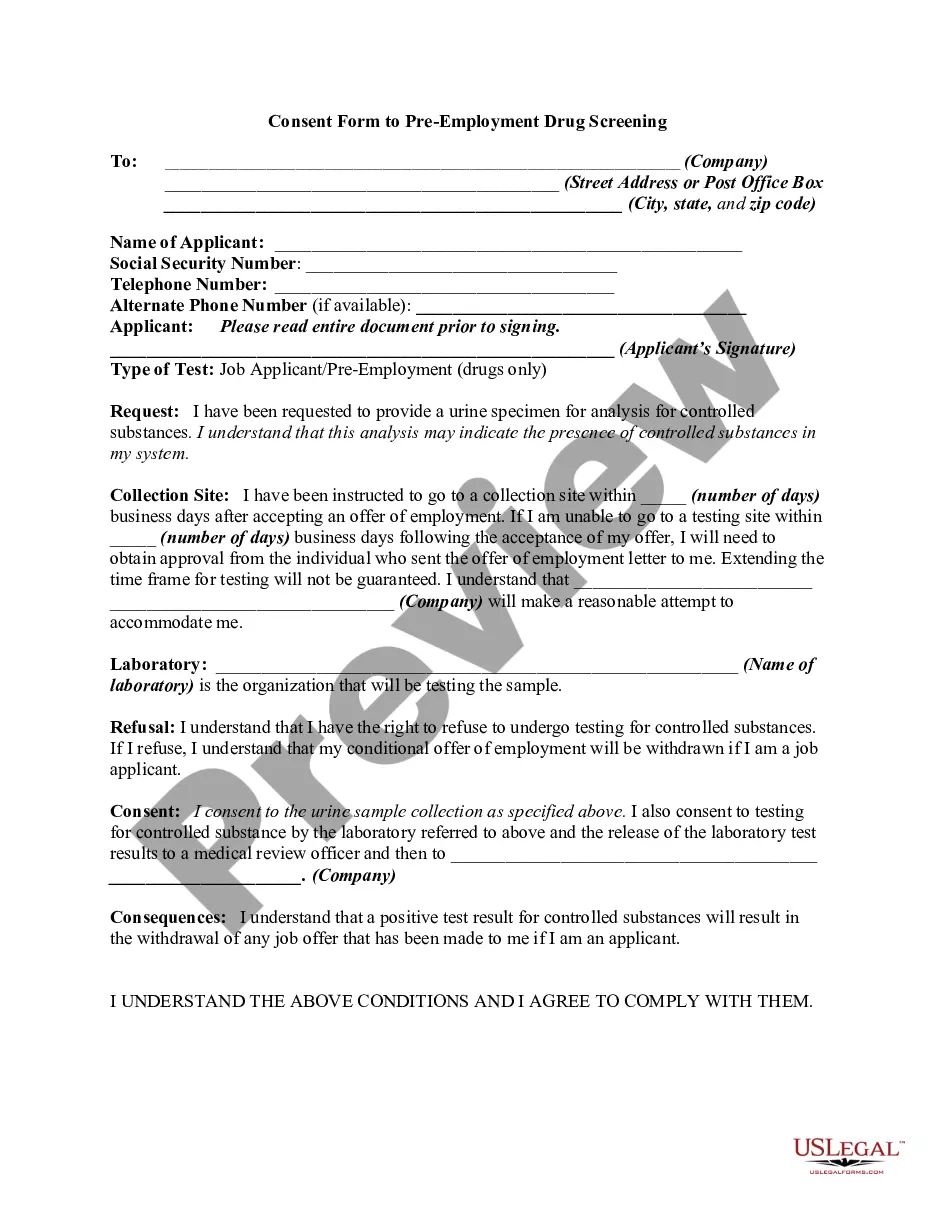
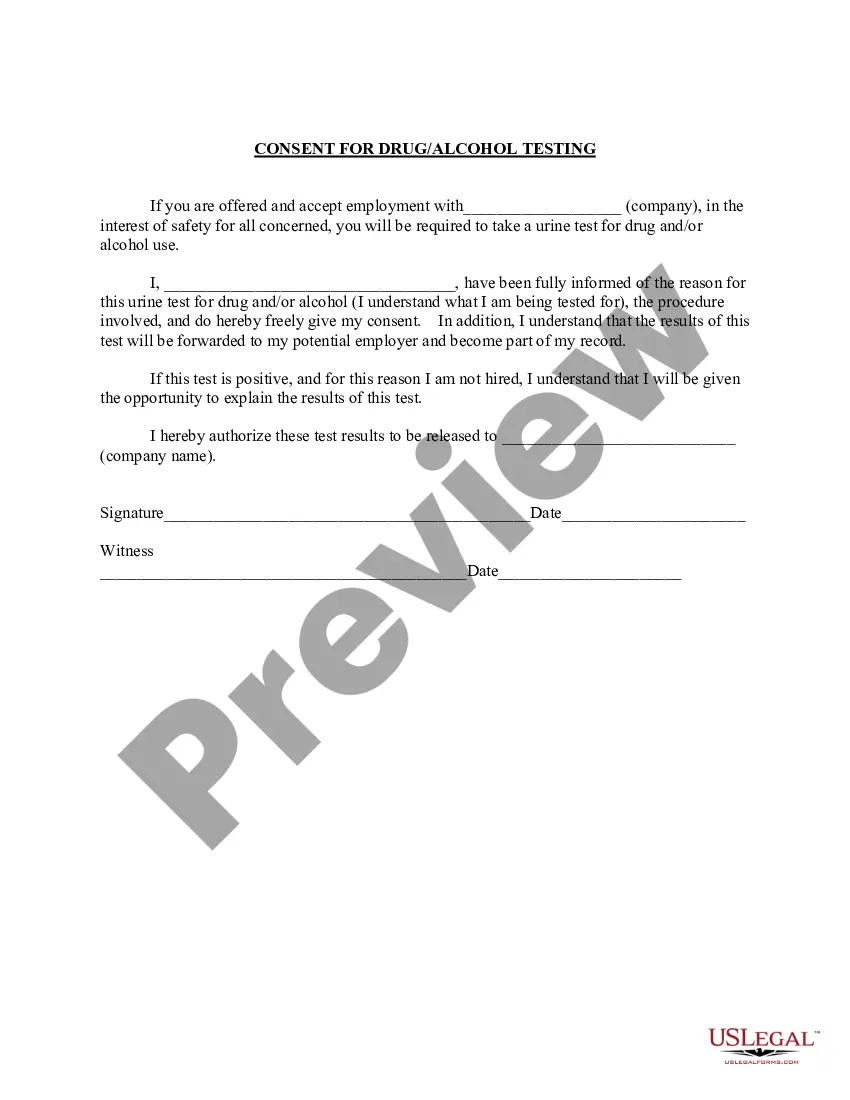
- Look at the form preview, if available, to confirm the form is what you need.
- Return to the search to find the right document if the Drug Test For Employment Thc does not meet your criteria.
- If you are confident about the form’s applicability, download it.
- If you are a registered user, click Log in to verify and access your selected forms in My documents.
- If you don't have an account yet, click Buy now to acquire the template.
- Choose the pricing option that fits your needs.
- Continue to the registration to complete your purchase.
- Finalize your purchase by selecting a payment method (credit card or PayPal).
- Select the document format for downloading Drug Test For Employment Thc.
- Once the form is on your device, you can modify it using the editor or print and complete it by hand.
Form popularity
FAQ
The cutoff levels for at-home THC tests can vary by brand but commonly range from 50 ng/ml to 100 ng/ml. These cutoffs are set to determine what qualifies as a positive result, aligning with standard laboratory testing thresholds. For individuals concerned about a drug test for employment THC, knowing the cutoff can help you choose the right testing kit and interpret the results accurately.
THC can be detected in your system anywhere from a few days to several weeks, depending on usage patterns. In occasional users, THC may remain detectable for 3 to 7 days, while chronic users may find it present for a month or more. Therefore, it's essential to understand this timeline if you are facing a drug test for employment THC.
The cut-off level for THC in a drug test for employment typically stands at 50 ng/mL for initial screenings. If a test result exceeds this threshold, confirmatory tests are conducted, which can use different cut-off levels. Knowing these figures can help you understand how sensitive these tests are and prepare accordingly for potential outcomes.
A drug test for employment THC typically screens for substances like marijuana, cocaine, opiates, and amphetamines. THC, the active compound in marijuana, is usually the primary focus of these tests. Testing labs analyze urine, blood, or hair samples to detect the presence of these substances. Therefore, if you are concerned about an upcoming test, it is wise to know what these tests can reveal.
?If someone is using delta-8-THC, the immunoassay we are using and likely other immunoassays which are out on the market will detect it. Once an immunoassay positive sample has been identified, then you need a chromatographic method to separate delta-8 and delta-9 because they are very similar structurally.
Urinalysis ? A urine test is the most common form of pre-employment drug testing and is typically conducted once a conditional offer of employment has been sent. A urine test can show traces of drug use even after the effects of the drug have worn off and remain in the body for an extended period of time.
Amphetamine (more on this below) and methamphetamine are the most commonly reported false positive.
URINE TESTING The urine test is the most common form of drug and alcohol testing. It may be conducted as part of pre-employment screening, randomly, or post-accident by employers, especially for employees in certain occupations. Currently, urinalysis is the only testing method approved for federally-mandated testing.
Urine colour slightly faded on addition of hydrogen peroxide, but not to an extent that would raise suspicion of adulteration. Considerable depletion of all endogenous steroids except T was observed on addition of hydrogen peroxide.