Warning Employee Draft Without Notice
Description
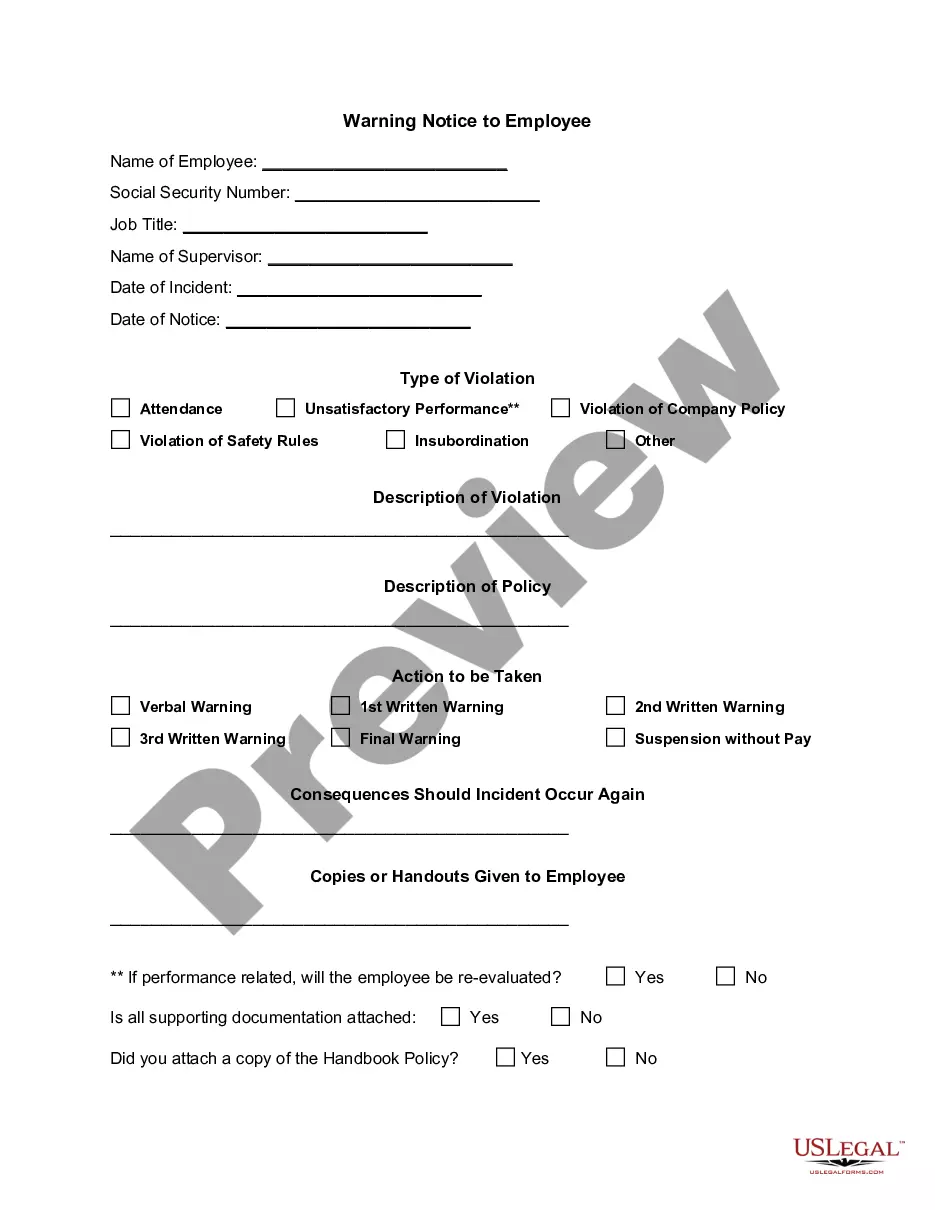
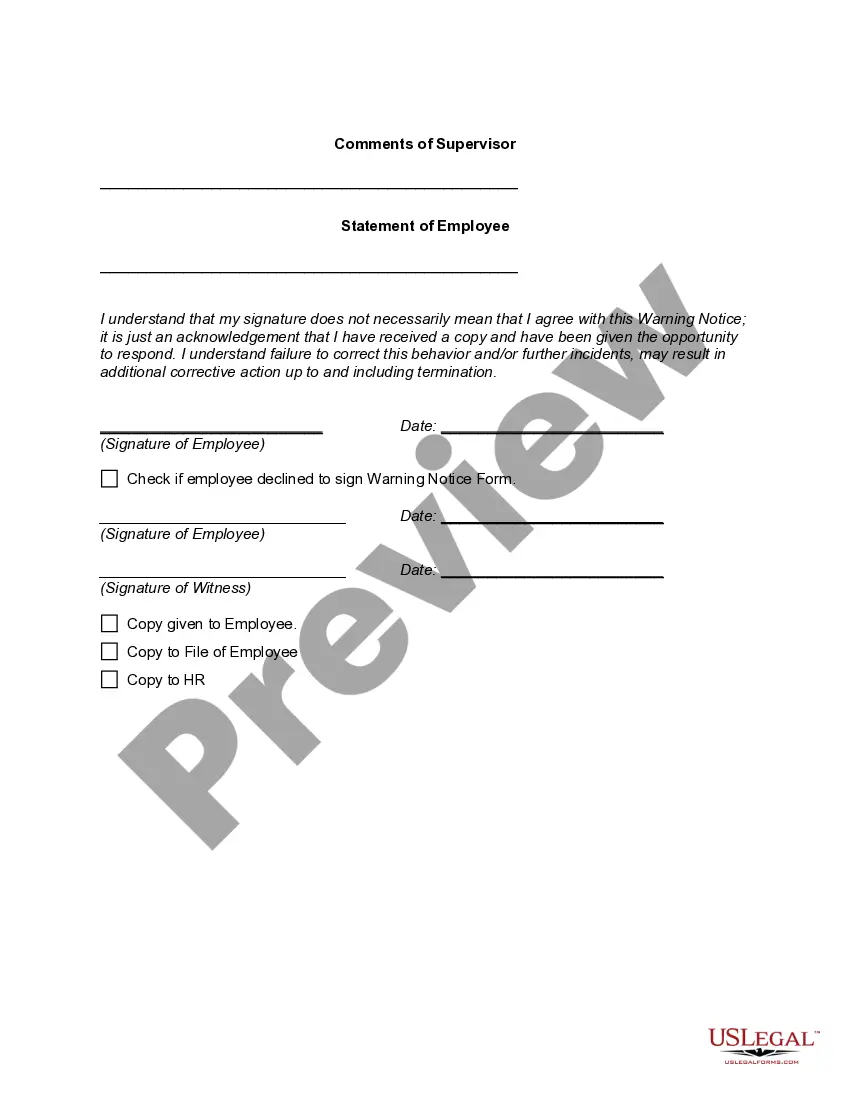
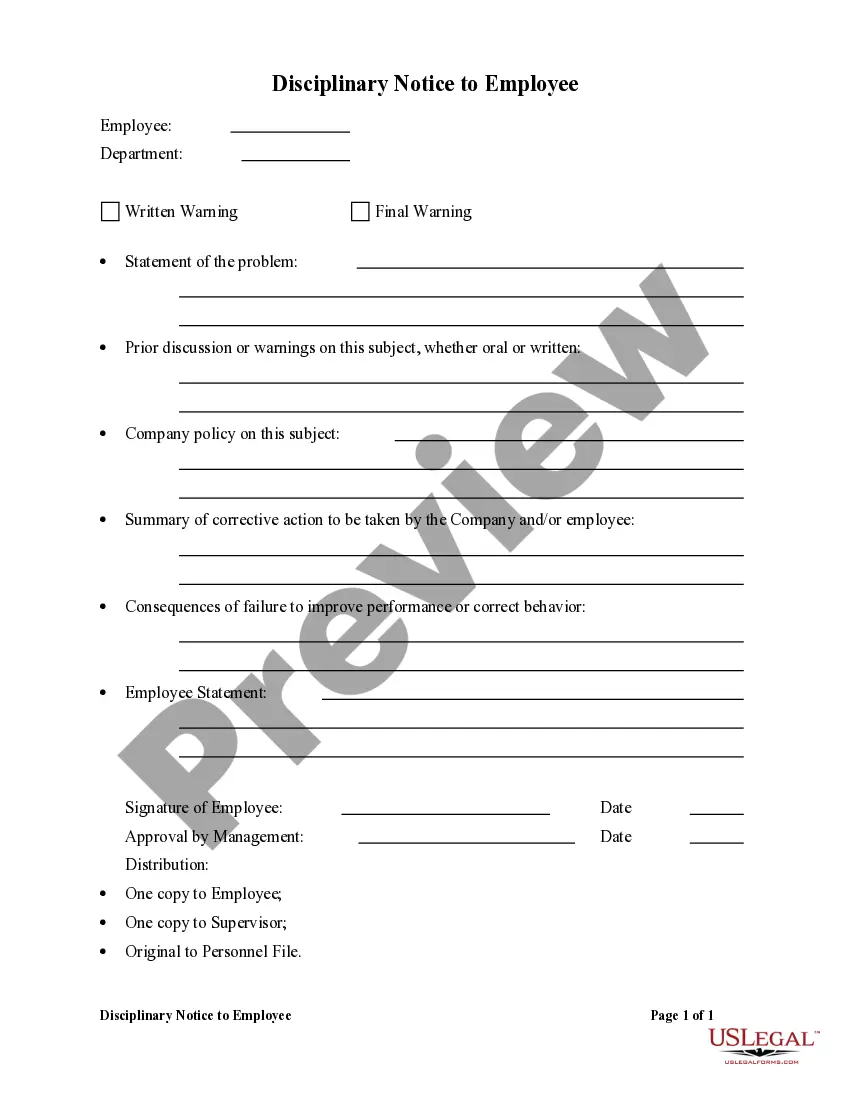
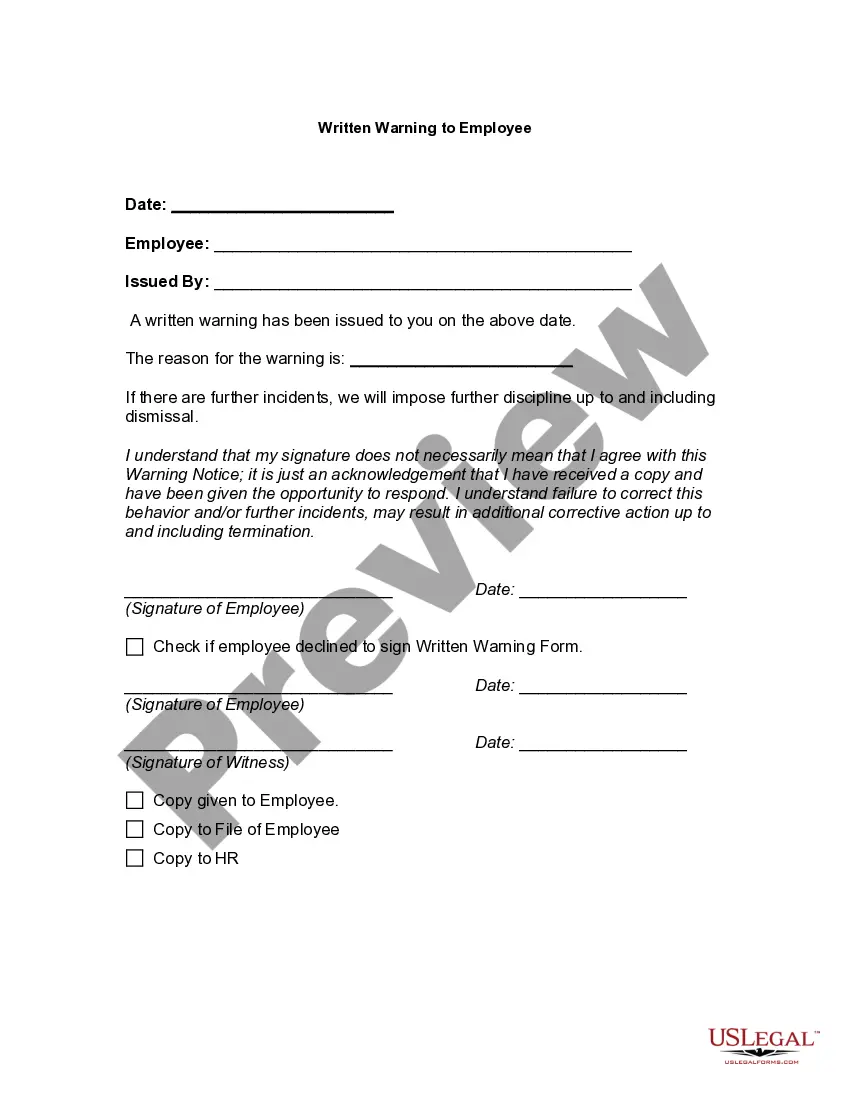
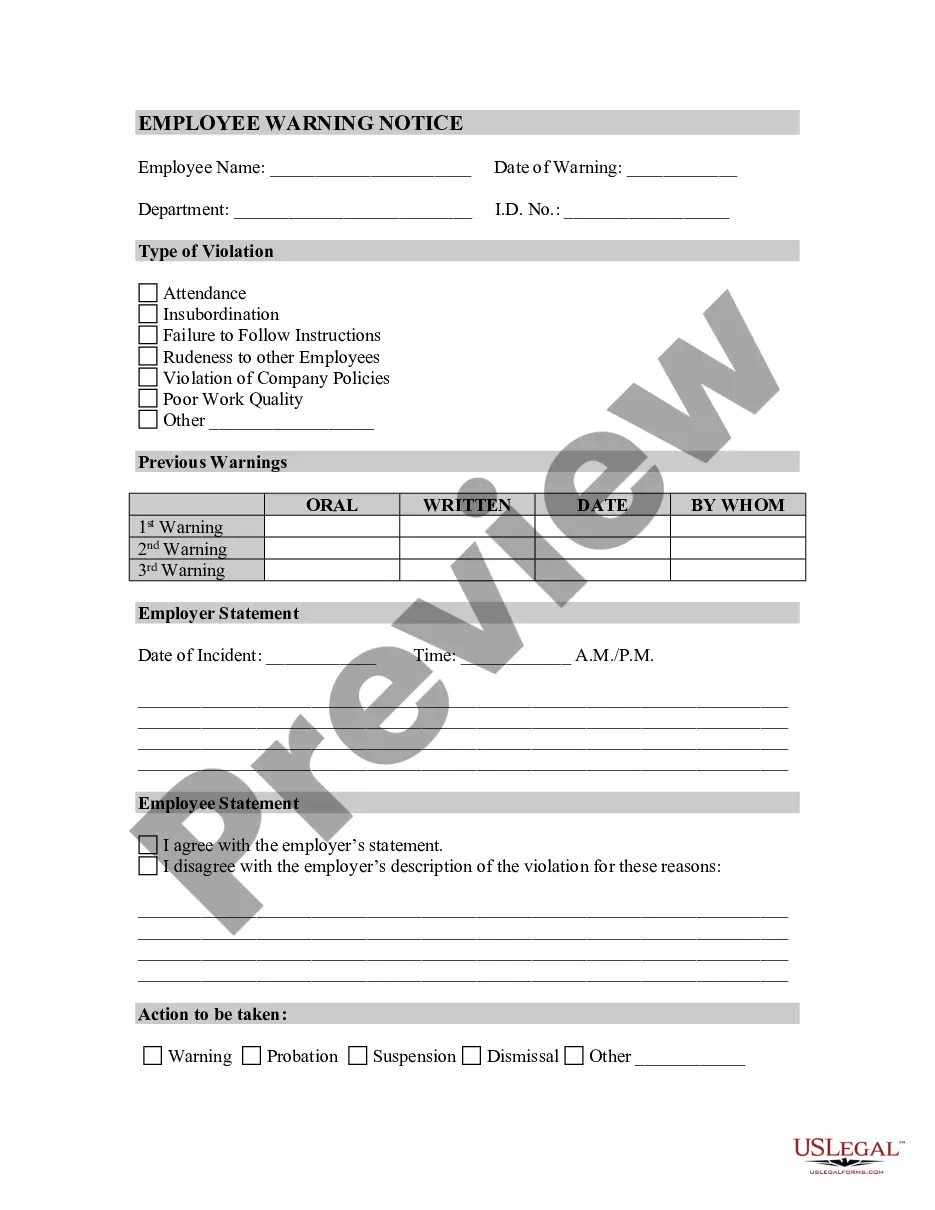
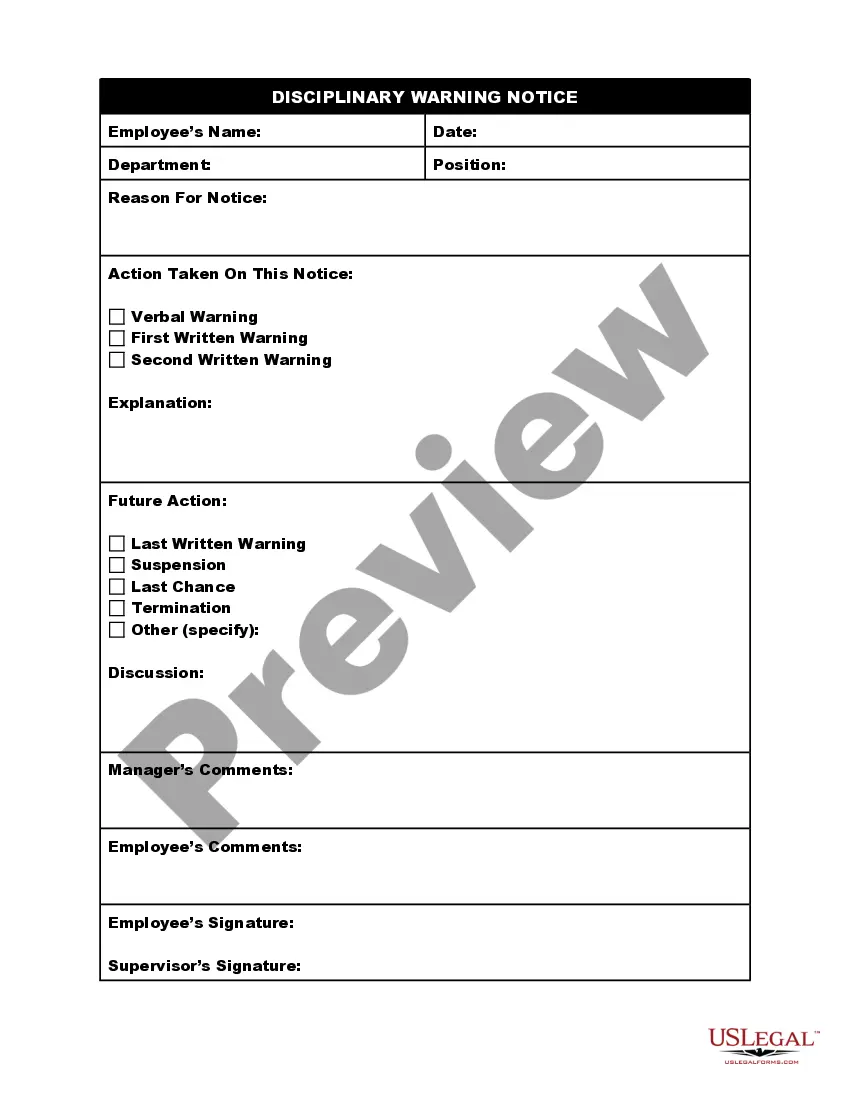
Get your form ready online
Our built-in tools help you complete, sign, share, and store your documents in one place.
Make edits, fill in missing information, and update formatting in US Legal Forms—just like you would in MS Word.
Download a copy, print it, send it by email, or mail it via USPS—whatever works best for your next step.
Sign and collect signatures with our SignNow integration. Send to multiple recipients, set reminders, and more. Go Premium to unlock E-Sign.
If this form requires notarization, complete it online through a secure video call—no need to meet a notary in person or wait for an appointment.
We protect your documents and personal data by following strict security and privacy standards.

Make edits, fill in missing information, and update formatting in US Legal Forms—just like you would in MS Word.

Download a copy, print it, send it by email, or mail it via USPS—whatever works best for your next step.

Sign and collect signatures with our SignNow integration. Send to multiple recipients, set reminders, and more. Go Premium to unlock E-Sign.

If this form requires notarization, complete it online through a secure video call—no need to meet a notary in person or wait for an appointment.

We protect your documents and personal data by following strict security and privacy standards.
Looking for another form?






Form popularity
FAQ
Grounds for a verbal warning typically include minor infractions, performance issues, or behavioral concerns. It is crucial to present clear evidence of the issue at hand. A verbal warning should be aimed at encouraging improvement while keeping the conversation constructive. If needed, you can follow it up with a formal warning employee draft without notice for documentation.
Start your warning letter by clearly identifying the specific rule that was violated. Provide context as to why the rule is essential for workplace operations. Include any prior warnings or discussions related to the violation to show a history of non-compliance. A warning employee draft without notice can help standardize the writing process.
Yes, a verbal warning can be issued immediately without prior notice. This approach can be effective for addressing minor issues directly as they arise. However, it is still advisable to document the verbal warning for future reference. Following up with a warning employee draft without notice may also be useful for record-keeping.
When writing someone up for not following procedures, thoroughly document the incidents, including dates and relevant details. Be clear about the procedures in question and the consequences of repeated disregard. This formal documentation is essential for any potential future actions. Utilizing a warning employee draft without notice ensures everything is covered.
Addressing an employee who does not follow procedures requires a calm and factual approach. Start by discussing the specific instances where procedures were not followed and listen to their perspective. Make sure they understand the importance of adhering to these procedures for overall workplace efficiency. A clear warning employee draft without notice can be a helpful follow-up.
To create a warning letter for not following instructions, pinpoint the specific instructions that were overlooked. Provide concrete examples of the effects this had on productivity or team dynamics. Encourage the employee to communicate any challenges they may face in following instructions. Integrating a warning employee draft without notice can enhance clarity.
In your warning letter for leaving early without permission, specify the date and time of the incident. Highlight the impact that the early departure had on the team or workflow. Provide a clear reminder of the company's expectations around attendance to ensure understanding. Using a warning employee draft without notice can help maintain consistency.
Begin by identifying the employee and the dates of unauthorized leave in your warning letter. Clearly outline the company’s leave policies and any consequences of not adhering to them. It’s crucial to maintain a professional tone while emphasizing the importance of adherence to procedures, possibly incorporating a warning employee draft without notice.
When writing a warning letter for leave without permission, start with a clear statement of the incident. Mention the dates of the unauthorized leave and any potential impacts on the workplace. Include a reminder of the company's leave policies to provide context. Reference a warning employee draft without notice for a structured approach.
To present a written warning effectively, schedule a private meeting with the employee in a neutral environment. Clearly explain the reasons for the warning and ensure the employee understands the content of the warning letter. Encourage them to ask questions or express concerns regarding the matter. You may use a warning employee draft without notice for clarity.
