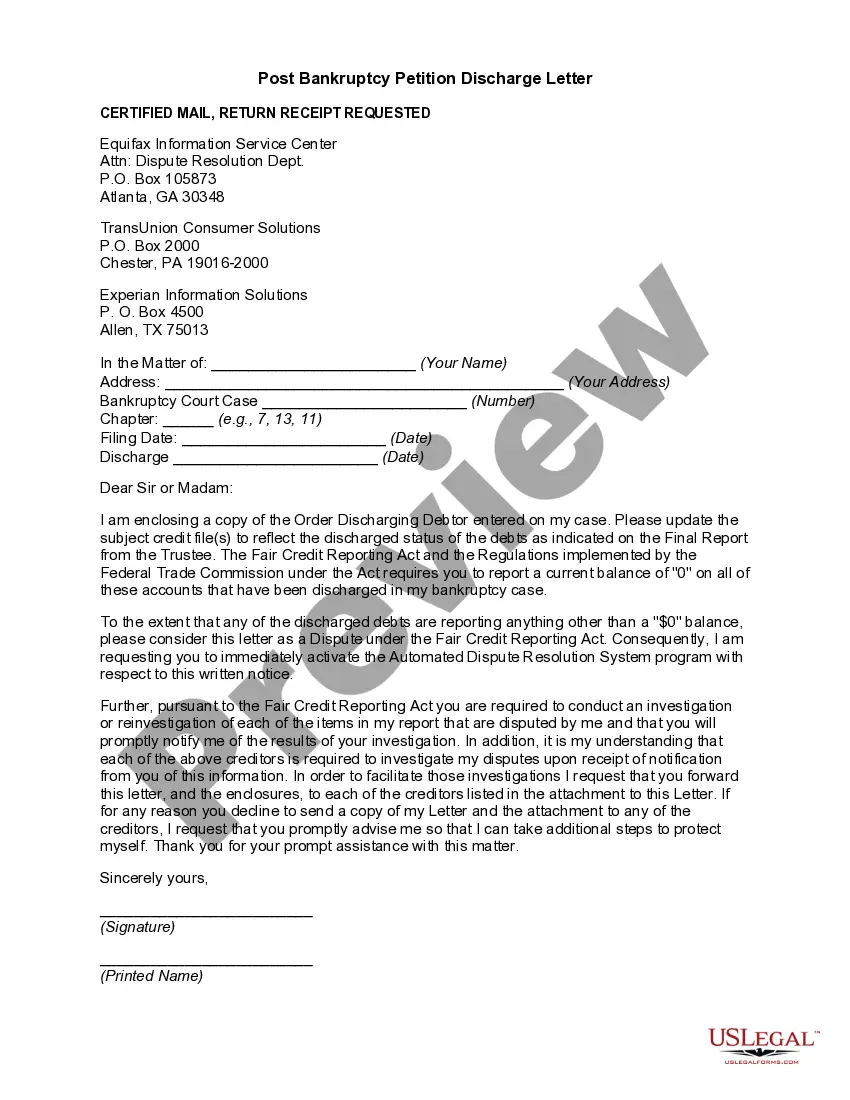
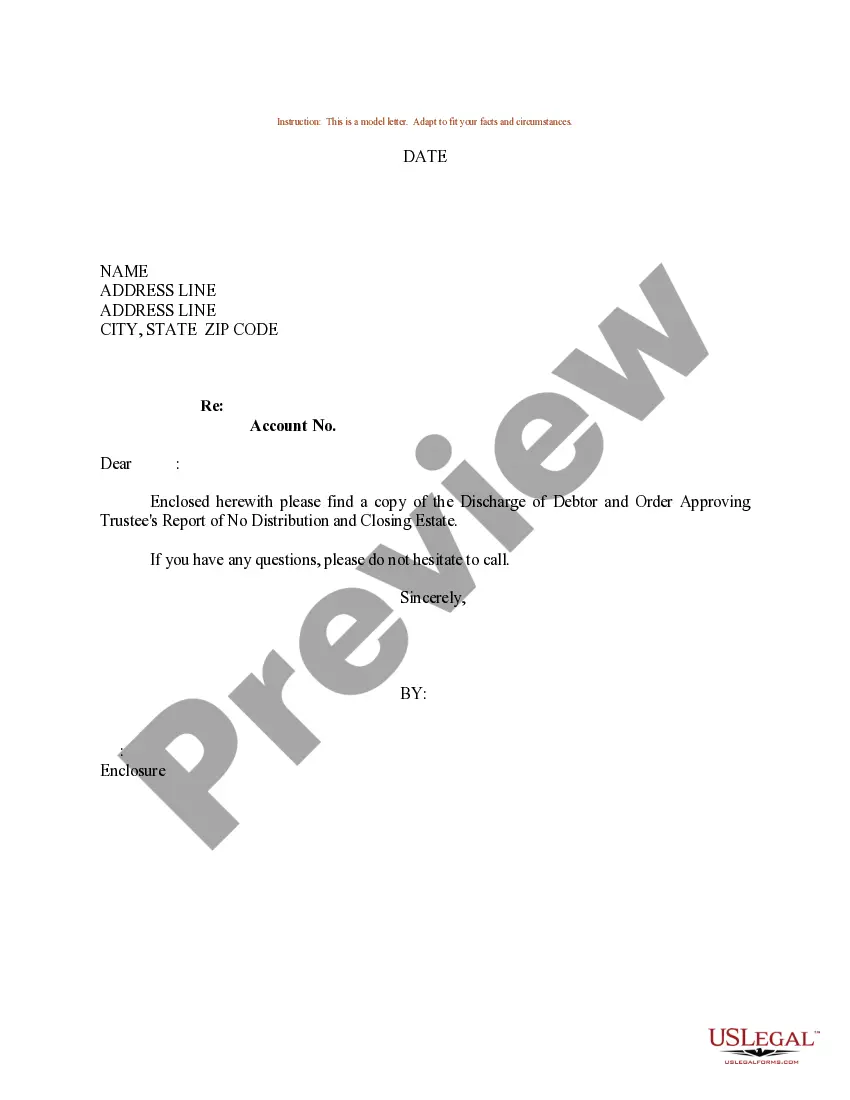
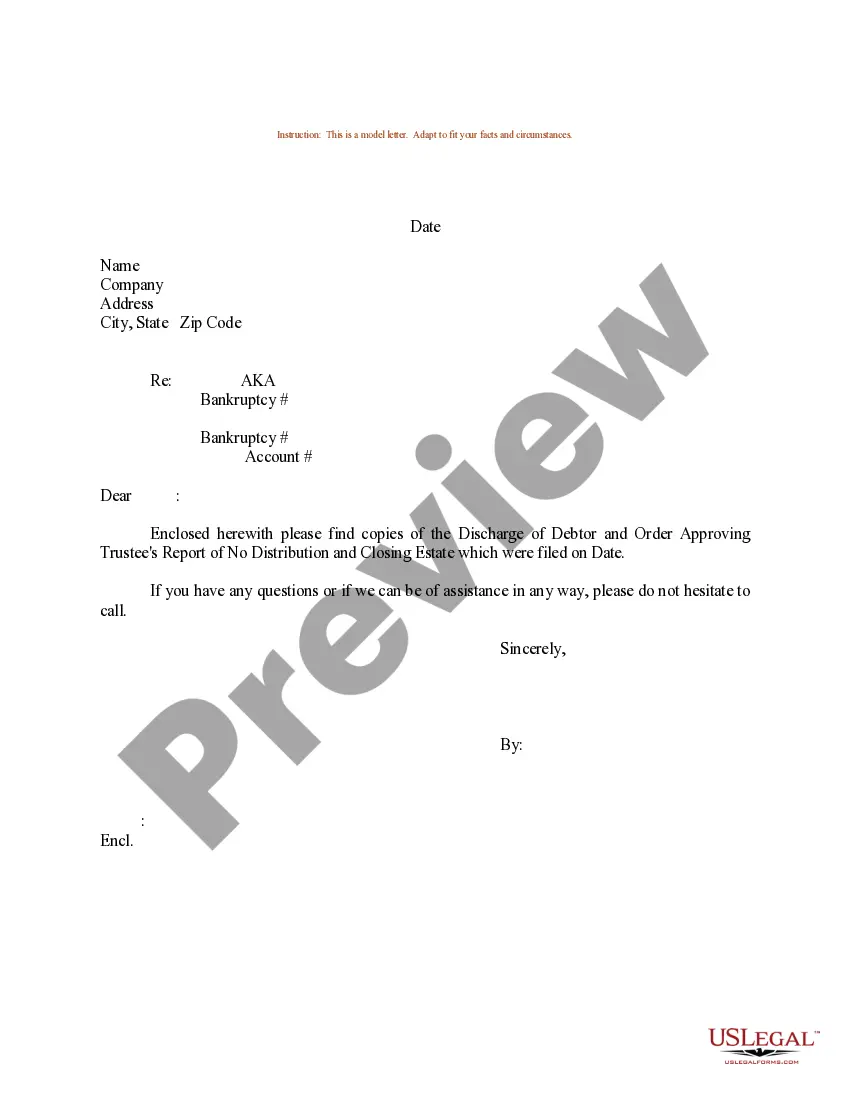
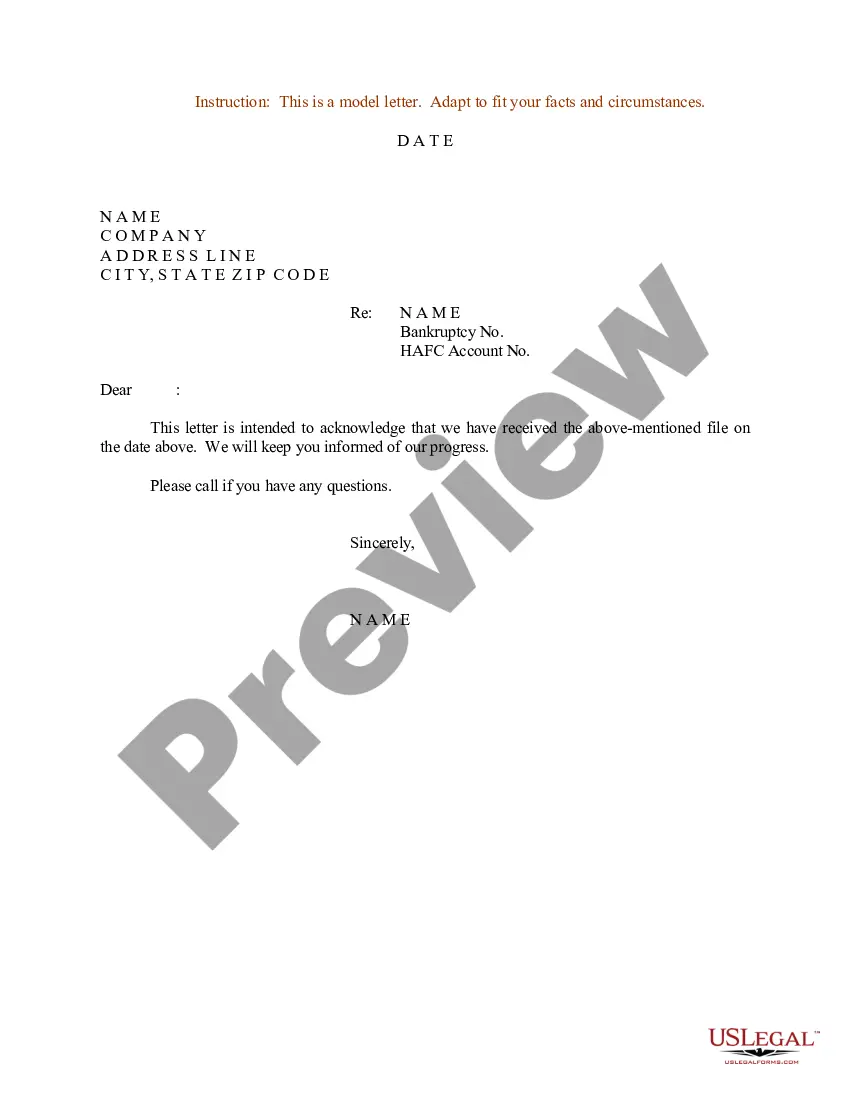
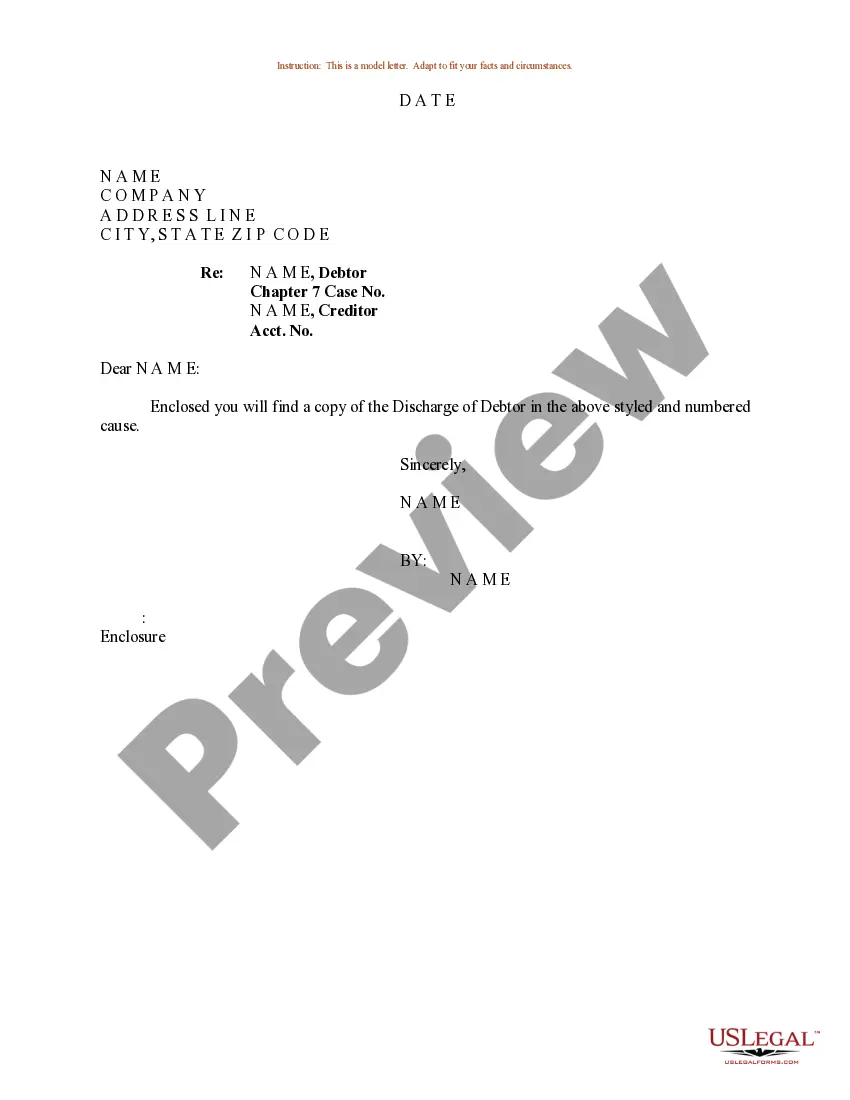
Bankruptcy Closed Without Discharge
Description
Get your form ready online
Our built-in tools help you complete, sign, share, and store your documents in one place.
Make edits, fill in missing information, and update formatting in US Legal Forms—just like you would in MS Word.
Download a copy, print it, send it by email, or mail it via USPS—whatever works best for your next step.
Sign and collect signatures with our SignNow integration. Send to multiple recipients, set reminders, and more. Go Premium to unlock E-Sign.
If this form requires notarization, complete it online through a secure video call—no need to meet a notary in person or wait for an appointment.
We protect your documents and personal data by following strict security and privacy standards.

Make edits, fill in missing information, and update formatting in US Legal Forms—just like you would in MS Word.

Download a copy, print it, send it by email, or mail it via USPS—whatever works best for your next step.

Sign and collect signatures with our SignNow integration. Send to multiple recipients, set reminders, and more. Go Premium to unlock E-Sign.

If this form requires notarization, complete it online through a secure video call—no need to meet a notary in person or wait for an appointment.

We protect your documents and personal data by following strict security and privacy standards.
Looking for another form?







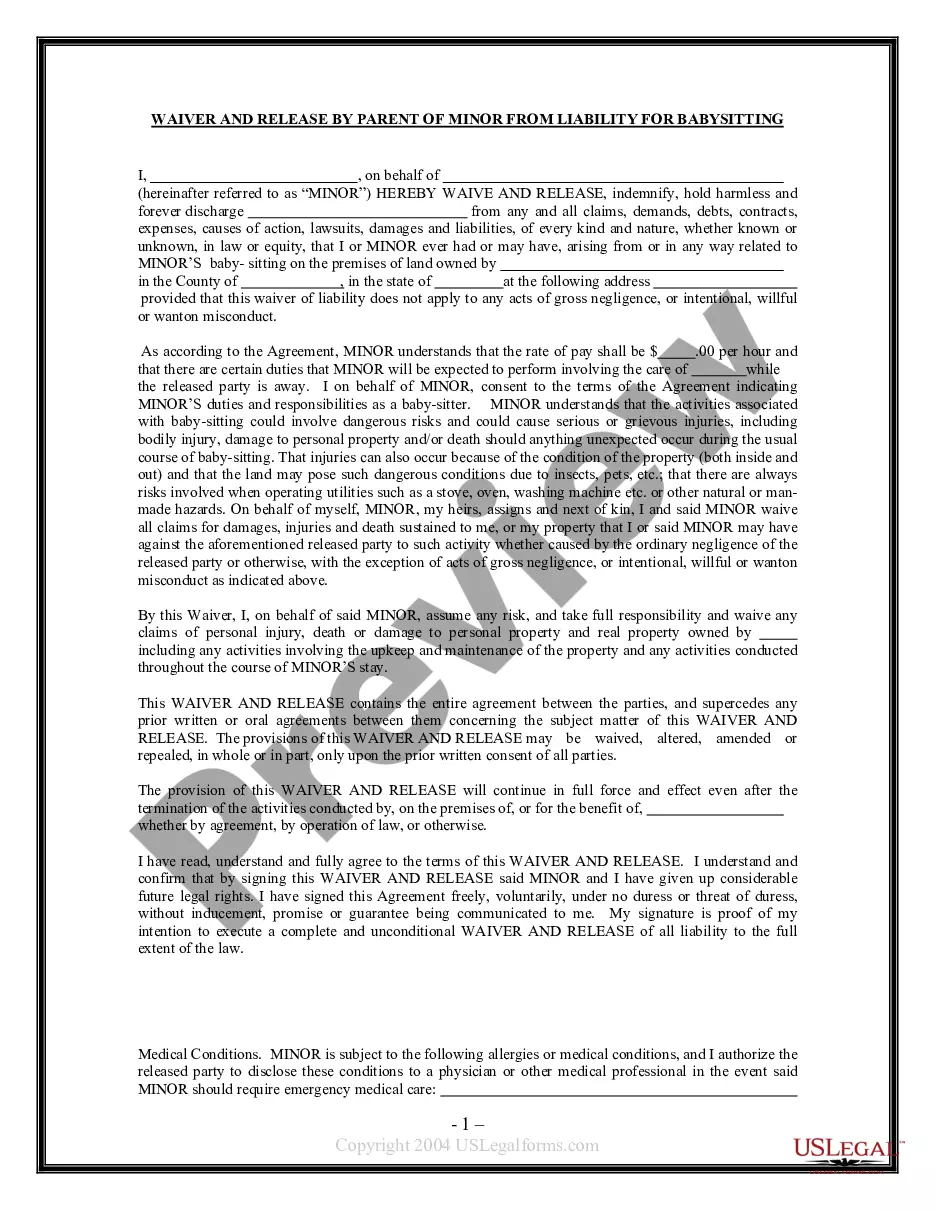


How to fill out Post Bankruptcy Petition Discharge Letter?
Locating a reliable source for obtaining the most up-to-date and pertinent legal templates is a significant part of navigating bureaucracy. Selecting the appropriate legal documents requires precision and meticulousness, which is why it is essential to obtain samples of Bankruptcy Closed Without Discharge exclusively from trustworthy sources, such as US Legal Forms. An incorrect template can squander your time and delay your situation. With US Legal Forms, you need not be overly concerned. You can access and review all the information regarding the document’s application and appropriateness for your situation and in your jurisdiction.
Follow these outlined steps to complete your Bankruptcy Closed Without Discharge.
Once you have the form on your device, you can modify it using the editor or print it out and fill it in manually. Eliminate the hassle associated with your legal documentation. Explore the vast US Legal Forms collection where you can discover legal templates, assess their relevance to your situation, and download them instantly.
- Utilize the catalog navigation or search bar to find your template.
- Examine the form’s details to determine if it meets the criteria of your state and locality.
- Preview the form, if available, to confirm that it is the one you need.
- Return to the search and find the correct template if the Bankruptcy Closed Without Discharge does not fulfill your requirements.
- Once you are confident about the form’s applicability, download it.
- If you are a registered user, click Log in to verify and access your chosen templates in My documents.
- If you haven't created an account yet, click Buy now to acquire the form.
- Select the pricing option that matches your needs.
- Proceed to registration to finalize your transaction.
- Complete your payment by choosing a payment method (credit card or PayPal).
- Choose the file format for downloading Bankruptcy Closed Without Discharge.
Form popularity
FAQ
Hear this out loud PauseClosed Without a Discharge Cases are closed without discharge when the debtor does not complete the required debtor education required as a condition of discharge. The court may also close your case without discharge if you failed the last step for getting rid of debt. Your filing may not have been filed timely.
Hear this out loud PauseUnpacking Denial of Discharge Denial of your Chapter 7 discharge doesn't end the case, though. The Chapter 7 trustee will still gather and liquidate any non-exempt assets; all you lose is your fresh start free of those debts. Even if you file a Chapter 7 bankruptcy in the future, those debts won't be wiped out.
Hear this out loud PauseIn most bankruptcy cases, shortly after the final discharge order is entered by the court, the case is closed. However, this is not always the case. In some Chapter 7 bankruptcy cases, the case may remain open for months, or even years, after the discharge has been granted.
Hear this out loud PauseDebts not discharged include debts for alimony and child support, certain taxes, debts for certain educational benefit overpayments or loans made or guaranteed by a governmental unit, debts for willful and malicious injury by the debtor to another entity or to the property of another entity, debts for death or personal ...
Most Chapter 7 bankruptcy cases take between 4 - 6 months to complete after filing the case with the court. The order erasing eligible debts can be granted as early as 90 days from the date the case was filed. No-asset cases are typically closed a couple of weeks after the discharge date.