Renters Rights For Pets
Description
Get your form ready online
Our built-in tools help you complete, sign, share, and store your documents in one place.
Make edits, fill in missing information, and update formatting in US Legal Forms—just like you would in MS Word.
Download a copy, print it, send it by email, or mail it via USPS—whatever works best for your next step.
Sign and collect signatures with our SignNow integration. Send to multiple recipients, set reminders, and more. Go Premium to unlock E-Sign.
If this form requires notarization, complete it online through a secure video call—no need to meet a notary in person or wait for an appointment.
We protect your documents and personal data by following strict security and privacy standards.

Make edits, fill in missing information, and update formatting in US Legal Forms—just like you would in MS Word.

Download a copy, print it, send it by email, or mail it via USPS—whatever works best for your next step.

Sign and collect signatures with our SignNow integration. Send to multiple recipients, set reminders, and more. Go Premium to unlock E-Sign.

If this form requires notarization, complete it online through a secure video call—no need to meet a notary in person or wait for an appointment.

We protect your documents and personal data by following strict security and privacy standards.
Looking for another form?






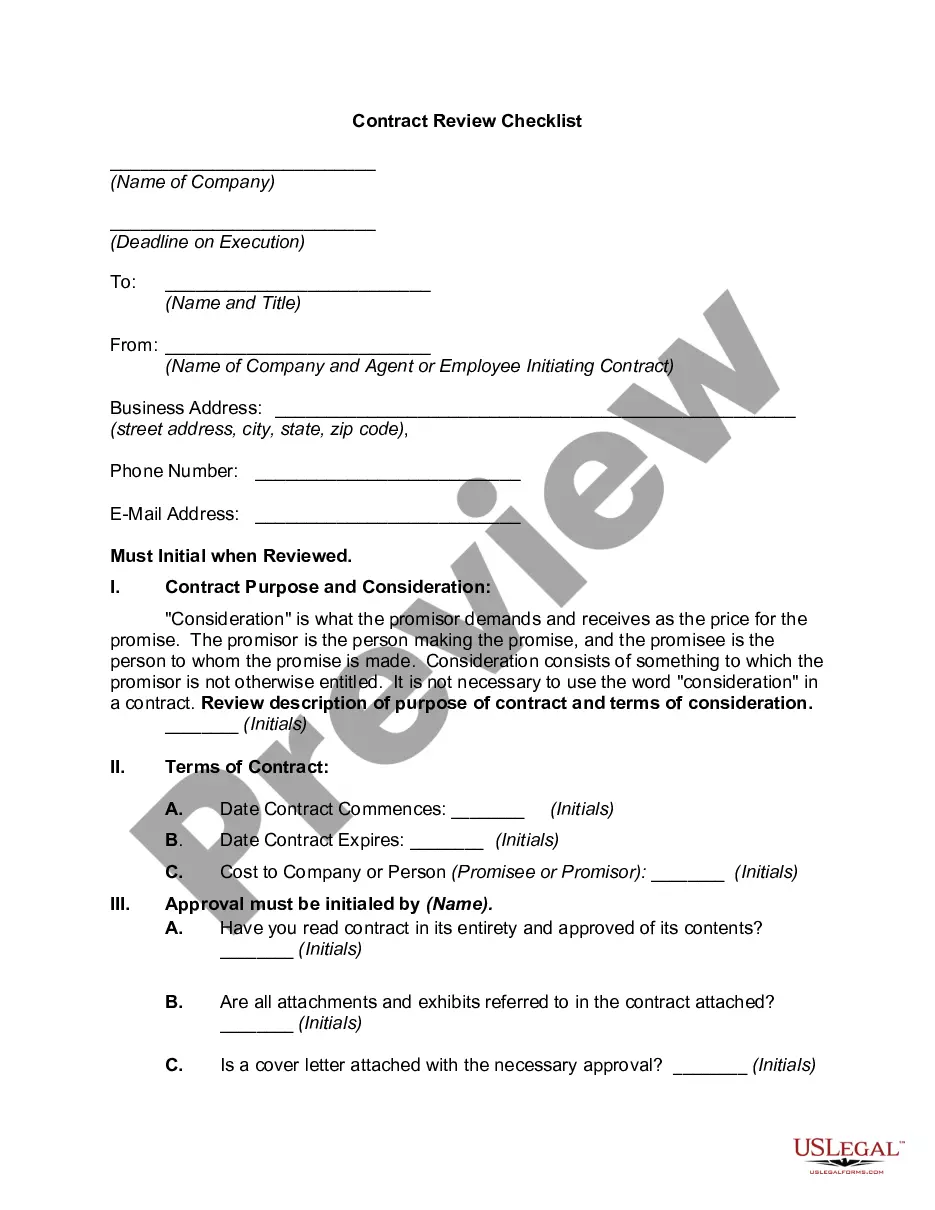
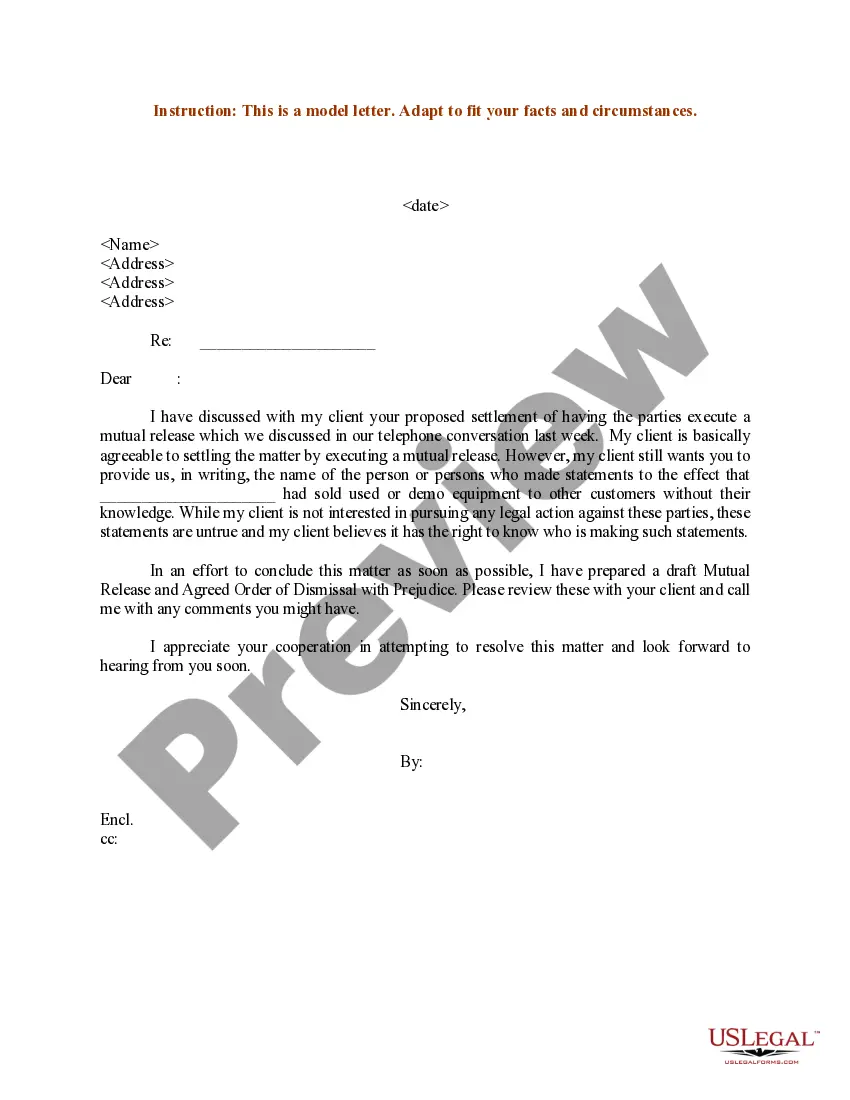


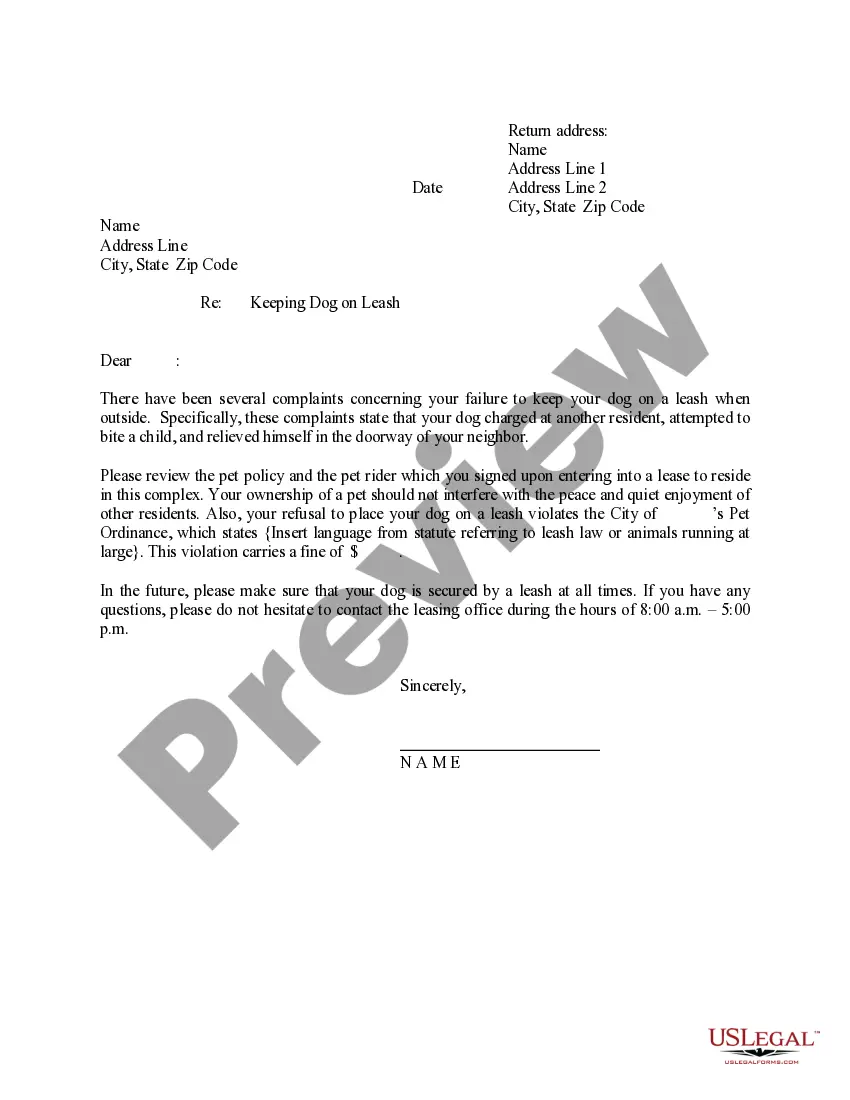
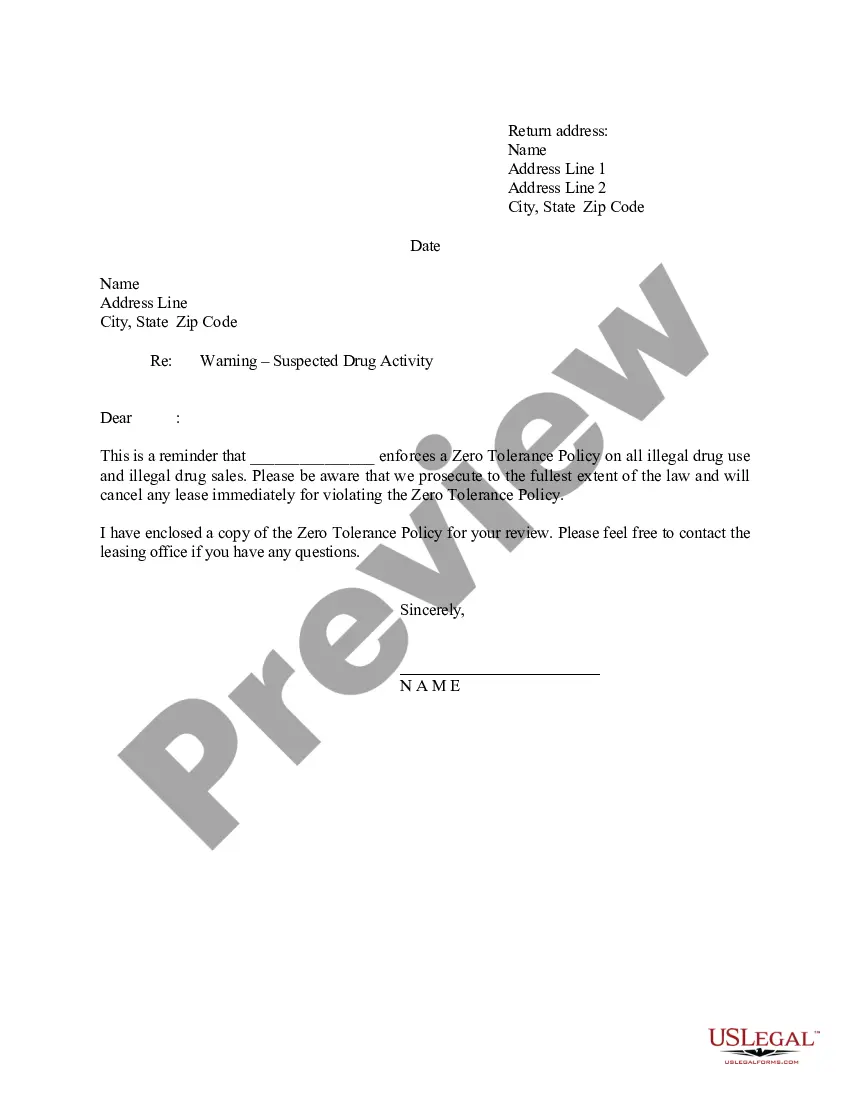
How to fill out Letter - Warning To Renter Regarding The Behavior Of The Renters Dog?
Regardless of whether it’s for corporate purposes or personal issues, everyone eventually has to handle legal matters at some point in their life.
Filling out legal paperwork requires meticulous care, starting from selecting the correct form template.
With an extensive US Legal Forms catalog available, you never need to waste time searching for the correct template online. Take advantage of the library’s easy navigation to find the appropriate form for any situation.
- Acquire the document you require by utilizing the search bar or browsing the catalog.
- Review the form’s description to ensure it aligns with your circumstances, state, and county.
- Click on the form’s preview to view it.
- If it is the wrong document, return to the search function to find the Renters Rights For Pets format you need.
- Download the template when it suits your requirements.
- If you possess a US Legal Forms account, simply click Log in to access previously stored documents in My documents.
- If you do not have an account yet, you can acquire the form by clicking Buy now.
- Choose the appropriate pricing option.
- Fill out the account registration form.
- Select your payment method: you can utilize a credit card or a PayPal account.
- Choose the document format you prefer and download the Renters Rights For Pets.
- Once it is stored, you can fill out the form using editing software or print it out to complete it by hand.
Form popularity
FAQ
Navigating a no-pet policy requires caution and respect for your lease terms. You can inquire about potential exceptions, such as having a certified emotional support animal, which sometimes bypasses these rules. Keep in mind your renters rights for pets, and be transparent with your landlord if you decide to pursue this route. If you need assistance, platforms like USLegalForms can provide guidance on the legal aspects of your request.
If a landlord discovers a pet in a no-pet apartment, they may issue a warning or impose fines. In serious cases, they could initiate eviction proceedings against you. Being aware of your renters rights for pets is crucial during such confrontations. Consider using resources like USLegalForms to find appropriate responses or agreements for your situation.
Yes, California landlords can enforce no-pet policies in rental agreements. However, they must comply with state laws regarding assistance animals and emotional support pets. Knowing your renters rights for pets can give you an advantage if you feel your rights are being compromised. Always review your lease and local regulations, as these can influence your situation significantly.
To request permission for a pet, draft a sincere and respectful letter to your landlord outlining your reasons. Highlight your ability to maintain the property, your commitment to responsible pet ownership, and any benefits having a pet can bring. Clearly reference your renters rights for pets to strengthen your case. Staying calm and polite during this conversation can help foster a positive response from your landlord.
When your landlord communicates a no-pets policy, it's important to respect their rules unless there are exceptions in your lease agreement. Certain situations, like emotional support animals, may provide grounds for required accommodations. Empower yourself by knowing your renters rights for pets, which can help you address any potential loopholes. Remember, open dialogue with your landlord can sometimes lead to a resolution.
If you keep a pet in an apartment without permission, you risk facing eviction. Landlords can enforce their pet policies, which may include fines or notice to vacate. Understanding your renters rights for pets can help you navigate this situation. Familiarize yourself with local laws, as some regions have specific regulations regarding pet policies.
A no pet policy prohibits tenants from having pets in their rental units. This policy is common in many apartment buildings and is intended to maintain a certain environment. Knowing your renters rights for pets can provide you guidance on how to approach such policies when searching for a pet-friendly home. Consider discussing potential flexibility with your landlord if needed.
A pet policy outlines the regulations regarding pet ownership in rental properties. This policy may specify which types of animals are allowed, if any, and include rules about deposits and pet behavior. Being aware of your renters rights for pets includes understanding these policies fully. It can help you make informed decisions about your living situation.
Yes, a landlord can evict a tenant for dog sitting if it violates the no pet policy stated in the lease. Most landlords view this as non-compliance with the rental agreement. To protect your renters rights for pets, it is best to discuss your intentions with your landlord before taking on such responsibilities. Transparency can often lead to a more favorable outcome.
If a landlord enforces a no pet policy, they can prohibit dog visits indefinitely, as long as those terms are included in the lease. It’s important to respect these guidelines to maintain a positive landlord-tenant relationship. Understanding your renters rights for pets can help you navigate discussions with your landlord about visitation allowances. Engaging in polite conversation may lead to a temporary arrangement.