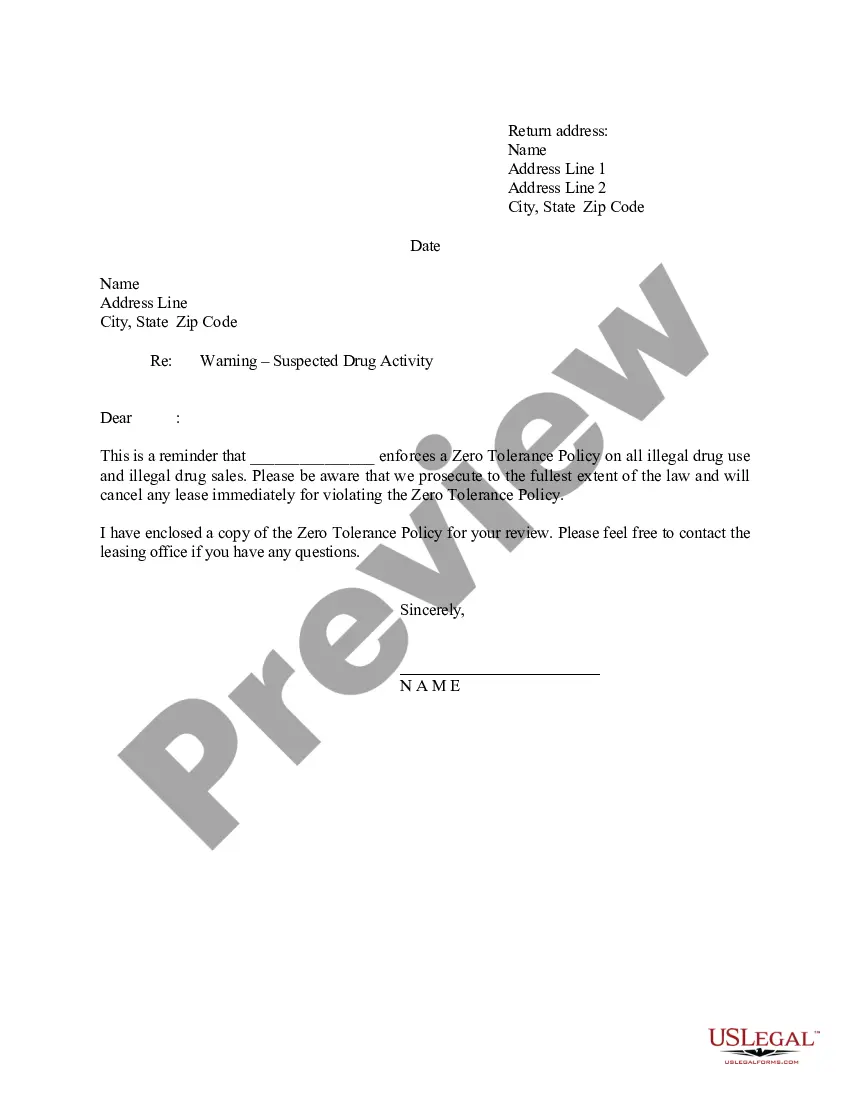
Letter Warning Regarding For Late Coming
Description
Get your form ready online
Our built-in tools help you complete, sign, share, and store your documents in one place.
Make edits, fill in missing information, and update formatting in US Legal Forms—just like you would in MS Word.
Download a copy, print it, send it by email, or mail it via USPS—whatever works best for your next step.
Sign and collect signatures with our SignNow integration. Send to multiple recipients, set reminders, and more. Go Premium to unlock E-Sign.
If this form requires notarization, complete it online through a secure video call—no need to meet a notary in person or wait for an appointment.
We protect your documents and personal data by following strict security and privacy standards.

Make edits, fill in missing information, and update formatting in US Legal Forms—just like you would in MS Word.

Download a copy, print it, send it by email, or mail it via USPS—whatever works best for your next step.

Sign and collect signatures with our SignNow integration. Send to multiple recipients, set reminders, and more. Go Premium to unlock E-Sign.

If this form requires notarization, complete it online through a secure video call—no need to meet a notary in person or wait for an appointment.

We protect your documents and personal data by following strict security and privacy standards.
Looking for another form?




How to fill out Letter - Warning To Renter Of Zero Tolerance Policy Regarding Drug Activity?
Locating a reliable source for up-to-date and pertinent legal forms constitutes a significant part of navigating bureaucracy. Identifying the appropriate legal documents demands accuracy and meticulousness, making it essential to acquire samples of Letter Warning Regarding For Late Coming exclusively from trustworthy sources like US Legal Forms. A flawed template could consume your time and delay your current situation. With US Legal Forms, you have minimal concerns. You can access and verify all details associated with the document's applicability and relevance to your specific circumstance and location.
Follow these steps to complete your Letter Warning Regarding For Late Coming.
Eliminate the hassle associated with your legal documents. Explore the extensive US Legal Forms library to locate legal templates, evaluate their significance to your scenario, and download them instantly.
- Utilize the library navigation or search tool to find your template.
- Examine the form's details to determine if it meets your state and county's requirements.
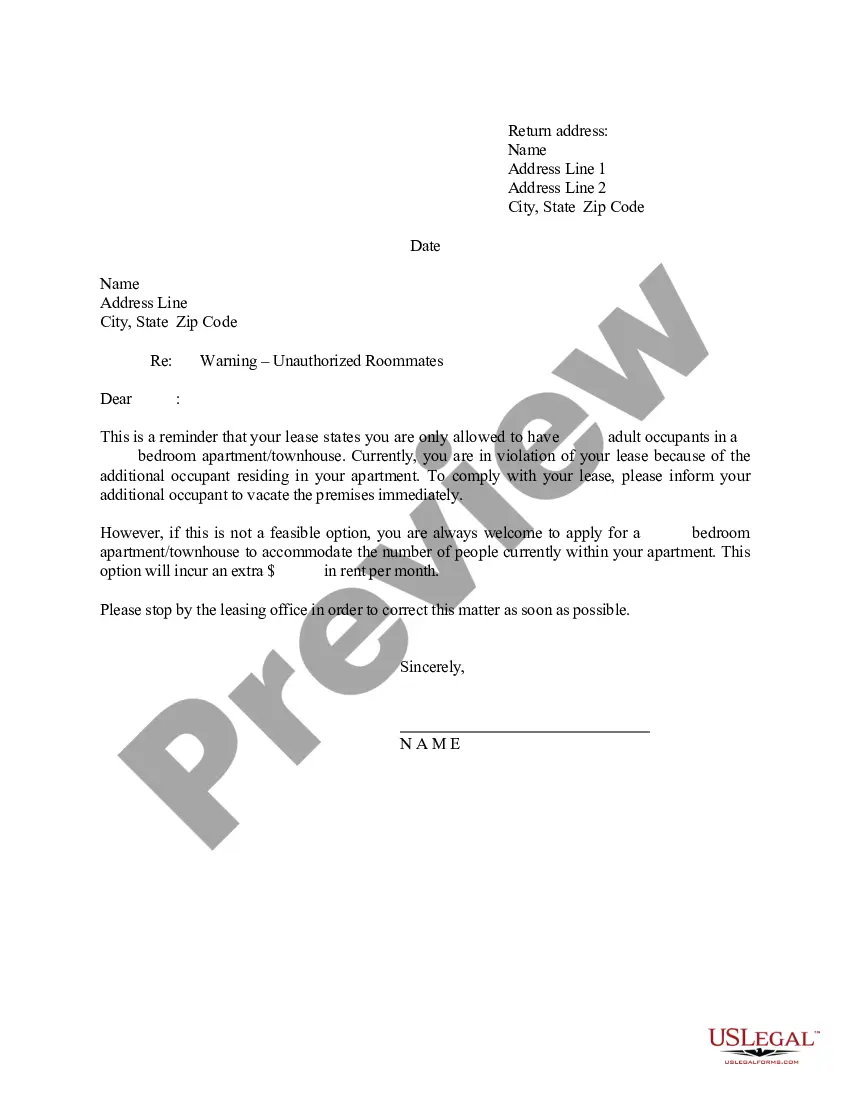
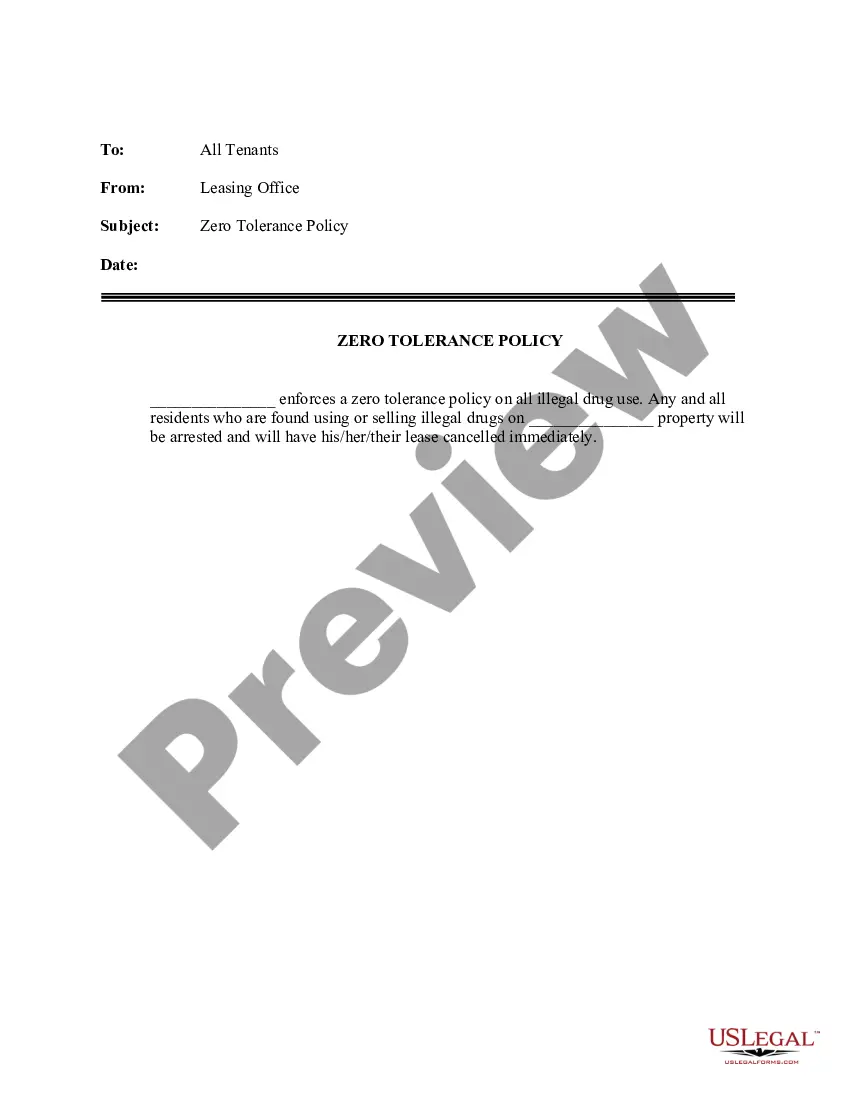
- Check the form preview, if available, to confirm the form is indeed the one you need.
- Return to the search and find the correct template if the Letter Warning Regarding For Late Coming does not conform to your specifications.
- Once you are confident about the form's applicability, download it.
- If you are a registered user, click Log in to verify and access your selected forms in My documents.
- If you do not possess an account yet, click Buy now to acquire the template.
- Select the pricing option that suits your needs.
- Proceed with the registration to finalize your purchase.
- Complete your transaction by selecting a payment method (credit card or PayPal).
- Choose the file format for downloading Letter Warning Regarding For Late Coming.
- After obtaining the form on your device, you can edit it with the editor or print it out to fill it in manually.
Form popularity
FAQ
To write a formal letter requesting permission, start with a polite greeting and a clear statement of your request. Provide context, explaining why you seek permission, and include any relevant details. Be sure to express appreciation for considering your request, reinforcing your commitment to the responsibilities involved.
A release of liability, also known as a liability waiver or a hold harmless agreement, is a contract in which one party agrees not to hold another party liable for damages or injury.
Key Takeaways On How To Write A Waiver Choose a waiver template. Determine the type of activity or service. State the purpose of the waiver. Identify the risks. Include a title. Include customer information. Include waiver terms. Include a statement of understanding.
What to Include in a Release of Liability Form Releasor: Full name of the releasor. Releasee: Full name of the releasee. Effective date: The date the waiver takes effect. Incident: Details of the injury, debt, or accident. Compensation: The total that must be paid in exchange for signing the waiver.
The main difference between releases and waivers is the transferring of ownership. When rights are released, they are transferred to another party. When rights are waived, they are gone altogether.
A waiver is a legally binding provision where either party in a contract agrees to voluntarily forfeit a claim without the other party being liable. Waivers can either be in written form or some form of action.
A release of liability, also known as a liability waiver or a hold harmless agreement, is a contract in which one party agrees not to hold another party liable for damages or injury.
A release and waiver agreement is an enforceable promise not to pursue legal action in exchange for compensation. The releasee gives money or some other form of compensation to the releasor, who then agrees not to press charges, sue, or take any other legal action against the releasee.