Zoning Codes For Real Estate
Description

Get your form ready online
Our built-in tools help you complete, sign, share, and store your documents in one place.
Make edits, fill in missing information, and update formatting in US Legal Forms—just like you would in MS Word.
Download a copy, print it, send it by email, or mail it via USPS—whatever works best for your next step.
Sign and collect signatures with our SignNow integration. Send to multiple recipients, set reminders, and more. Go Premium to unlock E-Sign.
If this form requires notarization, complete it online through a secure video call—no need to meet a notary in person or wait for an appointment.
We protect your documents and personal data by following strict security and privacy standards.

Make edits, fill in missing information, and update formatting in US Legal Forms—just like you would in MS Word.

Download a copy, print it, send it by email, or mail it via USPS—whatever works best for your next step.

Sign and collect signatures with our SignNow integration. Send to multiple recipients, set reminders, and more. Go Premium to unlock E-Sign.

If this form requires notarization, complete it online through a secure video call—no need to meet a notary in person or wait for an appointment.

We protect your documents and personal data by following strict security and privacy standards.
Looking for another form?

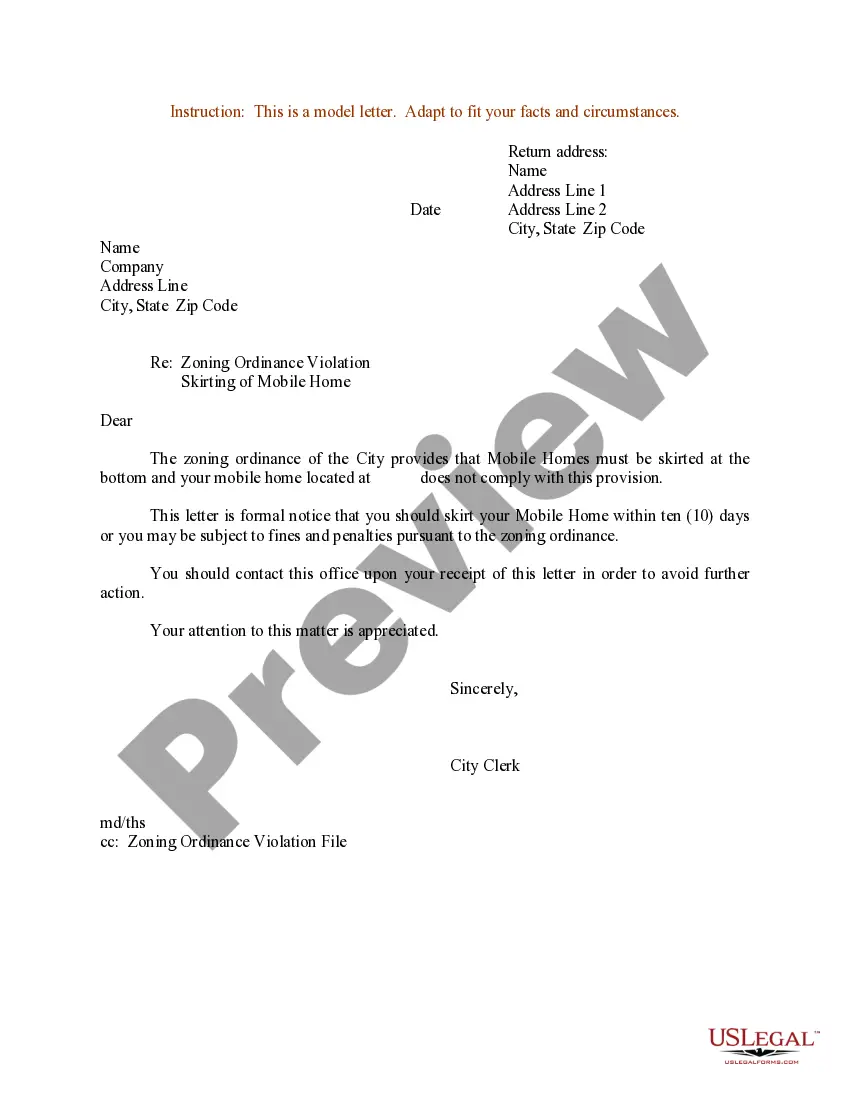
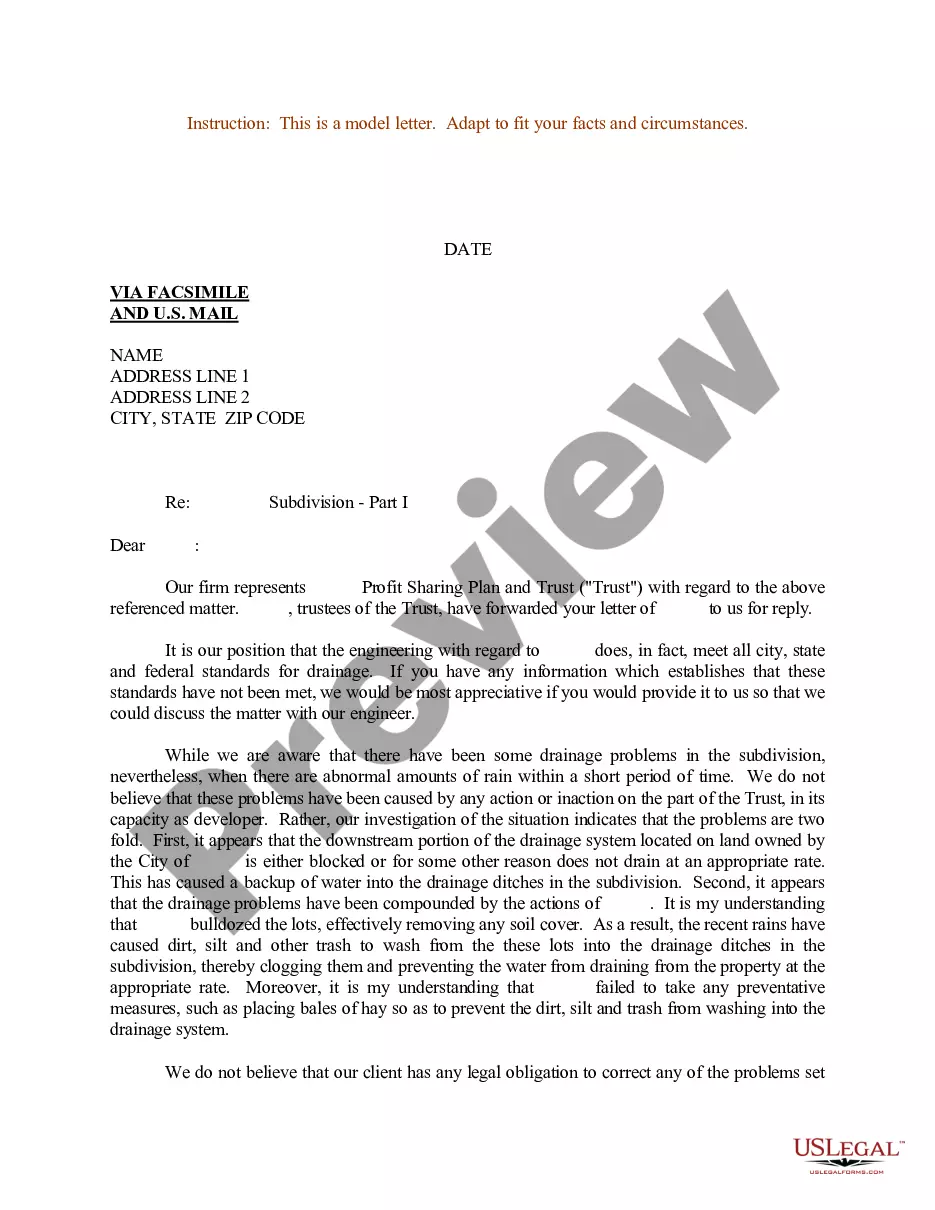
How to fill out Sample Letter For Violation Of Zoning Ordinance?
Whether for professional reasons or for personal matters, everyone must encounter legal issues at some point in their lives.
Completing legal documents requires meticulous care, starting from choosing the appropriate form sample.
With an extensive US Legal Forms catalog available, you do not need to waste time searching for the appropriate template online. Utilize the library’s user-friendly navigation to find the right form for any situation.
- Locate the template you require by using the search bar or browsing the catalog.
- Review the form’s description to confirm it aligns with your situation, state, and county.
- Click on the form’s preview to review it.
- If it is the incorrect form, return to the search option to find the Zoning Codes For Real Estate sample you require.
- Download the template once it fulfills your criteria.
- If you possess a US Legal Forms account, simply click Log in to access previously saved documents in My documents.
- If you do not have an account yet, you may download the form by clicking Buy now.
- Choose the appropriate pricing option.
- Complete the account registration form.
- Select your payment method: utilize a credit card or PayPal account.
- Choose the document format you desire and download the Zoning Codes For Real Estate.
- Once it is downloaded, you can fill out the form using editing software or print it and complete it manually.
Form popularity
FAQ
NYC zoning works by categorizing land into various districts, each with distinct uses, density limits, and building regulations. Zoning codes for real estate in NYC are complex, with rules affecting everything from building height to bulk limitations. For developers, navigating these regulations is crucial for successful projects and compliance with city planning.
The four primary types of zones include residential, commercial, industrial, and agricultural. Each zoning type serves a specific function and impacts how property can be used. Understanding these zones, as defined in zoning codes for real estate, helps property owners make informed decisions about purchasing or investing.
An example of zoning in real estate is a parcel of land designated for mixed-use development, allowing both residential and commercial structures. This type of zoning reflects the changing needs of communities and encourages vibrant neighborhoods. Zoning codes for real estate play a critical role in shaping these developments and can enhance property value.
The most common type of zoning in the United States is residential zoning, which regulates housing developments and ensures that neighborhoods remain conducive to living. Zoning codes for real estate typically classify residential zones further into categories like single-family and multi-family units. These classifications help manage population density and community services.
An example of zoning can be seen in a neighborhood where residential buildings are separated from commercial areas. Zoning codes for real estate govern how land can be used and help maintain a community's character. Such regulations can prevent incompatible uses, making it crucial for real estate professionals and homeowners to understand local zoning laws.
R1.2 refers to a specific residential zoning classification that typically allows for single-family homes on lots of a certain size. In zoning codes for real estate, R1.2 designates the density and can dictate the building height and setbacks from property lines. Understanding this classification is essential for property buyers and developers looking to build or renovate.
An example of a zoning ordinance is a regulation that restricts commercial buildings to certain areas within a residential neighborhood. This ensures that the character of the community remains intact and protects property values. Specific zoning codes for real estate, like residential, commercial, or industrial designations, help define where different types of activities can occur. Familiarizing yourself with these examples can aid in property development or investment decisions.
In AP Human Geography, a zoning ordinance is a law that defines how property in specific geographic zones can be used. These ordinances play a crucial role in urban planning and land management. They establish patterns of land use, impacting community development and organization. Understanding zoning codes for real estate enhances your insight into urban dynamics.
Changing the zoning on your house requires submitting a rezoning application to your local zoning authority. This application typically involves showing how the change aligns with the community's comprehensive plan and how it supports local zoning codes for real estate. Public hearings may also take place for feedback from neighbors and stakeholders. Be prepared for a potentially lengthy process.
To file a zoning variance, you first need to check with your local zoning board or planning department. You must fill out an application, detailing why you need a variance from the existing zoning codes for real estate. Supporting documents, such as maps and surveys, may also be required. This process allows for flexibility within specific zoning regulations.