Prosecution Motion In Limine Example
Description
Get your form ready online
Our built-in tools help you complete, sign, share, and store your documents in one place.
Make edits, fill in missing information, and update formatting in US Legal Forms—just like you would in MS Word.
Download a copy, print it, send it by email, or mail it via USPS—whatever works best for your next step.
Sign and collect signatures with our SignNow integration. Send to multiple recipients, set reminders, and more. Go Premium to unlock E-Sign.
If this form requires notarization, complete it online through a secure video call—no need to meet a notary in person or wait for an appointment.
We protect your documents and personal data by following strict security and privacy standards.

Make edits, fill in missing information, and update formatting in US Legal Forms—just like you would in MS Word.

Download a copy, print it, send it by email, or mail it via USPS—whatever works best for your next step.

Sign and collect signatures with our SignNow integration. Send to multiple recipients, set reminders, and more. Go Premium to unlock E-Sign.

If this form requires notarization, complete it online through a secure video call—no need to meet a notary in person or wait for an appointment.

We protect your documents and personal data by following strict security and privacy standards.
Looking for another form?
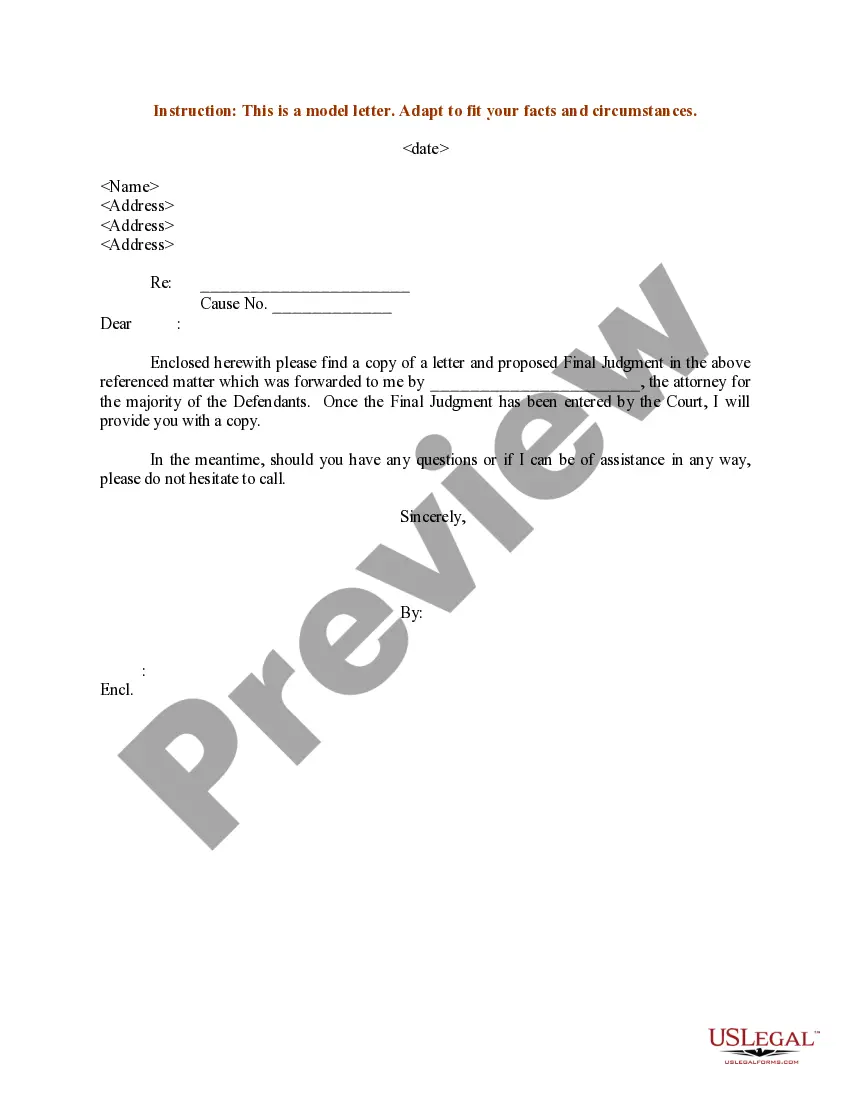
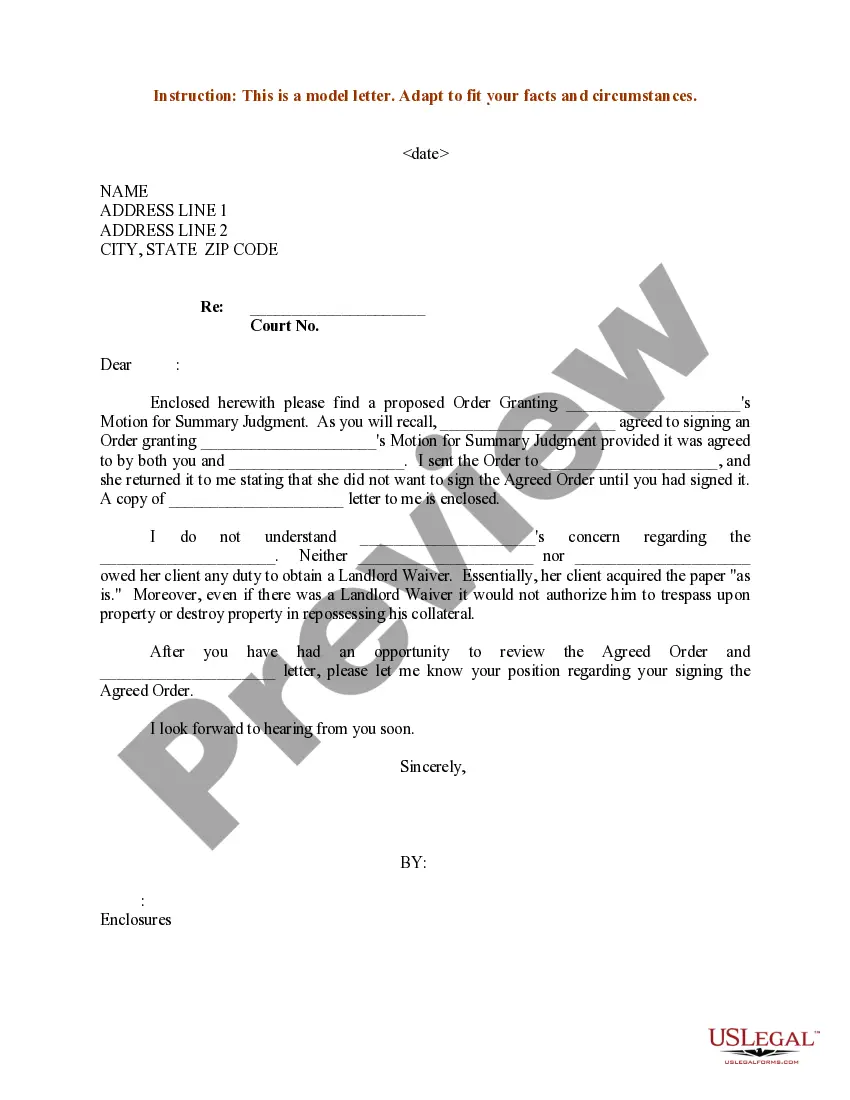
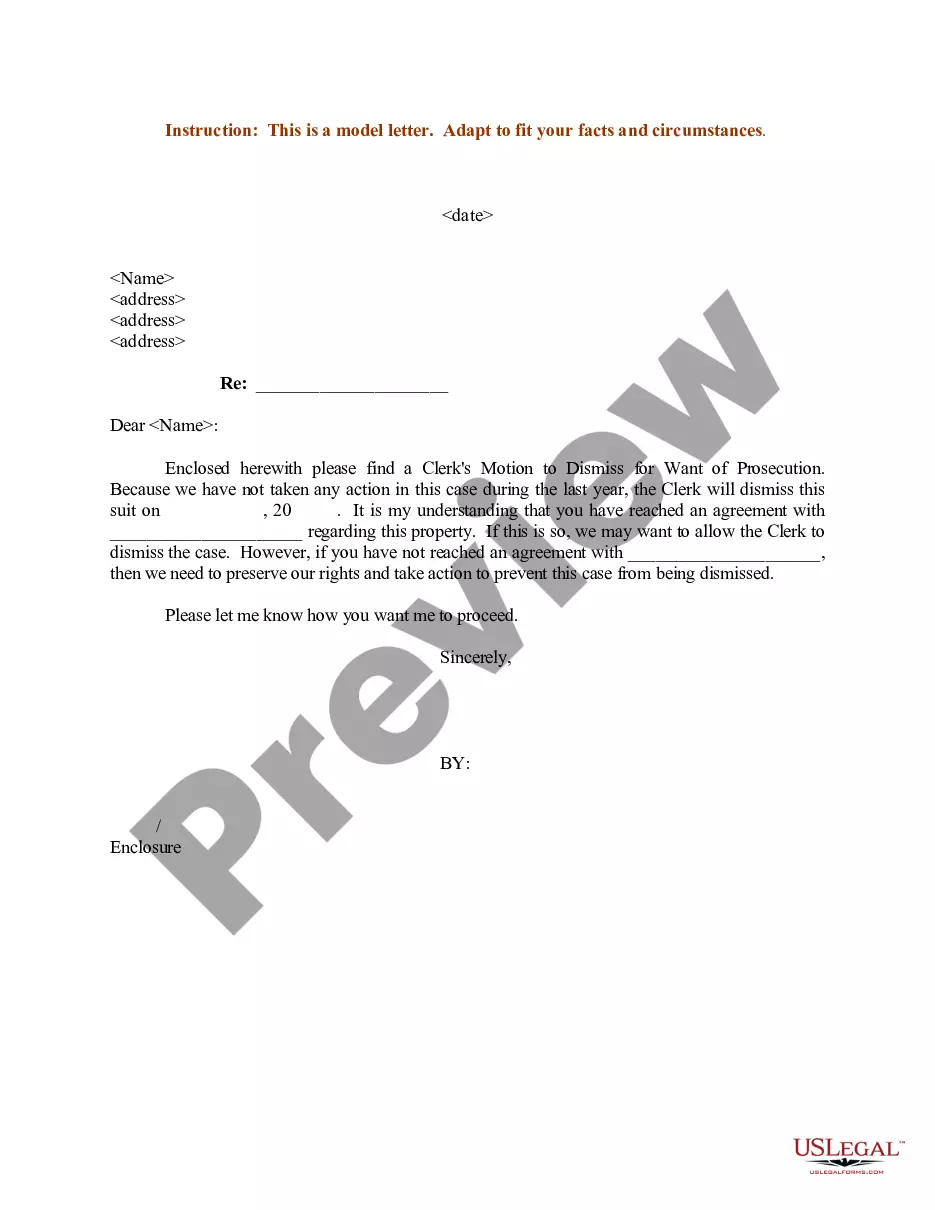
How to fill out Sample Letter For Motion To Dismiss For Want Of Prosecution?
Whether for corporate activities or personal matters, everyone must confront legal circumstances at some point in their lives.
Completing legal documents requires meticulous care, starting from selecting the correct form template.
Complete the account registration form and select your payment method: you can use a credit card or PayPal account. Choose the document format you prefer and download the Prosecution Motion In Limine Example. Once saved, you can fill out the form using editing software or print it and complete it by hand. With an extensive US Legal Forms catalog available, you don’t have to waste time searching online for the right sample. Utilize the library’s user-friendly navigation to find the suitable template for any circumstance.
- For example, if you select an incorrect version of a Prosecution Motion In Limine Example, it will be denied upon submission.
- Thus, it is crucial to rely on a reliable source for legal documents like US Legal Forms.
- If you need a Prosecution Motion In Limine Example template, follow these straightforward steps.
- Locate the sample you require by using the search bar or browsing the catalog.
- Review the form’s details to confirm it matches your case, state, and county.
- Click on the form’s preview to view it.
- If it is the incorrect form, return to the search option to find the Prosecution Motion In Limine Example sample you need.
- Download the template once it satisfies your criteria.
- If you already possess a US Legal Forms account, click Log in to access previously saved documents in My documents.
- If you do not have an account yet, you can download the form by clicking Buy now.
- Choose the appropriate pricing option.
Form popularity
FAQ
The golden rule motion in limine refers to a specific request to exclude evidence that appeals to the jurors' emotions, urging them to sympathize with one side over the other. In a prosecution motion in limine example, this may involve barring testimony that provokes pity or outrage rather than factual analysis. By utilizing this motion, attorneys aim to uphold the integrity of the judicial process. Our platform, uslegalforms, offers resources to guide you through these motions effectively.
Motions in limine are typically based on various legal grounds, including relevance, prejudicial impact, and admissibility of evidence. For example, a prosecution motion in limine example may seek to prevent irrelevant or overly prejudicial evidence from being presented to the jury. This helps ensure a fair trial by keeping the focus on pertinent facts. Understanding these grounds can assist you in effectively framing your legal arguments.
A good motion in limine is clear, concise, and well-supported by legal arguments. It effectively identifies the specific evidence you want to exclude, explains why it is inadmissible, and includes relevant case law. Furthermore, it should anticipate possible objections from the opposing side and address them proactively. Utilizing resources from platforms like UsLegalForms can help you create a strong prosecution motion in limine example that meets these criteria.
To write a good closing statement for prosecution, focus on summarizing the key evidence presented during the trial. Emphasize how this evidence supports your case and reinforces the guilt of the defendant. Additionally, appeal to the jury’s sense of justice and remind them of their responsibility. A compelling closing statement can serve as a powerful conclusion to your prosecution motion in limine example.
An example of a motion in limine could be a request to exclude testimony from a witness whose credibility has been challenged. This motion would argue that the testimony is irrelevant or prejudicial. By providing a solid rationale and supporting evidence, you can present a convincing prosecution motion in limine example that aligns with court expectations.
When writing a motion in limine, begin with a concise introduction that specifies what you are requesting. Follow this with a detailed explanation of the evidence you want to be excluded, citing relevant laws and precedents. Conclude your motion by summarizing your points and reiterating the necessity of the motion. A well-crafted prosecution motion in limine example will enhance your chances of success in court.
To write a good motion in limine, start by clearly stating the purpose of the motion. Outline the specific evidence you seek to exclude and provide legal reasoning for its exclusion. Additionally, include supporting case law or statutes to strengthen your argument. A strong prosecution motion in limine example will also anticipate counterarguments and address them effectively.