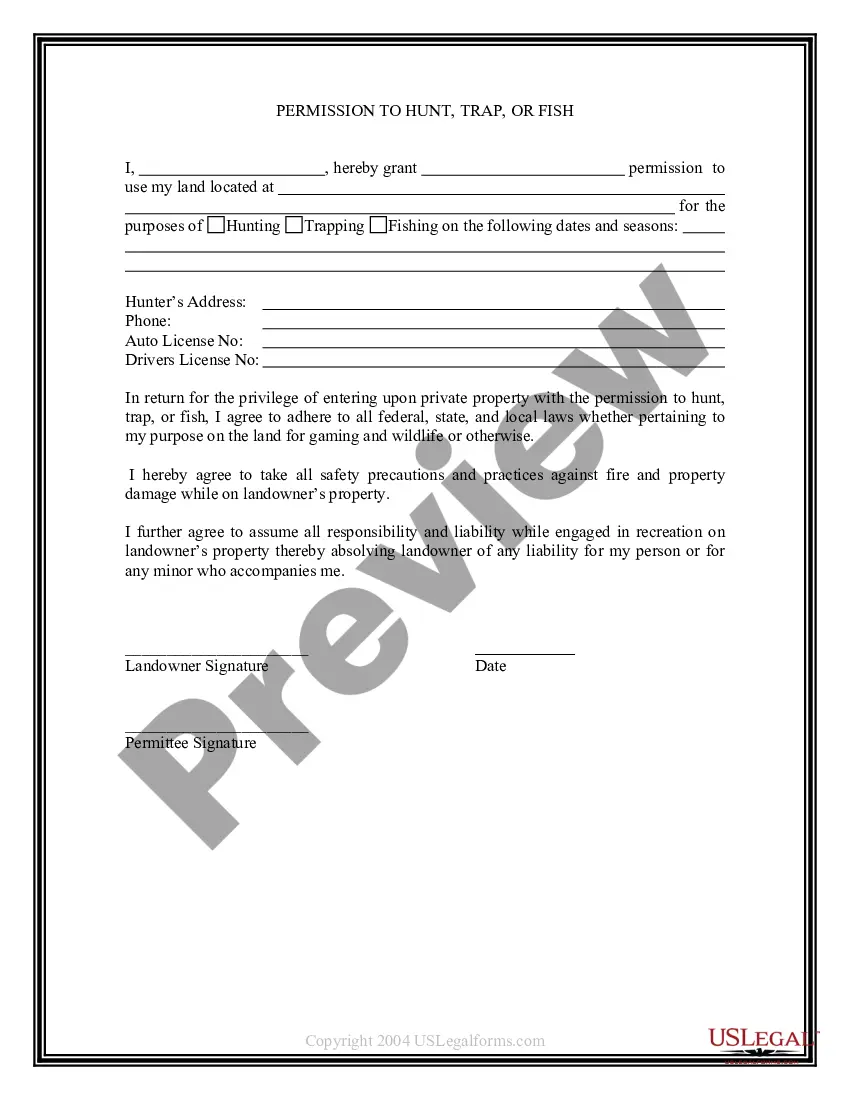
Hunting Permission Letter Examples
Description
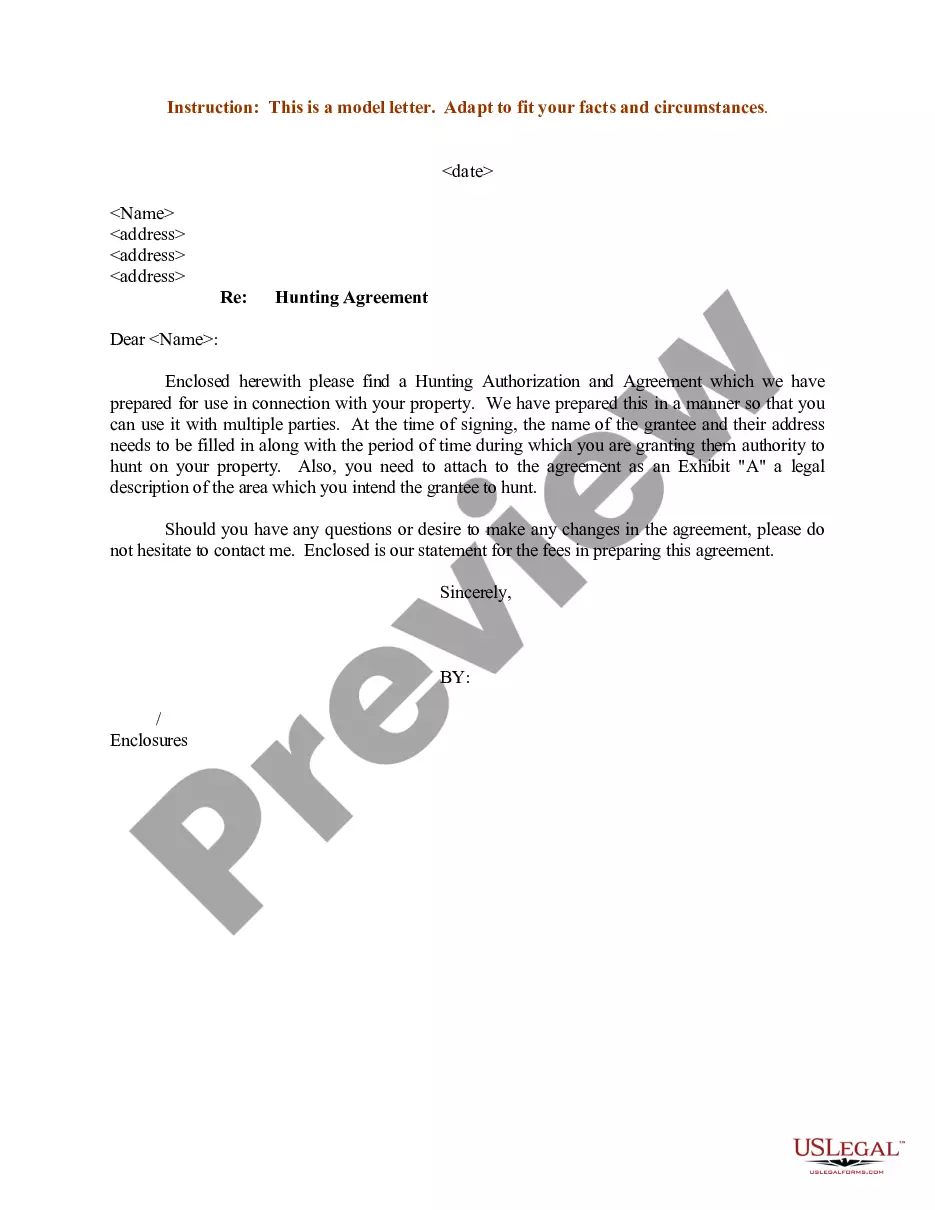
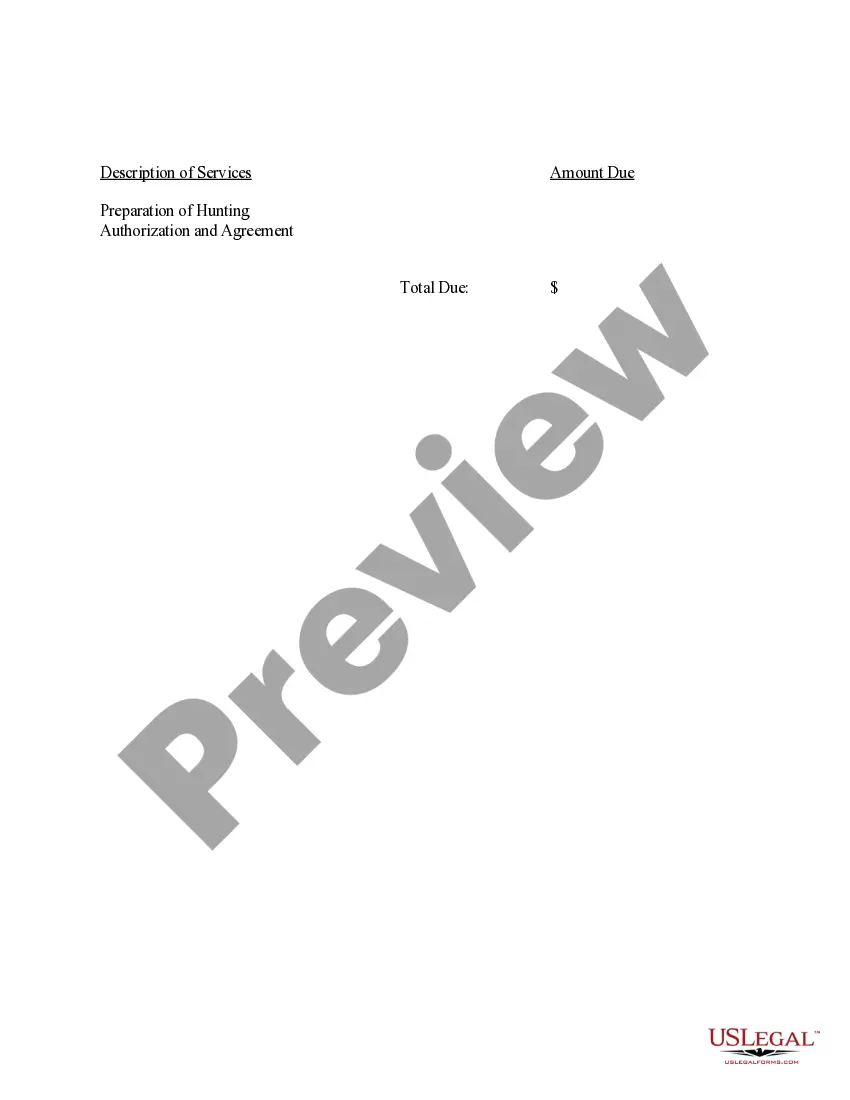
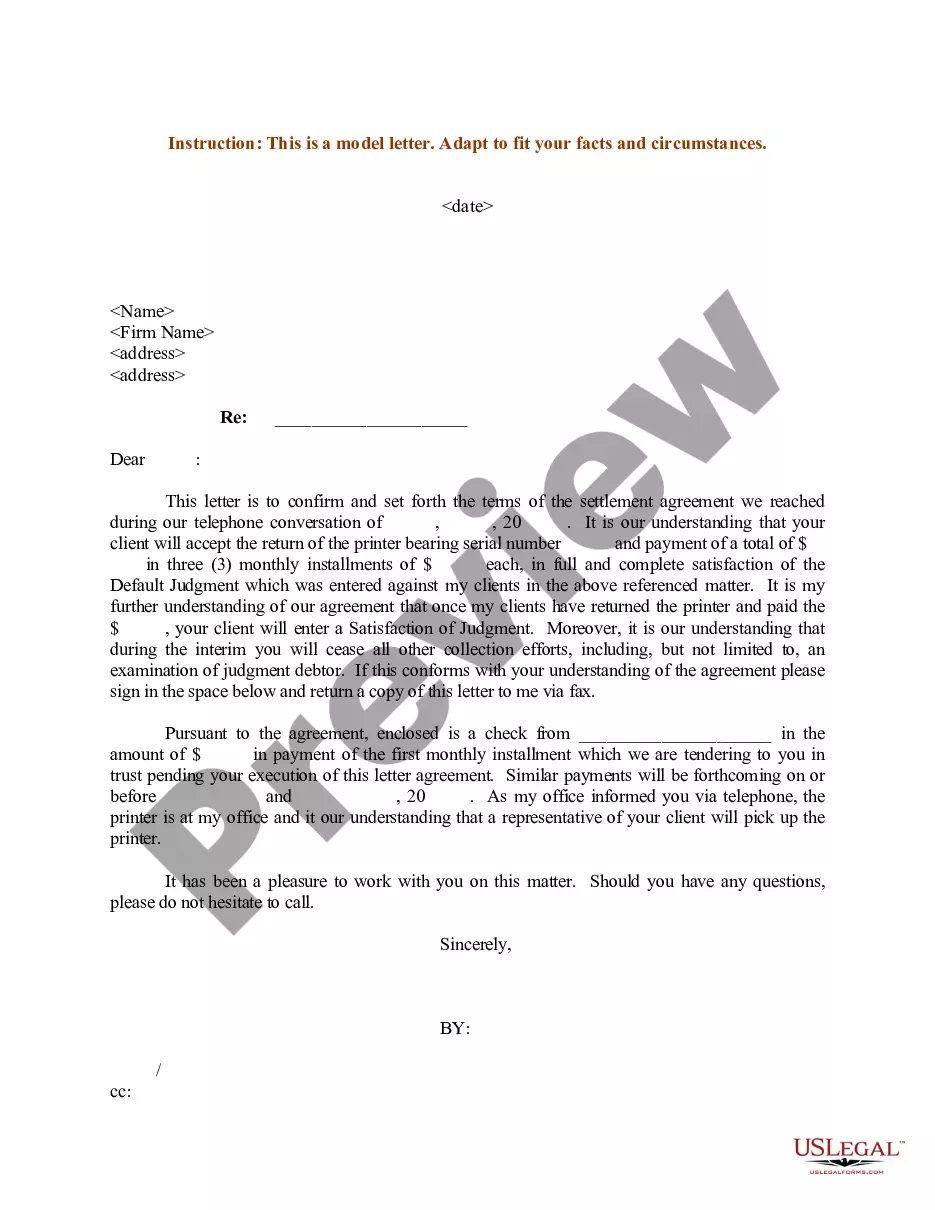
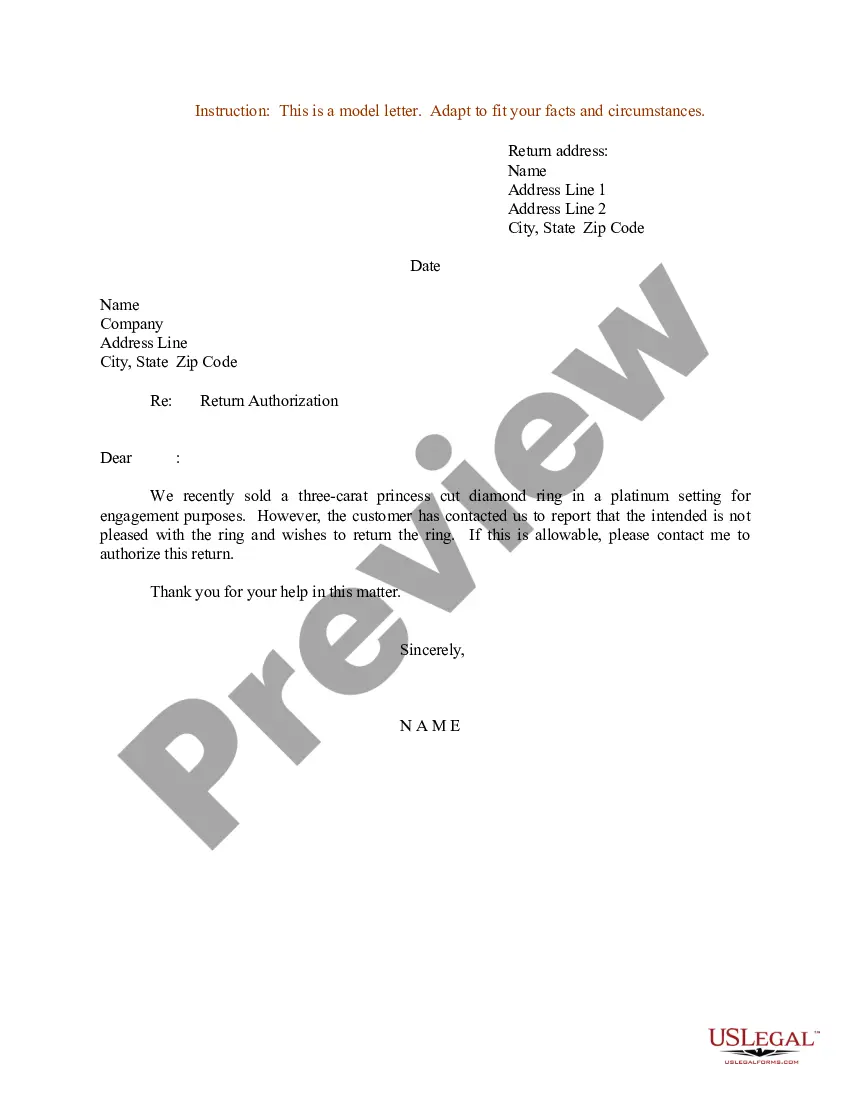
Get your form ready online
Our built-in tools help you complete, sign, share, and store your documents in one place.
Make edits, fill in missing information, and update formatting in US Legal Forms—just like you would in MS Word.
Download a copy, print it, send it by email, or mail it via USPS—whatever works best for your next step.
Sign and collect signatures with our SignNow integration. Send to multiple recipients, set reminders, and more. Go Premium to unlock E-Sign.
If this form requires notarization, complete it online through a secure video call—no need to meet a notary in person or wait for an appointment.
We protect your documents and personal data by following strict security and privacy standards.

Make edits, fill in missing information, and update formatting in US Legal Forms—just like you would in MS Word.

Download a copy, print it, send it by email, or mail it via USPS—whatever works best for your next step.

Sign and collect signatures with our SignNow integration. Send to multiple recipients, set reminders, and more. Go Premium to unlock E-Sign.

If this form requires notarization, complete it online through a secure video call—no need to meet a notary in person or wait for an appointment.

We protect your documents and personal data by following strict security and privacy standards.
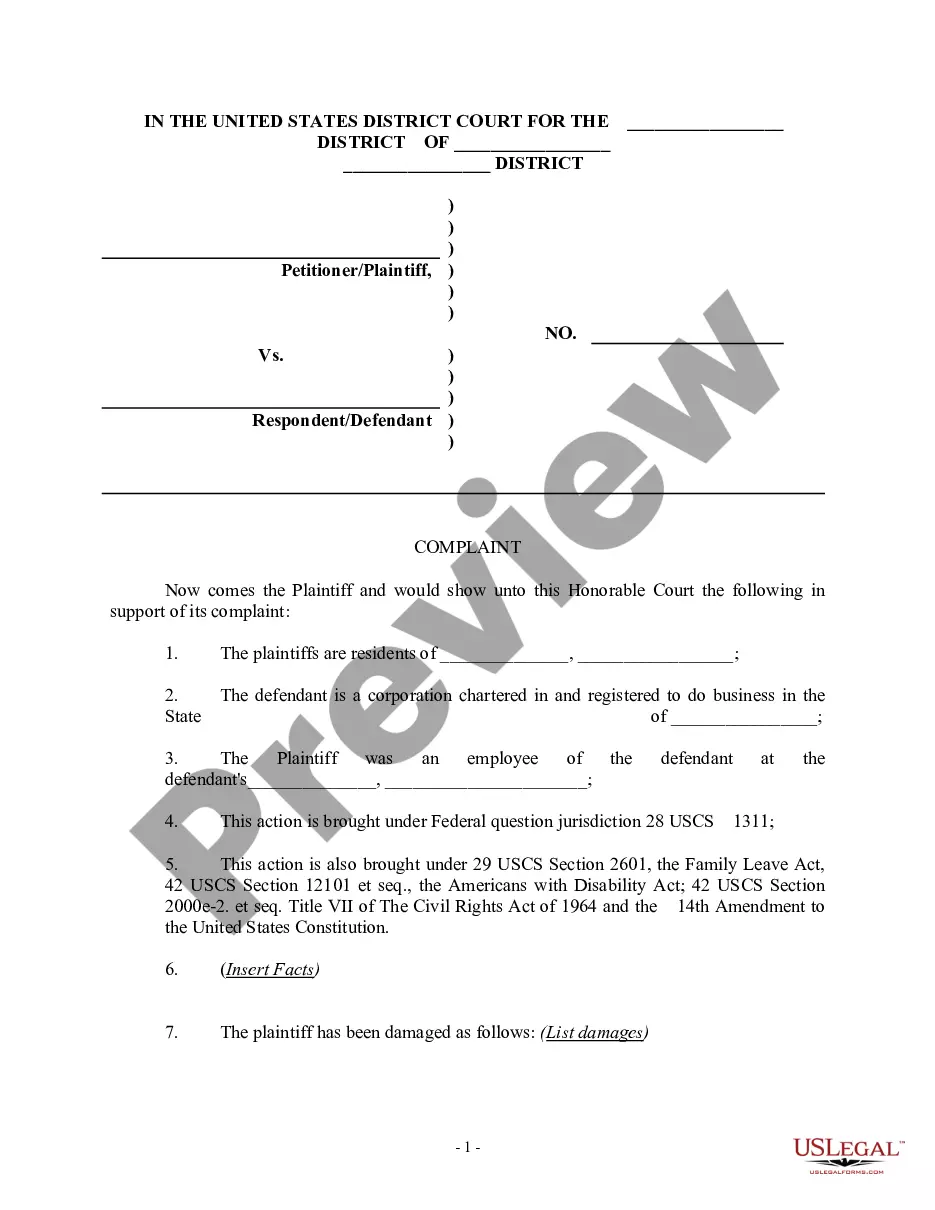
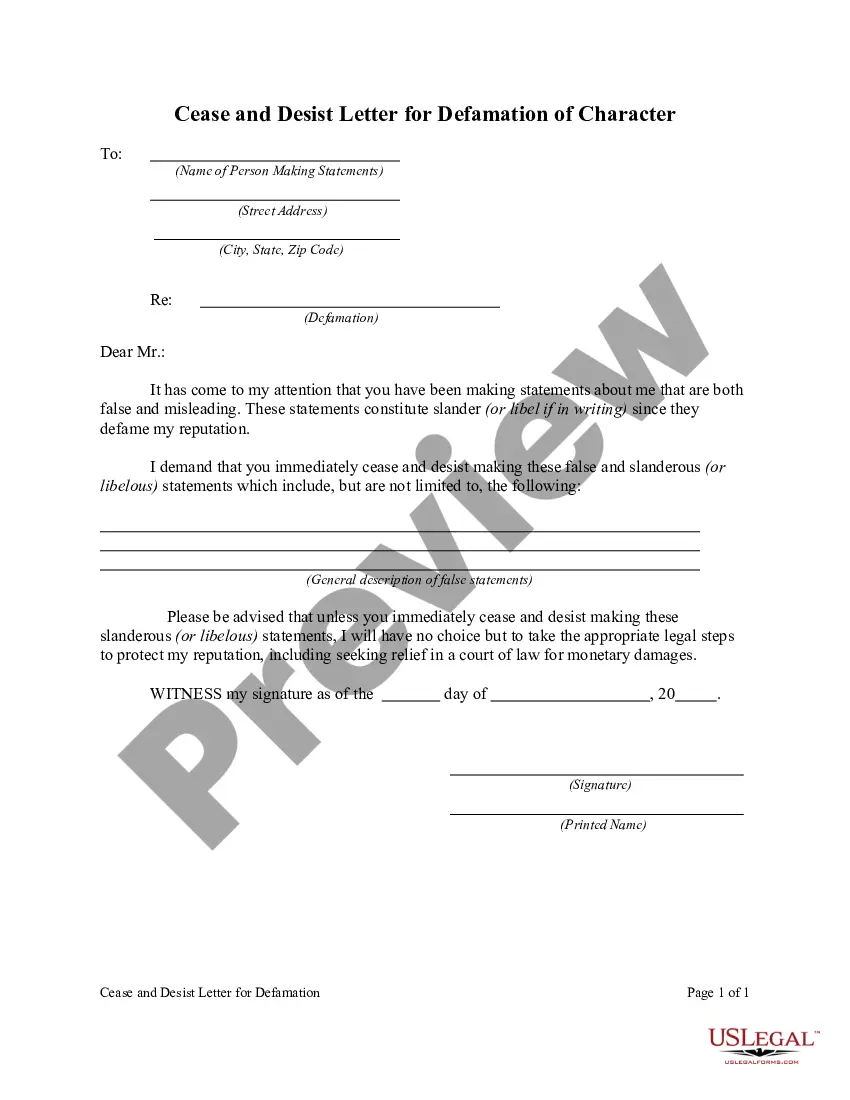
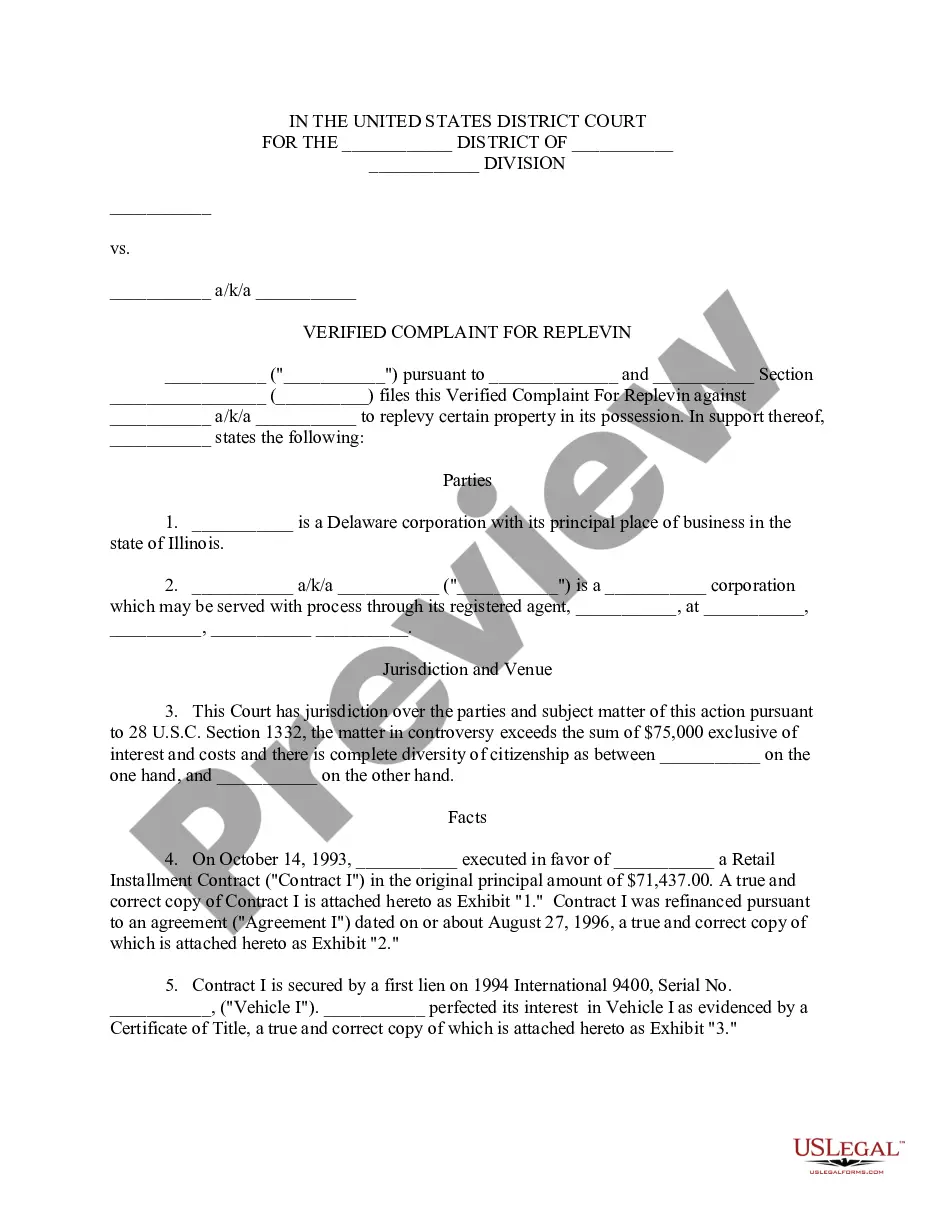
Looking for another form?
How to fill out Sample Letter Regarding Hunting Authorization And Agreement?
Regardless of whether it's for corporate needs or individual matters, everyone must confront legal issues at some point in their lives.
Completing legal documents requires meticulous attention, starting with selecting the correct form template.
With a comprehensive catalog from US Legal Forms available, you don’t need to waste time searching for the ideal template online. Take advantage of the library’s straightforward navigation to discover the right template for any situation.
- Locate the template you require through the search bar or catalog browsing.
- Review the description of the form to ensure it corresponds with your situation, state, and locality.
- Click on the form’s preview to view it.
- If this document is incorrect, revert to the search feature to find the Hunting Permission Letter Examples template you seek.
- Obtain the template if it aligns with your needs.
- If you have a profile on US Legal Forms, click Log in to access your previously saved templates in My documents.
- If you don't have an account yet, you can acquire the form by clicking Buy now.
- Select the appropriate pricing option.
- Complete the profile registration form.
- Choose your payment method: you may use a credit card or PayPal account.
- Select the desired file format and download the Hunting Permission Letter Examples.
- After downloading, you can complete the form using editing software or print it out and finish it manually.
Form popularity
FAQ
To write an official letter requesting something, start with a clear subject line or heading. Begin the letter with a formal greeting, then state your purpose directly. Provide any necessary details or context that supports your request, and conclude with a polite closing. For guidance, you can refer to hunting permission letter examples available on our platform.
To write a permission letter, start by including your name and address at the top, followed by the date. Next, state the purpose of your letter clearly; for example, if it's about hunting permission, mention the specific area and date. Use a polite tone throughout, and conclude with your signature and contact information. For hunting permission letter examples, you can find templates that simplify this process.
When writing a formal letter requesting approval, start with your address and the recipient's address at the top. In the body, introduce yourself and state your request clearly, detailing the reasons for the approval and any relevant information. Make sure to close with a thank you and provide your contact information. Utilizing hunting permission letter examples can help guide your writing.
How to Ask Landowners for Permission. Make contact well ahead of the hunting season. Wear street clothes?no hunting gear or firearms. Don't bring companions?a ?crowd? could be intimidating.
How To Ask Permission To Hunt Private Land Write Letters. Knocking on a landowner's door may work for some, but for a less intrusive alternative writing a letter to ask permission to hunt is recommended. ... Make a Strong First Impression. ... Provide References. ... Show Respect. ... Ask What You Can Do.
Landowners can grant or deny permission to hunt on their land. Landowners can require and charge for a hunting lease. Landowners can require hunters to sign a liability waiver. Landowners can impose stricter bag limits or harvest requirements, within existing game laws.
Start the letter by introducing yourself, compliment their land and tell them why you are interested in hunting it. Explain your hunting ideologies and ethics, and ask if they have any rules or preferences on when and where you hunt. This will instill confidence that you will respect their time and their property.