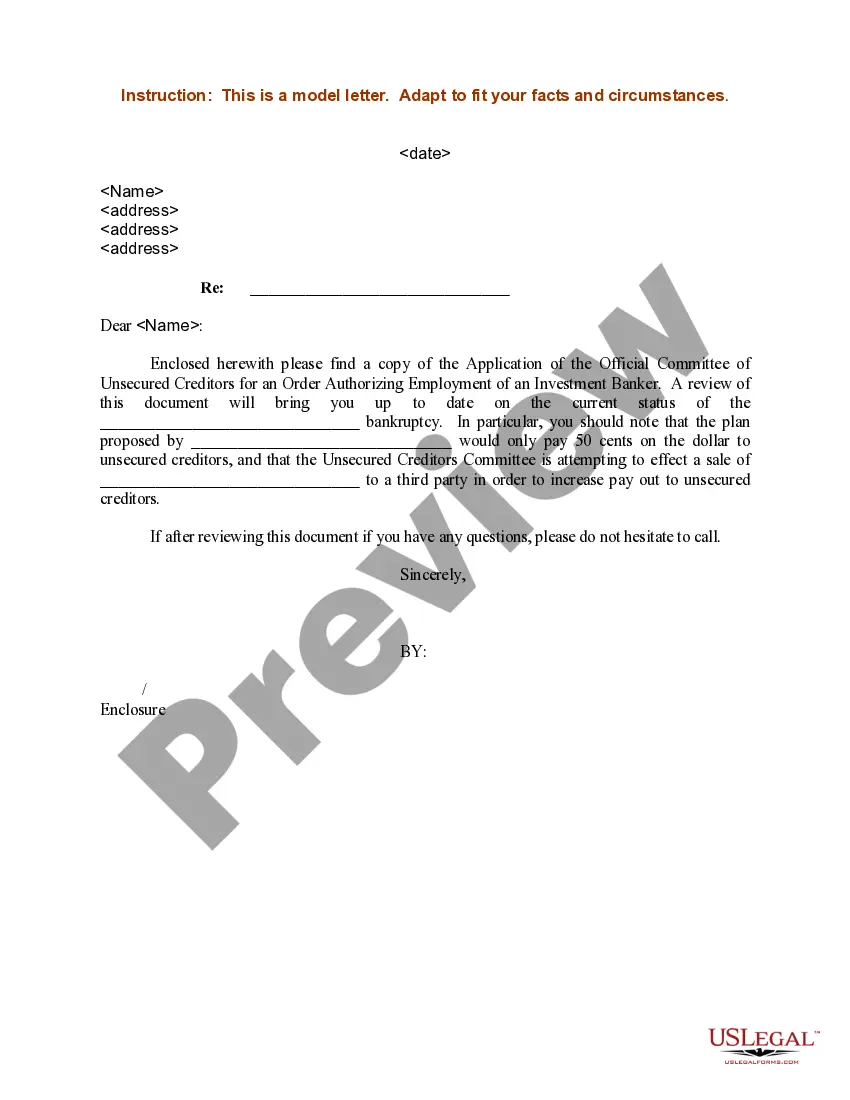
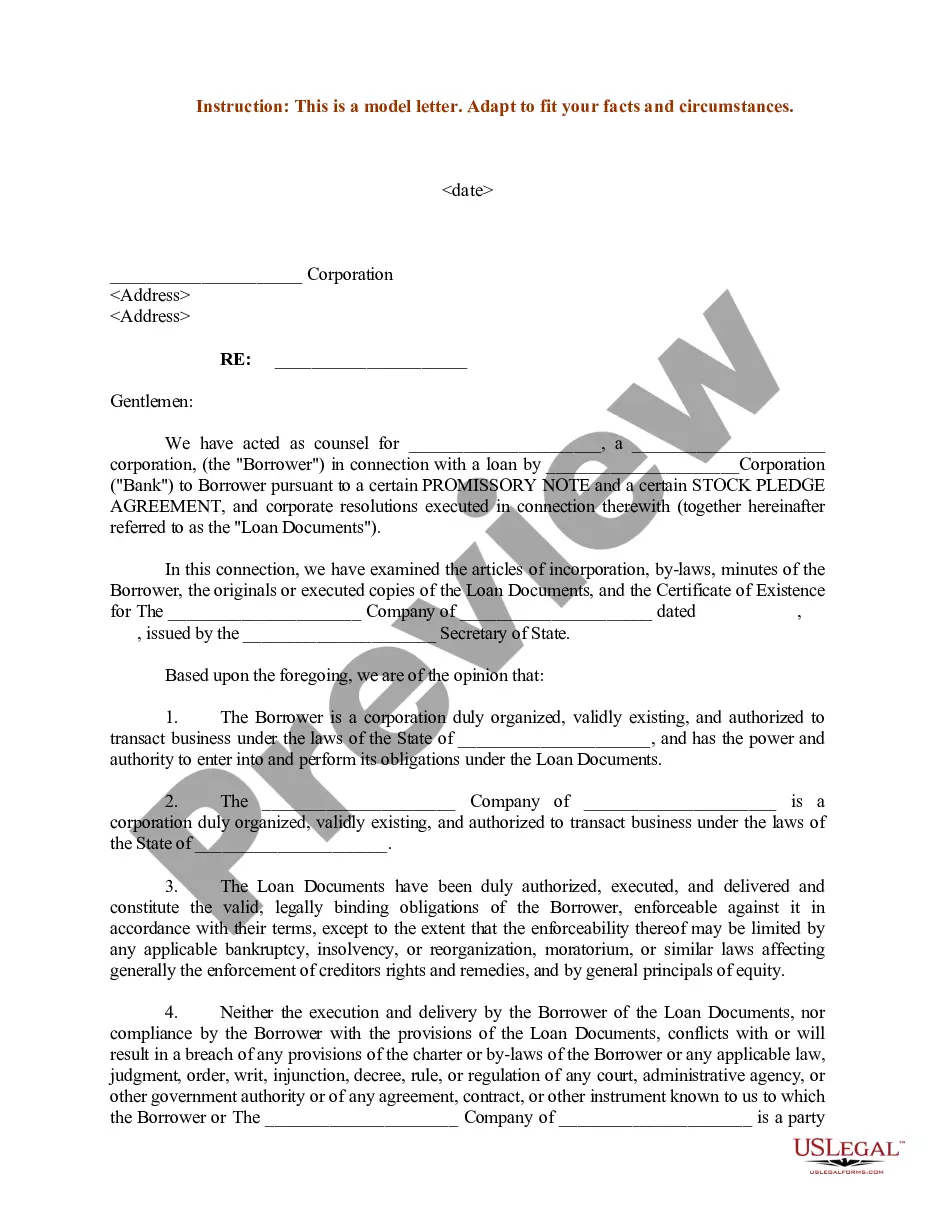
Unsecured Creditors With Example
Description
Get your form ready online
Our built-in tools help you complete, sign, share, and store your documents in one place.
Make edits, fill in missing information, and update formatting in US Legal Forms—just like you would in MS Word.
Download a copy, print it, send it by email, or mail it via USPS—whatever works best for your next step.
Sign and collect signatures with our SignNow integration. Send to multiple recipients, set reminders, and more. Go Premium to unlock E-Sign.
If this form requires notarization, complete it online through a secure video call—no need to meet a notary in person or wait for an appointment.
We protect your documents and personal data by following strict security and privacy standards.

Make edits, fill in missing information, and update formatting in US Legal Forms—just like you would in MS Word.

Download a copy, print it, send it by email, or mail it via USPS—whatever works best for your next step.

Sign and collect signatures with our SignNow integration. Send to multiple recipients, set reminders, and more. Go Premium to unlock E-Sign.

If this form requires notarization, complete it online through a secure video call—no need to meet a notary in person or wait for an appointment.

We protect your documents and personal data by following strict security and privacy standards.
Looking for another form?






How to fill out Sample Letter For Application Of Unsecured Creditors For An Order Authorizing Employment Of Investment Banker?
Managing legal documents can be perplexing, even for the most seasoned experts.
When searching for an Unsecured Creditors With Example and lacking the time to seek out the suitable and current version, the processes may be challenging.
Access specific legal and business forms tailored to your state or county.
US Legal Forms meets all your requirements, from personal to business paperwork, all in one place.
If this is your first experience with US Legal Forms, create a free account to gain unlimited access to all the platform’s benefits. Here are the steps to follow after finding the form you desire.
- Utilize enhanced tools to complete and manage your Unsecured Creditors With Example.
- Access a library of articles, guides, and resources relevant to your situation and requirements.
- Save time and effort searching for the forms you need, using US Legal Forms’ advanced search and Preview function to find Unsecured Creditors With Example and obtain it.
- If you have a subscription, Log In to your US Legal Forms account, search for the form, and download it.
- Check the My documents tab to review the documents you have previously saved and manage your folders as needed.
- A robust online form library can be transformative for anyone wishing to efficiently handle these matters.
- US Legal Forms is a leading provider in web-based legal forms, offering over 85,000 state-specific legal forms accessible at any time.
- With US Legal Forms, you can.
Form popularity
FAQ
Some of the most common types of unsecured creditors include credit card companies, utilities, landlords, hospitals and doctor's offices, and lenders that issue personal or student loans (though education loans carry a special exception that prevents them from being discharged).
Also known as general creditor and general unsecured creditor. A creditor holding an unsecured claim, or having no liens against a debtor's property.
Student loans, personal loans and credit cards are all example of unsecured loans. Since there's no collateral, financial institutions give out unsecured loans based in large part on your credit score and history of repaying past debts.
Examples of unsecured debt include credit cards, medical bills, utility bills, and other instances in which credit was given without any collateral requirement. Unsecured loans are particularly risky for lenders because the borrower might choose to default on the loan through bankruptcy.
Examples of unsecured claims are child support debt, alimony debt, credit card debt, tax debts, and personal loans.