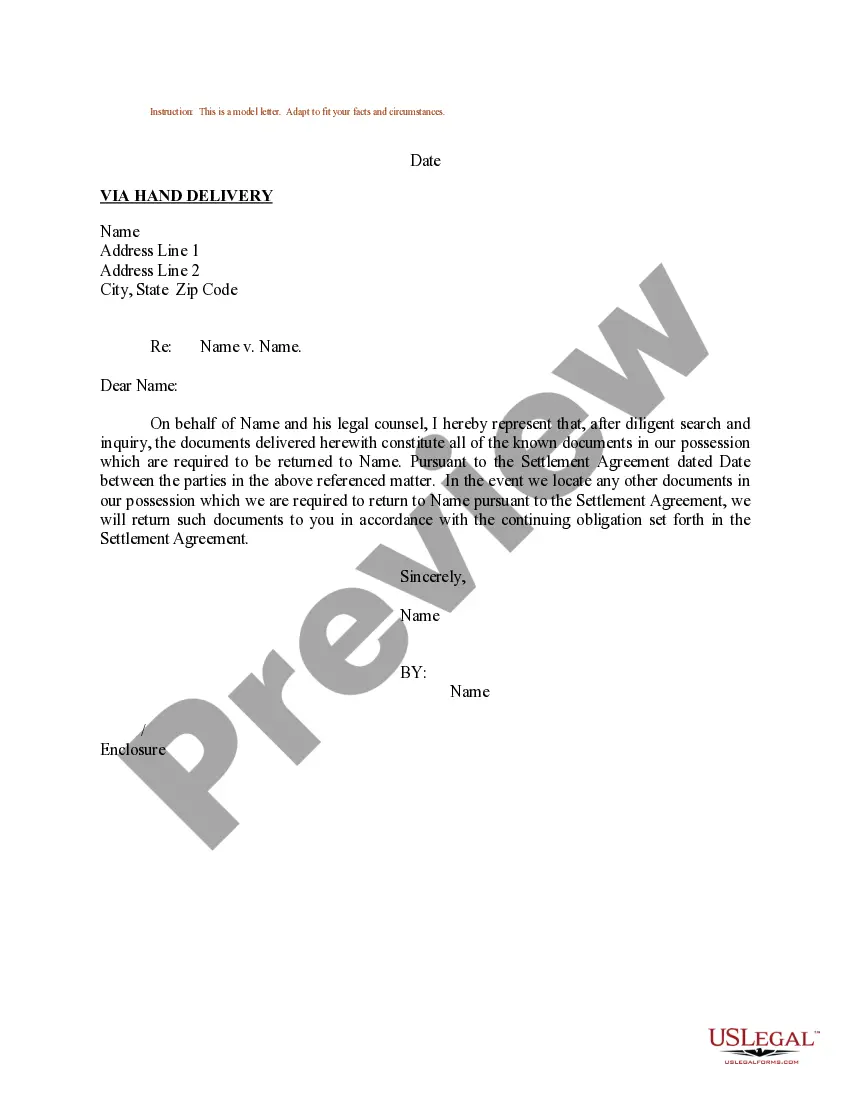
Sample Letter Returning Documents To Client For Work
Description
Get your form ready online
Our built-in tools help you complete, sign, share, and store your documents in one place.
Make edits, fill in missing information, and update formatting in US Legal Forms—just like you would in MS Word.
Download a copy, print it, send it by email, or mail it via USPS—whatever works best for your next step.
Sign and collect signatures with our SignNow integration. Send to multiple recipients, set reminders, and more. Go Premium to unlock E-Sign.
If this form requires notarization, complete it online through a secure video call—no need to meet a notary in person or wait for an appointment.
We protect your documents and personal data by following strict security and privacy standards.

Make edits, fill in missing information, and update formatting in US Legal Forms—just like you would in MS Word.

Download a copy, print it, send it by email, or mail it via USPS—whatever works best for your next step.

Sign and collect signatures with our SignNow integration. Send to multiple recipients, set reminders, and more. Go Premium to unlock E-Sign.

If this form requires notarization, complete it online through a secure video call—no need to meet a notary in person or wait for an appointment.

We protect your documents and personal data by following strict security and privacy standards.
Looking for another form?
How to fill out Sample Letter For Return Of Documents?
Acquiring legal templates that adhere to both federal and local regulations is essential, and the internet provides a multitude of options to select from.
However, why waste time searching for the accurate Sample Letter Returning Documents To Client For Work on the internet when the US Legal Forms online repository already compiles these templates in one convenient location.
US Legal Forms is the largest online legal directory featuring over 85,000 editable templates drafted by attorneys for any professional or personal situation. They are easy to navigate with all documents organized by state and intended usage.
Explore additional samples using the search option at the top of the page if required.
- Our experts stay updated with legislative changes, ensuring that your documents are always current and compliant when obtaining a Sample Letter Returning Documents To Client For Work from our platform.
- Acquiring a Sample Letter Returning Documents To Client For Work is straightforward and quick for both existing and new users.
- If you already possess an account with an active subscription, Log In and save the template you require in the preferred format.
- If you are a newcomer to our website, follow the steps listed below.
- Examine the template using the Preview feature or through the text outline to confirm it satisfies your needs.
Form popularity
FAQ
Writing a cover letter as a stay-at-home mom involves addressing any employment gaps and showcasing transferable skills acquired during your time at home. Focus on your readiness to transition back into the workforce and illustrate how your experiences equip you for the role you seek. Consider using a format similar to a sample letter returning documents to client for work to demonstrate your effective communication skills.
To request the submission of documents, write a clear and concise letter or email outlining what documents you need and why they are required. It's important to specify any deadlines and provide helpful details on how to send the documents. This approach encourages a prompt and organized response from the recipient.
Background check consent form serving as a disclosure and authorization for an employer to provide to job applicants and employees before seeking a consumer report for employment purposes, as required under the Fair Credit Reporting Act (FCRA).
Consumer Rights Under the Fair Credit Reporting Act (FCRA) They can request their reports at the official, government-authorized website for that purpose: AnnualCreditReport.com. Under the FCRA, consumers also have a right to: Verify the accuracy of their report when it's required for employment purposes.
The FCRA specifies those with a valid need for access. reporting agency may not give out information about you to your employer, or a potential employer, without your written consent given to the employer.
Fair Credit Reporting Act in Alabama The Fair Credit Reporting Act or (FCRA) is a federal law and requires creditors, also known as furnishers, and the crediting reporting agencies to do several things regarding the accuracy of the credit reports. For those who live in Alabama, you will rely on the federal law only.
The Fair Credit Reporting Act (FCRA) , 15 U.S.C. § 1681 et seq., governs access to consumer credit report records and promotes accuracy, fairness, and the privacy of personal information assembled by Credit Reporting Agencies (CRAs).
In addition, all consumers are entitled to one free disclosure every 12 months upon request from each nationwide credit bureau and from nationwide specialty consumer reporting agencies. See .consumerfinance.gov/learnmore for additional information.
Consumers are entitled to one free credit report every 12 months from each of the three nationwide credit bureaus.
The Fair Credit Reporting Act (FCRA) , 15 U.S.C. § 1681 et seq., governs access to consumer credit report records and promotes accuracy, fairness, and the privacy of personal information assembled by Credit Reporting Agencies (CRAs).