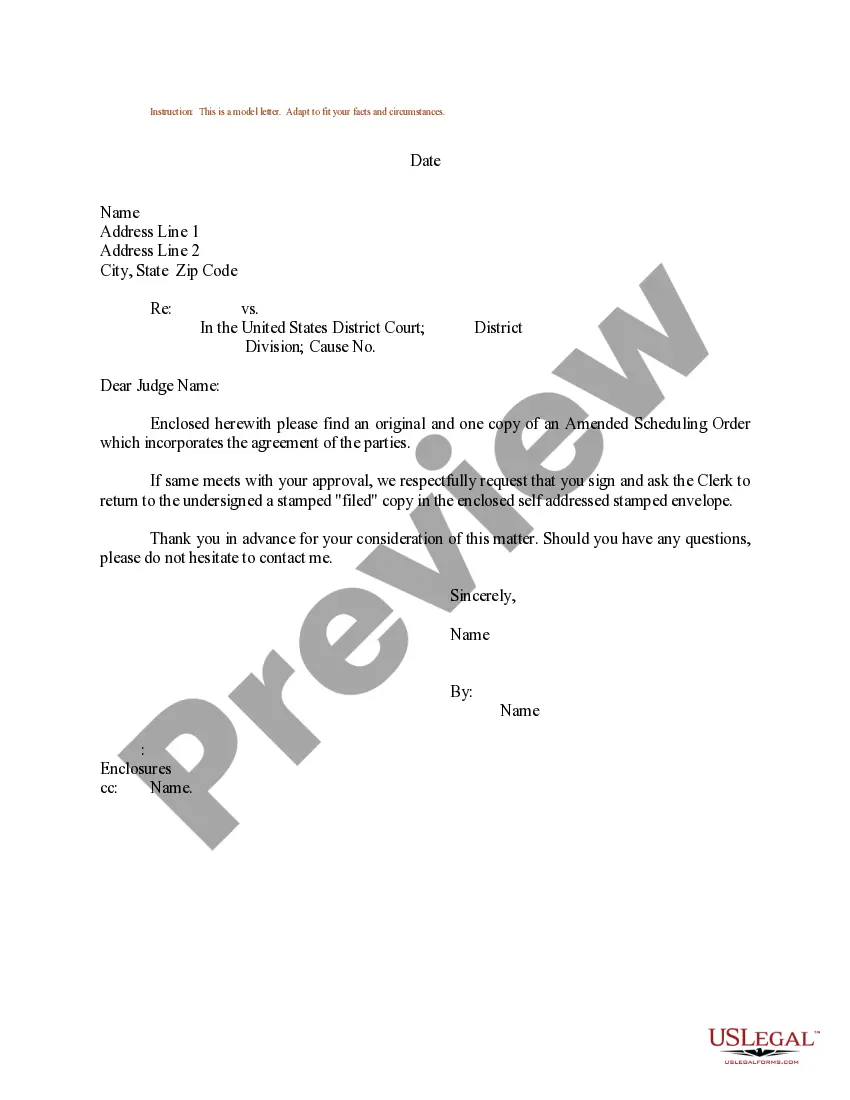
Scheduling Order By Agreement
Description
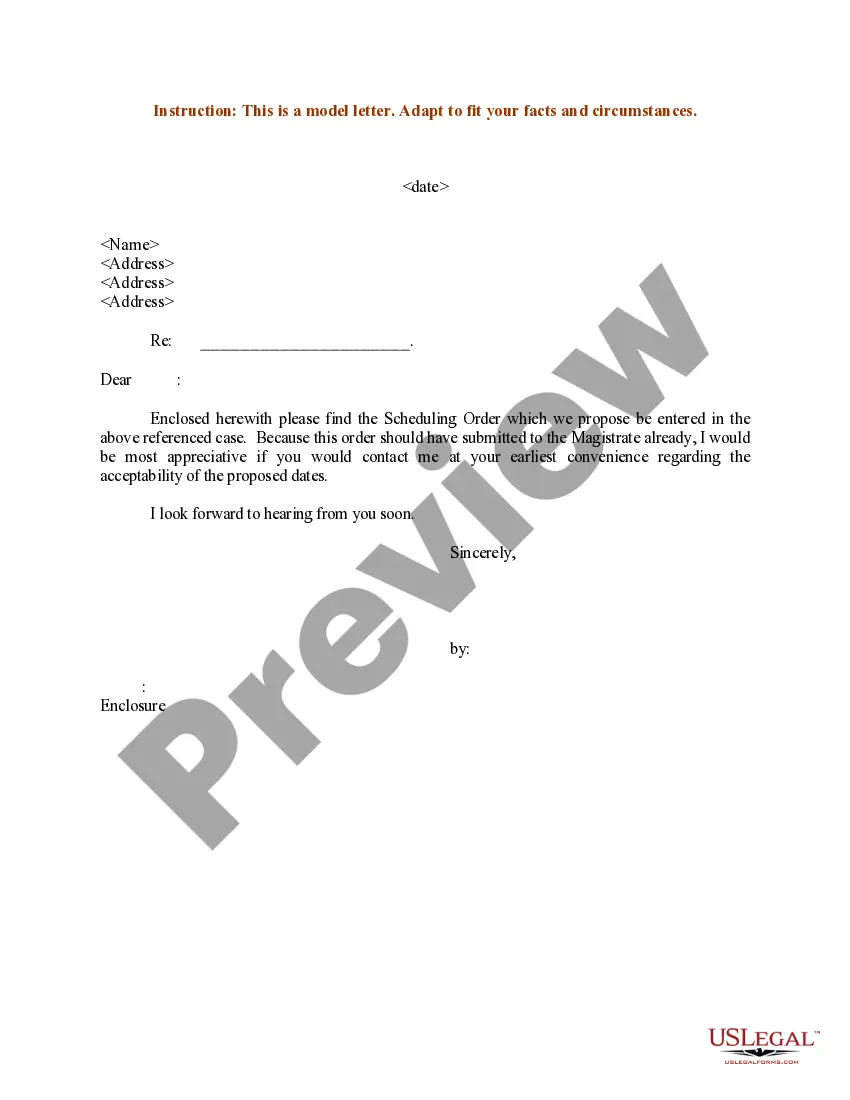
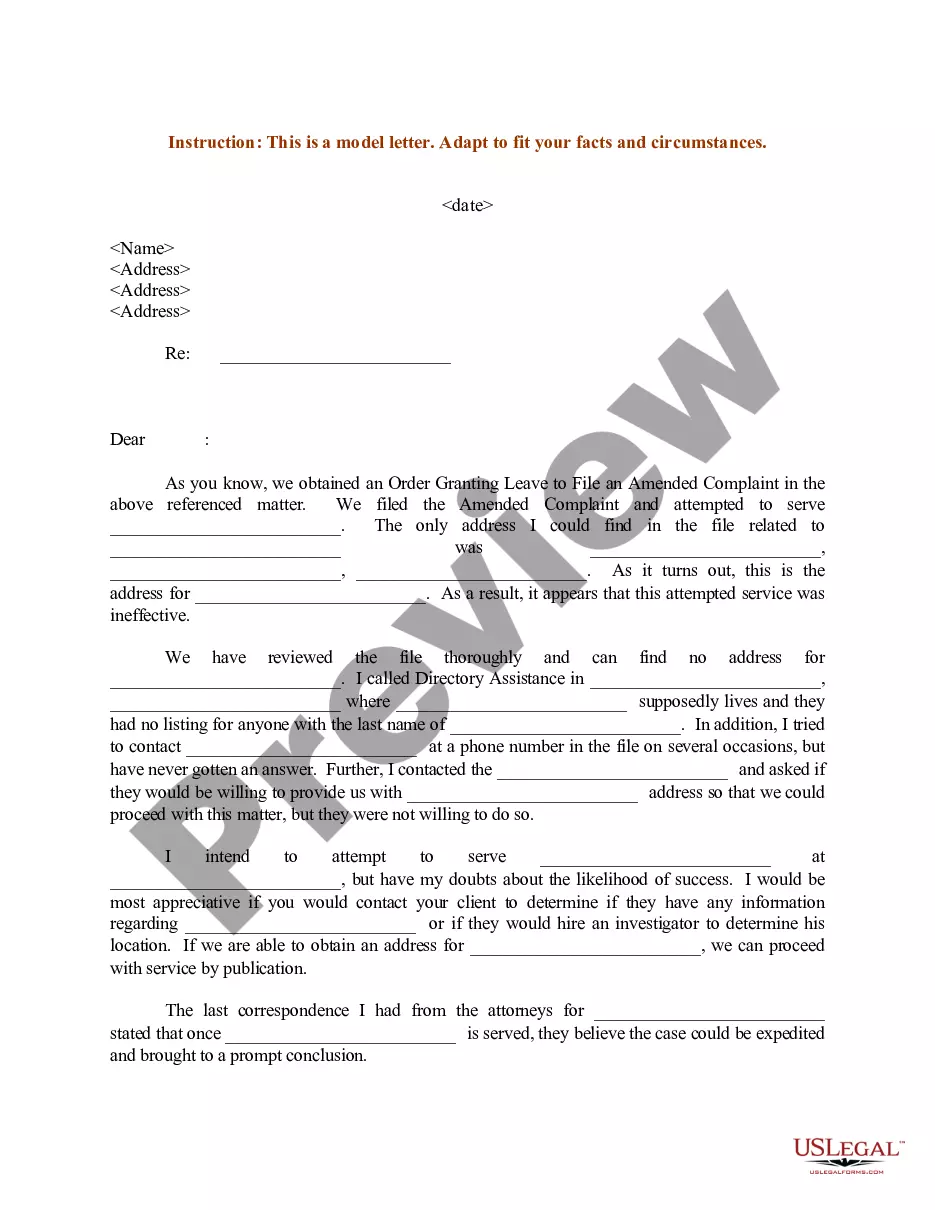
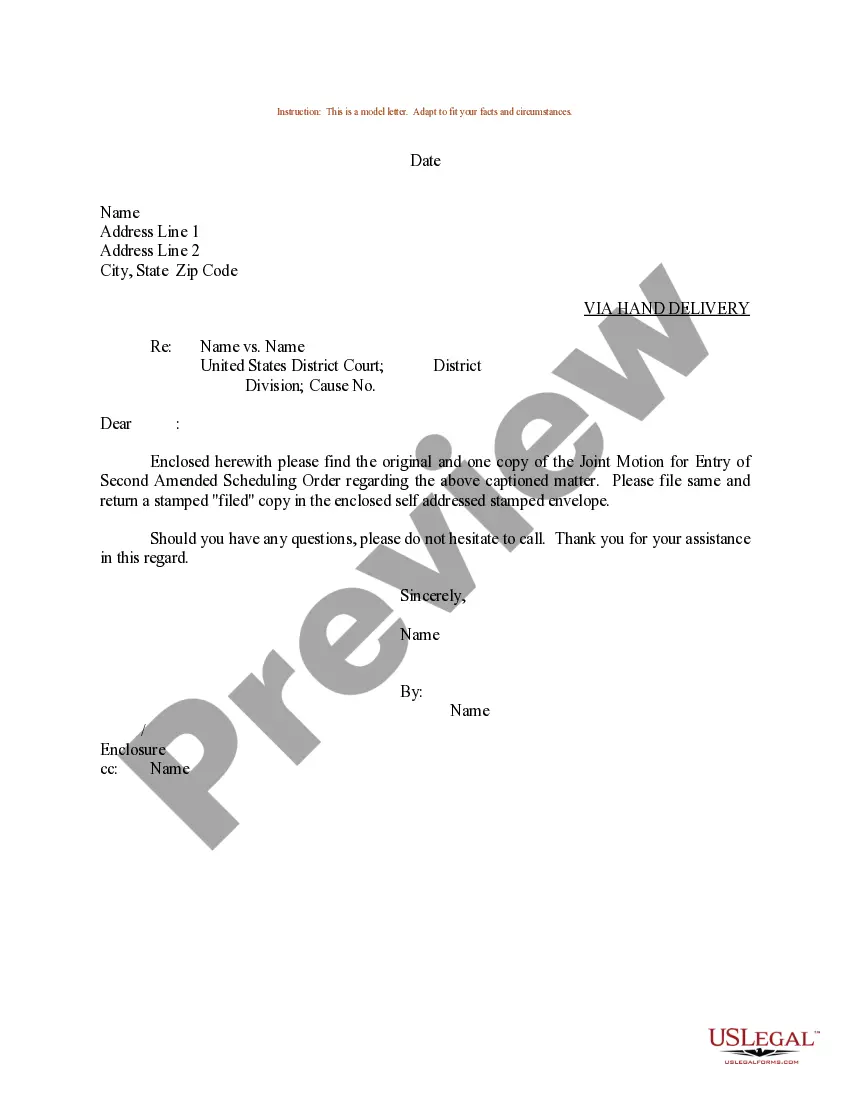
How to fill out Sample Letter For Amended Scheduling Order?
Handling legal paperwork and procedures can be a lengthy addition to your entire day.
Scheduling Order By Agreement and similar forms usually necessitate you to search for them and navigate the path to complete them efficiently.
For that reason, regardless of whether you are managing financial, legal, or personal affairs, having a comprehensive and effective online catalog of forms at your disposal will significantly help.
US Legal Forms is the premier online platform for legal templates, featuring more than 85,000 state-specific forms and a variety of resources to help you finalize your documents swiftly.
Is this your first experience with US Legal Forms? Register and create an account in a few moments and you’ll gain access to the form catalog and Scheduling Order By Agreement. Then, follow the steps below to complete your form: Ensure you have located the correct form by using the Preview feature and reviewing the form details. Select Buy Now when ready, and pick the monthly subscription plan that suits your requirements. Click Download then fill out, eSign, and print the form. US Legal Forms has twenty-five years of experience assisting users manage their legal documents. Acquire the form you need today and enhance any process effortlessly.
- Browse the catalog of pertinent documents available with merely one click.
- US Legal Forms grants you access to state- and county-specific forms available at any time for download.
- Protect your document management processes with excellent support that allows you to prepare any form within minutes without extra or concealed fees.
- Simply Log In to your account, locate Scheduling Order By Agreement, and download it immediately from the My documents section.
- You can also retrieve previously saved forms.
Form popularity
FAQ
WHAT IS THE SCHEDULING CONFERENCE? The Scheduling Conference may be the first of a number of court dates which you will have before the trial date on your domestic case. It is the court's way to begin tracking your case, and to schedule the steps in your case's development.
After you have filed the Joint 26(f) Report, you will receive a document from the Court called a ?Scheduling Order.? This document is extremely important because it lists many deadlines for your case, including discovery deadlines, motion deadlines, and deadlines for required pre-trial documents.
Once the time passes, plaintiff is entitled to serve discovery without any procedural hurdles. However, in a federal court action, a party may not serve discovery until after the meeting of counsel under Federal Rule of Civil Procedure 26. This meeting is typically initiated by plaintiff's counsel.
Upon a defendant's request, the government must furnish the defendant with a copy of the defendant's prior criminal record that is within the government's possession, custody, or control if the attorney for the government knows-or through due diligence could know-that the record exists.
Rule 26(f) describes a conference of two parties (the plaintiff and defendant) to cooperate and set out a clear plan for the process of discovery. In terms of responsibility for arrangement, both parties are jointly responsible?and this remains true as the case progresses.