Summary Judgment Legal For Plaintiff
Description
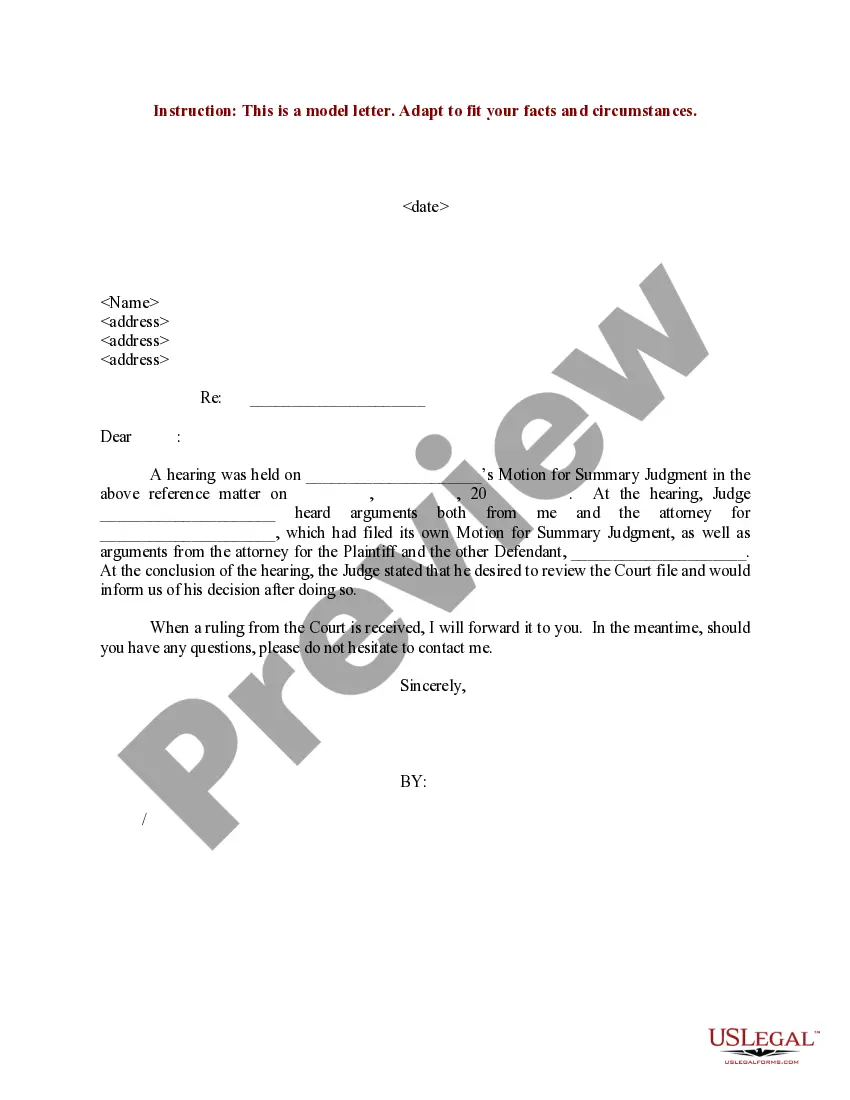
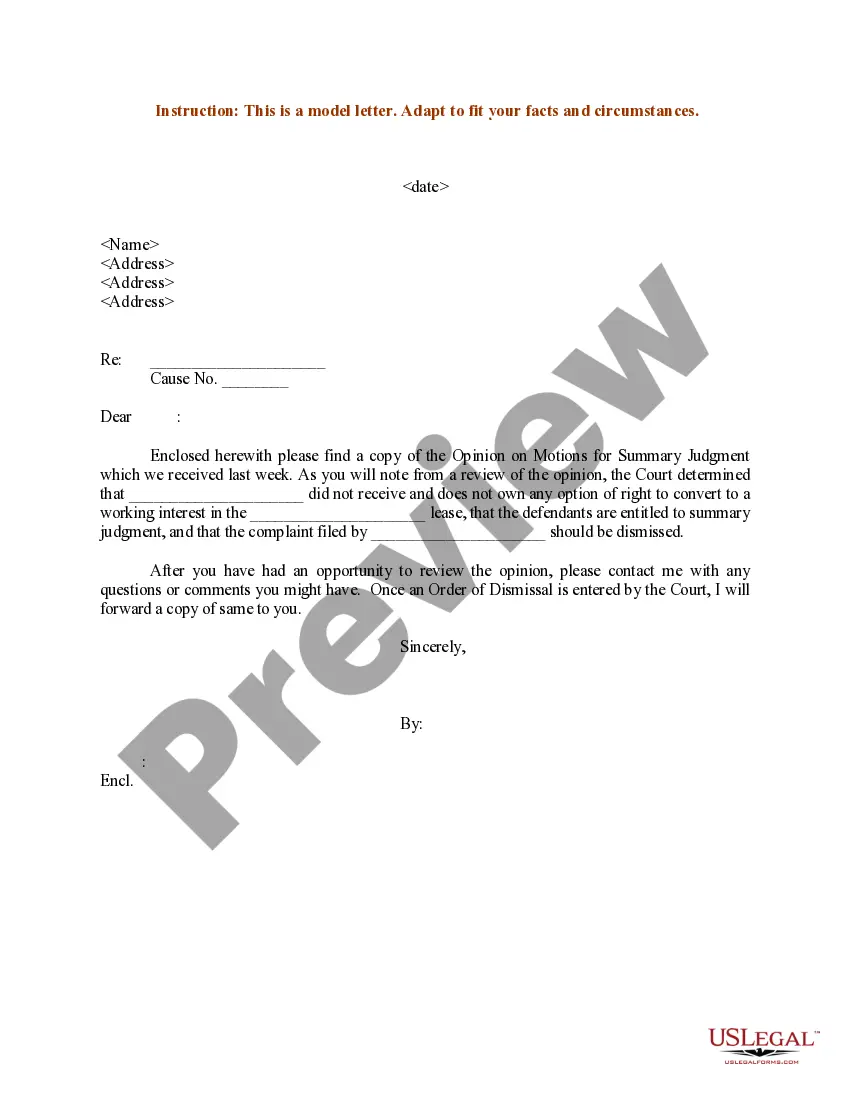
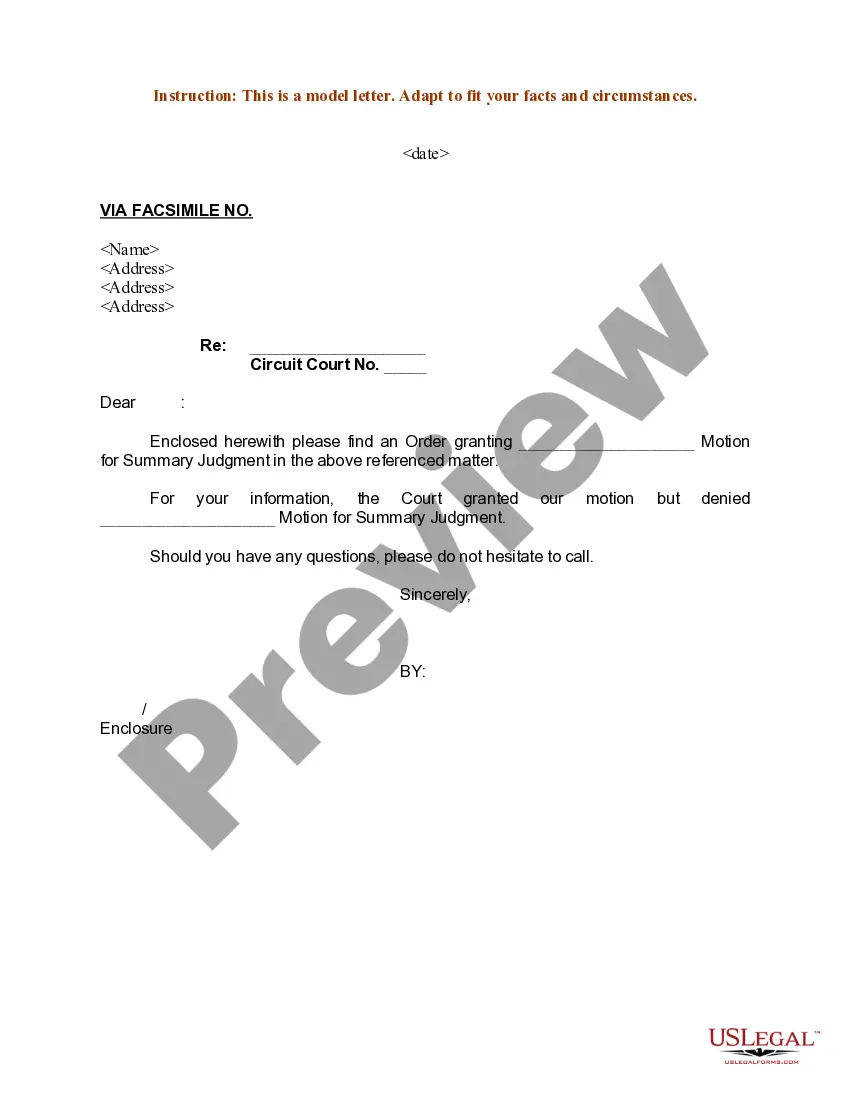
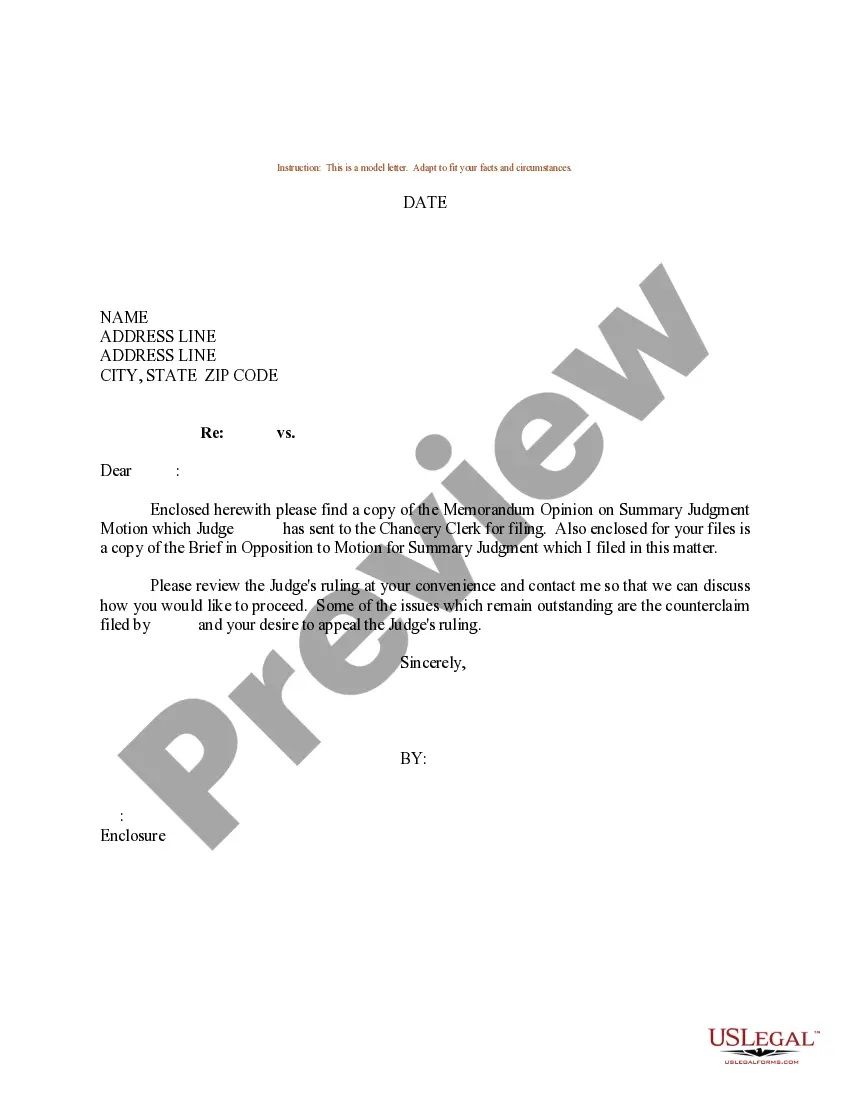
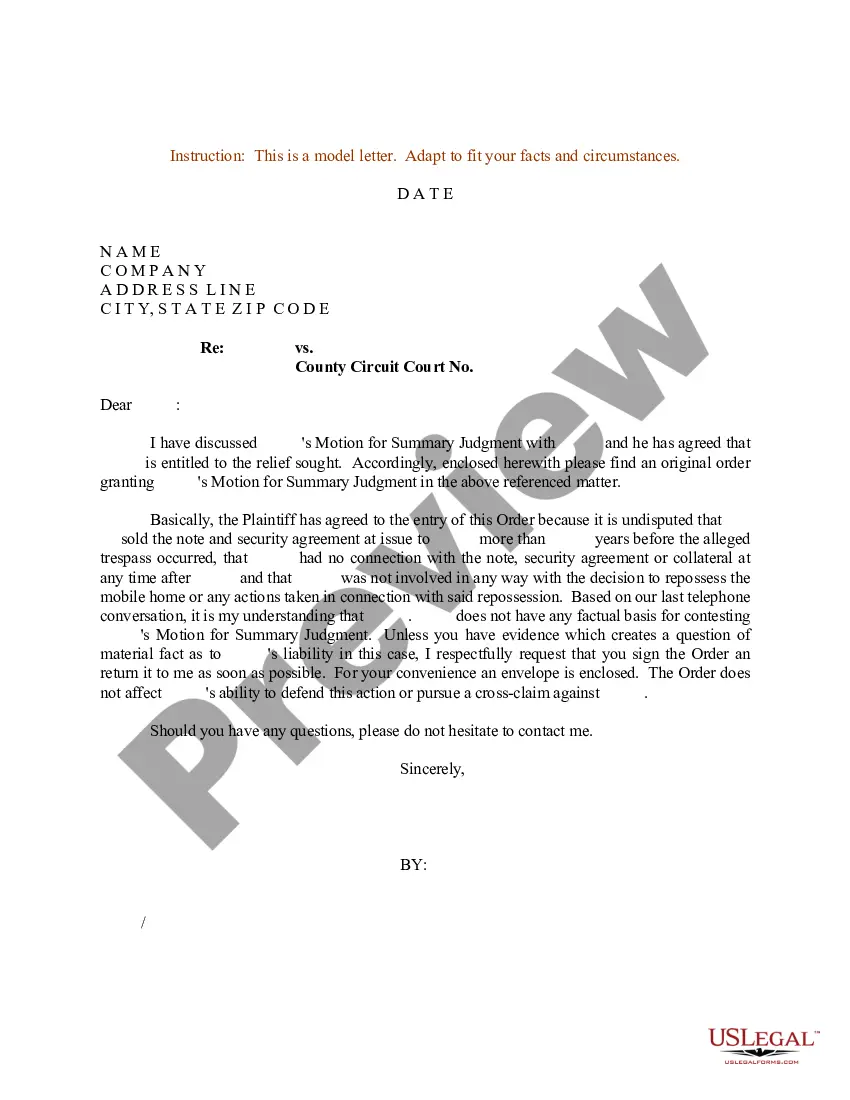









How to fill out Sample Letter For Response In Connection With Motions For Summary Judgment?
It's clear that you cannot instantly become a legal expert, nor can you swiftly learn to prepare Summary Judgment Legal For Plaintiff without possessing a specialized education.
Compiling legal documents is a lengthy process that demands specific training and expertise. So why not let the experts handle the creation of the Summary Judgment Legal For Plaintiff.
With US Legal Forms, featuring one of the most extensive legal document collections, you can discover everything from courtroom papers to templates for internal business correspondence.
If you need another template, start your search again.
Create a free account and choose a subscription plan to purchase the template. Select Buy now. Once the payment is successful, you can download the Summary Judgment Legal For Plaintiff, complete it, print it, and distribute it to the relevant individuals or organizations.
- We understand how crucial compliance and adherence to federal and state regulations are.
- That’s why, on our platform, all documents are location-specific and current.
- Start by visiting our website and obtain the document you need in just minutes.
- Find the document you're looking for by utilizing the search bar at the top of the page.
- Preview it (if this option is available) and review the accompanying description to determine if Summary Judgment Legal For Plaintiff meets your needs.
Form popularity
FAQ
To request summary judgment, you need to file a motion with the court that outlines your case and provides evidence supporting your claims. This motion should demonstrate that there are no significant disputes about the facts in your case, thus making a trial unnecessary. Using the summary judgment legal for plaintiff framework, you can strengthen your request by including affidavits, depositions, and relevant documentation. It's advisable to work with a legal professional to ensure your motion meets all procedural requirements.
To effectively oppose a motion for summary judgment, you should identify factual disputes and present evidence that contradicts the moving party's claims. Create a clear argument that outlines why summary judgment is not appropriate in your case. Utilizing strong supporting evidence, along with legal precedents, strengthens your position. Platforms like USLegalForms offer resources to help you craft a compelling opposition to a summary judgment legal for plaintiff.
While summary judgment can streamline your case, there are potential downsides. If you file for summary judgment and the court denies your motion, you may give your opponent an advantage. Additionally, pursuing summary judgment might lead to increased legal fees and extend the duration of your case. It's crucial to weigh these factors when considering the summary judgment legal for plaintiff approach.
To answer a plaintiff's motion for summary judgment, you must file a response that challenges the plaintiff's claims and presents evidence that suggests factual disputes exist. It’s crucial to provide counter-evidence and legal arguments to demonstrate why the case should proceed to trial. Engaging with platforms like uslegalforms can help you draft a compelling response. Leveraging the summary judgment legal for plaintiff can help clarify your position effectively.
True, both the plaintiff and the defendant can file motions for summary judgment. This legal strategy allows either party to argue that the case should be decided in their favor without a trial. Each party presents their arguments and supporting evidence for the court's consideration. To maximize your chances, understanding the summary judgment legal for plaintiff and its application becomes essential.
A judge typically decides a summary judgment motion. The judge reviews the evidence presented by both parties and assesses whether there are material facts in dispute. If the judge determines that there are no facts that require a trial, they may grant the summary judgment. Familiarizing yourself with how the summary judgment legal for plaintiff works can be advantageous in navigating this process.
Judges may grant partial summary judgment. For example, a judge might rule on some factual issues, but leave others for trial. Alternately, a judge might grant summary judgment regarding liability, but still hold a trial to determine damages.
The theory of summary judgment is that judges may rule for one side or the other only after finding that no "genuine" issues of "material" fact are in dispute.
Answer each numbered fact proposed by the moving party in separate paragraphs, using the same number. The court strongly prefers that the responding party repeat verbatim the moving party's proposed fact and then respond to it. 2. All responses should be succinctly stated.
The chance of success in these cases is less than 10% [1]. Another study found that summary judgment is mostly granted in Title VII cases, for example, cases involving equal pay or employment discrimination [2]. When it comes to federal cases, summary judgments are filed in 17% of total cases.