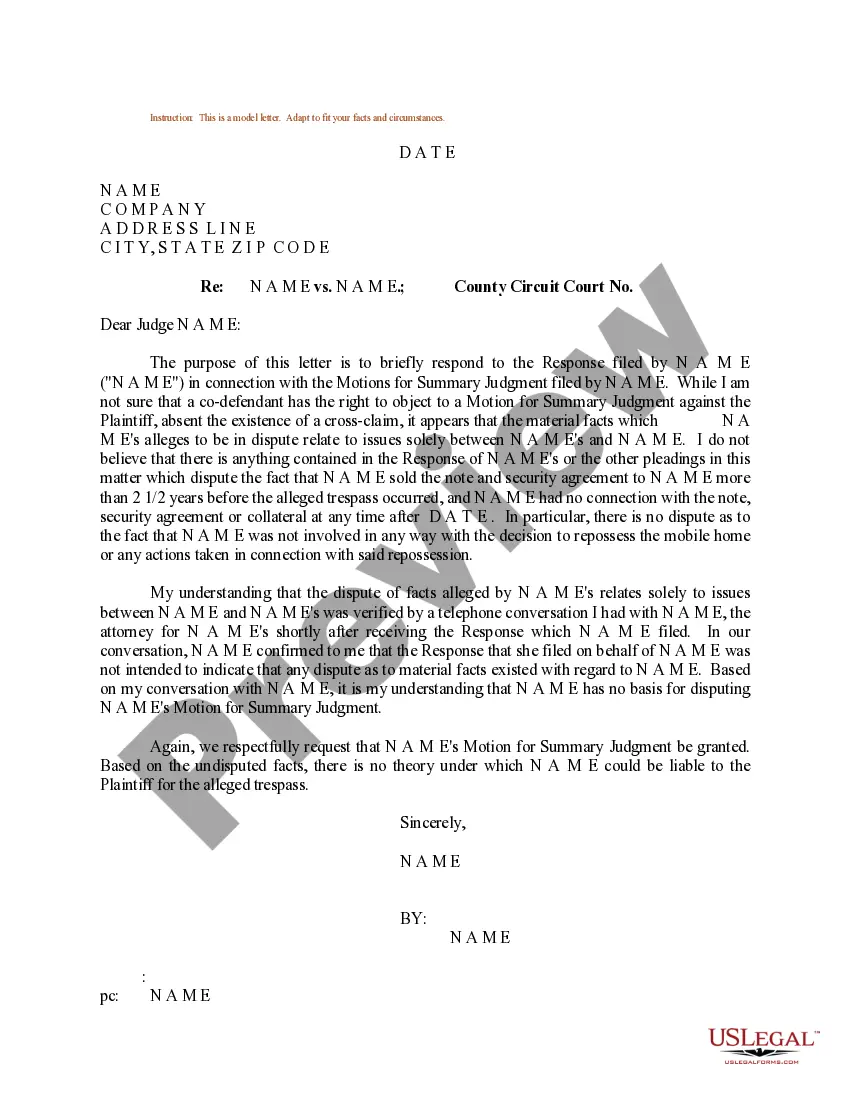
Sample Response To Motion To Dismiss
Description
Get your form ready online
Our built-in tools help you complete, sign, share, and store your documents in one place.
Make edits, fill in missing information, and update formatting in US Legal Forms—just like you would in MS Word.
Download a copy, print it, send it by email, or mail it via USPS—whatever works best for your next step.
Sign and collect signatures with our SignNow integration. Send to multiple recipients, set reminders, and more. Go Premium to unlock E-Sign.
If this form requires notarization, complete it online through a secure video call—no need to meet a notary in person or wait for an appointment.
We protect your documents and personal data by following strict security and privacy standards.

Make edits, fill in missing information, and update formatting in US Legal Forms—just like you would in MS Word.

Download a copy, print it, send it by email, or mail it via USPS—whatever works best for your next step.

Sign and collect signatures with our SignNow integration. Send to multiple recipients, set reminders, and more. Go Premium to unlock E-Sign.

If this form requires notarization, complete it online through a secure video call—no need to meet a notary in person or wait for an appointment.

We protect your documents and personal data by following strict security and privacy standards.
Looking for another form?
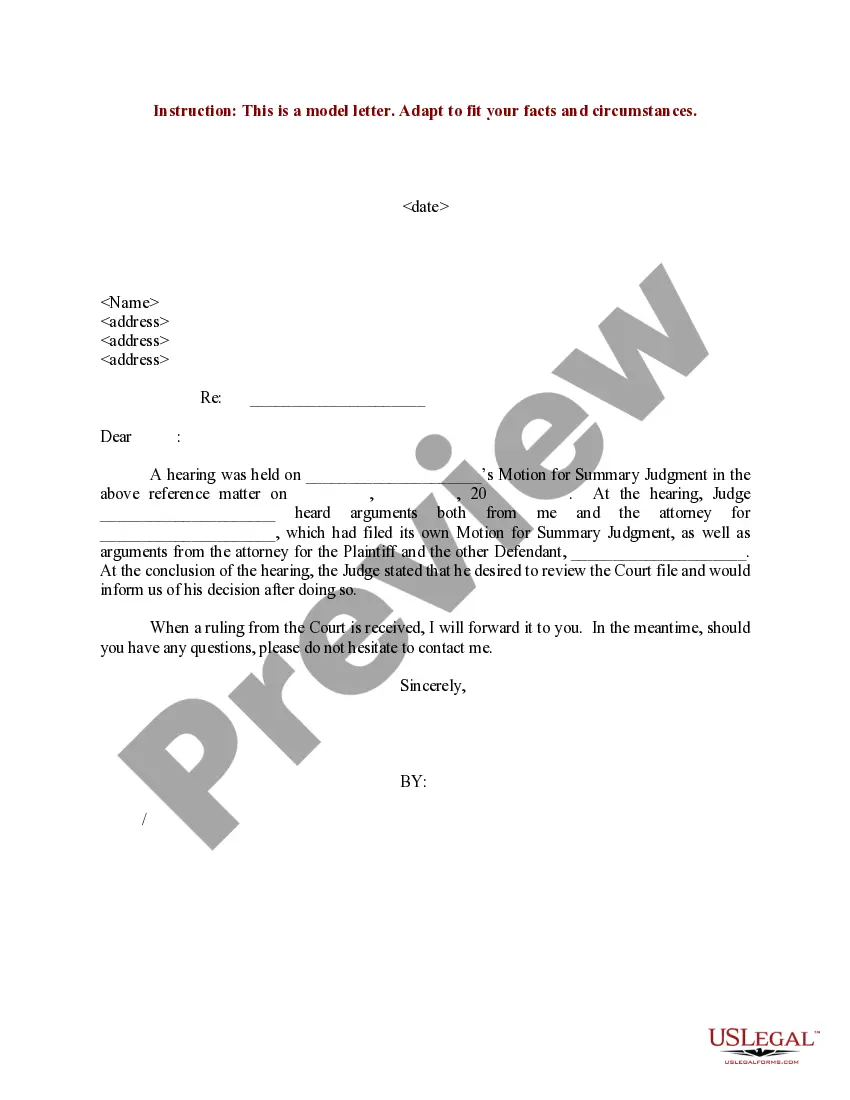
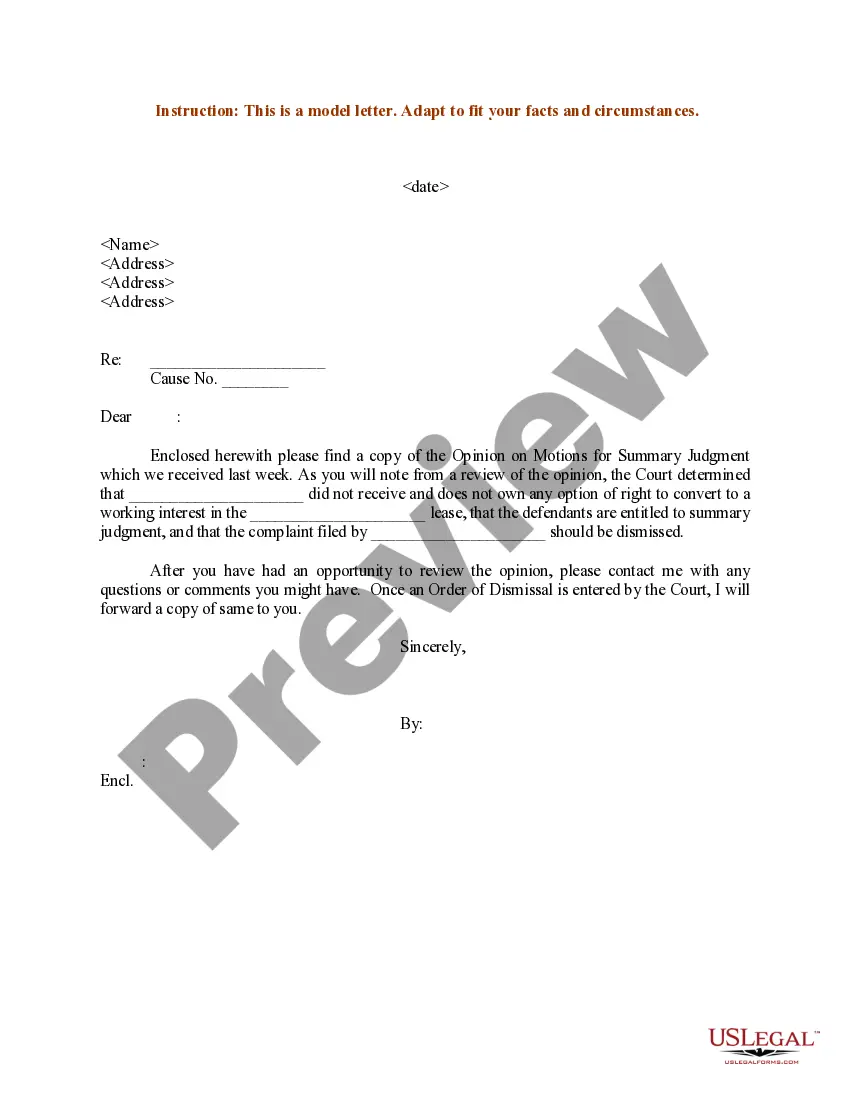
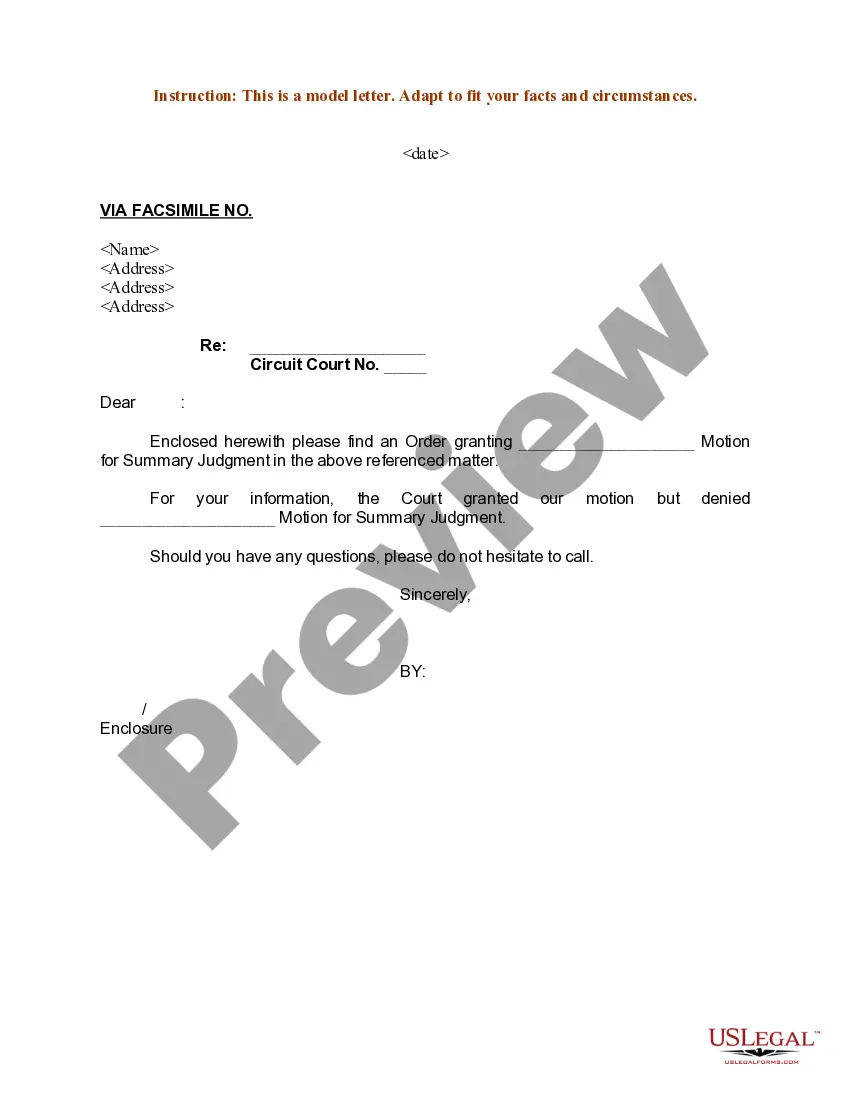
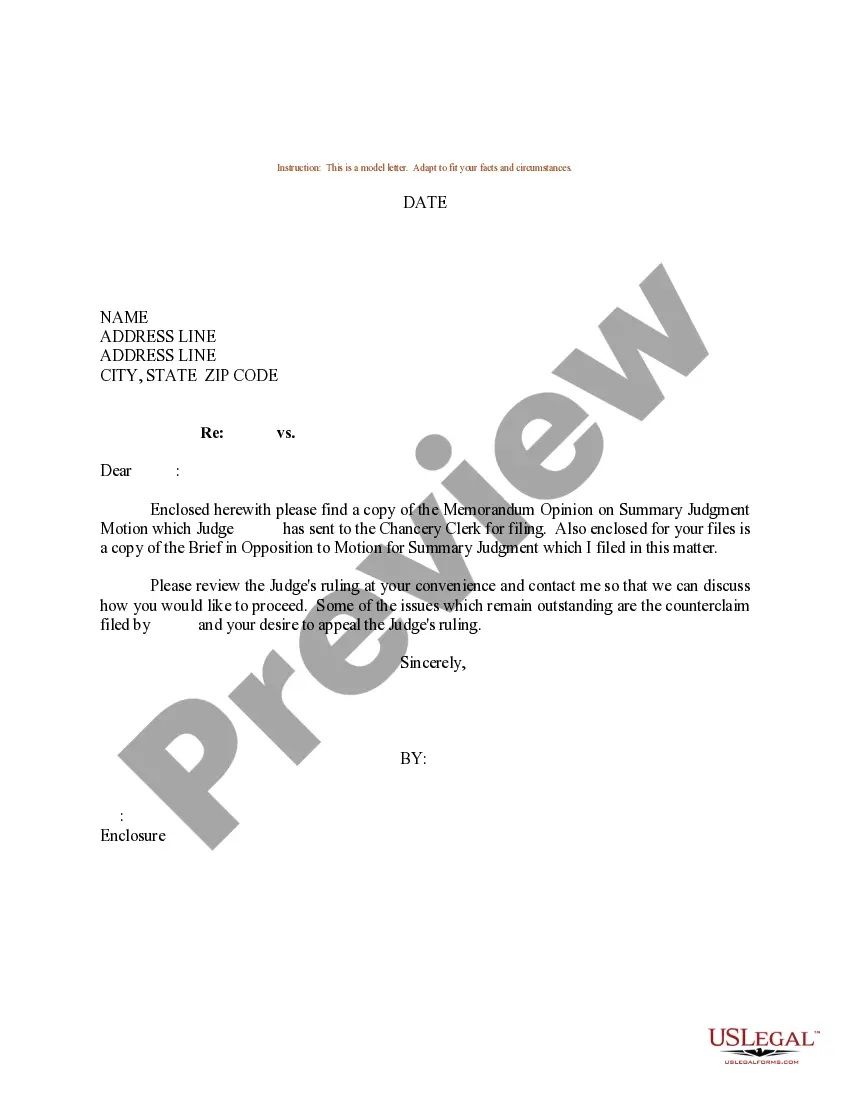
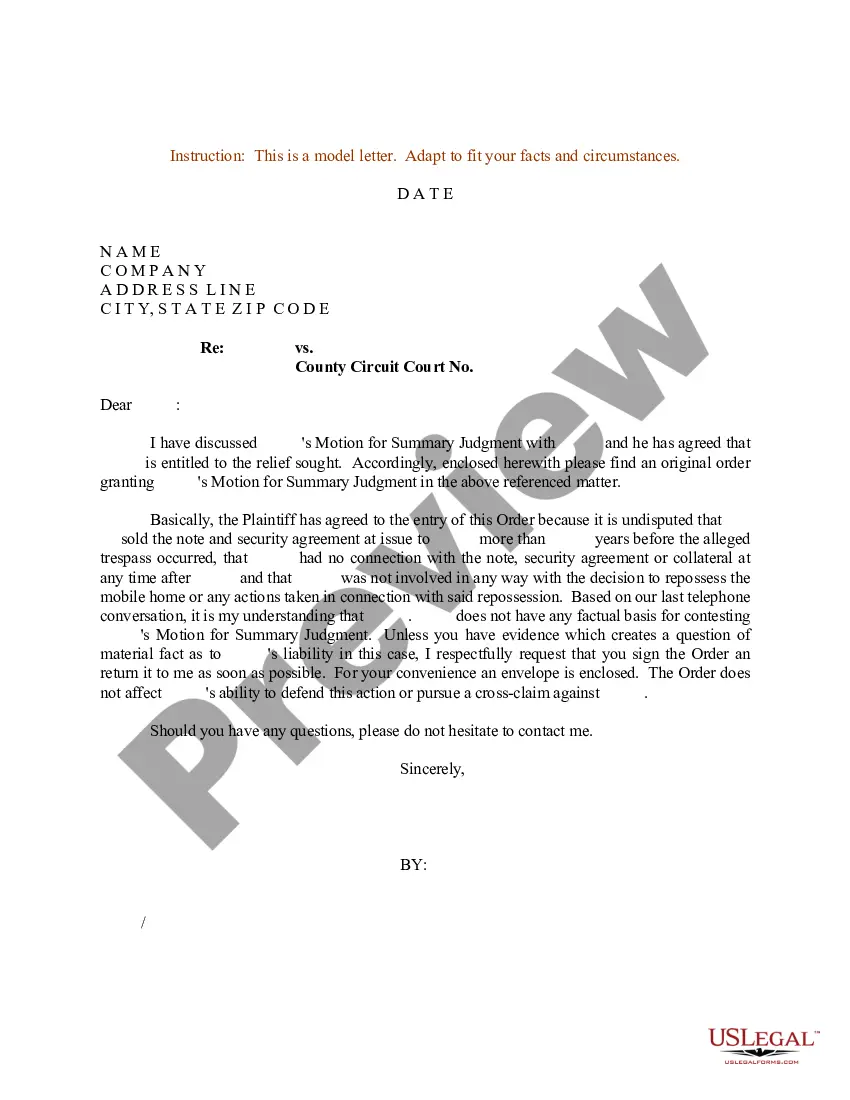
How to fill out Sample Letter For Response In Connection With Motions For Summary Judgment?
- If you already have an account, log in and check your subscription status. Ensure it’s valid to continue downloading templates.
- Explore the Preview mode and description of the form. Confirm that it aligns with your needs and complies with local jurisdiction requirements.
- If necessary, utilize the Search tab to find additional relevant templates that may suit your situation.
- Select your desired document by clicking the Buy Now button and choose a subscription plan that meets your needs. You will need to create an account to proceed.
- Finalize your purchase by entering your payment details. You can use credit cards or your PayPal account.
- Download the form to your device for easy access and completion. You can also find it in the My Forms section of your account anytime.
In conclusion, leveraging US Legal Forms not only saves you time but also provides you with the assurance that your legal documents are both comprehensive and compliant. With access to over 85,000 forms and expert assistance, your journey through legal documentation becomes much smoother.
Start your seamless experience today with US Legal Forms!
Form popularity
FAQ
To effectively survive a motion to dismiss, you should prepare a strong sample response to motion to dismiss that addresses the legal issues raised by the opposing party. This response must clearly outline the facts of your case and argue why the motion should be denied. Moreover, utilizing a platform like USLegalForms can help streamline the creation of an effective sample response to motion to dismiss. By following best practices and being thorough in your response, you increase your chances of moving forward in your case.
Writing a response to a motion to dismiss involves articulating your arguments against the motion while being concise and direct. Start by addressing each point raised in the motion and reinforce your position with legal citations as needed. Utilize a sample response to motion to dismiss as a guide to ensure your response is organized and persuasive, following best practices.
To respond to a dismissal, analyze the reasons provided for the dismissal and prepare your arguments accordingly. You may need to file a motion to reconsider or appeal the decision. Having a sample response to motion to dismiss can help you articulate your counterpoints effectively and enhance your chances of overturning the dismissal.
Writing a motion response involves addressing the points made in the original motion and presenting your arguments. Clearly state your counterarguments and provide evidence or legal authority to support your position. When crafting your response, refer to a sample response to motion to dismiss for a structured approach and to strengthen your case.
Filling out a motion to dismiss form requires clarity and accuracy. Begin by stating the grounds for dismissal clearly, include relevant case details, and sign the form. For assistance, consider using resources like US Legal Forms that provide templates and guidance on crafting an effective sample response to motion to dismiss.
After a request for dismissal, the court will review the motion and may schedule a hearing. If the court grants the dismissal, your case will be closed. However, if the request is denied, you may need to respond with a sample response to motion to dismiss, outlining your arguments to support your claims.
In response to a motion, you file an opposition brief outlining your arguments against the motion. This brief should clearly articulate why the motion should not be granted. Utilizing a sample response to motion to dismiss will help ensure that you cover all critical points in your opposition.
Writing a reply to a motion to dismiss involves reiterating your key arguments and addressing any new points raised by the moving party. Make sure your reply maintains a professional tone and remains focused on the legal grounds for maintaining your case. A sample response to motion to dismiss can help in framing your reply effectively.
When responding to a request for dismissal, analyze the reasons provided and prepare a counterargument. If you disagree with the request, make sure to outline your opposing views clearly. A sample response to motion to dismiss can serve as a practical template for crafting this response.
If a motion to dismiss is granted, the case is usually dismissed without prejudice. This means the plaintiff could potentially refile the case in the future. Understanding the implications can help you prepare a solid sample response to motion to dismiss in your next steps.