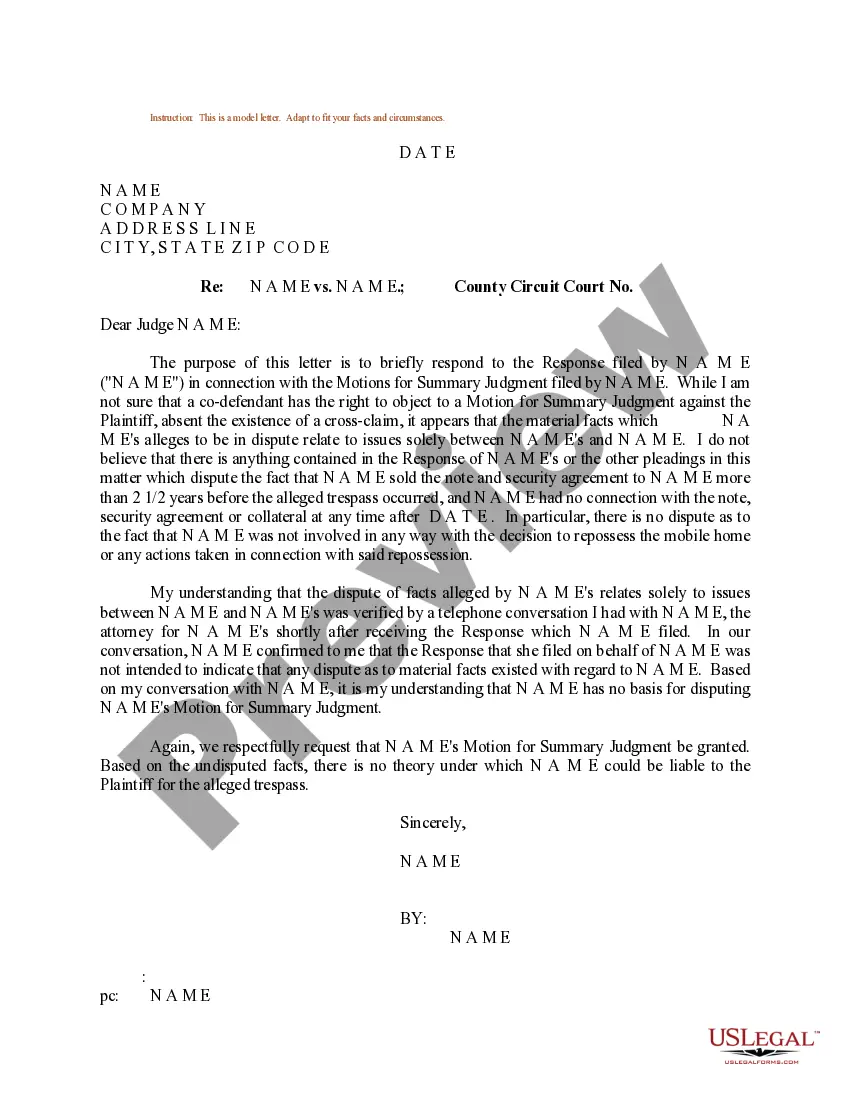
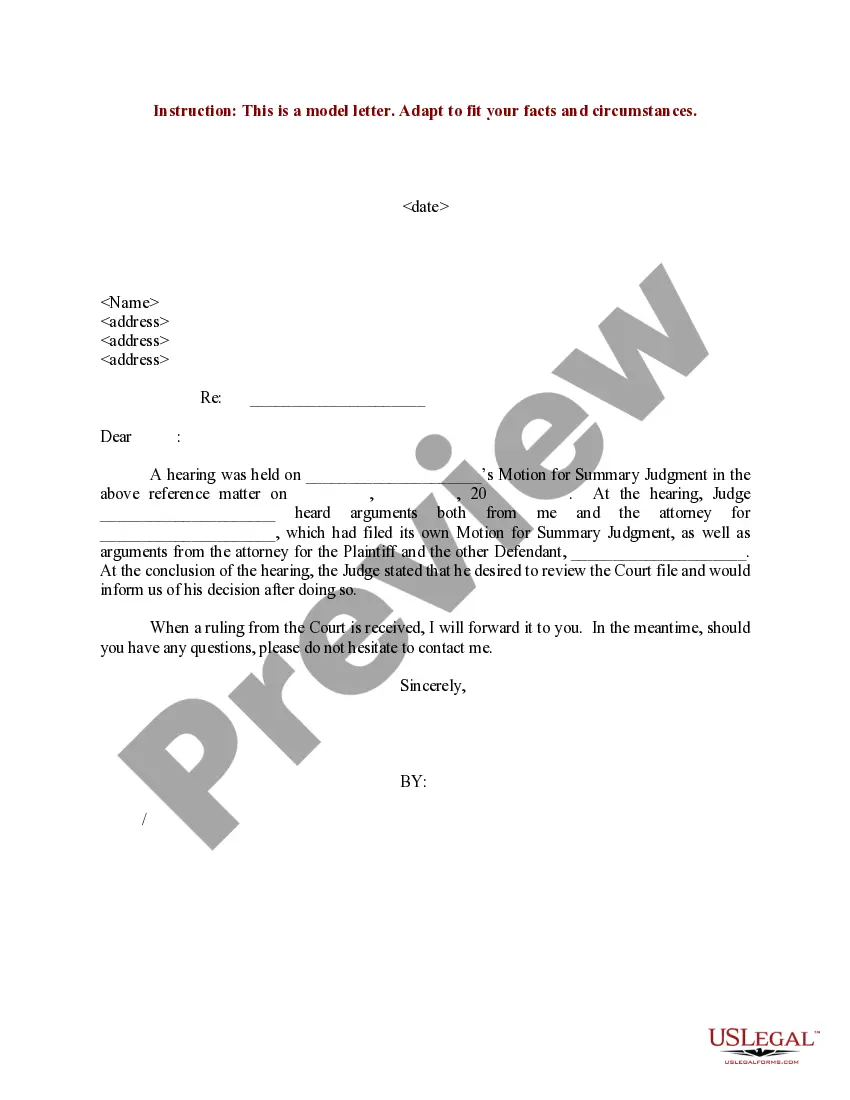
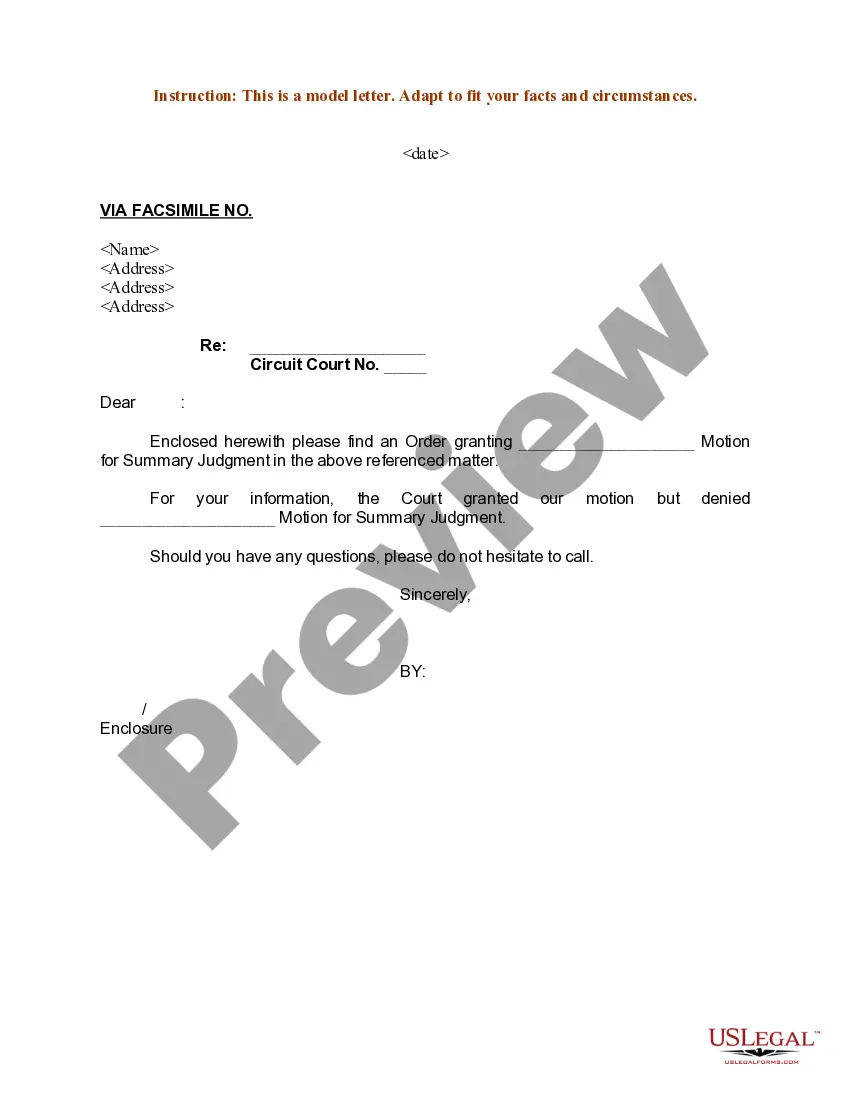
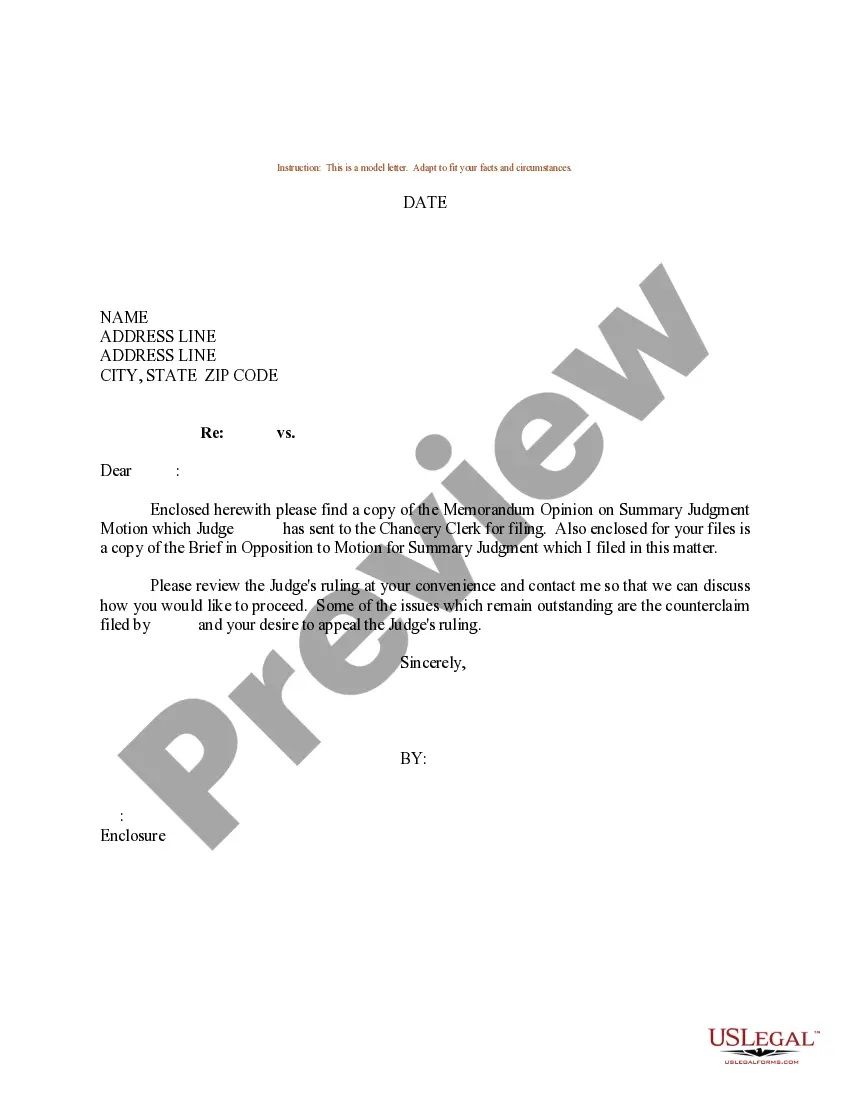
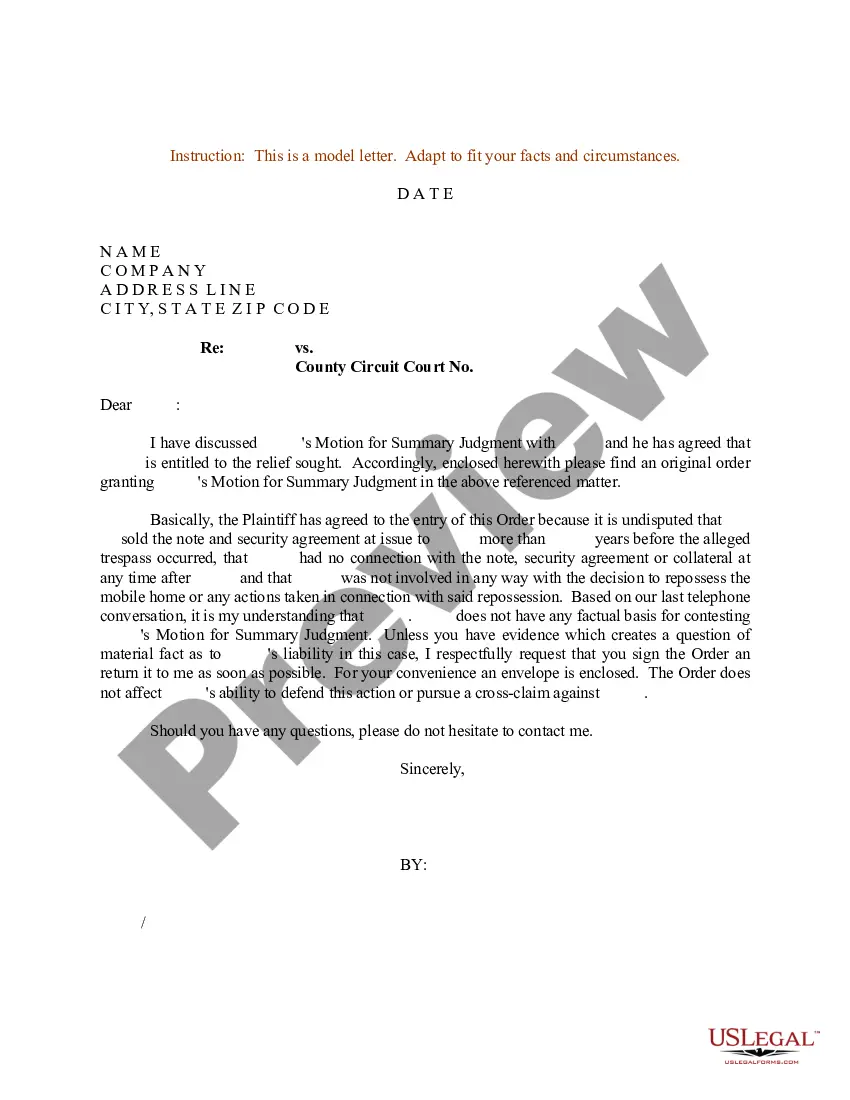
Sample Motion For Summary Judgment
Description
Get your form ready online
Our built-in tools help you complete, sign, share, and store your documents in one place.
Make edits, fill in missing information, and update formatting in US Legal Forms—just like you would in MS Word.
Download a copy, print it, send it by email, or mail it via USPS—whatever works best for your next step.
Sign and collect signatures with our SignNow integration. Send to multiple recipients, set reminders, and more. Go Premium to unlock E-Sign.
If this form requires notarization, complete it online through a secure video call—no need to meet a notary in person or wait for an appointment.
We protect your documents and personal data by following strict security and privacy standards.

Make edits, fill in missing information, and update formatting in US Legal Forms—just like you would in MS Word.

Download a copy, print it, send it by email, or mail it via USPS—whatever works best for your next step.

Sign and collect signatures with our SignNow integration. Send to multiple recipients, set reminders, and more. Go Premium to unlock E-Sign.

If this form requires notarization, complete it online through a secure video call—no need to meet a notary in person or wait for an appointment.

We protect your documents and personal data by following strict security and privacy standards.
Looking for another form?
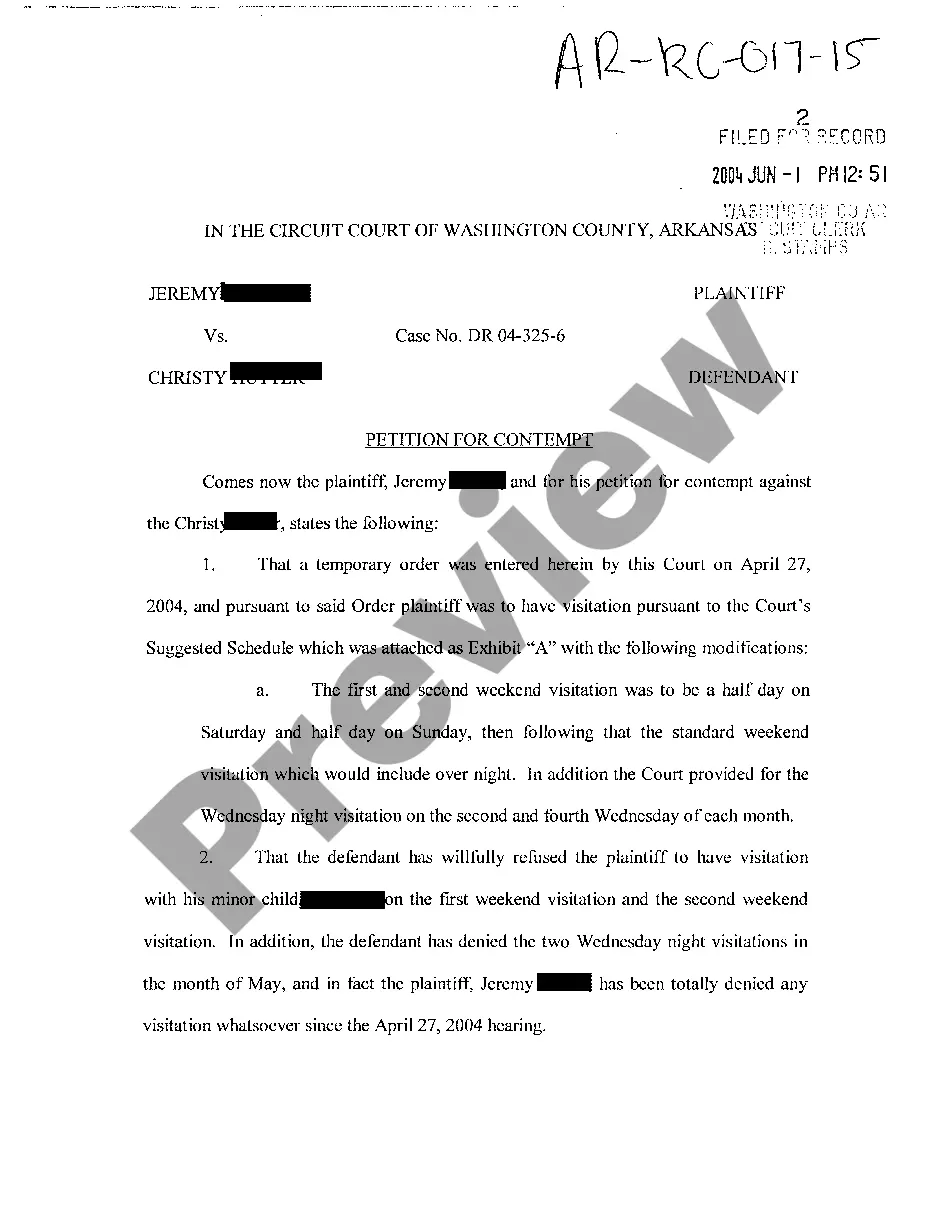



How to fill out Sample Letter For Response In Connection With Motions For Summary Judgment?
The Example Motion For Summary Judgment displayed on this site is a reusable official template crafted by seasoned attorneys adhering to federal and state laws and guidelines.
For over 25 years, US Legal Forms has supplied individuals, entities, and lawyers with more than 85,000 authenticated, state-specific forms for any business and personal situation. It offers the quickest, easiest and most dependable method to acquire the documents you require, as the service ensures bank-level data protection and anti-malware security.
Subscribe to US Legal Forms to have authenticated legal templates for all of life’s circumstances readily available.
- Search for the document you need and examine it.
- Browse through the file you searched and preview it or verify the form description to guarantee it meets your needs. If it doesn’t, utilize the search bar to locate the suitable one. Click Buy Now when you have located the template you desire.
- Register and Log In.
- Choose the pricing option that fits your needs and set up an account. Use PayPal or a credit card for a swift transaction. If you already possess an account, Log In and review your subscription to proceed.
- Obtain the fillable template.
- Select the format you prefer for your Example Motion For Summary Judgment (PDF, Word, RTF) and download the specimen onto your device.
- Complete and sign the documentation.
- Print the template to finish it manually. Alternatively, utilize an online multifunctional PDF editor to quickly and accurately fill out and sign your form with a valid signature.
- Download your documents once more.
- Use the same file again whenever necessary. Access the My documents section in your profile to redownload any forms you have previously acquired.
Form popularity
FAQ
To write a good motion for summary judgment, it is important to clearly outline the facts, present compelling evidence, and cite relevant legal standards. Your motion should be well-organized and logically argue why there is no genuine dispute about the material facts. Reviewing a sample motion for summary judgment can provide valuable insight into effective writing techniques and argumentation.
The odds of winning summary judgment as a plaintiff can vary greatly depending on the specifics of the case, including the available evidence and the strength of legal arguments. Generally, plaintiffs face a tougher road in obtaining summary judgment compared to defendants. By studying sample motion for summary judgment formats, plaintiffs can better prepare their cases and improve their chances of success.
The burden of proof for summary judgment generally lies with the party filing the motion, which is usually the defendant. They must show that there is no significant evidence to support the other party's claims. For plaintiffs, understanding this burden is crucial, and a sample motion for summary judgment can illustrate how to present counterarguments effectively.
Plaintiffs often struggle with winning motions for summary judgment because they carry the burden of proof and must establish that no genuine issues of material fact exist. Defendants, on the other hand, can argue that the evidence is insufficient to support the plaintiff's claims. Thoroughly understanding the dynamics through examples like a sample motion for summary judgment can help address these challenges.
To defeat a motion for summary judgment, a party must demonstrate that there are genuine issues of material fact that require a trial. This often involves presenting affidavits, depositions, or other evidence that contradicts the claims made in the motion. Utilizing a sample motion for summary judgment can guide you in framing your opposition effectively.
A plaintiff's opposition to a motion for summary judgment is a response that argues against the motion filed by the defendant. It typically includes evidence and legal arguments to show that there are factual disputes that warrant a trial. In this context, a well-prepared sample motion for summary judgment can provide insight into the common strategies used to counteract such motions.
Writing a good legal motion involves thorough research and a clear presentation of your arguments. Start by clearly defining the issue at hand and use factual data to build your case. A solid sample motion for summary judgment will convey confidence and clarity, making it easy for the judge to understand your position. Use resources, such as templates from USLegalForms, to streamline the process and ensure you cover all necessary aspects.
When writing a motion letter, start with a clear and concise introduction that specifies the purpose of the motion. Include a brief section that outlines the relevant facts and legal arguments that support your case. Be sure to close with a strong request for the relief you seek, such as approval for your sample motion for summary judgment. A well-structured letter enhances clarity and persuasiveness.
An example of a legal motion is a sample motion for summary judgment, which requests the court to rule in favor of one party without going to trial. This type of motion is often used when there are no material facts in dispute, and the law is on the side of the moving party. The motion outlines the specific reasons and legal support for why a judgment should be granted. Familiarizing yourself with this example can help you understand its structure and purpose.
To file a motion for judgment, start by preparing the necessary documents, including your sample motion for summary judgment. Next, you submit these documents to the appropriate court, adhering to any local filing rules. It's important to keep copies for your records and to serve the opposing party with your motion. For additional guidance, consider using resources available on platforms like USLegalForms.