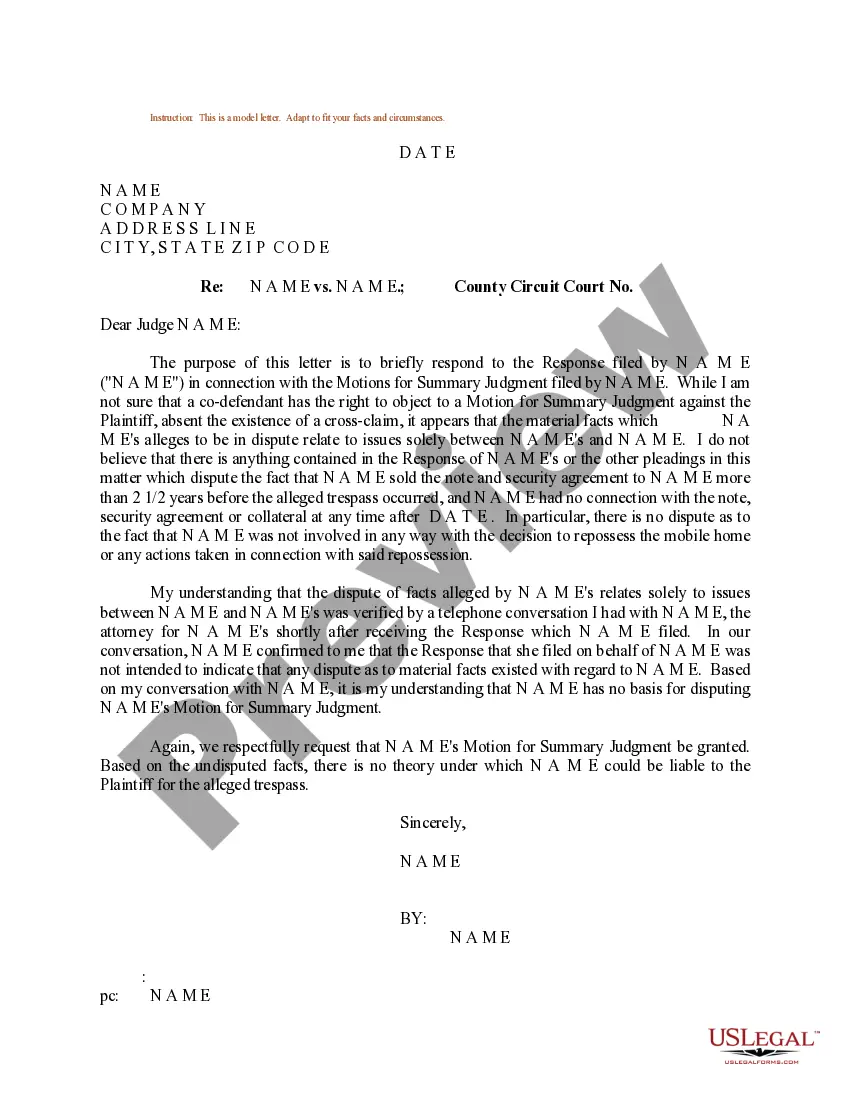
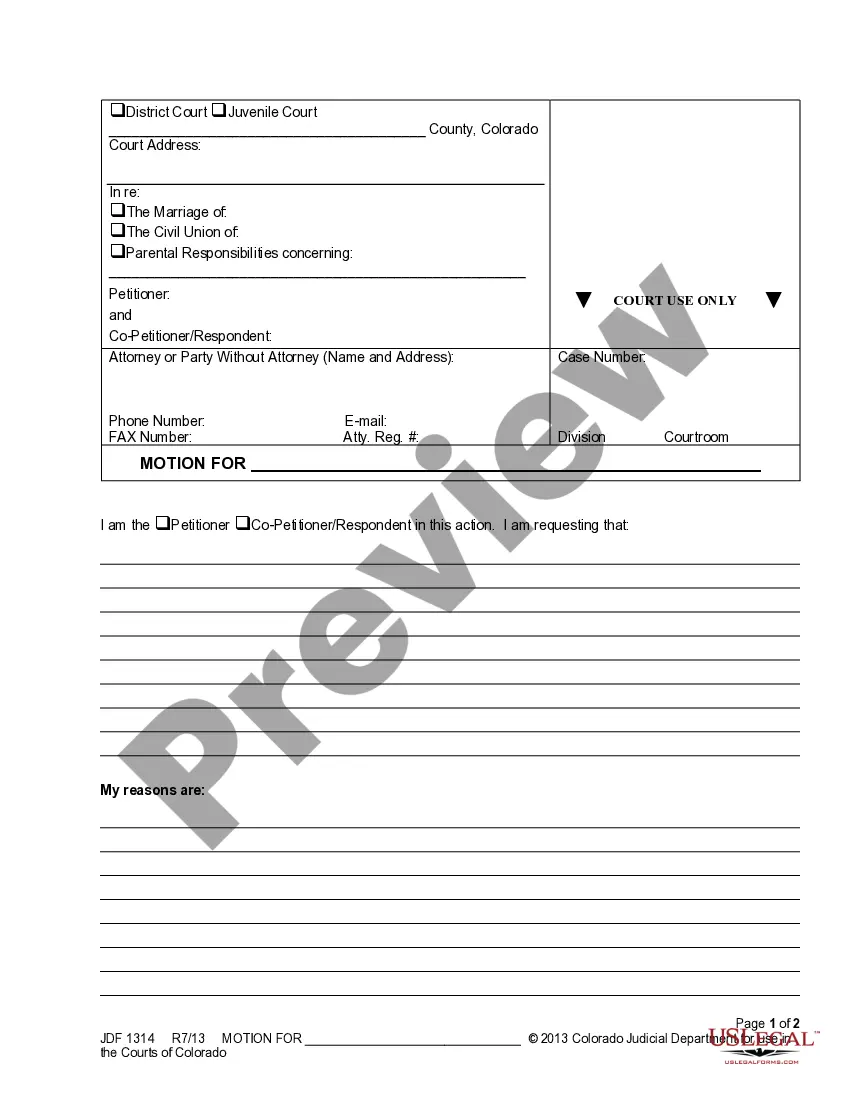
Motion For Sanctions
Description
Get your form ready online
Our built-in tools help you complete, sign, share, and store your documents in one place.
Make edits, fill in missing information, and update formatting in US Legal Forms—just like you would in MS Word.
Download a copy, print it, send it by email, or mail it via USPS—whatever works best for your next step.
Sign and collect signatures with our SignNow integration. Send to multiple recipients, set reminders, and more. Go Premium to unlock E-Sign.
If this form requires notarization, complete it online through a secure video call—no need to meet a notary in person or wait for an appointment.
We protect your documents and personal data by following strict security and privacy standards.

Make edits, fill in missing information, and update formatting in US Legal Forms—just like you would in MS Word.

Download a copy, print it, send it by email, or mail it via USPS—whatever works best for your next step.

Sign and collect signatures with our SignNow integration. Send to multiple recipients, set reminders, and more. Go Premium to unlock E-Sign.

If this form requires notarization, complete it online through a secure video call—no need to meet a notary in person or wait for an appointment.

We protect your documents and personal data by following strict security and privacy standards.
Looking for another form?
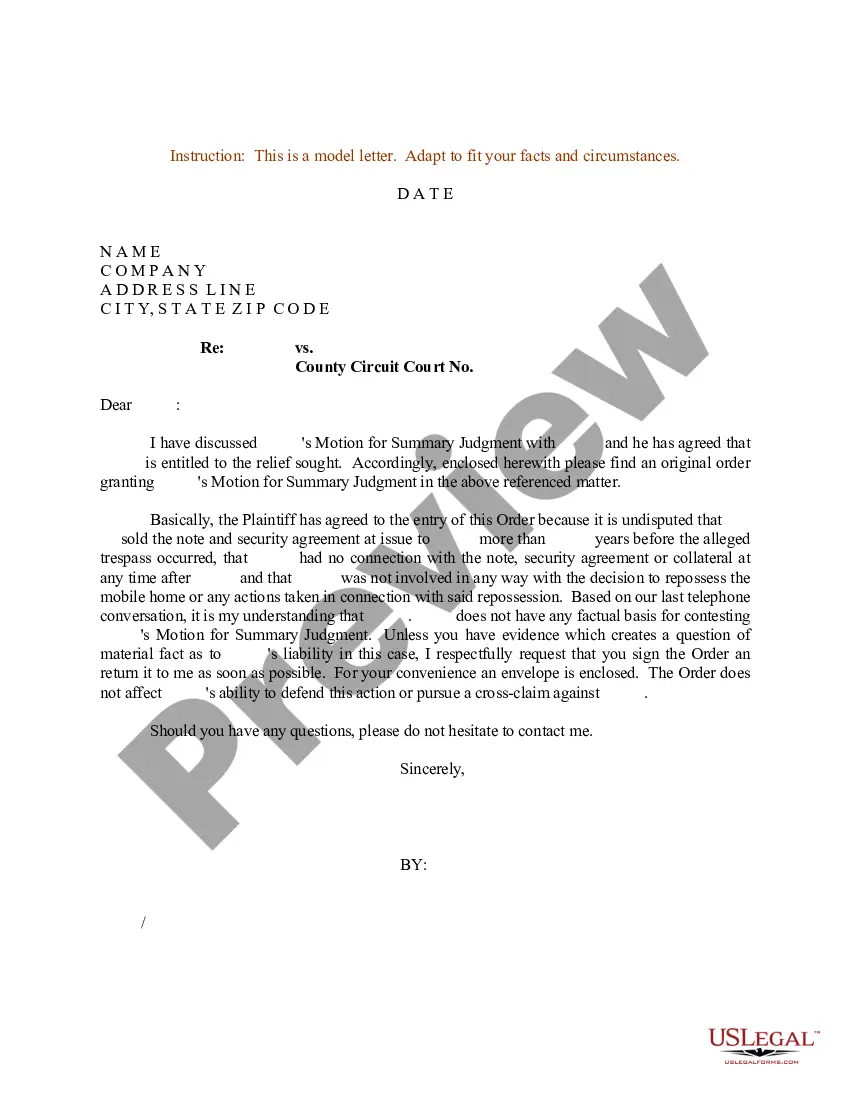
How to fill out Sample Letter For Response In Connection With Motions For Summary Judgment?
Handling legal documents and processes can be a time-consuming extension to your whole day.
Motions for Sanctions and similar forms typically necessitate searching for them and figuring out the correct way to complete them.
Consequently, whether you are managing financial, legal, or personal issues, having access to a thorough and straightforward online collection of forms at your fingertips will be very beneficial.
US Legal Forms is the leading online resource for legal templates, boasting over 85,000 state-specific forms and a range of tools to help you fill out your documents easily.
Is it your first time using US Legal Forms? Create an account in just a few minutes and you'll gain access to the forms catalog and Motion For Sanctions. After that, follow the instructions below to complete your form.
- Explore the collection of relevant documents available with just one click.
- US Legal Forms provides state- and county-specific forms that can be downloaded at any time.
- Safeguard your document management processes with exceptional support that enables you to assemble any form in just a few minutes without extra or hidden fees.
- Simply Log In to your account, find Motion For Sanctions, and download it directly from the My documents section.
- You can also access previously downloaded forms.
Form popularity
FAQ
When a court sanctions a party, it imposes penalties for failing to comply with legal rules or court orders. Sanctions can take various forms, such as fines, dismissal of claims, or even default judgments. Understanding the court's authority to sanction is crucial for parties involved in legal disputes, as it reinforces the necessity for adherence to established procedures.
The phrase 'motion to compel and for sanctions' encompasses two important legal actions. A motion to compel requests the court to enforce compliance, while a motion for sanctions seeks penalties against noncompliance. Together, these motions emphasize the importance of adhering to legal protocols and maintaining accountability during a case.
A motion to compel is a serious legal action that can significantly impact the outcome of a case. It requires the court's attention and can lead to further consequences if a party does not comply. Understanding the implications of a motion to compel is vital for legal professionals and clients aiming for favorable resolutions.
A motion for sanctions is a request submitted to a judge, asking for penalties against a party that has not complied with procedural requirements. It serves to enforce compliance and uphold the integrity of the judicial process. Through this motion, you can bring attention to any misconduct and encourage proper legal conduct.
A motion for sanctions refers to a formal request made to the court, seeking penalties against a party that has failed to comply with legal or court obligations. This motion aims to address violations in a case where a party does not adhere to established rules or court orders. When you file a motion for sanctions, you highlight the need for accountability in the legal process.
Motions to compel and sanctions are legal tools used in court cases to ensure compliance with procedural rules. A motion to compel forces a party to comply with a request for information or action. In contrast, a motion for sanctions proposes penalties against a party that fails to follow court orders. Understanding these motions is crucial for effective legal strategy.
A sanction order from the court is a formal ruling that outlines the penalties imposed on a party for failing to comply with legal obligations. This order details the specific sanctions, which can include fines, loss of legal rights, or requiring the payment of the opposing party's legal fees. If you are facing such an order, it is helpful to consult a professional for help navigating your options and ensuring compliance with the motion for sanctions.
One of the most common legal sanctions is the imposition of monetary fines, which acts as a deterrent against noncompliance in the legal process. These fines can be awarded to the opposing party to cover costs incurred due to the violation. The motion for sanctions not only serves to penalize the responsible party but also reinforces the integrity of the judicial system.
When a court sanctions you, it indicates that the judge has found you in violation of legal standards or court rules. This could lead to penalties, such as fines, attorney fees awarded to the other party, or restrictions on your legal rights in the case. Utilizing a motion for sanctions highlights the seriousness of the violation and promotes adherence to legal protocols within the court system.
Court sanctions can be imposed on any party involved in a legal proceeding, including plaintiffs, defendants, or their representatives. Sanctions are typically directed at individuals or entities that disrupt the judicial process or fail to comply with court orders. Using the motion for sanctions is a way for the aggrieved party to seek remedy and hold others accountable for their actions in court.