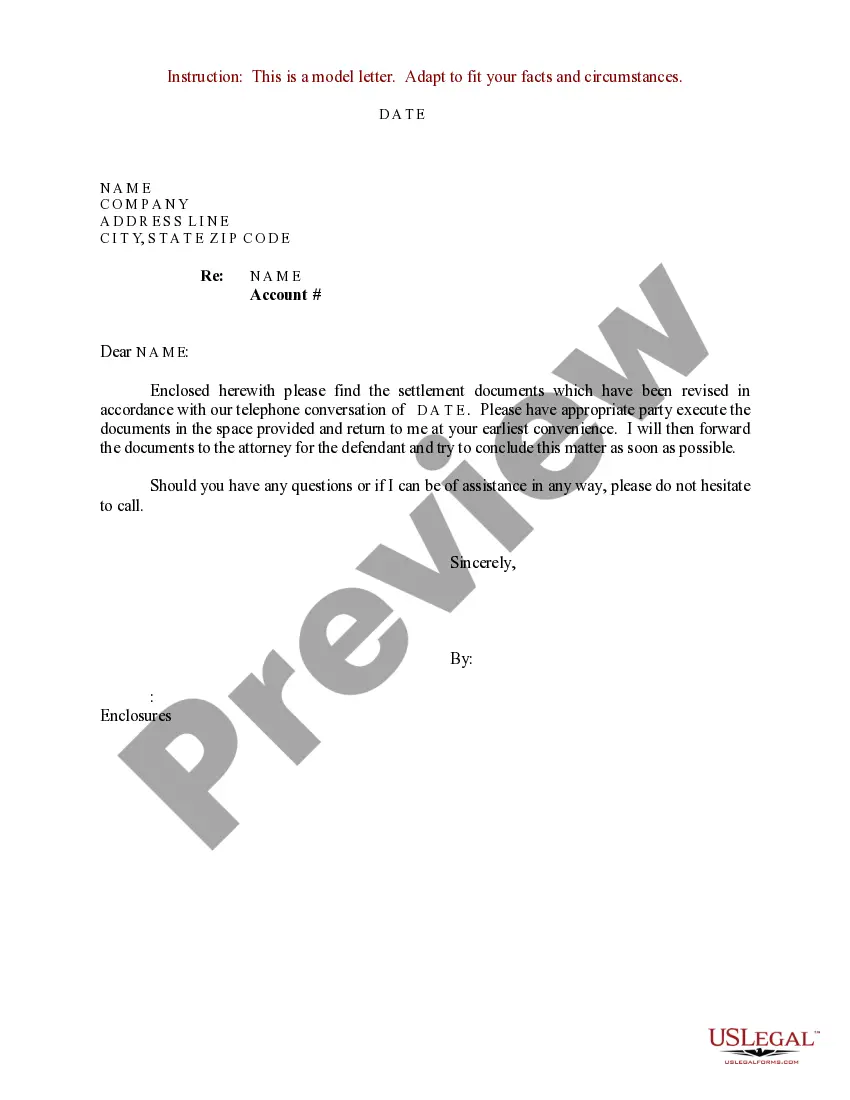
Settlement Agreement For Discrimination
Description
Get your form ready online
Our built-in tools help you complete, sign, share, and store your documents in one place.
Make edits, fill in missing information, and update formatting in US Legal Forms—just like you would in MS Word.
Download a copy, print it, send it by email, or mail it via USPS—whatever works best for your next step.
Sign and collect signatures with our SignNow integration. Send to multiple recipients, set reminders, and more. Go Premium to unlock E-Sign.
If this form requires notarization, complete it online through a secure video call—no need to meet a notary in person or wait for an appointment.
We protect your documents and personal data by following strict security and privacy standards.

Make edits, fill in missing information, and update formatting in US Legal Forms—just like you would in MS Word.

Download a copy, print it, send it by email, or mail it via USPS—whatever works best for your next step.

Sign and collect signatures with our SignNow integration. Send to multiple recipients, set reminders, and more. Go Premium to unlock E-Sign.

If this form requires notarization, complete it online through a secure video call—no need to meet a notary in person or wait for an appointment.

We protect your documents and personal data by following strict security and privacy standards.
Looking for another form?
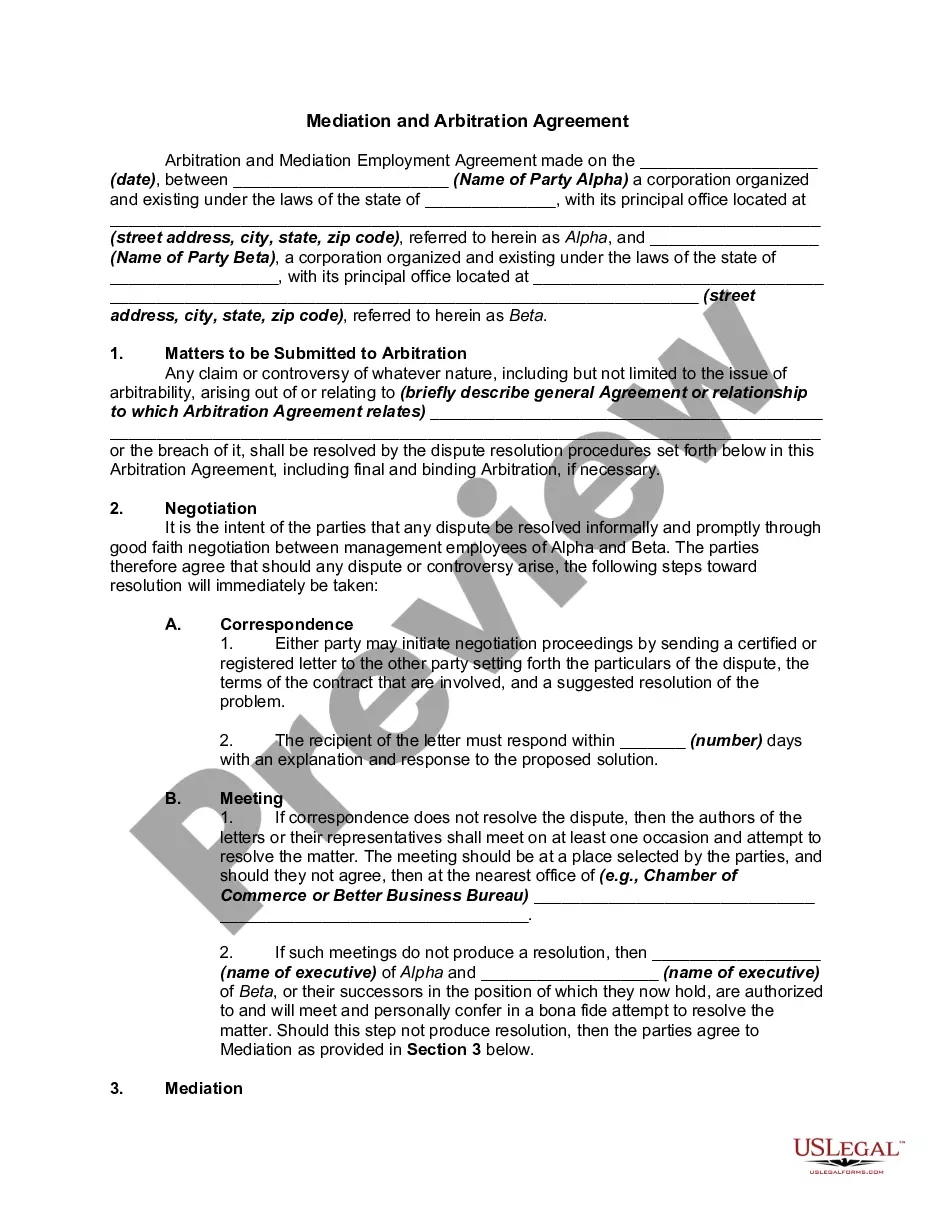
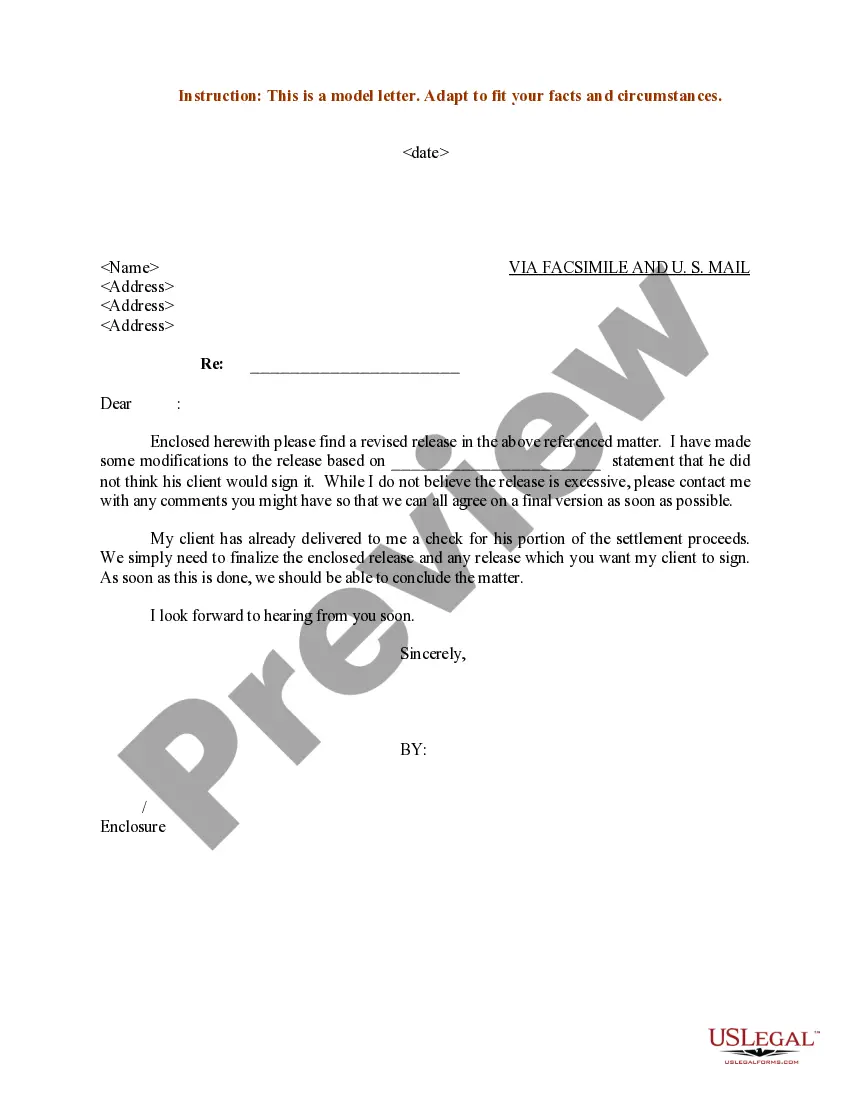
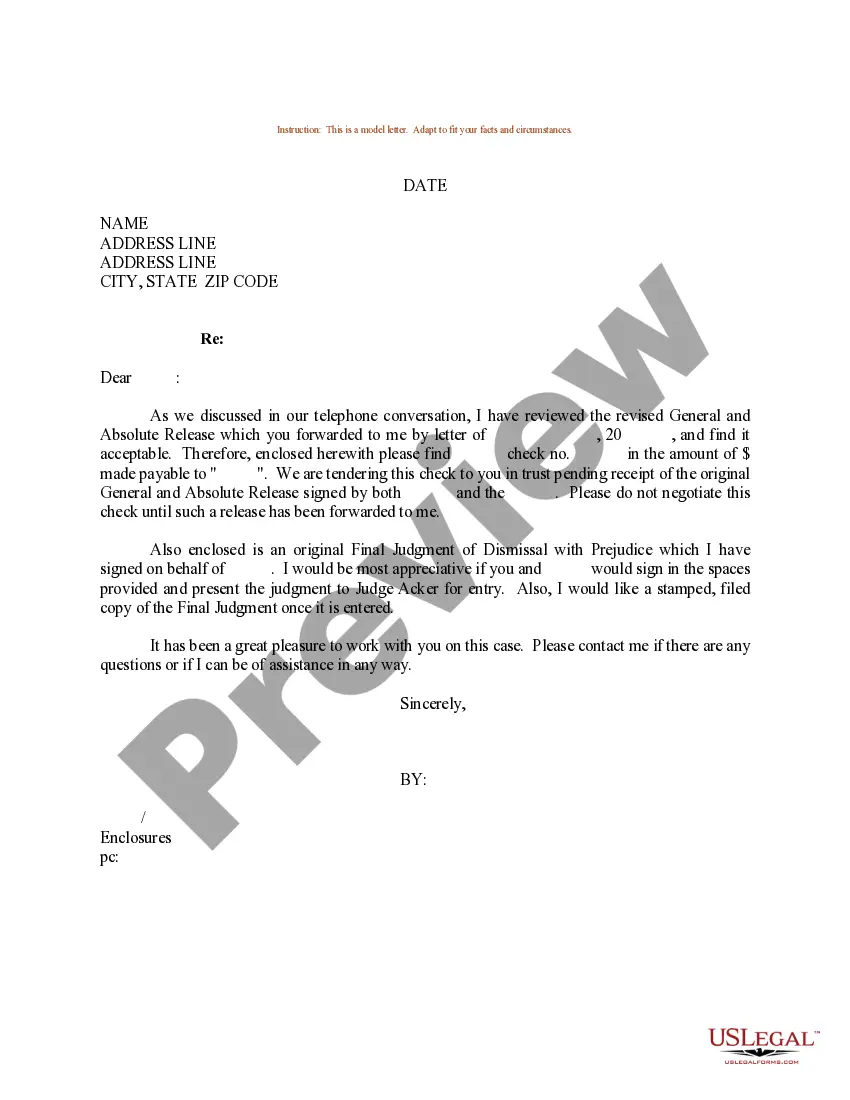
How to fill out Sample Letter For Revised Settlement Documents?
Whether for commercial reasons or for private issues, everyone must handle legal circumstances at some point in their lives.
Completing legal documents requires meticulous care, starting from choosing the correct form template.
Avoid altering or deleting any HTML tags. Only synonymize plain text outside of the HTML tags.
- For example, if you choose an incorrect version of the Settlement Agreement For Discrimination, it will be denied once submitted.
- Thus, it's vital to obtain a reliable source of legal documents like US Legal Forms.
- If you need to obtain a Settlement Agreement For Discrimination template, follow these straightforward steps.
- Acquire the sample you require by utilizing the search box or catalog navigation.
- Review the form’s details to ensure it corresponds with your case, state, and area.
- Select the form’s preview to examine it.
- If it is the incorrect form, return to the search feature to locate the Settlement Agreement For Discrimination template you need.
- Download the file if it aligns with your criteria.
- If you already possess a US Legal Forms account, just click Log in to access previously stored documents in My documents.
- In case you don’t have an account yet, you can download the form by clicking Buy now.
- Select the appropriate pricing option.
- Fill out the profile registration form.
- Choose your payment method: you may use a credit card or PayPal account.
- Select the document format you desire and download the Settlement Agreement For Discrimination.
- Once it is saved, you can complete the form using editing software or print it out and finish it manually.
- With a vast US Legal Forms catalog available, you never have to waste time searching for the correct template online.
- Utilize the library’s user-friendly navigation to find the suitable template for any circumstance.
Form popularity
FAQ
The amount for discrimination lawsuits can vary widely, often depending on the specifics of the case, the severity of the discrimination, and the jurisdiction. Generally, settlements can range from a few thousand dollars to several million. A well-structured settlement agreement for discrimination can ensure fair compensation and address your individual situation. Utilizing resources like USLegalForms can help you understand potential settlement values and create effective agreements.
When negotiating a settlement agreement for discrimination, consider requesting compensation for lost wages, emotional distress, and legal fees. It's also important to seek job reinstatement or a positive reference if applicable. Additionally, you might want to include clauses that protect you from future discrimination and ensure workplace improvements. Clearly outlining your needs can strengthen your position during negotiations.
A fair settlement for discrimination should adequately compensate the victim for all losses, including emotional pain, financial hardships, and future implications. It is vital to ensure that the settlement reflects the true impact of the discrimination experienced. Engaging with resources from USLegalForms can help you determine what constitutes a fair and just settlement for your specific circumstances.
The average settlement for a discrimination lawsuit varies based on the specific details of each case, but it often falls between $40,000 and $300,000. Factors influencing this range include the strength of the evidence, the extent of damages, and the jurisdiction. Using USLegalForms can provide insights and help you understand where your case might fit within this spectrum.
A reasonable settlement offer for discrimination should take into account the damages suffered, the context of the discrimination, and the likelihood of prevailing in court. It is essential to ensure that the offer adequately compensates for emotional distress, lost income, and other relevant factors. Tools from USLegalForms can help you craft a compelling offer that reflects these elements.
The 80% rule in discrimination refers to a guideline used to assess whether a company’s hiring practices disproportionately affect a particular group. It suggests that if a protected group makes up less than 80% of the selection rate compared to a majority group, it may indicate potential discrimination. Understanding this rule can be crucial when negotiating a settlement agreement for discrimination.
The worth of your discrimination lawsuit can depend on several key factors, including your financial losses, emotional suffering, and the strength of your case. While every case is unique, it is essential to evaluate all aspects to arrive at a fair value. Consulting with legal experts or using tools provided by USLegalForms can help clarify your lawsuit’s potential worth.
A good settlement amount for discrimination varies widely, depending on factors such as the nature of the discrimination, the impact on the victim, and the evidence available. Generally, settlements can range from a few thousand to several million dollars. To determine an appropriate amount, consider utilizing resources like USLegalForms for expert guidance.
A reasonable settlement agreement for discrimination typically reflects the severity of the case, the damages incurred, and the likelihood of success in court. It should consider emotional distress, lost wages, and any punitive damages. You can use platforms like USLegalForms to help draft a fair settlement agreement that aligns with your specific situation.
To write a simple settlement agreement for discrimination, start by clearly outlining the parties involved and the purpose of the agreement. Next, specify the terms of the settlement, including any compensation or actions to be taken by each party. It's important to include a confidentiality clause, if necessary, to protect sensitive information. Finally, ensure both parties sign the document to make it legally binding; using a platform like US Legal Forms can simplify this process by providing templates tailored for settlement agreements.