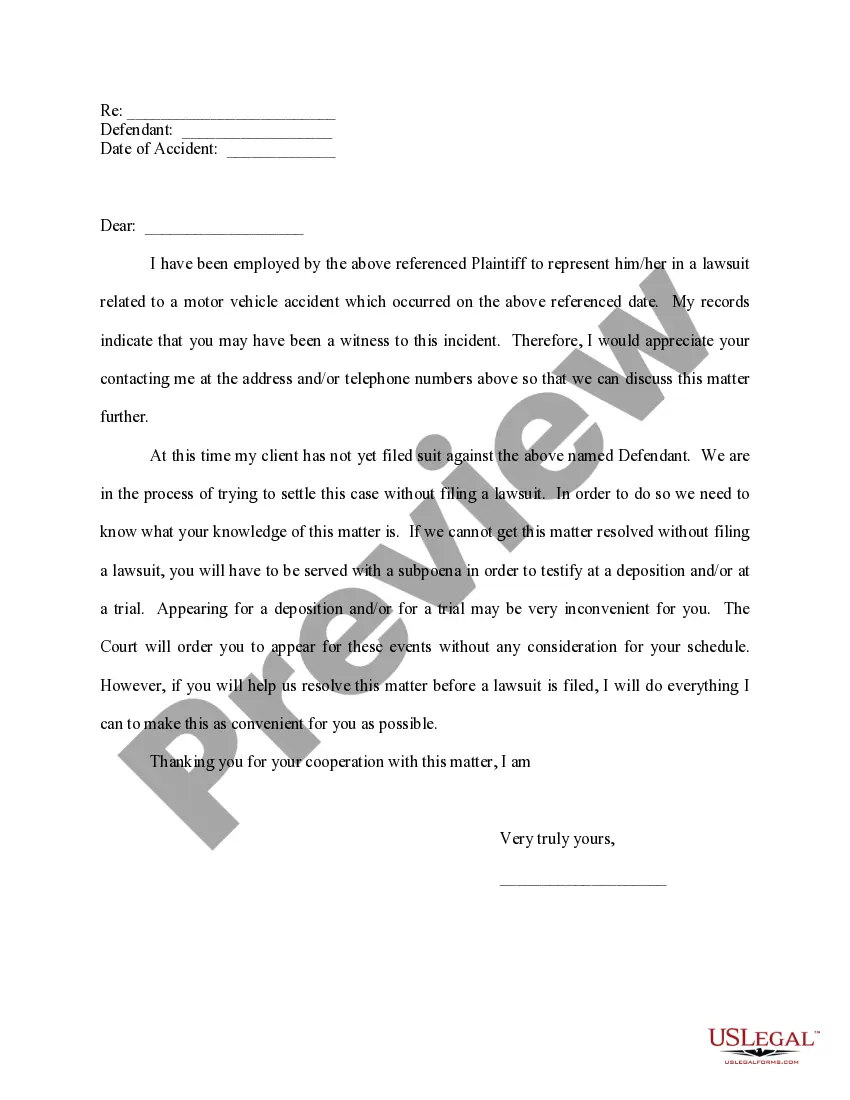
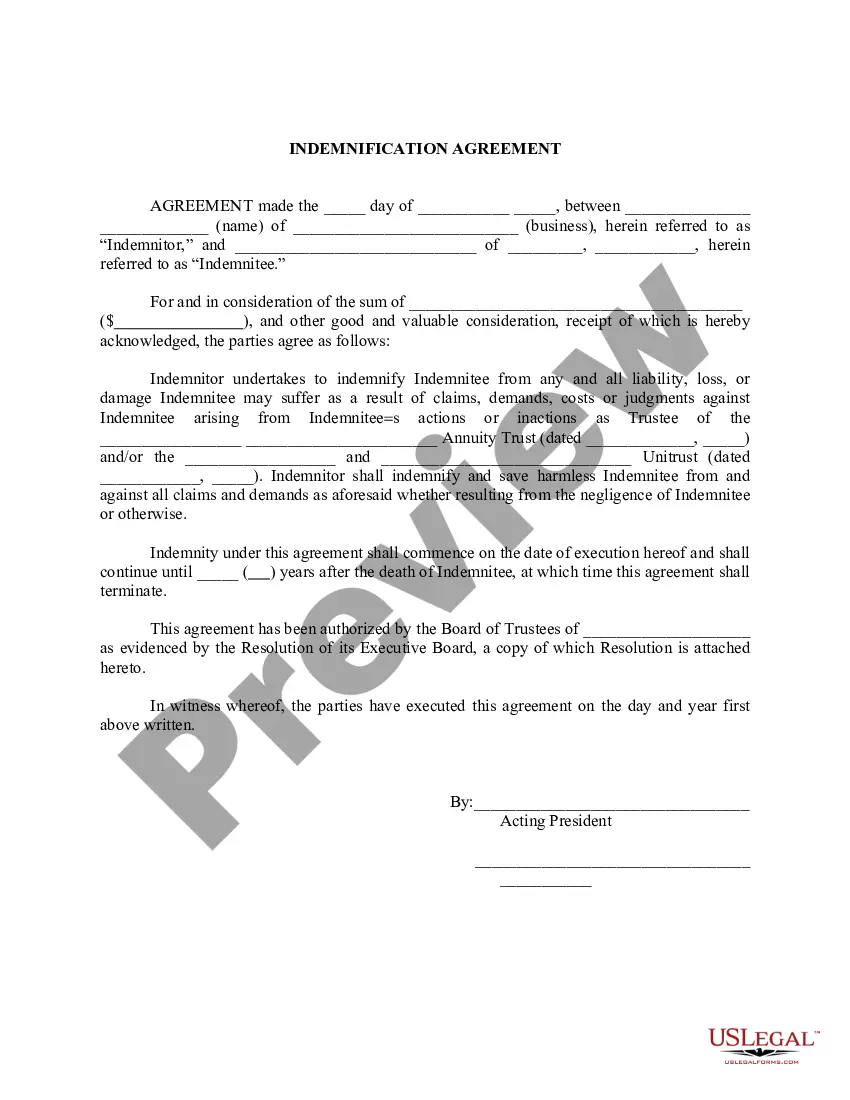
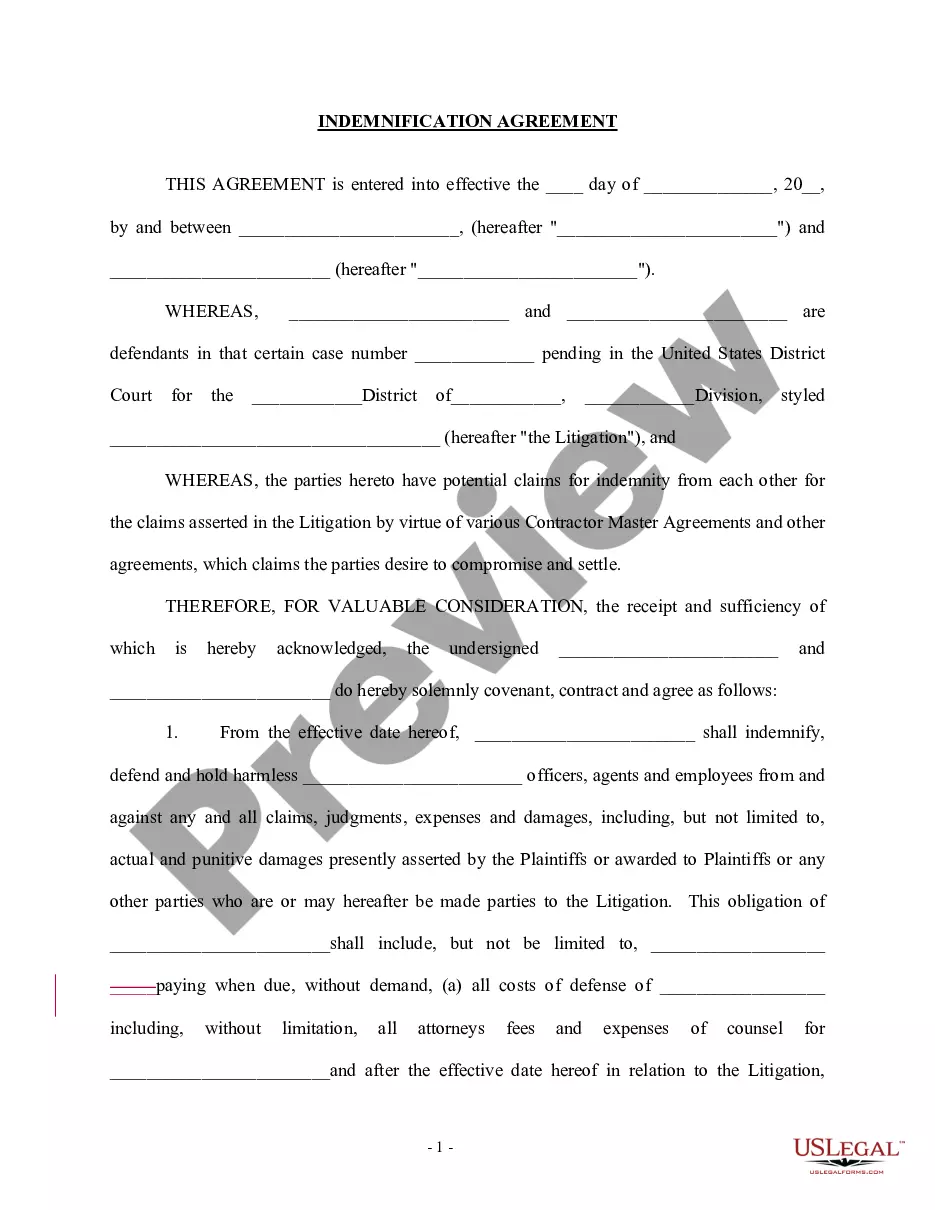
Indemnification Clause For Independent Contractors
Description
Get your form ready online
Our built-in tools help you complete, sign, share, and store your documents in one place.
Make edits, fill in missing information, and update formatting in US Legal Forms—just like you would in MS Word.
Download a copy, print it, send it by email, or mail it via USPS—whatever works best for your next step.
Sign and collect signatures with our SignNow integration. Send to multiple recipients, set reminders, and more. Go Premium to unlock E-Sign.
If this form requires notarization, complete it online through a secure video call—no need to meet a notary in person or wait for an appointment.
We protect your documents and personal data by following strict security and privacy standards.

Make edits, fill in missing information, and update formatting in US Legal Forms—just like you would in MS Word.

Download a copy, print it, send it by email, or mail it via USPS—whatever works best for your next step.

Sign and collect signatures with our SignNow integration. Send to multiple recipients, set reminders, and more. Go Premium to unlock E-Sign.

If this form requires notarization, complete it online through a secure video call—no need to meet a notary in person or wait for an appointment.

We protect your documents and personal data by following strict security and privacy standards.
Looking for another form?






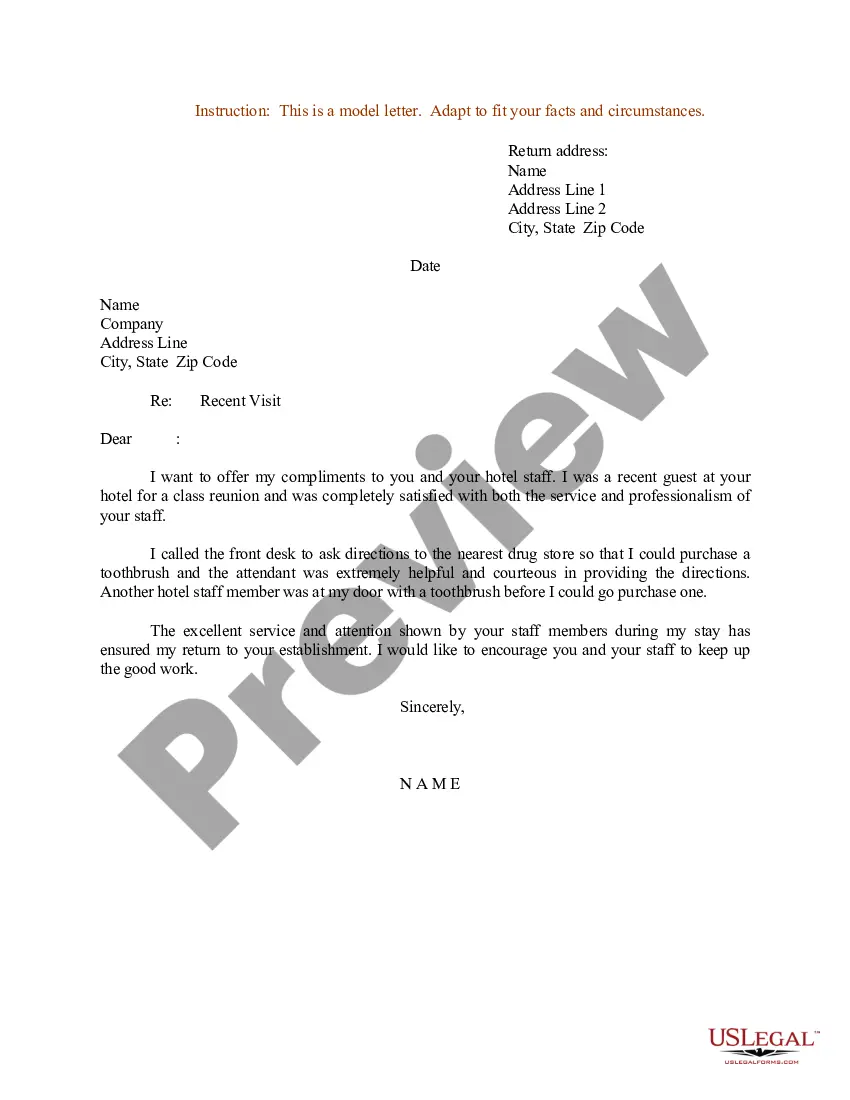



How to fill out Indemnification Agreement For A Trust?
How to obtain professional legal documents that adhere to your state regulations and formulate the Indemnification Clause For Independent Contractors without consulting an attorney.
Numerous online services provide templates to address various legal situations and formalities.
However, it may require time to identify which samples available fulfill both your specific requirements and legal standards.
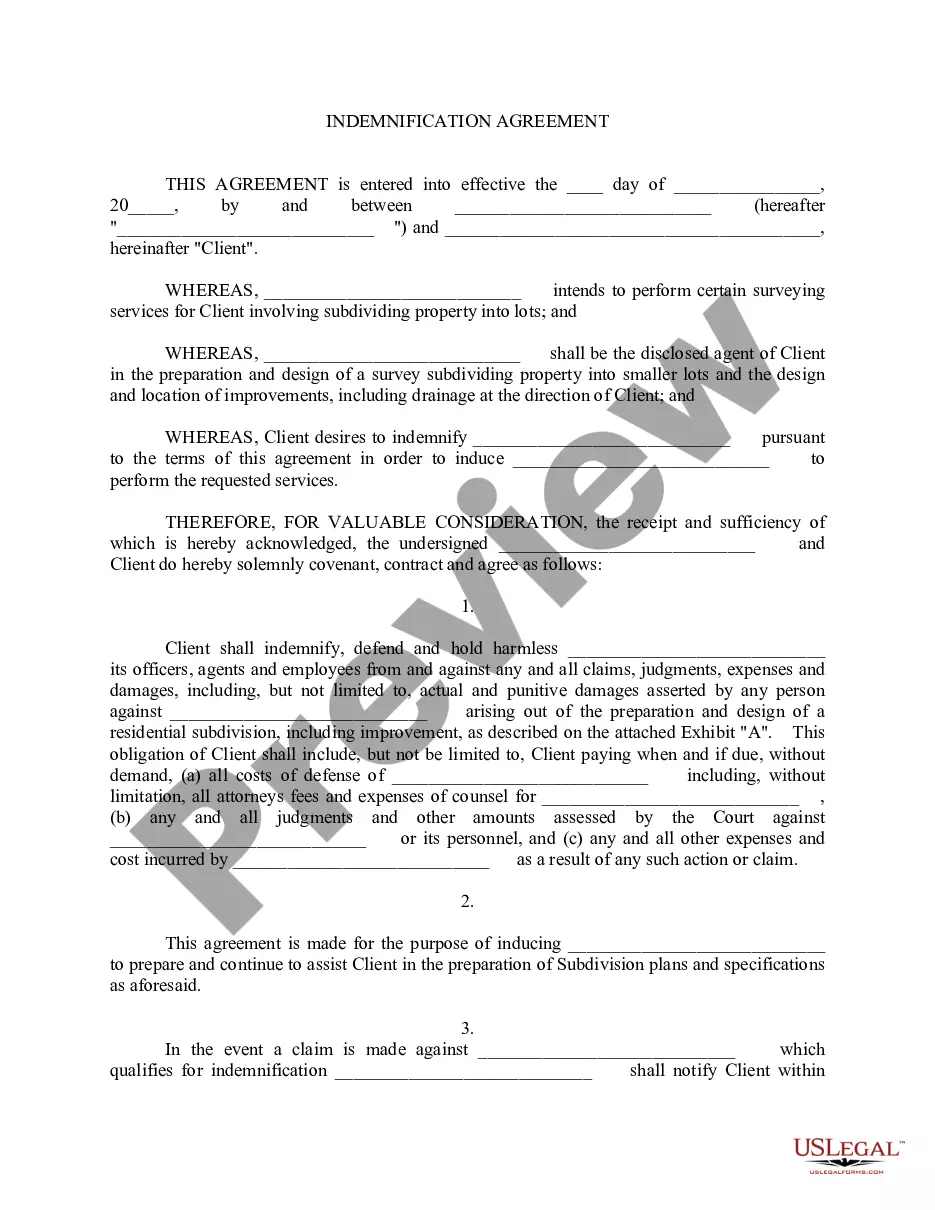
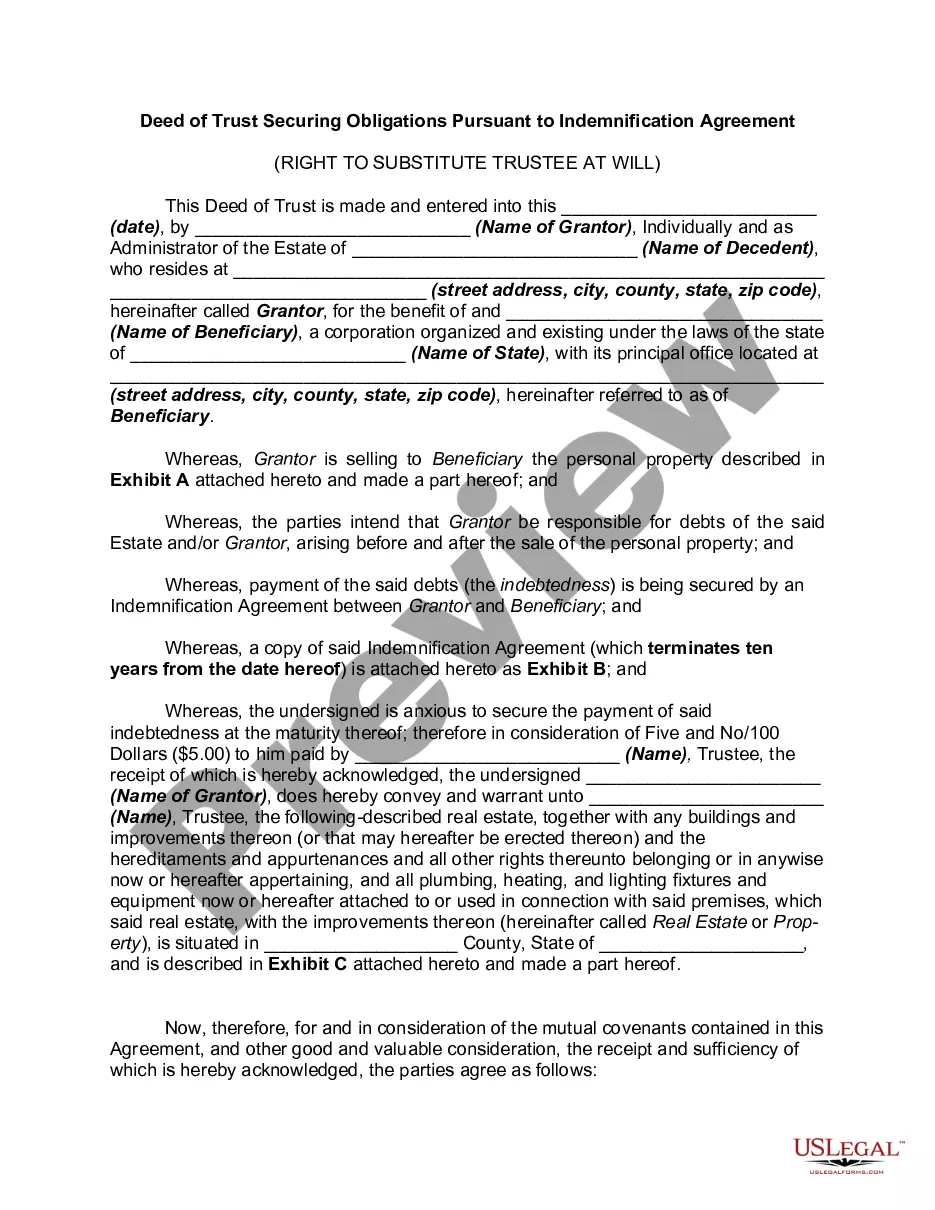
Download the Indemnification Clause For Independent Contractors using the corresponding button adjacent to the file name. If you lack an account with US Legal Forms, follow the instructions below.
- US Legal Forms is a reliable service that assists you in locating official documents created in compliance with the latest updates in state law and helps you save on legal costs.
- US Legal Forms is not an ordinary online library.
- It features a collection of over 85,000 validated templates for a range of business and personal scenarios.
- All documents are categorized by field and state to expedite your search process.
- Additionally, it integrates with robust solutions for PDF modification and electronic signatures, enabling users with a Premium subscription to conveniently complete their paperwork online.
- Obtaining the necessary documents requires minimal effort and time.
- If you already possess an account, Log In and verify the validity of your subscription.
Form popularity
FAQ
The most important tip for drafting an effective indemnity is to ensure that the clause is worded to suit the particular circumstances of the contracting parties. If there is a dispute about the operation of a contractual indemnity, the balance of the contract will help to identify how the indemnity operates.
Introduction It is a longstanding principle of the common law that an employer will be vicariously liable for the tortious acts of an employee but not for the acts of an independent contractor.
The general rule is that an individual is an independent contractor if the payer has the right to control or direct only the result of the work and not what will be done and how it will be done. If you are an independent contractor, then you are self-employed.
The general rule regarding independent contractors states that a person who hires an independent contractor cannot be held vicariously liable for the wrongdoing of the independent contractor.
7 Tips for Managing Freelancers and Independent ContractorsWhat the Experts Say.Understand what they want.Set expectations.Build the relationship.Make them feel part of the team.Don't micromanage.Give feedback.Pay them well.More items...?