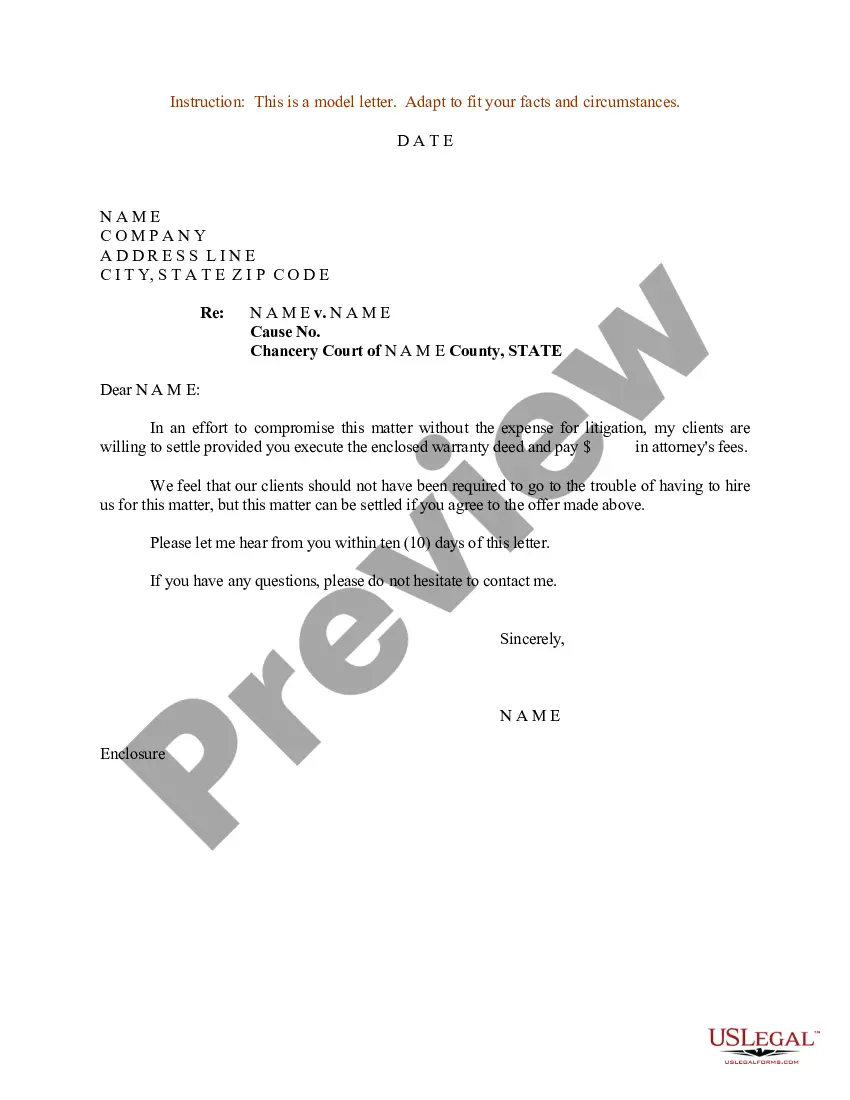
Settlement Offer Agreement With Insurance
Description
Get your form ready online
Our built-in tools help you complete, sign, share, and store your documents in one place.
Make edits, fill in missing information, and update formatting in US Legal Forms—just like you would in MS Word.
Download a copy, print it, send it by email, or mail it via USPS—whatever works best for your next step.
Sign and collect signatures with our SignNow integration. Send to multiple recipients, set reminders, and more. Go Premium to unlock E-Sign.
If this form requires notarization, complete it online through a secure video call—no need to meet a notary in person or wait for an appointment.
We protect your documents and personal data by following strict security and privacy standards.

Make edits, fill in missing information, and update formatting in US Legal Forms—just like you would in MS Word.

Download a copy, print it, send it by email, or mail it via USPS—whatever works best for your next step.

Sign and collect signatures with our SignNow integration. Send to multiple recipients, set reminders, and more. Go Premium to unlock E-Sign.

If this form requires notarization, complete it online through a secure video call—no need to meet a notary in person or wait for an appointment.

We protect your documents and personal data by following strict security and privacy standards.
Looking for another form?


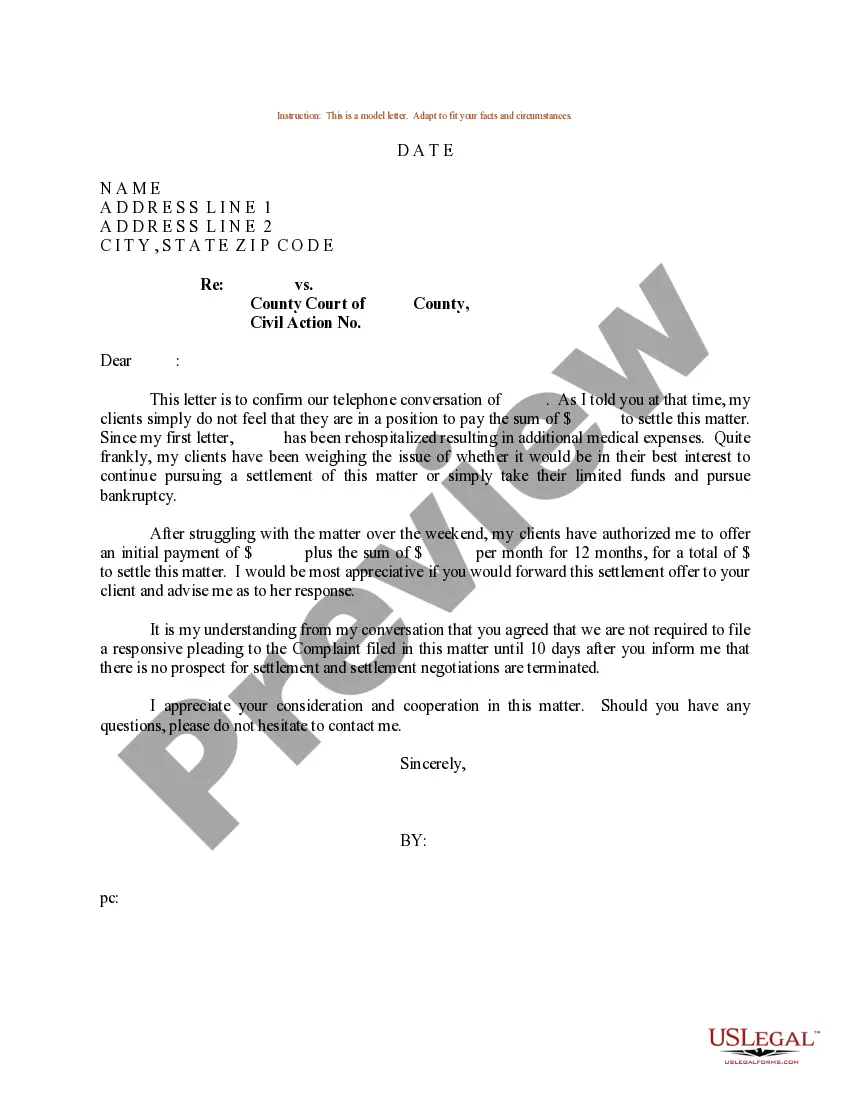
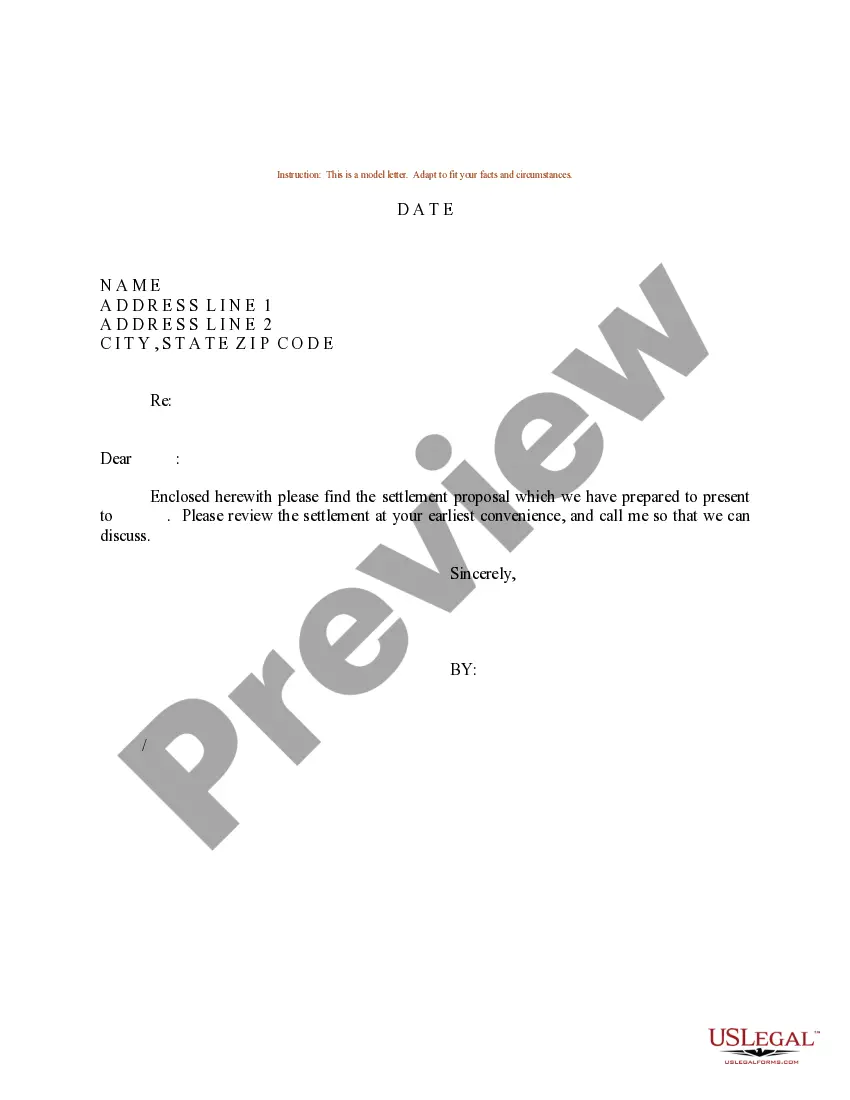
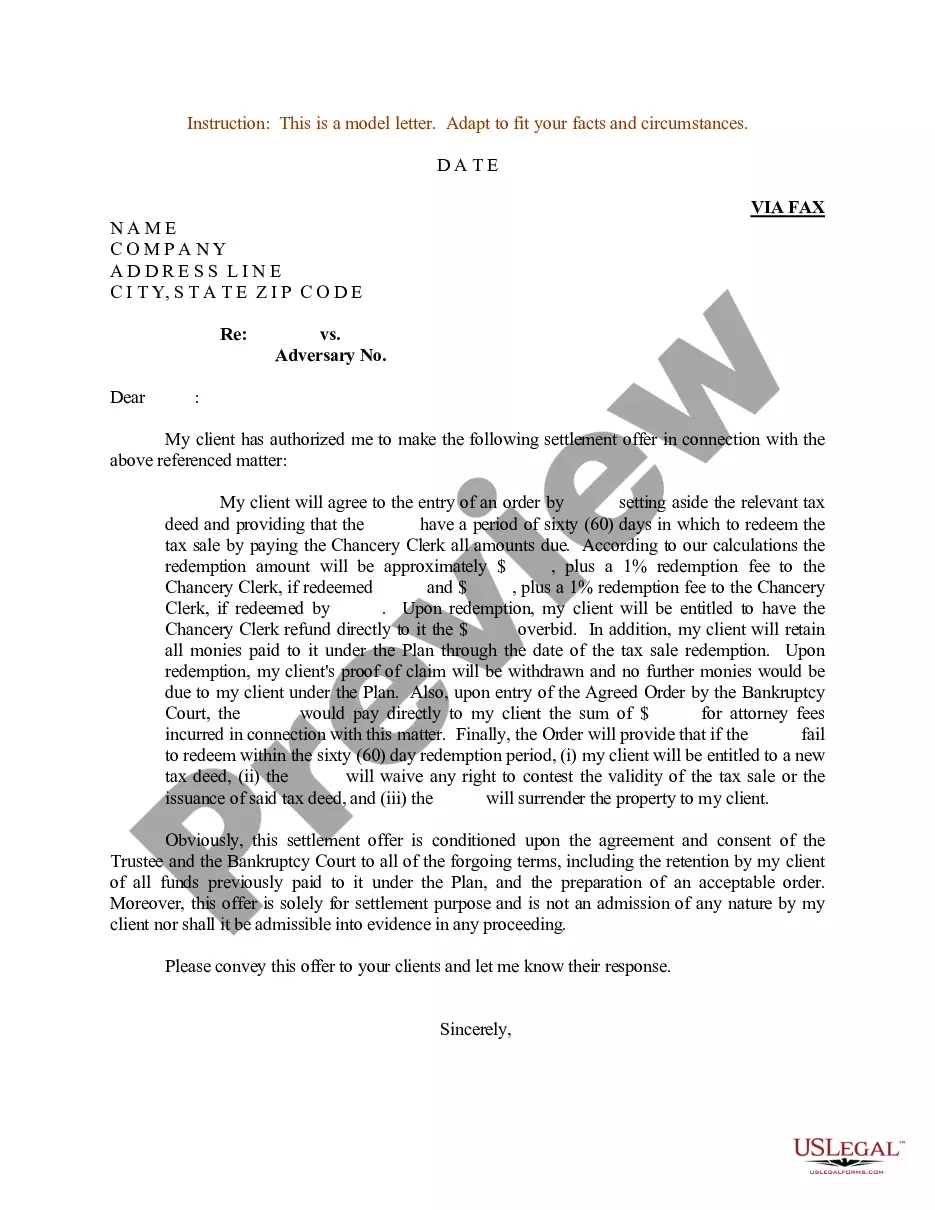
How to fill out Sample Letter For Settlement - Offer To Settle With Condition?
Finding a reliable location to obtain the most current and suitable legal templates is a significant part of navigating bureaucracy.
Identifying the correct legal document demands accuracy and meticulousness, which is why it is essential to obtain examples of Settlement Offer Agreement With Insurance solely from credible sources, such as US Legal Forms. A flawed template can squander your time and postpone your situation.
Once you have the form on your device, you can modify it with the editor or print it and complete it by hand. Eliminate the inconvenience associated with your legal paperwork. Explore the extensive US Legal Forms catalog where you can find legal templates, verify their applicability to your situation, and download them immediately.
- Use the directory navigation or search bar to find your template.
- Review the form's details to determine if it meets the criteria for your state and region.
- Check the form preview, if it exists, to ensure the form is indeed the one you are looking for.
- Return to the search to locate the suitable template if the Settlement Offer Agreement With Insurance does not fulfill your requirements.
- Once you are certain of the form's relevance, download it.
- If you are a registered user, click Log in to verify your identity and access your chosen forms in My documents.
- If you do not yet have an account, click Buy now to acquire the form.
- Select the pricing option that best suits your needs.
- Continue to the registration process to finalize your purchase.
- Conclude your transaction by selecting a payment method (credit card or PayPal).
- Choose the file format for downloading the Settlement Offer Agreement With Insurance.
Form popularity
FAQ
Deciding whether to accept a settlement offer agreement with insurance is a nuanced decision. You should evaluate the offer against your medical expenses, lost wages, and other damages. If you believe the offer is fair and covers your needs, accepting it may be beneficial, but consulting with a legal professional can provide guidance tailored to your situation.
Generally, once you accept a settlement offer agreement with insurance and sign the necessary documents, you cannot take further legal action against the insurer. It is vital to fully understand the implications of the settlement before you sign. If you're uncertain, consulting with a legal expert can provide clarity.
Yes, an insurance company can withdraw a settlement offer, especially if you have not yet accepted their settlement offer agreement with insurance. If your case changes or new evidence emerges, they might reconsider their offer. However, once you accept and sign the agreement, they are usually legally bound to it.
Once you accept a settlement offer agreement with insurance, the next steps include signing a release form. This document confirms that you accept the offer and relinquish any rights to further claims. After signing, the insurance company will typically process your payment promptly.
After you accept a settlement offer agreement with insurance, the payment process typically kicks off quickly. Compensation usually arrives within a few weeks, but it can depend on the insurer’s processes. Ensuring all paperwork is complete and accurate can help speed up the timeline.
When you accept a settlement offer agreement with insurance, you agree to resolve your claim for a specified amount. This means you'll receive payment in exchange for releasing the insurer from further liability. It is important to understand that accepting this offer usually ends your ability to pursue additional claims related to that incident.
Determining how much you can ask for in a settlement agreement requires a comprehensive assessment of your damages. Consider factors such as medical expenses, lost wages, and emotional distress. Researching similar cases can also provide valuable insight. With these details in hand, you can confidently approach your settlement offer agreement with insurance.
Absolutely, you can negotiate a settlement with an insurance company. Most companies anticipate negotiation and might start with a lower initial offer. It’s important to present clear evidence of your damages and reasons for a higher settlement. Knowing your worth and being strategic in these discussions helps you achieve a favorable settlement offer agreement with insurance.
Yes, negotiating an insurance settlement is not only possible but often advisable. Insurance companies expect some level of negotiation, so being prepared can lead to a better outcome. Gather supporting evidence, like medical bills and accident reports, to strengthen your position. This way, you can advocate for a fair settlement offer agreement with insurance.
When speaking with an insurance claim adjuster, avoid admitting fault or providing unnecessary details about your injuries. Also, don’t agree to a settlement offer without fully understanding its implications. Insurers may use your words against you, leading to unfavorable settlement offer agreements with insurance. Clear and cautious communication helps protect your interests.