Dissolution Deed For Trust
Description
Get your form ready online
Our built-in tools help you complete, sign, share, and store your documents in one place.
Make edits, fill in missing information, and update formatting in US Legal Forms—just like you would in MS Word.
Download a copy, print it, send it by email, or mail it via USPS—whatever works best for your next step.
Sign and collect signatures with our SignNow integration. Send to multiple recipients, set reminders, and more. Go Premium to unlock E-Sign.
If this form requires notarization, complete it online through a secure video call—no need to meet a notary in person or wait for an appointment.
We protect your documents and personal data by following strict security and privacy standards.

Make edits, fill in missing information, and update formatting in US Legal Forms—just like you would in MS Word.

Download a copy, print it, send it by email, or mail it via USPS—whatever works best for your next step.

Sign and collect signatures with our SignNow integration. Send to multiple recipients, set reminders, and more. Go Premium to unlock E-Sign.

If this form requires notarization, complete it online through a secure video call—no need to meet a notary in person or wait for an appointment.

We protect your documents and personal data by following strict security and privacy standards.
Looking for another form?
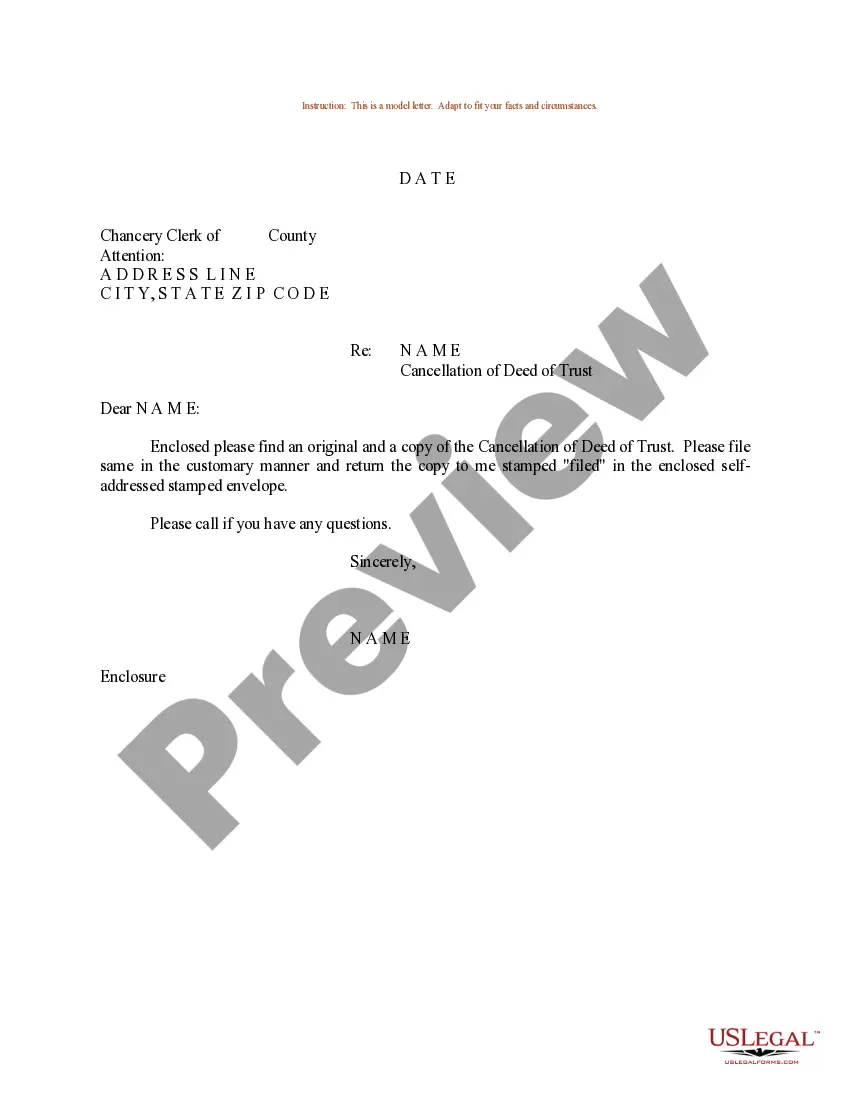
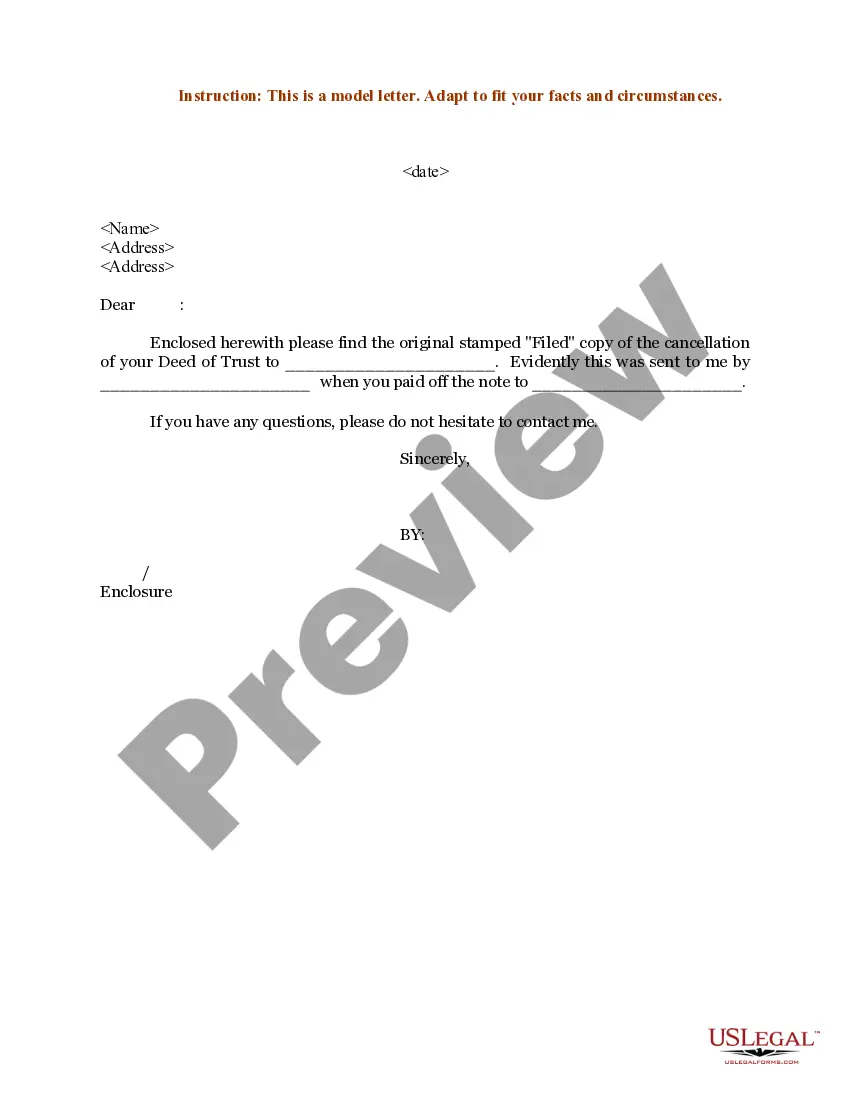
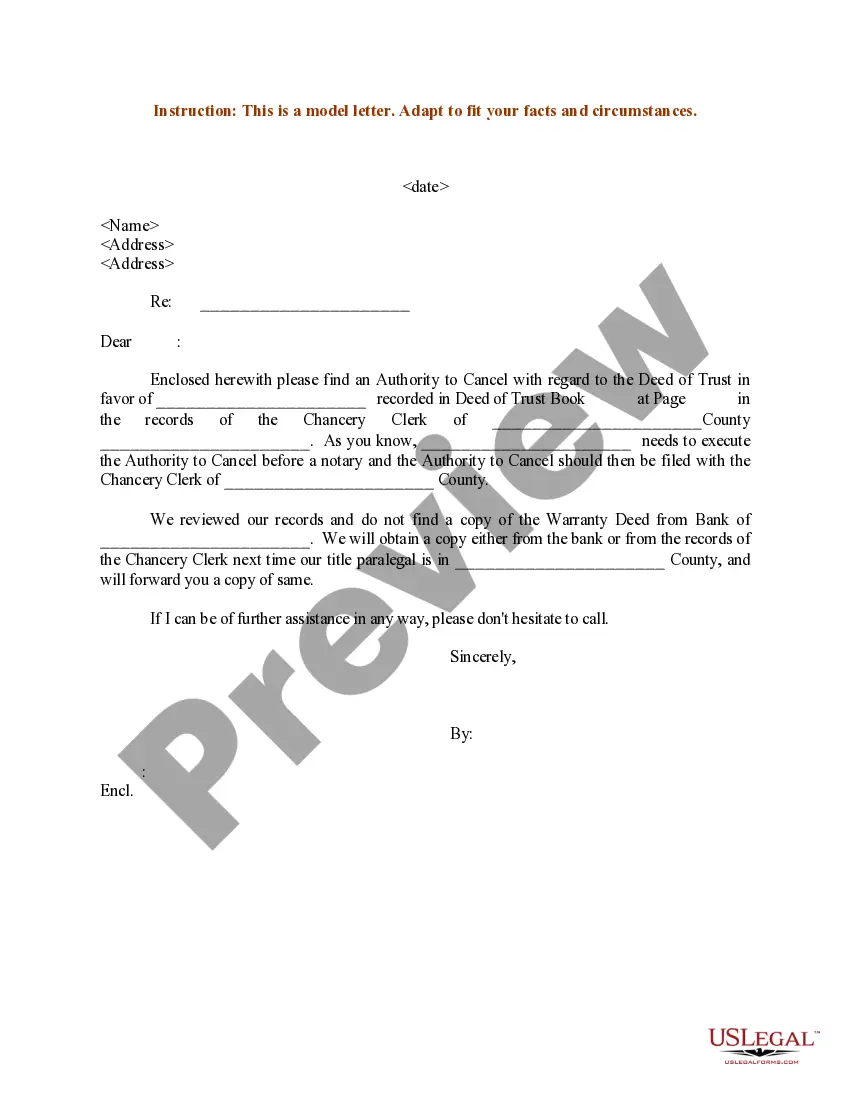
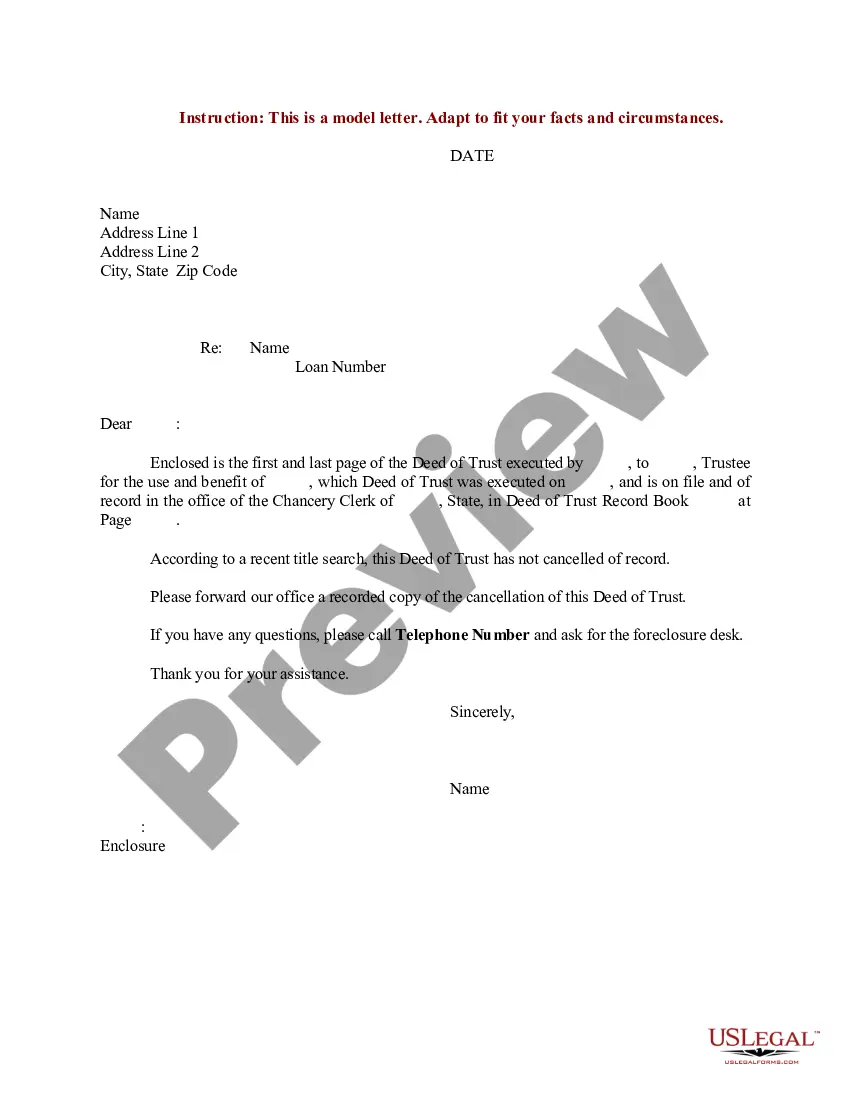
How to fill out Sample Letter Regarding Cancellation Of Deed Of Trust?
Whether for professional needs or for personal matters, everyone eventually has to handle legal issues at some point in their lives.
Completing legal paperwork necessitates meticulous care, starting with selecting the correct form template.
With a vast selection of US Legal Forms available, you do not need to waste time searching for the correct template on the internet. Utilize the library’s straightforward navigation to find the right form for any circumstance.
- Locate the template you require by utilizing the search box or catalog browsing.
- Review the form’s description to ensure it aligns with your circumstances, state, and locality.
- Click on the form’s preview to inspect it.
- If it is not the correct form, return to the search feature to locate the Dissolution Deed For Trust template you need.
- Download the template if it satisfies your criteria.
- If you already possess a US Legal Forms account, simply click Log in to access previously saved documents in My documents.
- If you do not yet have an account, you can download the form by clicking Buy now.
- Choose the appropriate price option.
- Complete the profile registration form.
- Select your payment method: use a credit card or PayPal account.
- Choose the document format you prefer and download the Dissolution Deed For Trust.
- Once it is saved, you can fill out the form using editing software or print it and complete it by hand.
Form popularity
FAQ
In most cases, the trustee has the authority to dissolve a trust, provided the trust agreement allows it. If you are a beneficiary, you may need to request the dissolution or be involved in the process. The process should follow the terms outlined in the trust document, ensuring compliance with the law. Utilizing resources like USLegalForms can provide you with the necessary templates for creating a dissolution deed for trust.
To close a trust deed, you need to complete a few key steps. First, gather all relevant documents and identify the assets within the trust. Next, prepare and execute a dissolution deed for trust, which officially terminates the trust. It may also require notifying beneficiaries and filing necessary documents with your local authorities.
The timeframe to dissolve a trust can vary based on several factors, including the trust's complexity and the requirements of your state. Typically, the process can take anywhere from weeks to several months. You can expedite the process by preparing a complete dissolution deed for trust ahead of time. Consulting with a professional may also help streamline the dissolution.
The dissolution clause in a trust deed specifies the circumstances that can lead to the trust's termination. This can include events such as the achievement of specific goals, the death of the grantor, or mutual agreement among the trustees. Understanding this clause allows you to create a more effective dissolution deed for trust, ensuring that all parties are aware of when and how the trust will come to an end.
A dissolution deed is a legal document that officially terminates a trust and details how its assets should be handled post-dissolution. It is vital for ensuring that all parties involved understand their rights and responsibilities regarding the trust's assets. In essence, this deed serves as a formal agreement, providing peace of mind for both trustees and beneficiaries.
To legally dissolve a trust, you must follow specific steps outlined in the trust document. Typically, this process involves executing a dissolution deed for trust, settling any outstanding obligations, and formally distributing the trust’s assets to the beneficiaries. It's essential to ensure that all legal requirements are met, and consulting with a legal professional can help guide you through this process.
A dissolution clause is a provision within a trust agreement that outlines the conditions under which the trust can be terminated. When you include a dissolution clause in your trust, it provides clarity on how the assets should be distributed after dissolution. Understanding this aspect is crucial for anyone considering a dissolution deed for trust, as it helps prevent disputes among beneficiaries.
Typically, the individual who created the trust maintains the original copy of the trust deed. If that person has passed away or is unable to manage it, the trustee usually takes responsibility. To ensure transparency and proper management, it may often be beneficial to securely store the document in a safe place or with services specializing in legal documents like USLegalForms.
Dissolving a trust deed involves creating and executing a dissolution deed for trust, which outlines your intention to close the trust. You should follow specific legal requirements based on your state laws, and it’s wise to work with a professional if you have any concerns. Once completed, inform all parties involved, including beneficiaries, to finalize the dissolution.
To formally close a trust, you must follow several steps, including settling debts, distributing remaining assets, and creating a dissolution deed for trust. Documentation is essential, as you will need to provide evidence that all obligations are met. Inform all beneficiaries about the closure process to ensure transparency and understanding.