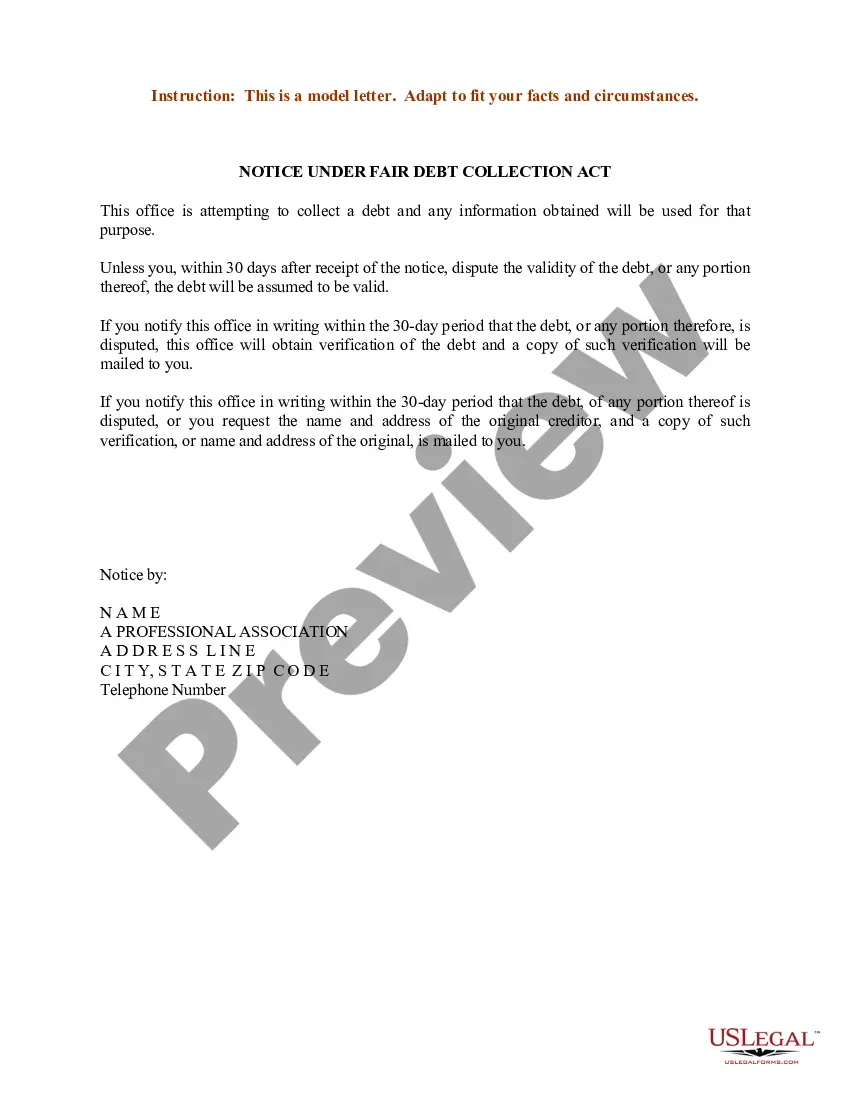
Fair Debt Collection Act 15
Description
Get your form ready online
Our built-in tools help you complete, sign, share, and store your documents in one place.
Make edits, fill in missing information, and update formatting in US Legal Forms—just like you would in MS Word.
Download a copy, print it, send it by email, or mail it via USPS—whatever works best for your next step.
Sign and collect signatures with our SignNow integration. Send to multiple recipients, set reminders, and more. Go Premium to unlock E-Sign.
If this form requires notarization, complete it online through a secure video call—no need to meet a notary in person or wait for an appointment.
We protect your documents and personal data by following strict security and privacy standards.

Make edits, fill in missing information, and update formatting in US Legal Forms—just like you would in MS Word.

Download a copy, print it, send it by email, or mail it via USPS—whatever works best for your next step.

Sign and collect signatures with our SignNow integration. Send to multiple recipients, set reminders, and more. Go Premium to unlock E-Sign.

If this form requires notarization, complete it online through a secure video call—no need to meet a notary in person or wait for an appointment.

We protect your documents and personal data by following strict security and privacy standards.
Looking for another form?





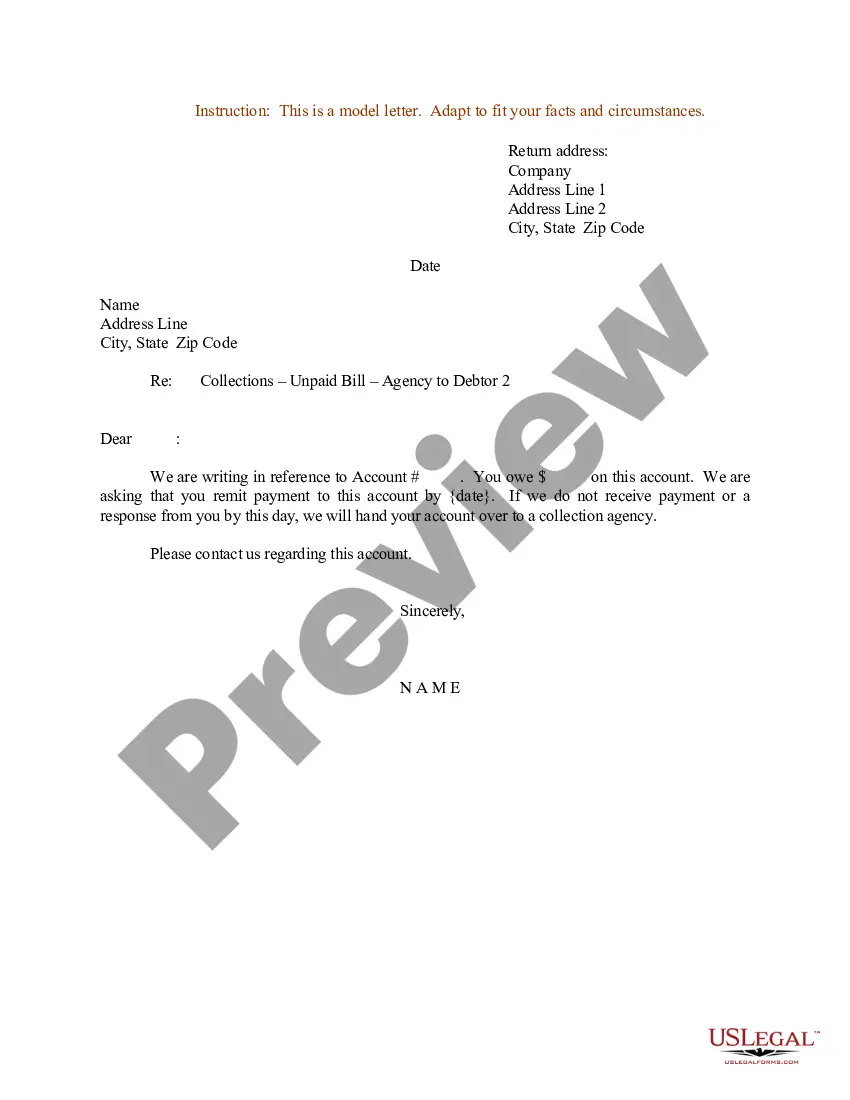
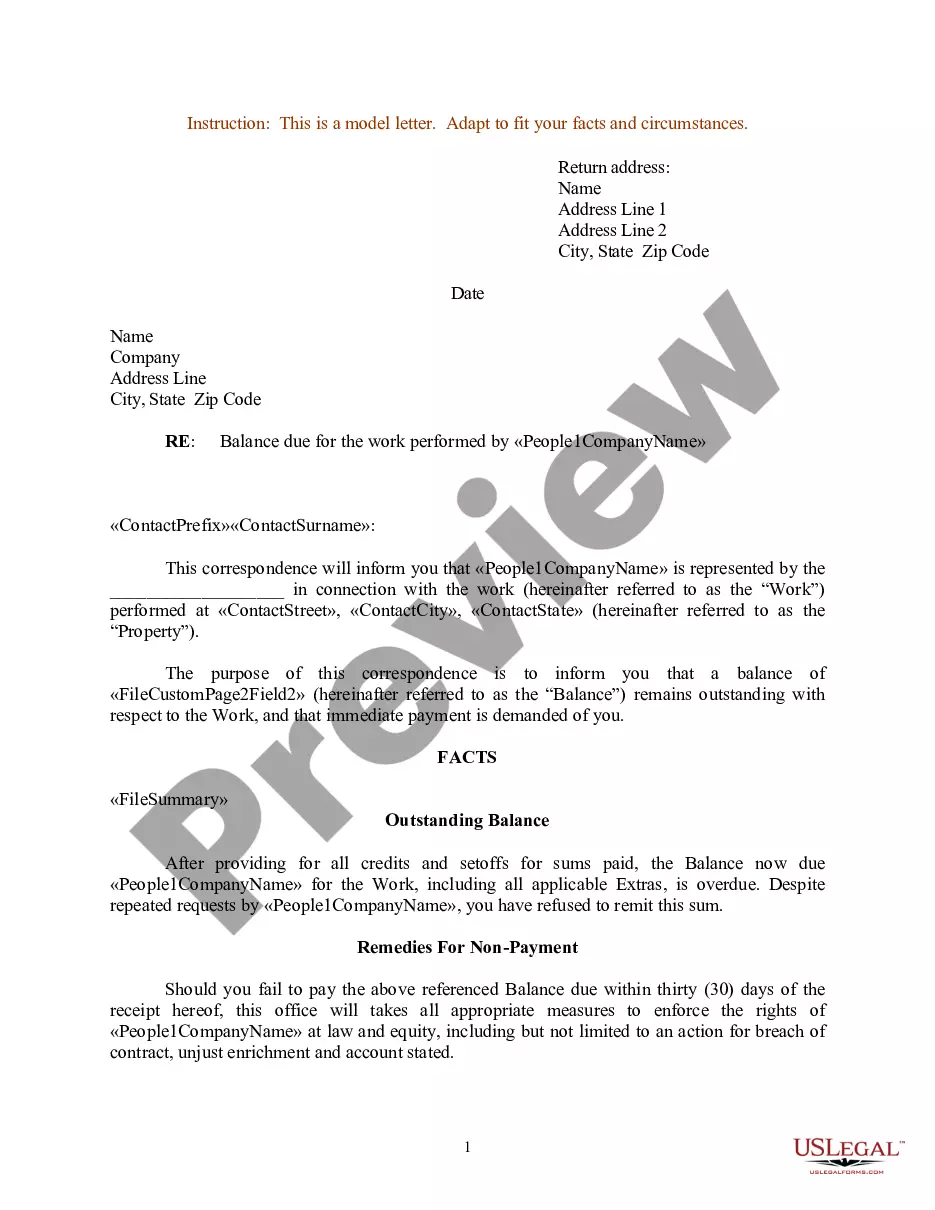
How to fill out Sample Letter For Notice Under Fair Debt Collection Act?
- Log in to your US Legal Forms account if you're a returning user, and check your subscription status to make sure it's valid.
- If new, first explore the Preview mode and descriptions of available forms pertinent to the Fair Debt Collection Act 15.
- Use the Search tab for any additional templates you may need, ensuring they align with your local jurisdiction's requirements.
- Select the appropriate document by clicking 'Buy Now' and choose the subscription plan that fits your needs. Registration is necessary for account access.
- Complete your purchase by entering your payment details, either credit card or PayPal.
- Finally, download your form to your device and access it anytime through the 'My Forms' section of your profile.
US Legal Forms empowers users by providing a vast collection of over 85,000 editable legal forms, ensuring that individuals and attorneys can create precise documents efficiently.
Start your journey towards hassle-free legal documentation today—explore US Legal Forms and regain control of your financial future.
Form popularity
FAQ
The worst a debt collector can do typically involves harassment or intimidation tactics, which are illegal under the Title 15 Fair Debt Collection Practices Act. Such actions can include threats of violence, false credit reporting, or continued contact after you've asked them to stop. Fortunately, you have the right to file complaints against such behavior and seek legal remedies. Platforms like US Legal Forms can help you understand and enforce your rights effectively.
Debt collectors are prohibited from engaging in various unfair practices as outlined in the Title 15 Fair Debt Collection Practices Act. They cannot contact you at inconvenient times, like early morning or late at night. Additionally, they cannot discuss your debt with third parties without your consent. Being aware of these restrictions helps you address any violations from collectors effectively.
Debt collectors must not engage in tactics that threaten consumers or use deceptive practices. Common illegal tactics include using false statements about the debt, threatening legal action that they do not intend to pursue, or calling at unreasonable hours. Under the Title 15 Fair Debt Collection Practices Act, these behaviors can lead to serious consequences for collectors. Knowing your rights under this act can empower you to report these illegal actions.
The Title 15 Fair Debt Collection Practices Act is a federal law designed to protect consumers from abusive debt collection practices. This act sets boundaries on how debt collectors can operate, ensuring that they treat consumers fairly and respectfully. Under this act, consumers have rights that safeguard them against harassment and deception from debt collectors. Understanding this act helps you navigate your rights as a consumer more effectively.
The Fair Debt Collection Practices Act 15 operates by setting clear guidelines for how debt collectors can conduct their activities. It prohibits harassment, false statements, and other unfair practices aimed at consumers. This law empowers you to report violations and seek remedies if your rights are infringed. Understanding how this act functions can help you navigate financial challenges more effectively.
You can use the Fair Debt Collection Practices Act 15 by knowing your rights as a consumer. This law regulates the practices of debt collectors, making it illegal for them to use abusive tactics. Familiarize yourself with these rules to assert your rights when dealing with collectors. Platforms like US Legal Forms can provide templates and materials to assist you in this process, ensuring you are well-informed and prepared.
To fill out a debt validation letter, start by clearly stating your name, address, and the date. Next, include the name of the debt collector and specific details about the debt in question. Request verification of the debt under the Fair Debt Collection Act 15, specifying that you would like documentation to confirm the validity of the debt. This step can protect your rights and ensure that you deal with legitimate claims.
As mentioned earlier, the most frequent violation of the Fair Debt Collection Act 15 involves harassment tactics. This can take many forms, such as excessive phone calls and the use of intimidation to pressurize consumers. Knowing your rights under the law can empower you to challenge these practices effectively.
Debt collectors are prohibited from using threats of violence or harm against consumers, as well as making false statements about the debt they're collecting. Under the Fair Debt Collection Act 15, these actions are considered illegal and can result in penalties for the debt collector. You have the right to report such behaviors.
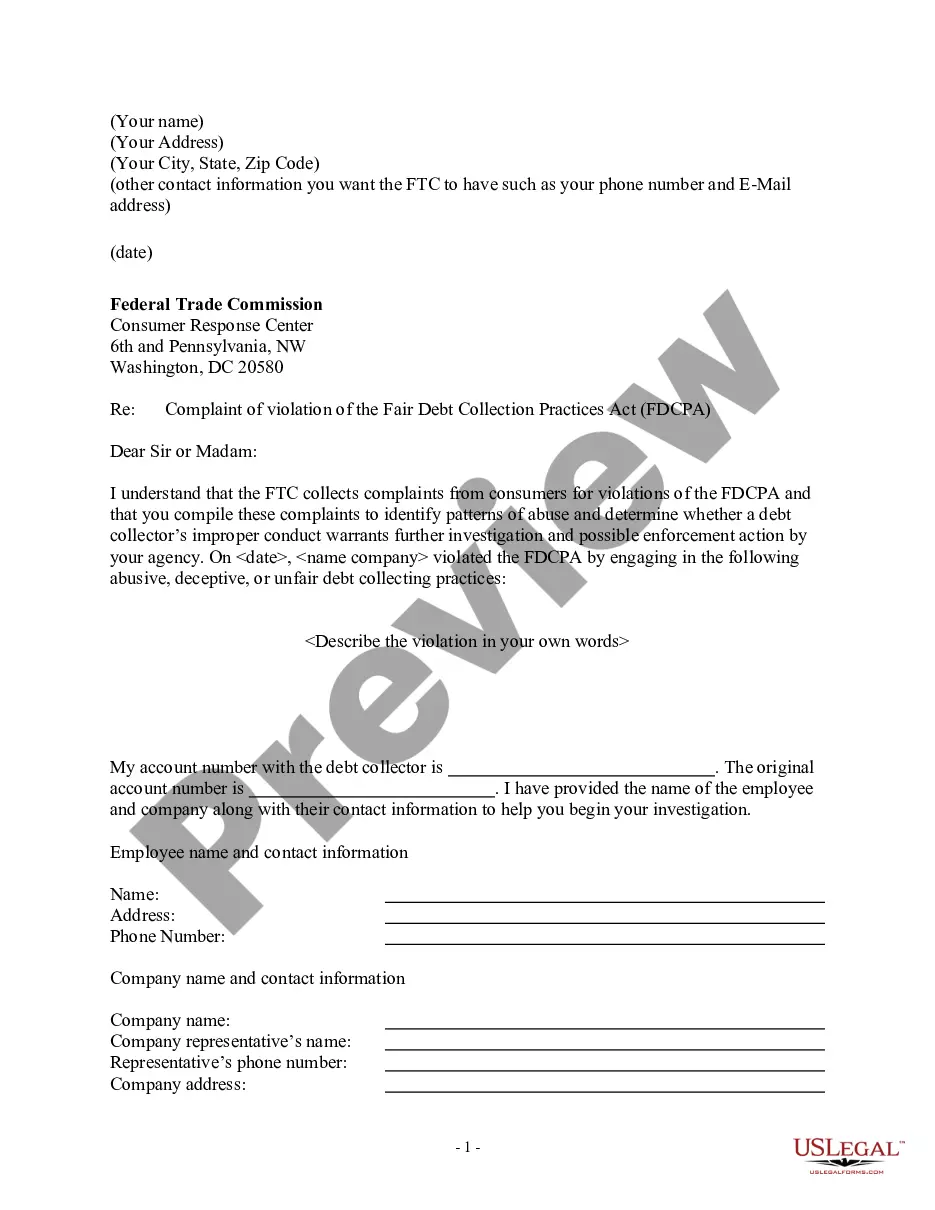
To file a complaint with the Fair Debt Collection Act 15, gather all relevant documentation, including letters and records of communication. Then, submit your complaint through the CFPB's online portal or your local consumer protection agency. Doing this helps protect your rights and assists in holding debt collectors accountable.