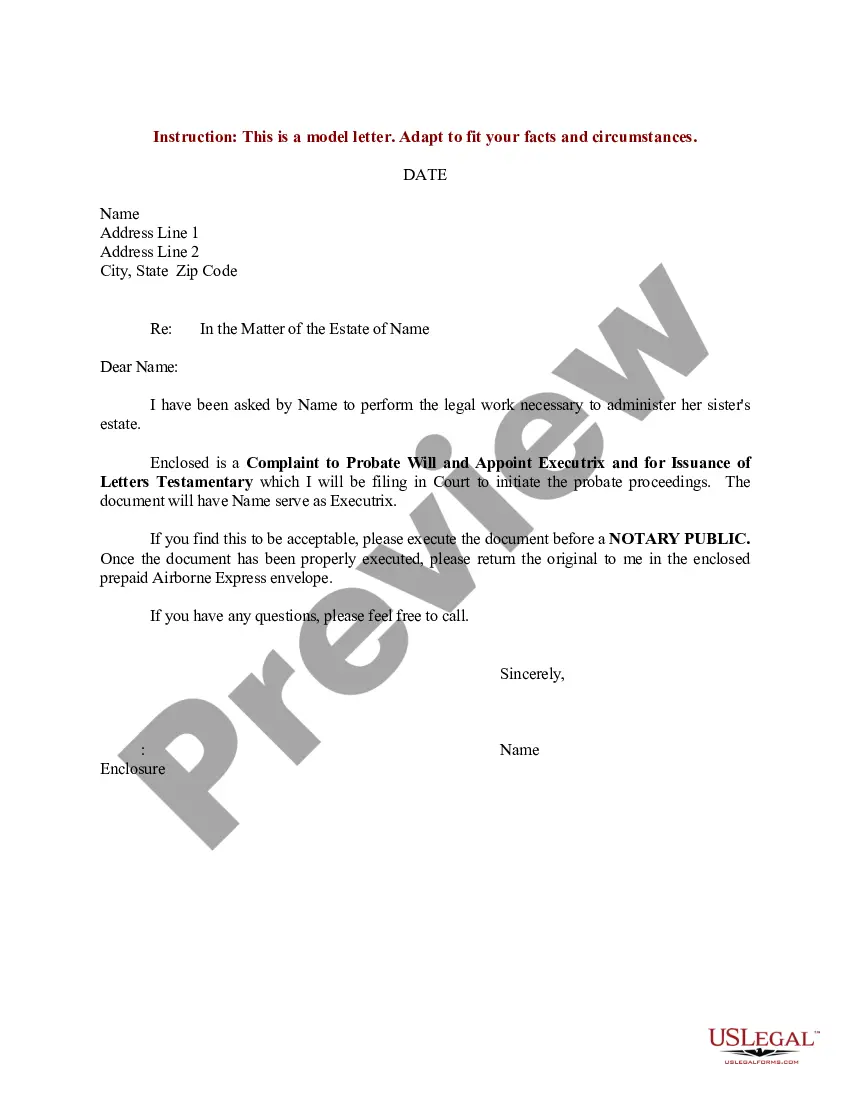
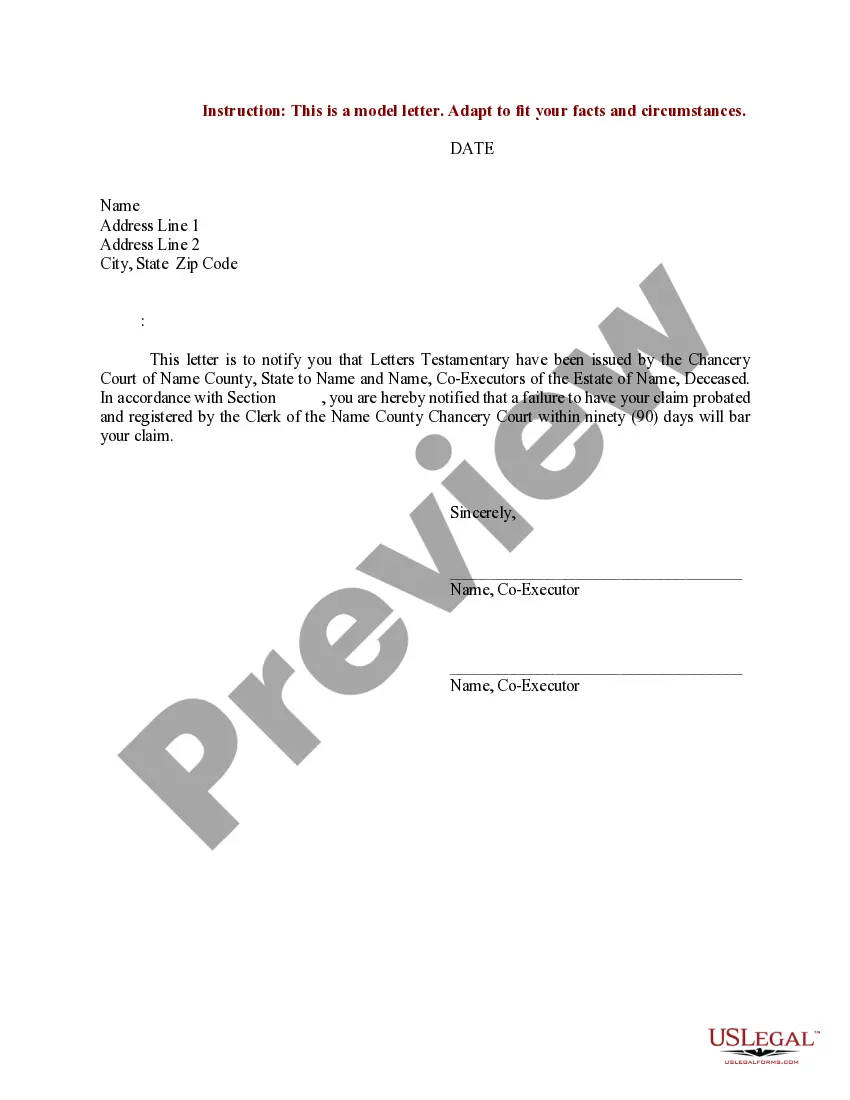
Texas Probate Creditor Claim Form Without Probate
Description
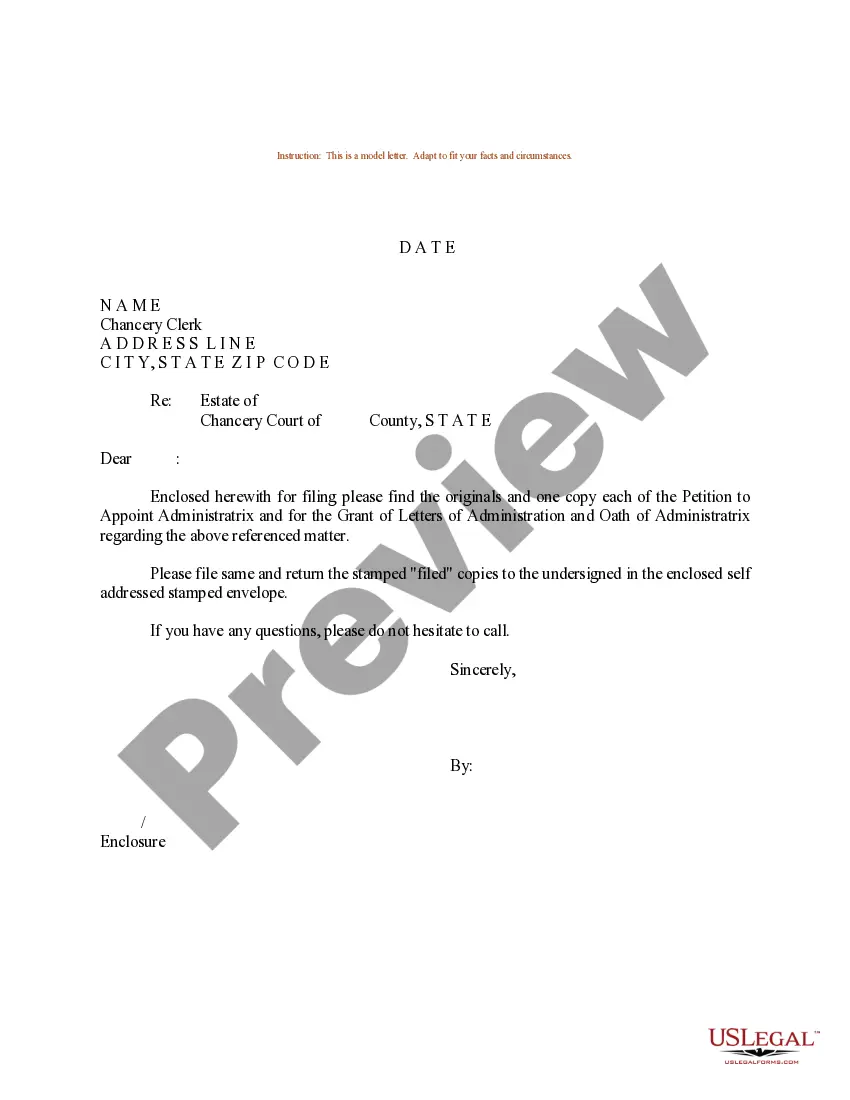
Get your form ready online
Our built-in tools help you complete, sign, share, and store your documents in one place.
Make edits, fill in missing information, and update formatting in US Legal Forms—just like you would in MS Word.
Download a copy, print it, send it by email, or mail it via USPS—whatever works best for your next step.
Sign and collect signatures with our SignNow integration. Send to multiple recipients, set reminders, and more. Go Premium to unlock E-Sign.
If this form requires notarization, complete it online through a secure video call—no need to meet a notary in person or wait for an appointment.
We protect your documents and personal data by following strict security and privacy standards.

Make edits, fill in missing information, and update formatting in US Legal Forms—just like you would in MS Word.

Download a copy, print it, send it by email, or mail it via USPS—whatever works best for your next step.

Sign and collect signatures with our SignNow integration. Send to multiple recipients, set reminders, and more. Go Premium to unlock E-Sign.

If this form requires notarization, complete it online through a secure video call—no need to meet a notary in person or wait for an appointment.

We protect your documents and personal data by following strict security and privacy standards.
Looking for another form?
How to fill out Sample Letter For Estate Administration?
The Texas Probate Creditor Claim Form Without Probate displayed on this page is a reusable official template created by expert attorneys in accordance with federal and local regulations.
For over 25 years, US Legal Forms has supplied individuals, businesses, and lawyers with more than 85,000 validated, state-specific documents for every business and personal situation. It’s the quickest, most uncomplicated, and most reliable method to acquire the forms you require, as the service ensures bank-level data security and anti-malware safeguards.
Subscribe to US Legal Forms to access verified legal templates for all of life’s situations whenever you need them.
- Search for the document you require and review it.
- Sign up and Log In.
- Obtain the editable template.
- Complete and sign the document.
- Download your paperwork again.
Form popularity
FAQ
Here are some of the most common ways for Texas residents to ensure their assets don't go through probate: Living trusts. Creating a trust is a common method used to avoid probate in Texas. ... Joint ownership. ... Payable-on-death accounts. ... Transfer-on-Death deeds. ... Small estate procedures.
Filing a Claim The claim must be filed with the probate court and a copy must be sent to the executor or administrator of the estate. Once the executor or administrator receives a notice of claim from the creditor, they have 30 days to review, determine if it is valid or not, and either pay the debt or object it.
If you do not submit the will into probate or miss the filing deadline, the probate court will treat the decedent's will as if it never existed. Then, the decedent's property will eventually be distributed ing to Texas intestate succession law. Under intestate law, the state decides who will inherit the property.
An estate may be exempt from the probate process in certain circumstances. Under Texas Estates Code, Title 2, Chapter 205, an estate need not pass through the probate process if there is no will and the total value of the estate (not counting any homestead real estate owned by the Decedent) is $75,000 or less.