Trust After Death With No Estate
Description
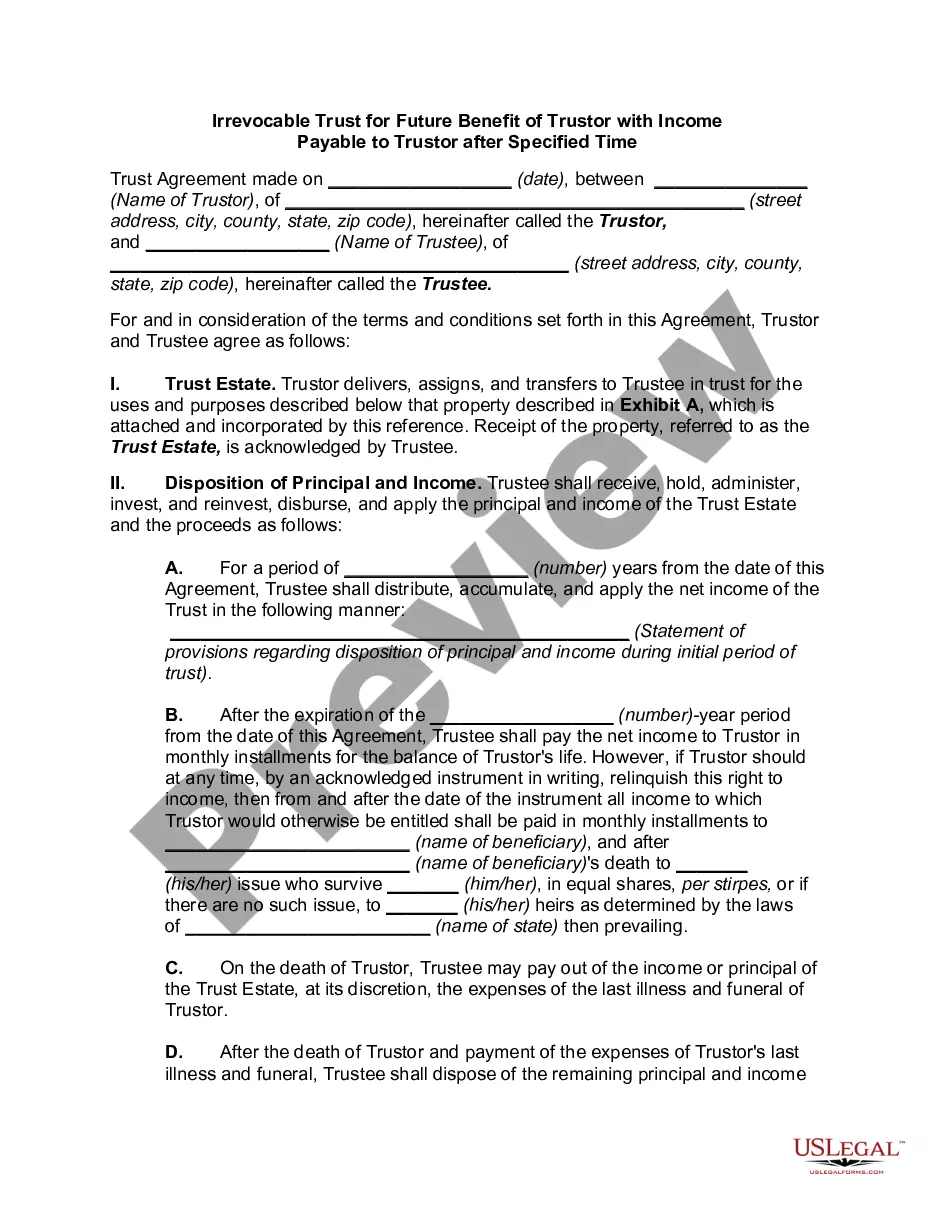
Get your form ready online
Our built-in tools help you complete, sign, share, and store your documents in one place.
Make edits, fill in missing information, and update formatting in US Legal Forms—just like you would in MS Word.
Download a copy, print it, send it by email, or mail it via USPS—whatever works best for your next step.
Sign and collect signatures with our SignNow integration. Send to multiple recipients, set reminders, and more. Go Premium to unlock E-Sign.
If this form requires notarization, complete it online through a secure video call—no need to meet a notary in person or wait for an appointment.
We protect your documents and personal data by following strict security and privacy standards.

Make edits, fill in missing information, and update formatting in US Legal Forms—just like you would in MS Word.

Download a copy, print it, send it by email, or mail it via USPS—whatever works best for your next step.

Sign and collect signatures with our SignNow integration. Send to multiple recipients, set reminders, and more. Go Premium to unlock E-Sign.

If this form requires notarization, complete it online through a secure video call—no need to meet a notary in person or wait for an appointment.

We protect your documents and personal data by following strict security and privacy standards.
Looking for another form?









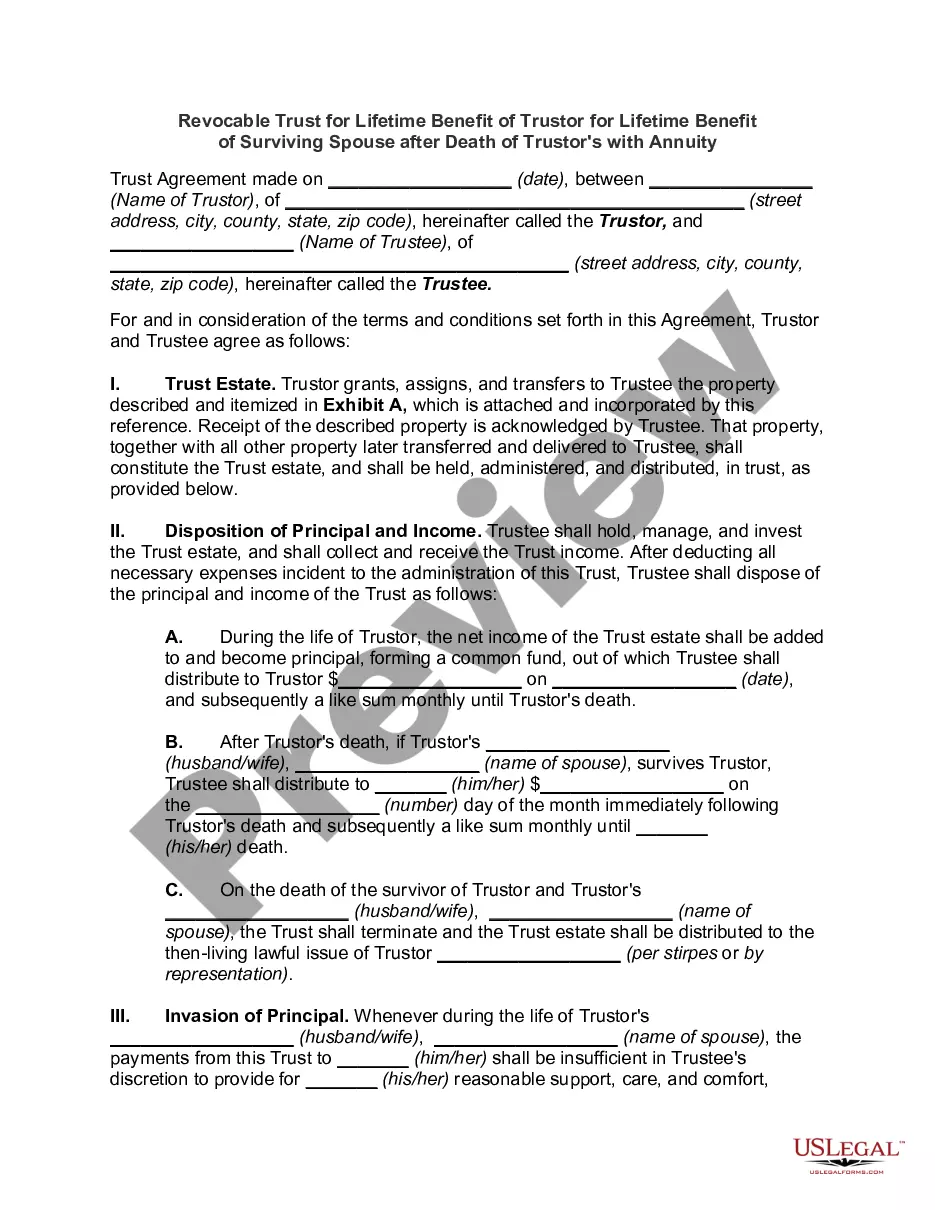
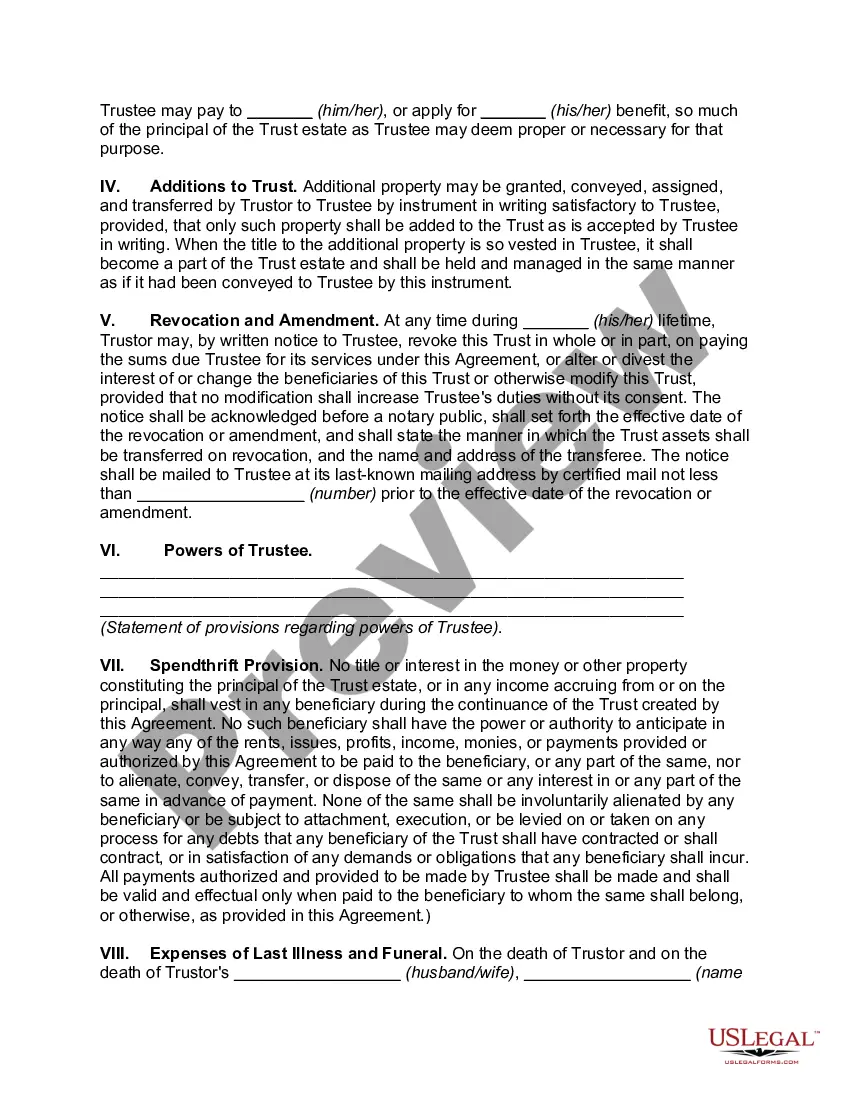
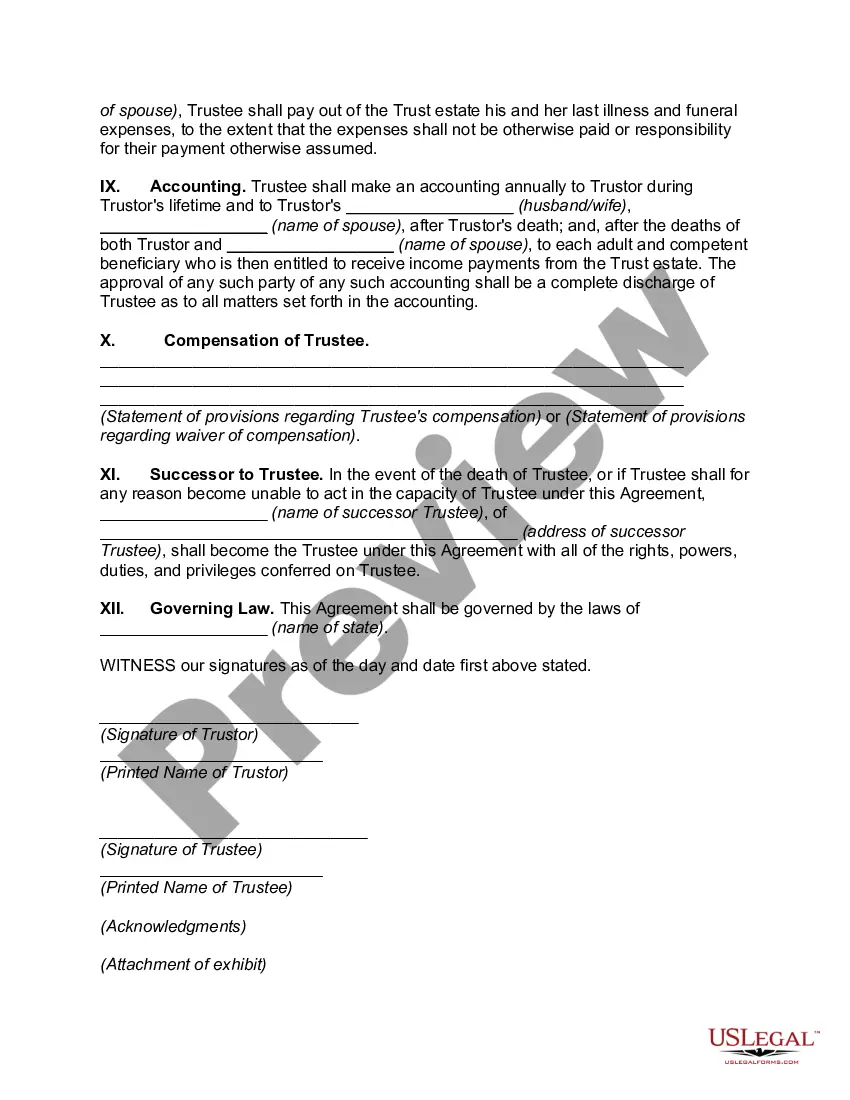
How to fill out Revocable Trust For Lifetime Benefit Of Trustor For Lifetime Benefit Of Surviving Spouse After Death Of Trustor's With Annuity?
Legal administration can be exasperating, even for the most skilled professionals.
When you seek a Trust After Death With No Estate and lack the opportunity to devote to locating the accurate and current version, the procedures can be overwhelming.
Tap into a valuable repository of articles, guides, manuals, and resources pertinent to your circumstances and requirements.
Save time and energy on searching for the documents you require, and use US Legal Forms’ advanced search and Preview feature to find Trust After Death With No Estate and acquire it.
Enjoy the US Legal Forms online library, backed by 25 years of expertise and trustworthiness. Revitalize your daily document management into a seamless and user-friendly operation today.
- If you have a membership, Log In to your US Legal Forms account, search for the form, and obtain it.
- Check the My documents tab to locate the documents you have previously downloaded and to manage your folders as desired.
- If this is your first experience with US Legal Forms, create an account and gain unlimited access to all features of the library.
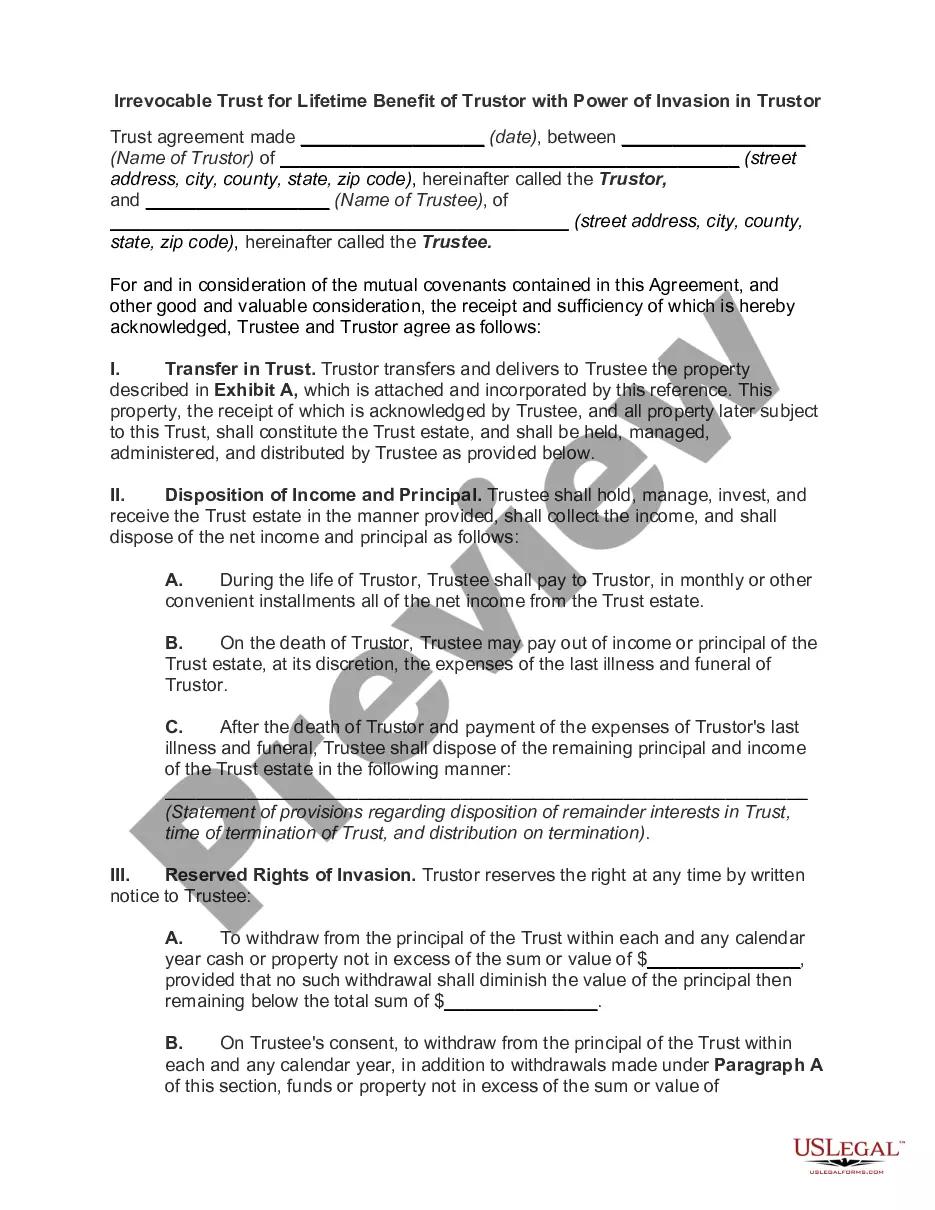
- After locating the form you want, verify it is the correct one by previewing it and reviewing its description.
- Ensure that the template is recognized in your state or county.
- Click Buy Now when you are prepared.
- Select a monthly subscription plan.
- Choose the format you desire, and Download, complete, eSign, print, and dispatch your documents.
- Access state- or county-specific legal and business forms.
- US Legal Forms addresses all requirements you may encounter, ranging from personal to business documents, all in one place.
- Employ sophisticated tools to finalize and oversee your Trust After Death With No Estate.
Form popularity
FAQ
Generally, a trust cannot be established after someone's death. It is essential to create a trust while the individual is alive to ensure their wishes are legally documented. However, a testamentary trust can be set up through a will which takes effect after death. Planning ahead with this type of trust can effectively manage resources after death with no estate, safeguarding your legacy.
For a revocable living trust to take effect, it should be funded by transferring certain assets into the trust. Often people fund a living trust with real estate, financial accounts, life insurance, annuity certificates, personal property, business interests, and other assets.
Franke, Jr. Yes, once the trust grantor becomes incapacitated or dies, his revocable trust is now irrevocable, meaning that generally the terms of the trust cannot be changed or revoked going forward. This is also true of trusts established by the grantor with the intention that they be irrevocable from the start.
Assets that should not be used to fund your living trust include: Qualified retirement accounts ? 401ks, IRAs, 403(b)s, qualified annuities. Health saving accounts (HSAs) Medical saving accounts (MSAs) Uniform Transfers to Minors (UTMAs) Uniform Gifts to Minors (UGMAs) Life insurance. Motor vehicles.
If you die without creating a will, assets that have not been placed in your trust will be distributed to family members ing to the laws of intestate succession in your state.
The trust can pay out a lump sum or percentage of the funds, make incremental payments throughout the years, or even make distributions based on the trustee's assessments. Whatever the grantor decides, their distribution method must be included in the trust agreement drawn up when they first set up the trust.