Trustor With With A Trust
Description
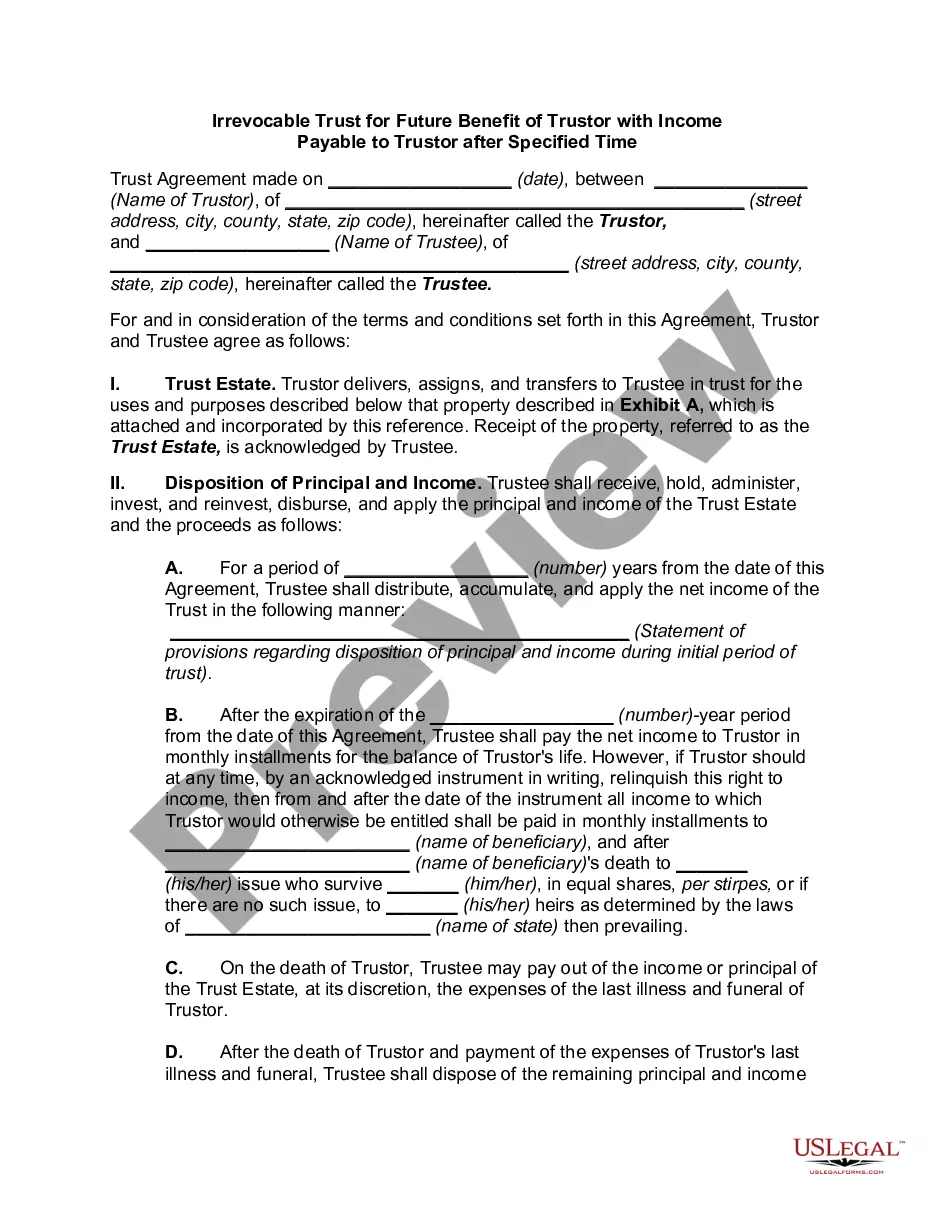
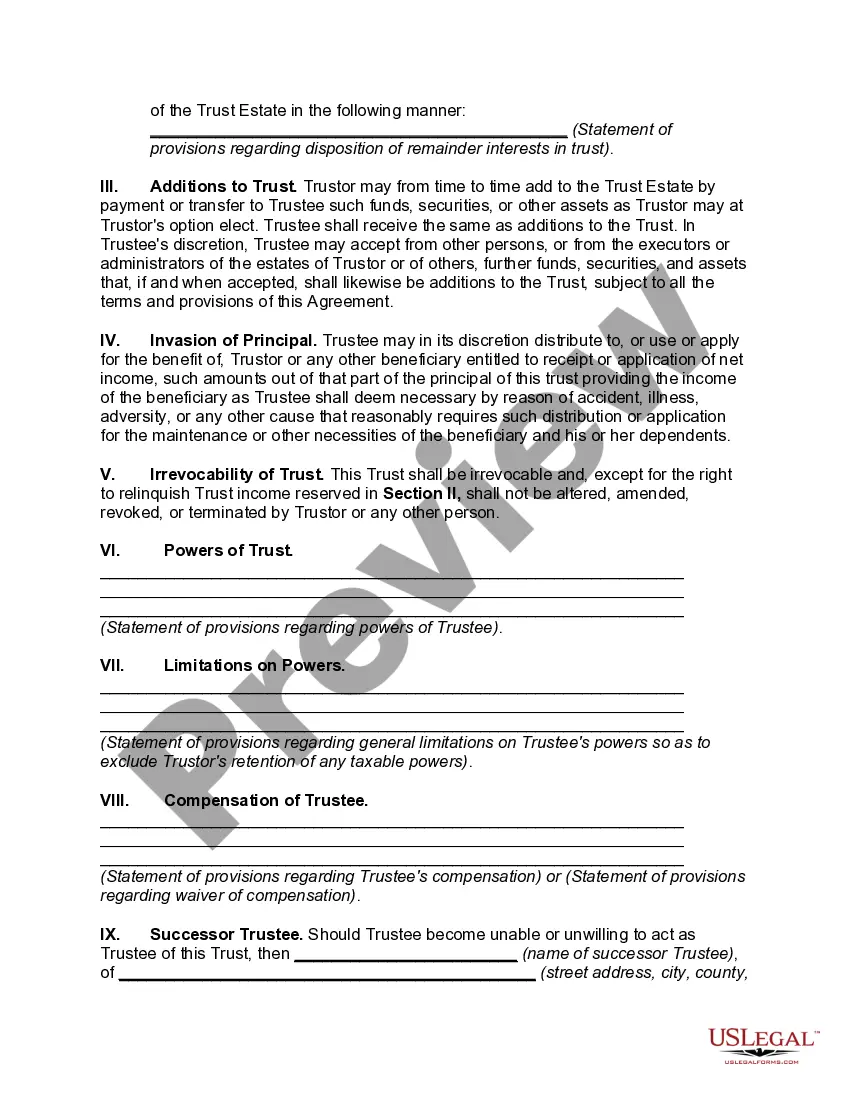
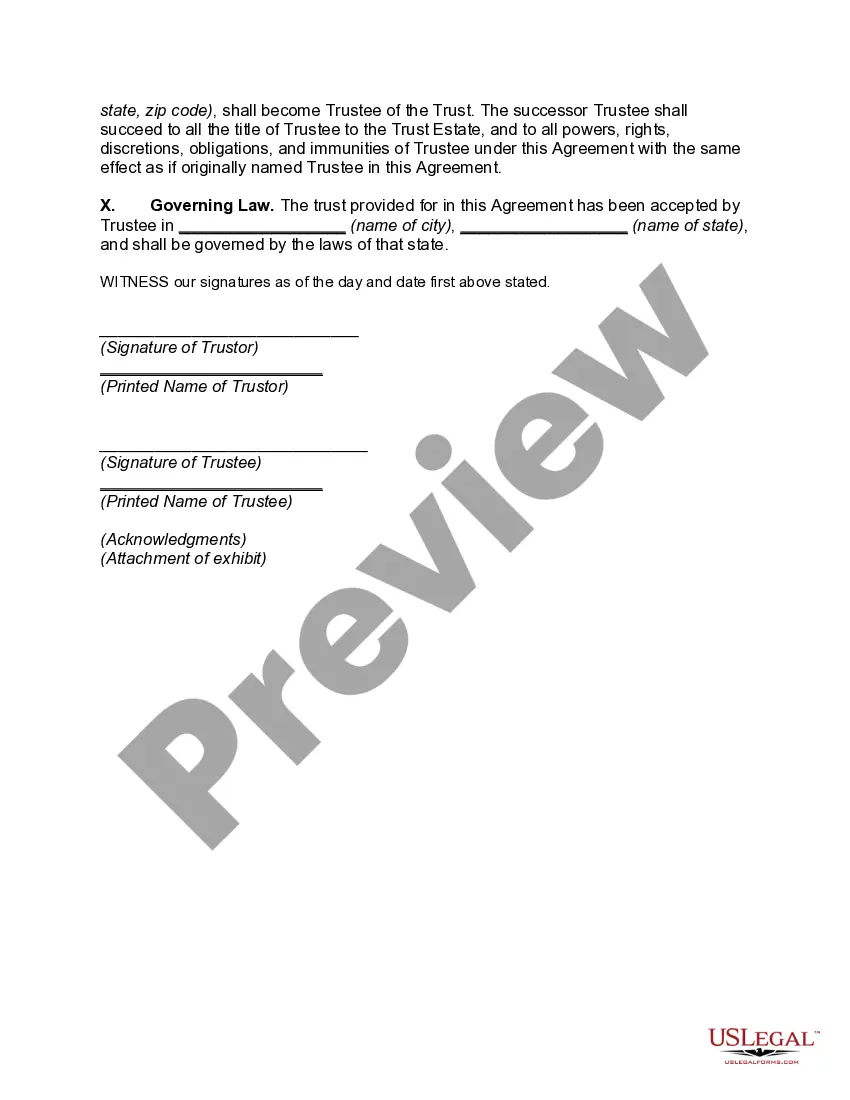
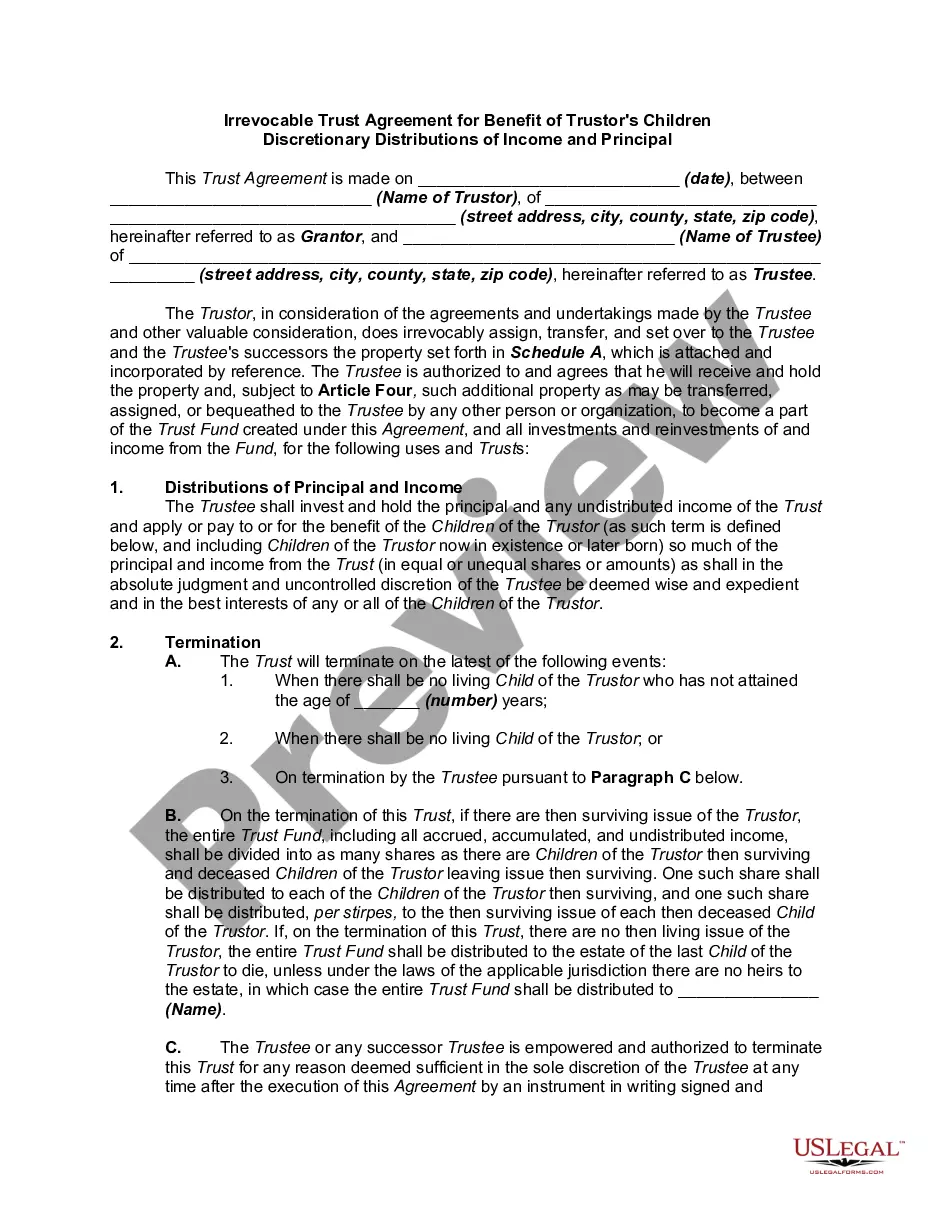
Get your form ready online
Our built-in tools help you complete, sign, share, and store your documents in one place.
Make edits, fill in missing information, and update formatting in US Legal Forms—just like you would in MS Word.
Download a copy, print it, send it by email, or mail it via USPS—whatever works best for your next step.
Sign and collect signatures with our SignNow integration. Send to multiple recipients, set reminders, and more. Go Premium to unlock E-Sign.
If this form requires notarization, complete it online through a secure video call—no need to meet a notary in person or wait for an appointment.
We protect your documents and personal data by following strict security and privacy standards.

Make edits, fill in missing information, and update formatting in US Legal Forms—just like you would in MS Word.

Download a copy, print it, send it by email, or mail it via USPS—whatever works best for your next step.

Sign and collect signatures with our SignNow integration. Send to multiple recipients, set reminders, and more. Go Premium to unlock E-Sign.

If this form requires notarization, complete it online through a secure video call—no need to meet a notary in person or wait for an appointment.

We protect your documents and personal data by following strict security and privacy standards.
Looking for another form?





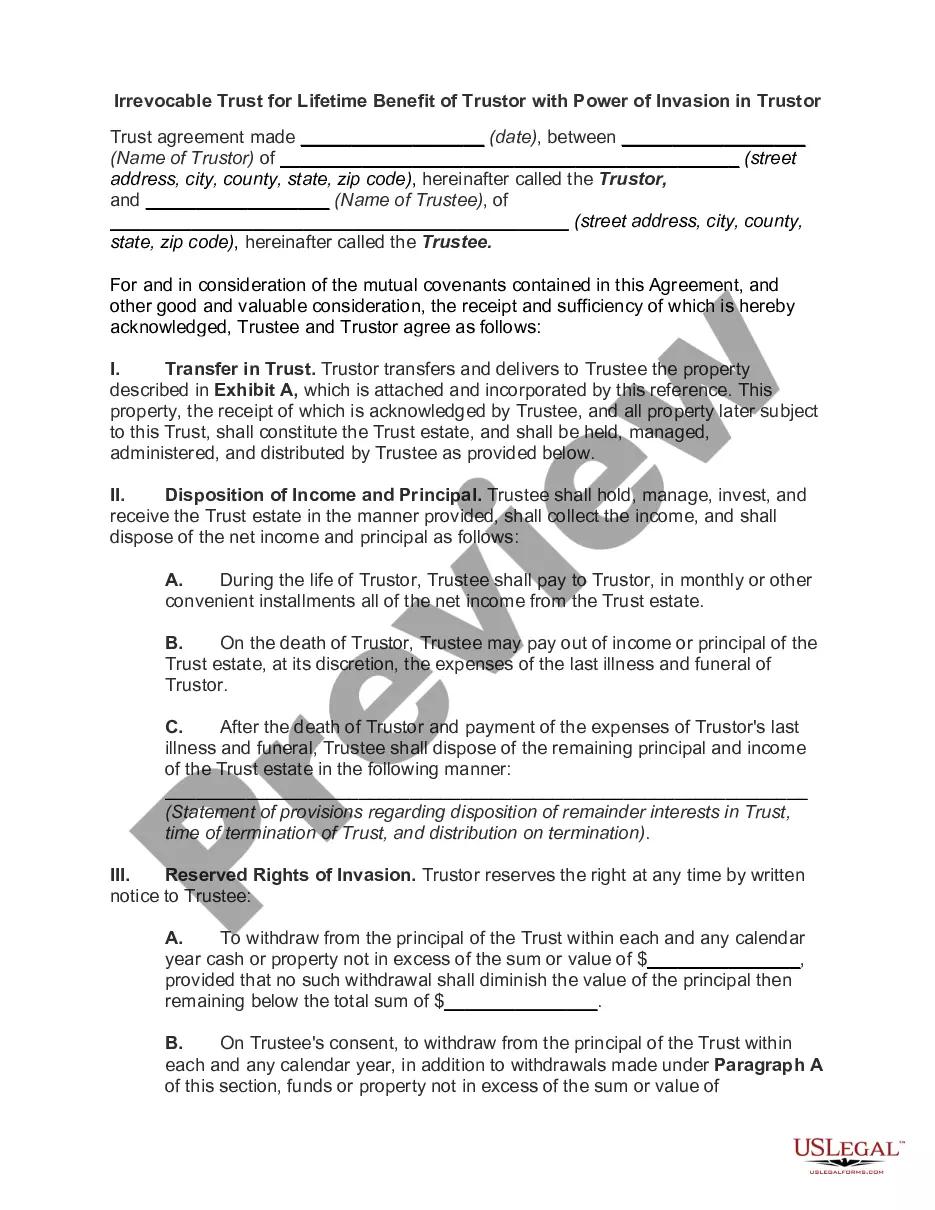
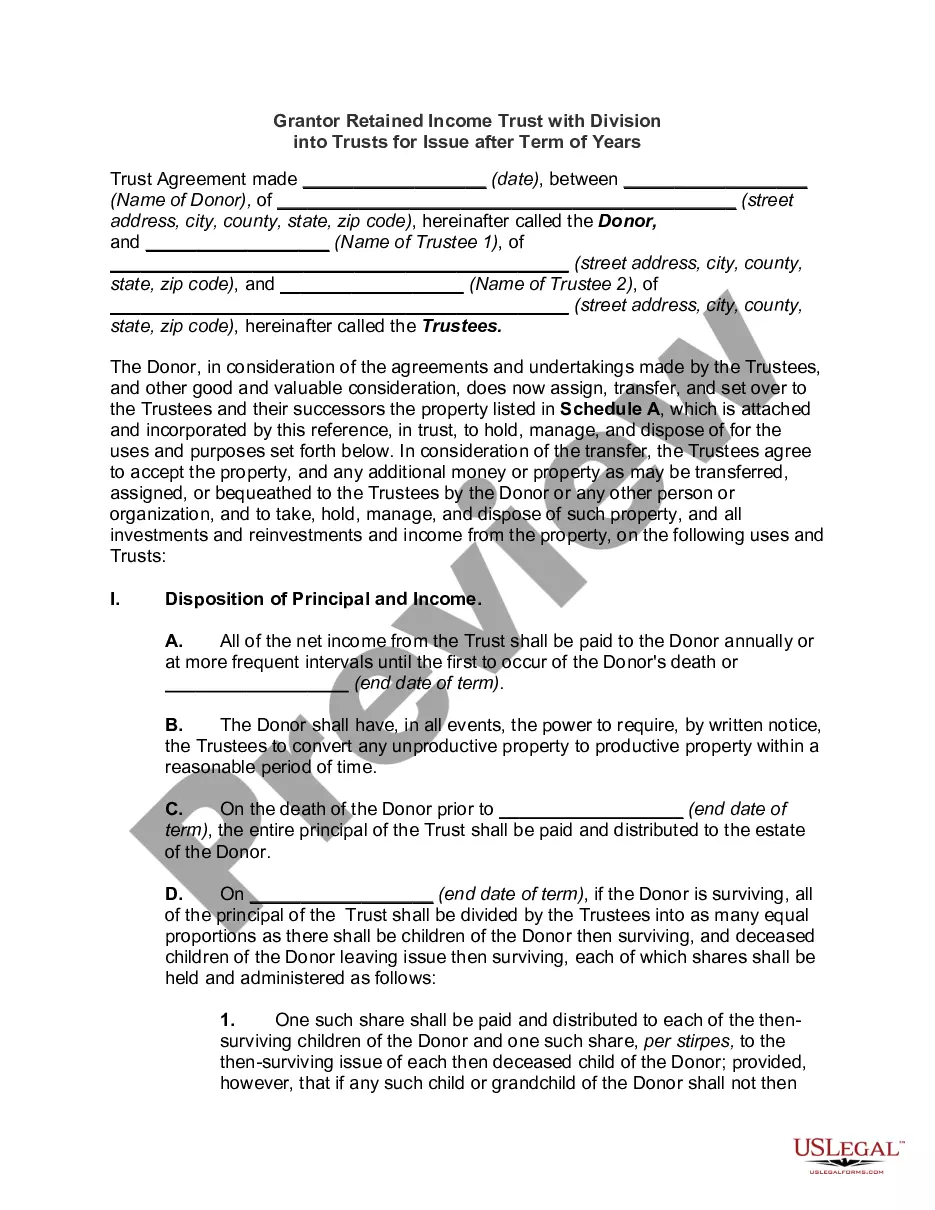
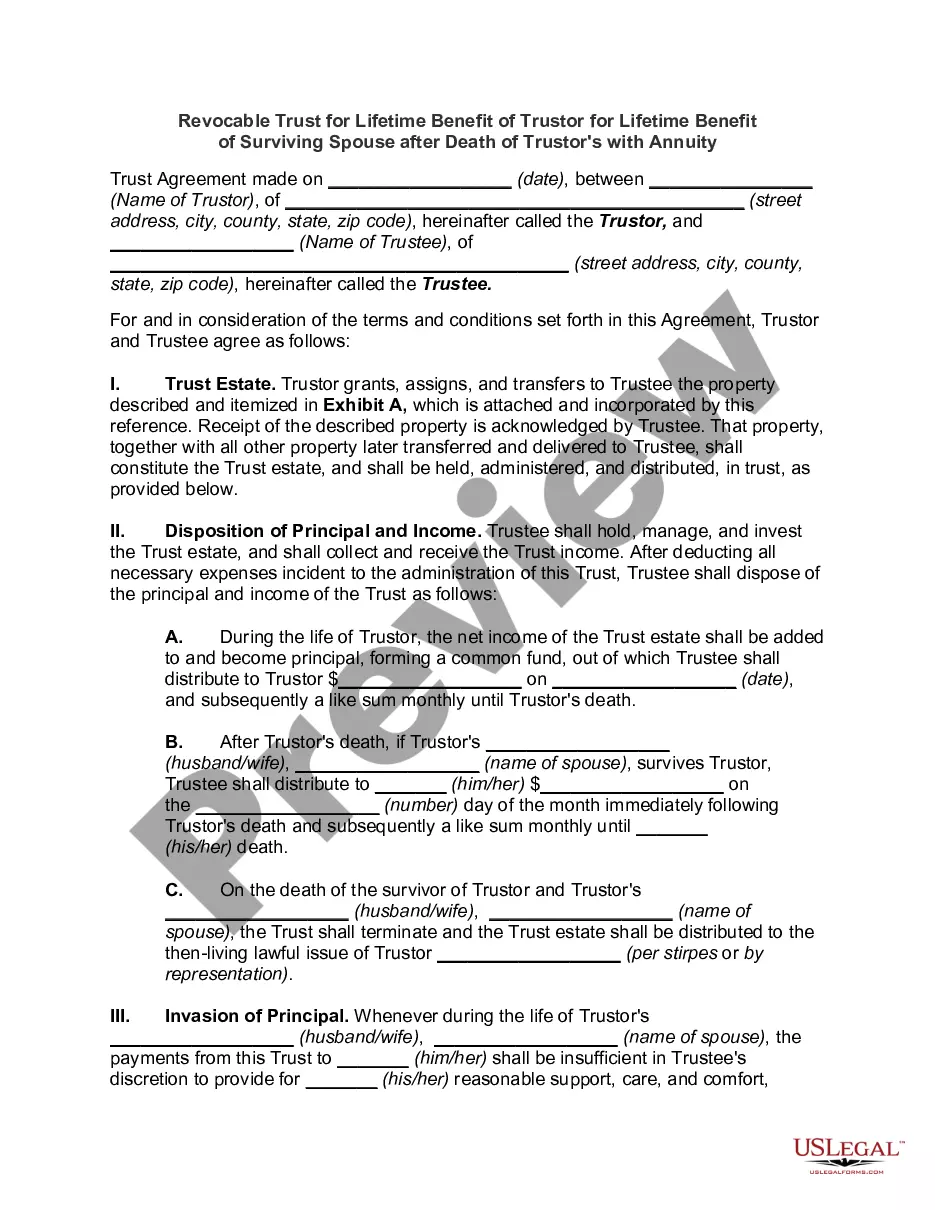
How to fill out Irrevocable Trust For Future Benefit Of Trustor With Income Payable To Trustor After Specified Time?
- If you’re a returning user, log in to your account and check your subscription status. If valid, locate and click the Download button for your desired form template.
- For first-time users, start by browsing the Preview mode and description of the trust document to confirm it meets your unique needs and local jurisdiction requirements.
- If necessary, utilize the Search tab to find an alternate template that better suits your situation by exploring the wide array of forms available.
- Proceed to purchase the document by clicking the Buy Now button and selecting your preferred subscription plan, registering for an account to access the full library.
- Complete your transaction by entering your payment details through a credit card or PayPal, and finalize your subscription to access your documents.
- Download your trusted form to your device, allowing you to fill it out as needed and revisit it anytime via the My Forms section of your profile.
By following these steps, you can effortlessly access a trust document tailored to your requirements. US Legal Forms stands out due to its extensive collection and the ability to consult with legal experts to ensure your documentation is both accurate and enforceable.
Don’t wait—take charge of your legal documents today with US Legal Forms!
Form popularity
FAQ
A trustee has significant power over a trust, but this is balanced by their fiduciary responsibility to act in the best interests of the beneficiaries. The trustor with a trust outlines the trustee's powers in the trust document, which can include managing assets, making distributions, and making investment decisions. It's important for a trustor to carefully consider these powers when setting up the trust.
The trustor in connection with a trust deed is the person who establishes the trust, defining its terms and intent. This individual plays a crucial role in determining how the assets will be managed and distributed. By serving as the trustor with a trust, they maintain authority over the trust's direction until it is transferred to the trustee.
No, a trustee is not the same as an owner of a trust. The trustor with a trust is the individual who creates and funds the trust. The trustee, appointed by the trustor with a trust, oversees the administration of the trust, ensuring that its terms are followed while managing the assets for the benefit of the beneficiaries.
Yes, a trustor can be removed from a trust, though this process depends on the trust's terms and state laws. If the trustor with a trust wishes to resign, they may need to follow specific procedures outlined in the trust document. In some cases, legal counsel can help navigate this process to ensure it aligns with all necessary regulations.
The trust owner, often referred to as the trustor with a trust, creates the trust and defines its terms. In contrast, the trustee is responsible for managing the trust assets according to those terms. The trustor with a trust retains specific rights regarding the trust's operation, while the trustee acts in a fiduciary role, prioritizing the beneficiaries' interests.
To file taxes on behalf of a trust, it is essential first to determine if the trust is a grantor trust or a non-grantor trust. The steps involve collecting income information, completing IRS forms like Form 1041, and reporting distributions to beneficiaries on Schedule K-1. For clarity and assistance, utilizing services like US Legal Forms can simplify the process for any trustor with a trust, helping ensure compliance with tax laws.
The party who is the trustor in connection with a trust deed is the one who creates and funds the trust. This role is crucial as it sets the foundation for how the trust operates. By acting as the trustor with a trust, they determine the rules and guidelines for asset management and distribution, ensuring their legacy continues as intended.
Generally, a trust must file a tax return if it has any income. However, it also depends on the type of trust established. A simple trust may not owe any taxes, while a complex trust often requires the trustor with a trust to file specific forms with the IRS, ensuring compliance with tax regulations.
The trustor in a trust is the person who initiates the trust by transferring ownership of assets. This individual outlines how the assets will be managed during their lifetime and after their death. Essentially, the trustor with a trust acts as a guide, directing how the funds and assets will benefit their chosen beneficiaries.
One significant mistake parents often make when setting up a trust fund is failing to clearly define the terms and conditions. Ambiguous language can lead to confusion and disputes among beneficiaries. A well-structured trust created by a trustor with a trust ensures that everyone understands their rights and responsibilities, preventing future misunderstandings.