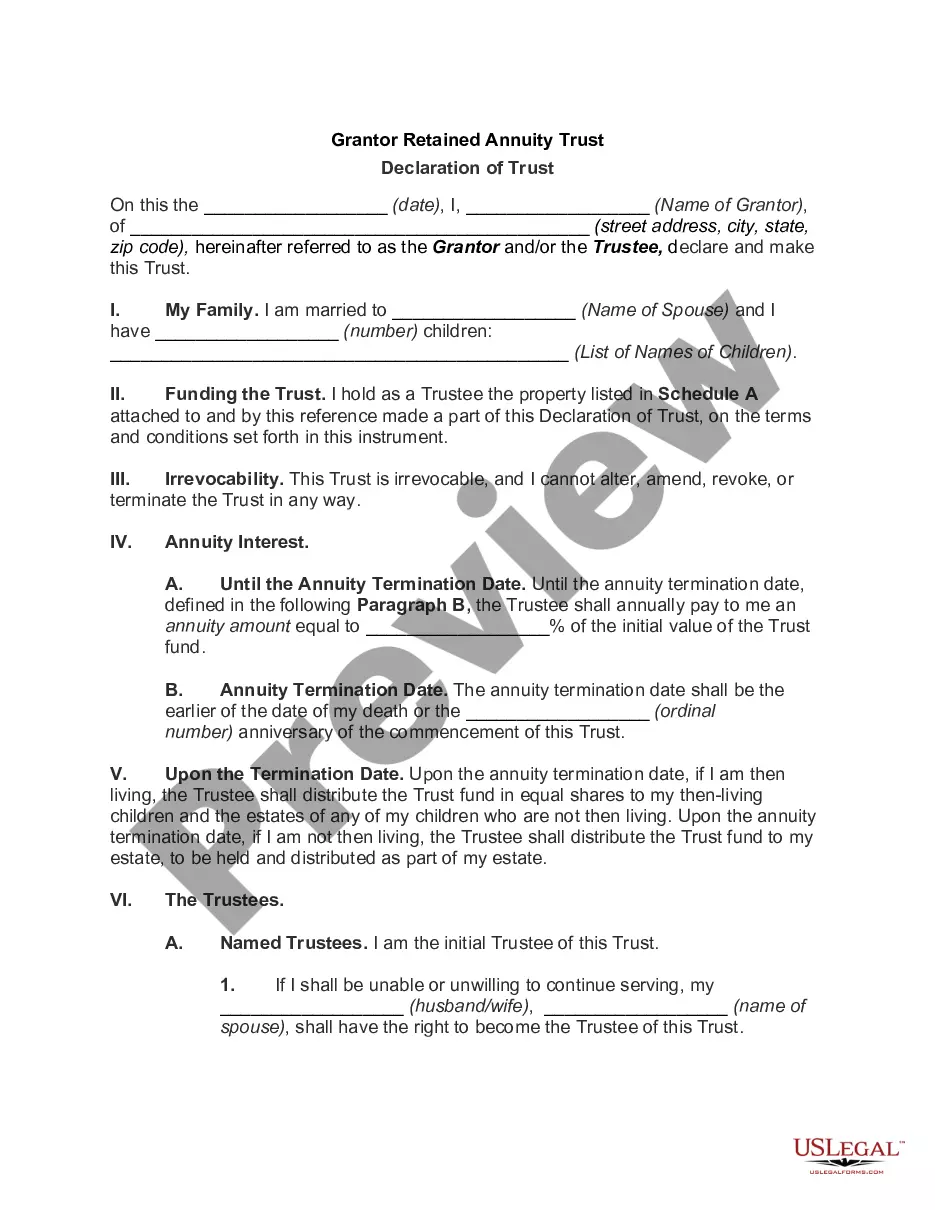
Non Qualified Annuity With Trust As Beneficiary
Description

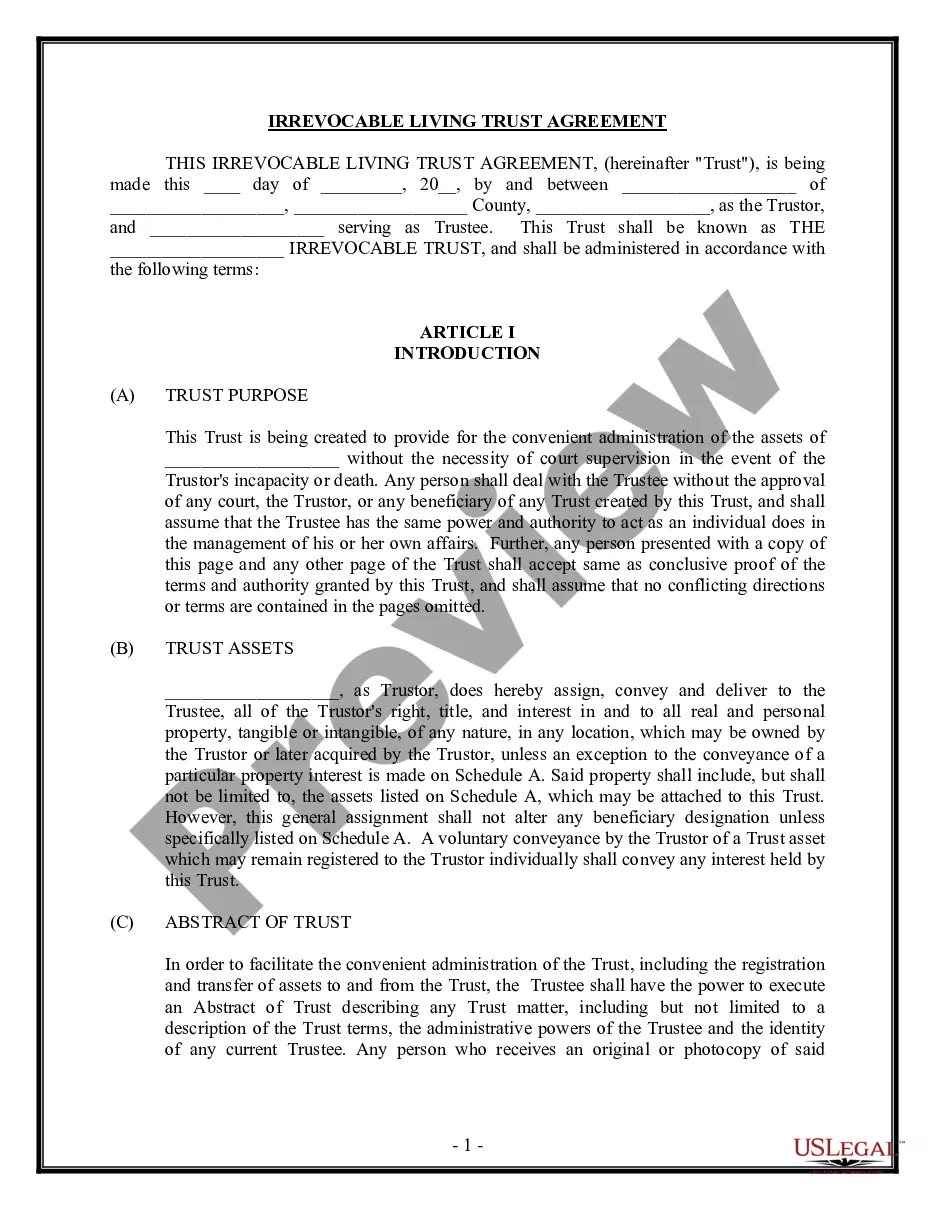
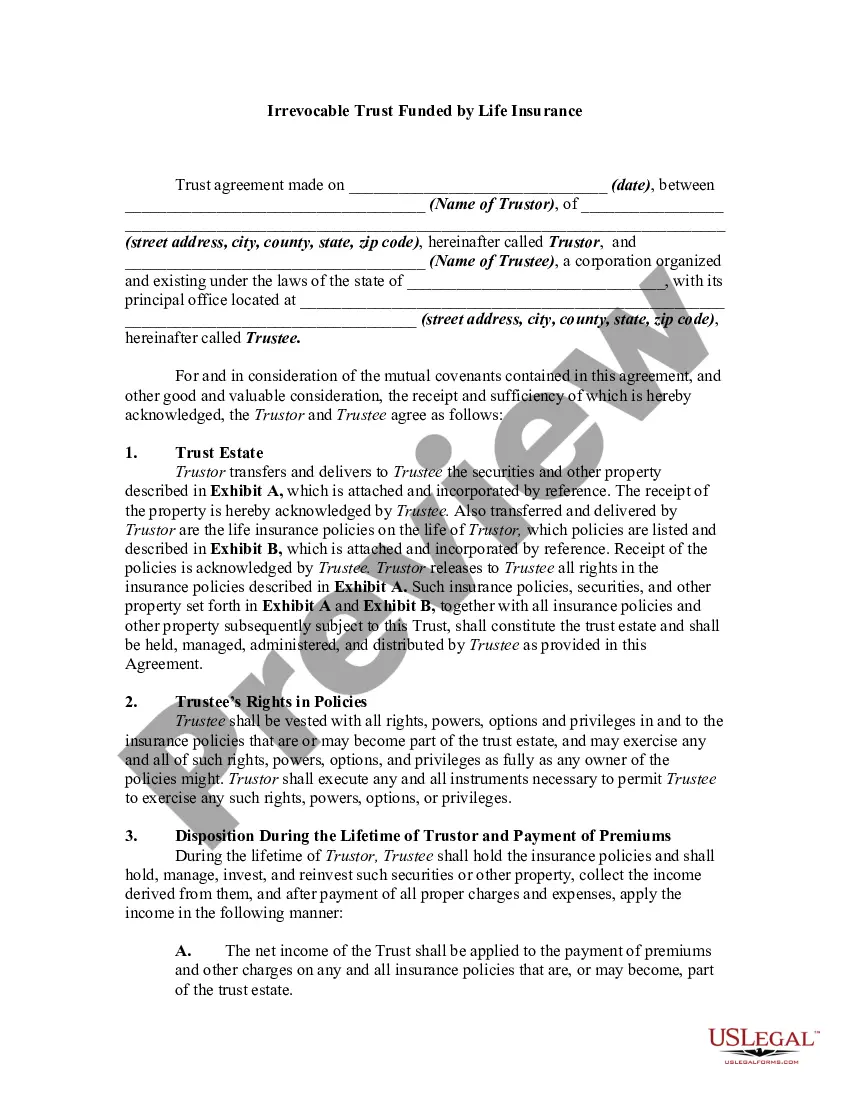
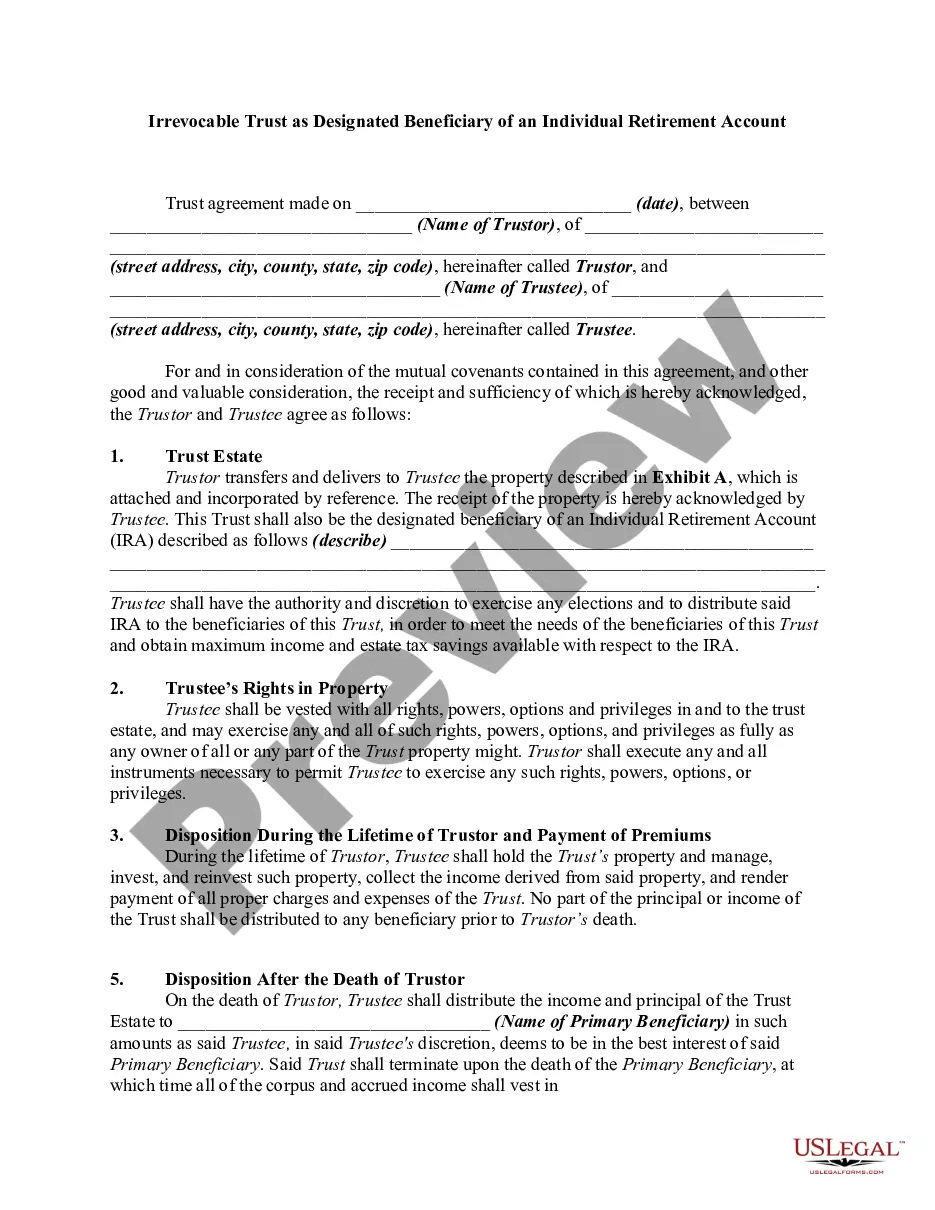
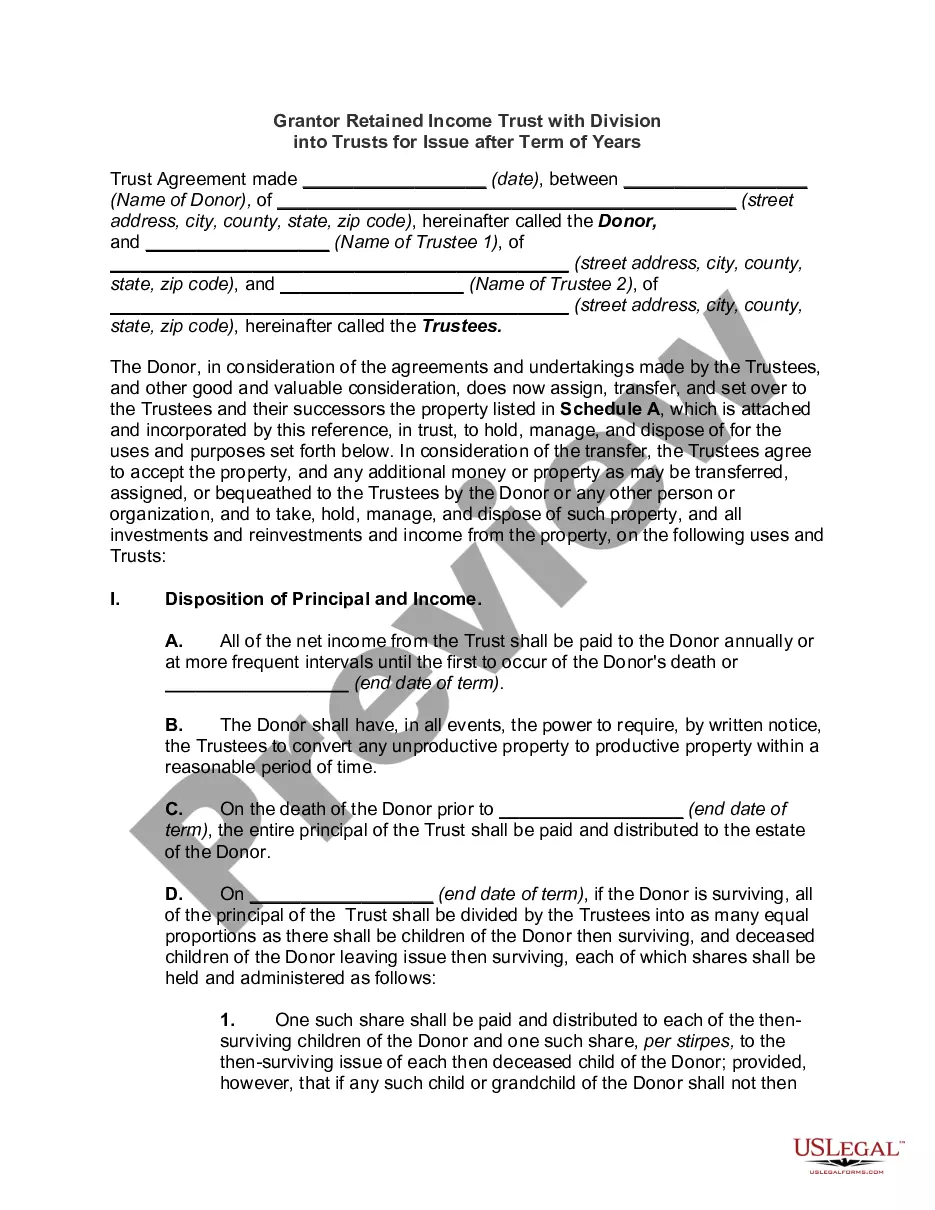
Get your form ready online
Our built-in tools help you complete, sign, share, and store your documents in one place.
Make edits, fill in missing information, and update formatting in US Legal Forms—just like you would in MS Word.
Download a copy, print it, send it by email, or mail it via USPS—whatever works best for your next step.
Sign and collect signatures with our SignNow integration. Send to multiple recipients, set reminders, and more. Go Premium to unlock E-Sign.
If this form requires notarization, complete it online through a secure video call—no need to meet a notary in person or wait for an appointment.
We protect your documents and personal data by following strict security and privacy standards.

Make edits, fill in missing information, and update formatting in US Legal Forms—just like you would in MS Word.

Download a copy, print it, send it by email, or mail it via USPS—whatever works best for your next step.

Sign and collect signatures with our SignNow integration. Send to multiple recipients, set reminders, and more. Go Premium to unlock E-Sign.

If this form requires notarization, complete it online through a secure video call—no need to meet a notary in person or wait for an appointment.

We protect your documents and personal data by following strict security and privacy standards.
Looking for another form?

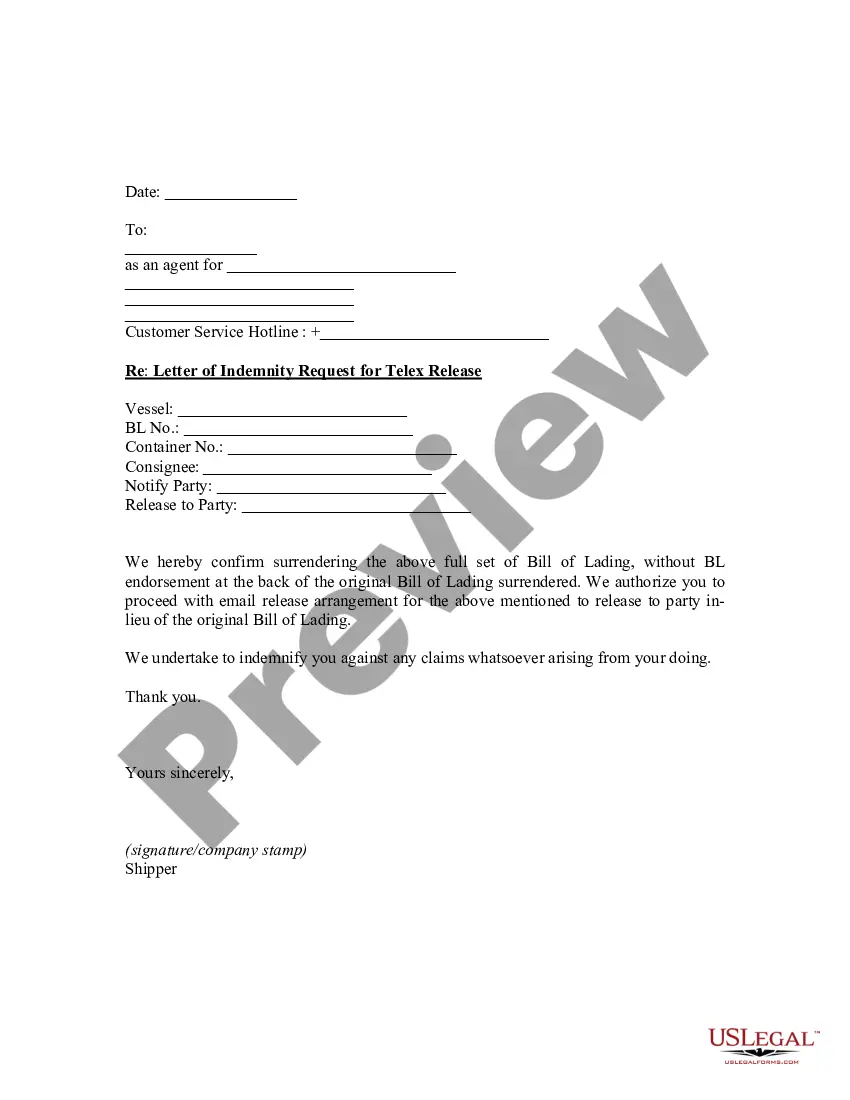








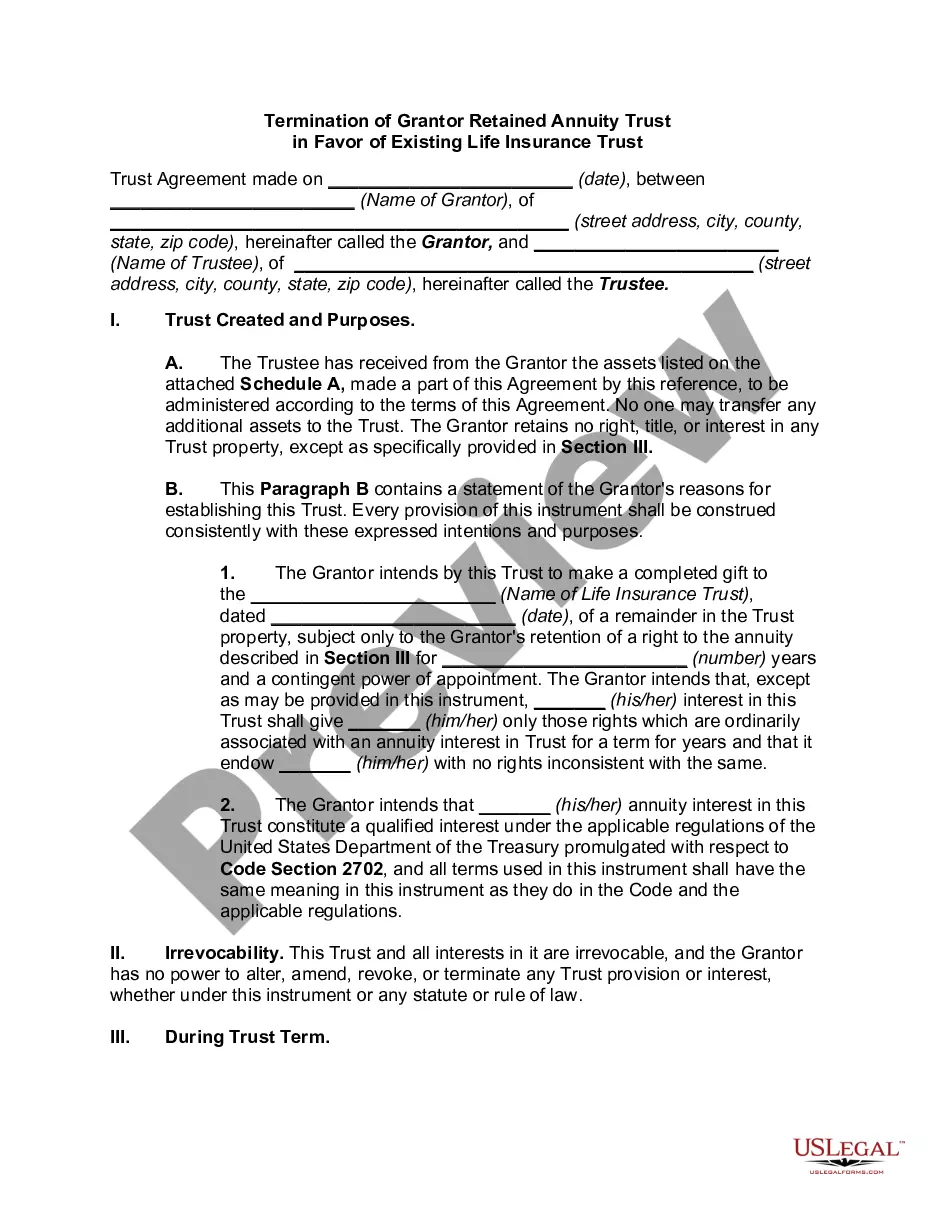
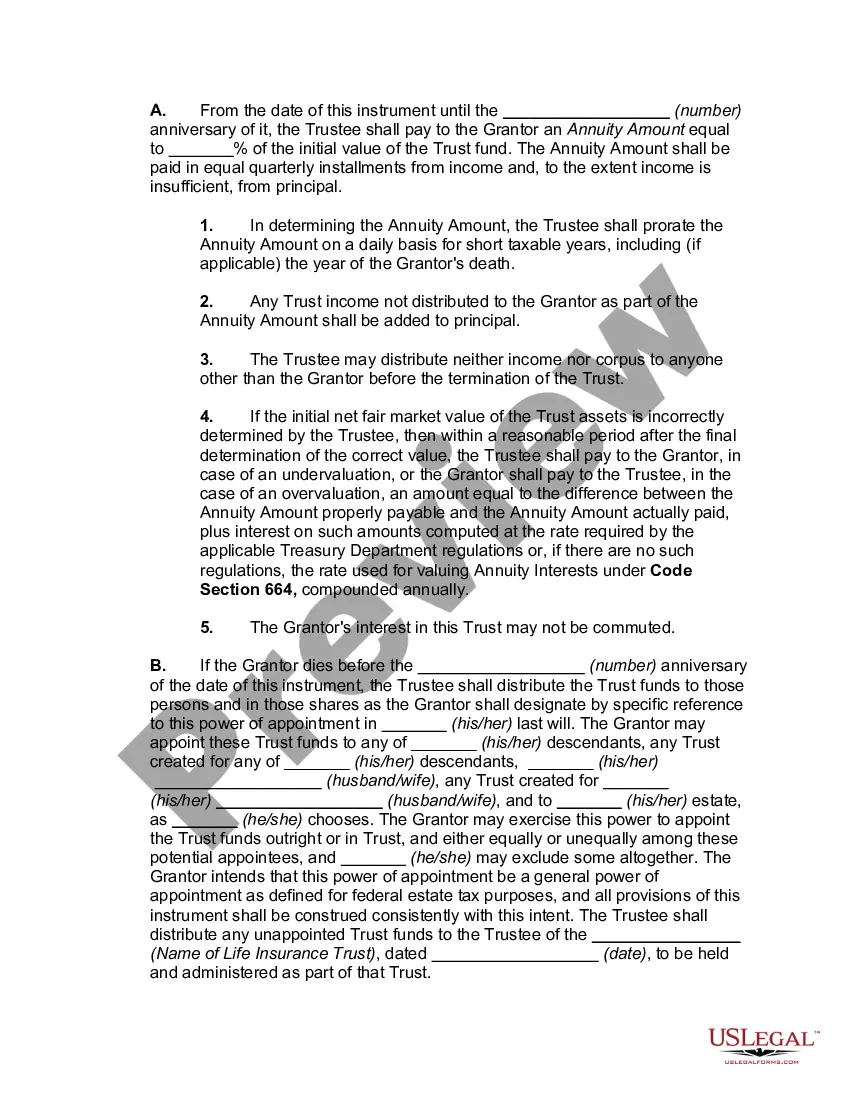
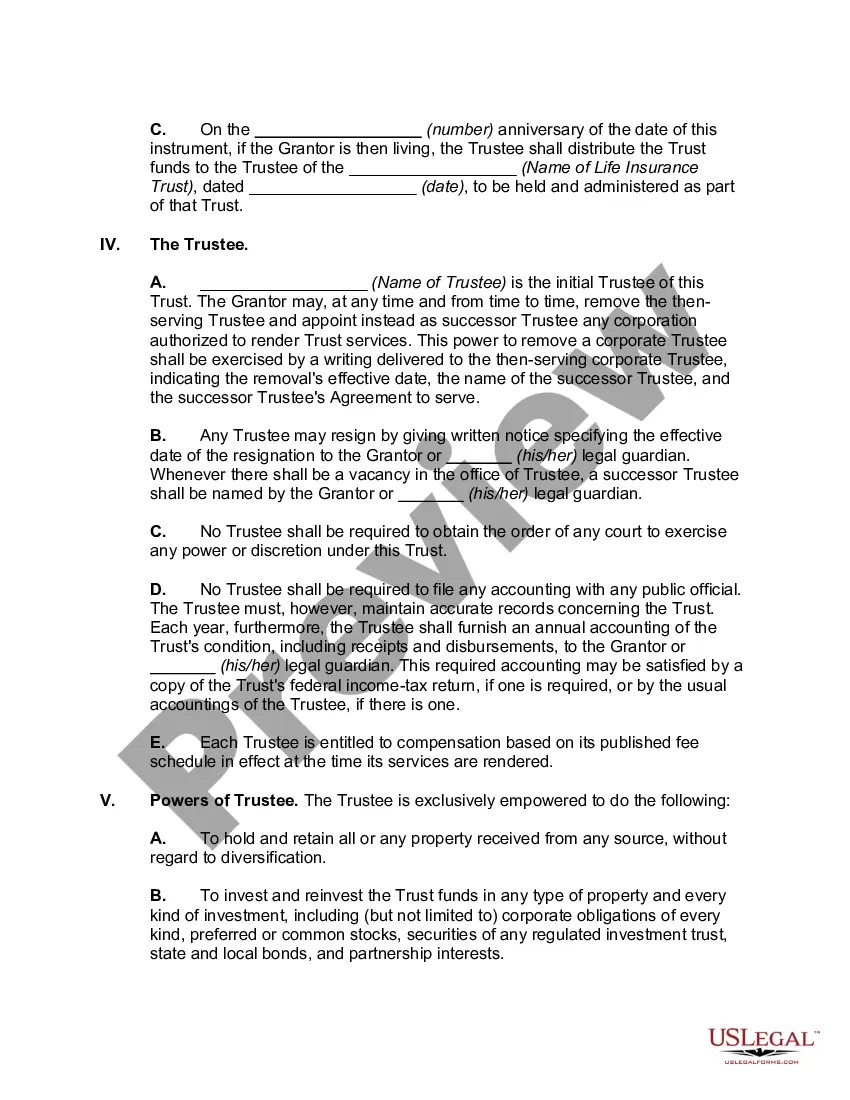
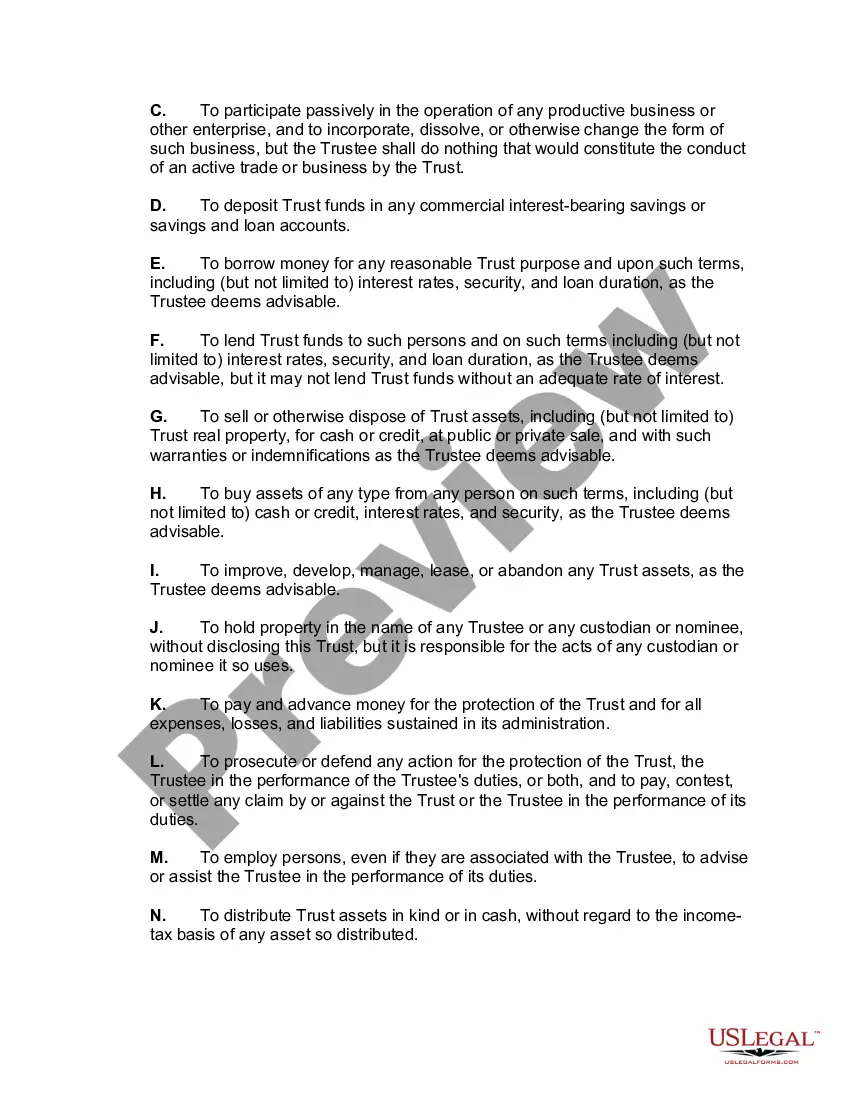
How to fill out Termination Of Grantor Retained Annuity Trust In Favor Of Existing Life Insurance Trust?
- Log in to your account if you're a returning user. Ensure your subscription is active; if not, renew or choose a suitable plan.
- Preview the available form. Check the description to confirm it aligns with your requirements and complies with your local jurisdiction.
- Search for additional templates if necessary. Use the Search tab to find the correct document ensuring it meets your specific needs.
- Purchase the selected document. Click 'Buy Now' and choose your desired subscription plan, then create an account to gain access.
- Complete your transaction. Enter your payment details through a credit card or PayPal to finalize the subscription.
- Download the form. Save the template to your device, and access it anytime via the 'My Forms' section of your profile.
With US Legal Forms, you gain access to an extensive library boasting over 85,000 easily fillable and editable legal documents. The platform not only saves you time but also provides premium expert assistance, ensuring that your documents are precise and legally sound.
Ready to get started? Visit US Legal Forms today and simplify your legal documentation process!
Form popularity
FAQ
When the owner of a non-qualified annuity passes away, the treatment of the annuity largely depends on the designated beneficiary. If you have named a trust as the beneficiary, the proceeds from the annuity can be managed according to the terms of that trust. This arrangement can provide your heirs with tax advantages, as the trust may help minimize estate taxes and control disbursement according to your wishes. Therefore, considering a non-qualified annuity with trust as beneficiary can be a strategic choice for asset transfer and protection.
You can roll a non-qualified annuity into another non-qualified annuity or into certain types of investment vehicles, such as mutual funds or brokerage accounts. However, keep in mind that the funds in a non-qualified annuity may be subject to taxes upon withdrawal. If you have a trust as a beneficiary, this can provide added flexibility in planning out your investments. To ensure you make informed choices, consult with a financial professional who understands your unique circumstances.
qualified annuity can be a beneficial investment for those looking to grow their savings without the limitations of taxdeferred retirement accounts. When you name a trust as the beneficiary, you can provide for your loved ones while maintaining control over how funds are distributed. This flexible structure often makes it easier to manage taxes and inheritance issues. Ultimately, whether it's a good fit for you depends on your financial goals and situation; reviewing these with an expert can help.
Inheriting a non-qualified annuity follows specific rules that can vary based on your relationship to the deceased and the terms of the annuity. Generally, if a trust is named as the beneficiary, the distribution will go to the trust, which then manages the assets according to its guidelines. It is essential to consult with a tax advisor, as there may be tax implications involved. Utilizing USLegalForms can help you navigate the necessary documentation for inheriting a non-qualified annuity with trust as beneficiary efficiently.
You can fund a non-qualified annuity with a lump sum or through multiple payments over time. This funding can come from a variety of sources, including savings, investments, or even selling an asset. When you name a trust as the beneficiary, you help ensure a smoother transition of your assets to your heirs. Using USLegalForms can simplify this process by providing the necessary forms and guidance for establishing a non-qualified annuity with trust as beneficiary.
When annuities are taxed to a trust beneficiary, income is typically subject to ordinary income tax rates. Additionally, the trust itself may be liable for taxes on distributions. Understanding these aspects is essential for making informed financial decisions regarding a non-qualified annuity with trust as beneficiary.
Annuities with a trust as a beneficiary face unique tax implications. The authority of the trust governs how distributions are handled, often leading to taxation as ordinary income. Consulting with a tax advisor can clarify the consequences of a non-qualified annuity with trust as beneficiary.
Naming a trust as the beneficiary of your annuity can offer advantages such as controlled distributions. This method also allows for potential creditor protection for heirs. However, it's essential to weigh these benefits against possible tax implications before deciding.
Inheriting an annuity generally triggers tax consequences for the beneficiary. Typically, the funds received are taxed as ordinary income. Therefore, understanding the tax implications of inheriting a non-qualified annuity with trust as beneficiary is critical for financial planning.
Non-qualified annuities do not receive a step up in basis at death. Instead, the original tax basis carries over to the beneficiary. This may result in taxable income if the annuity is accessed, making it vital to understand the implications of inheriting such an asset.