Types Of Special Trusts
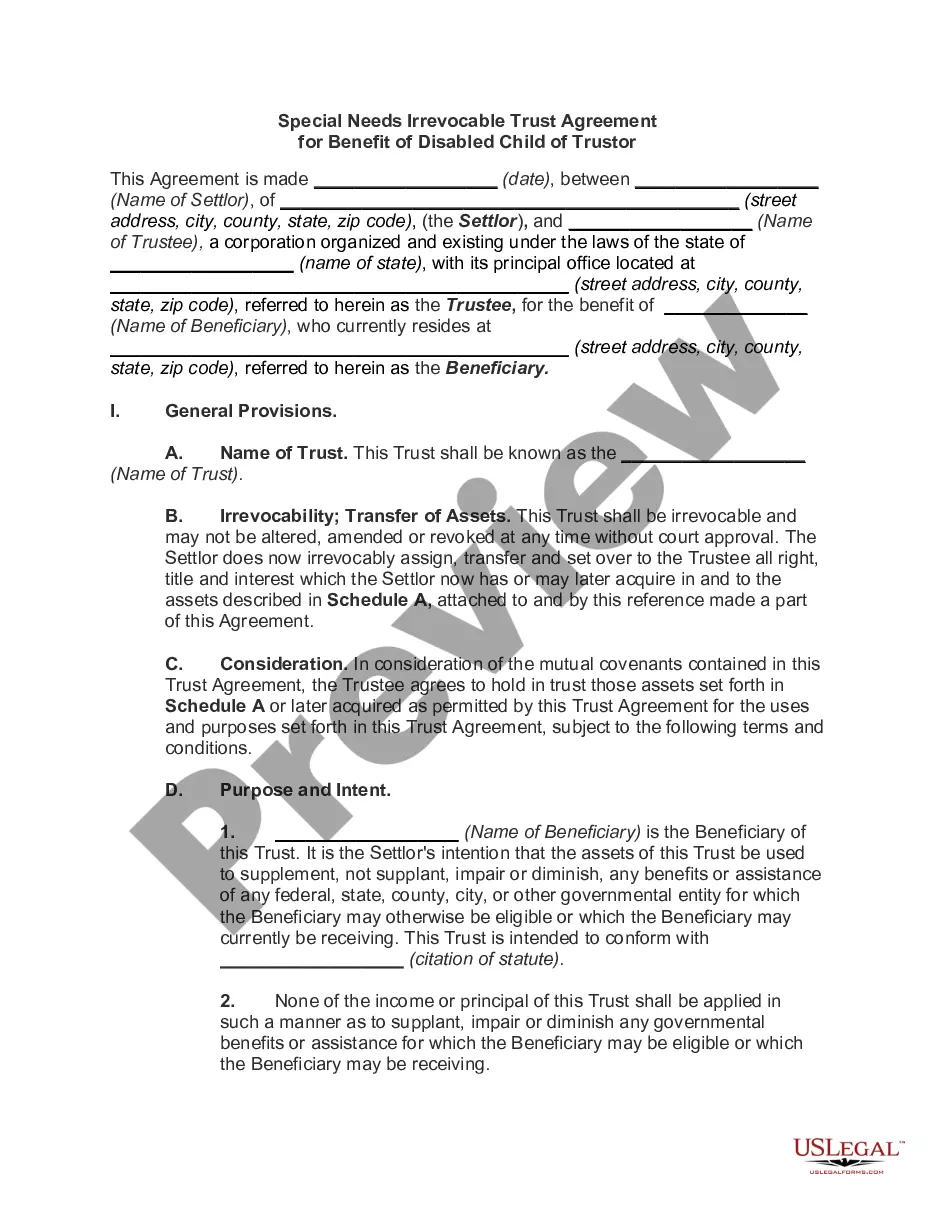
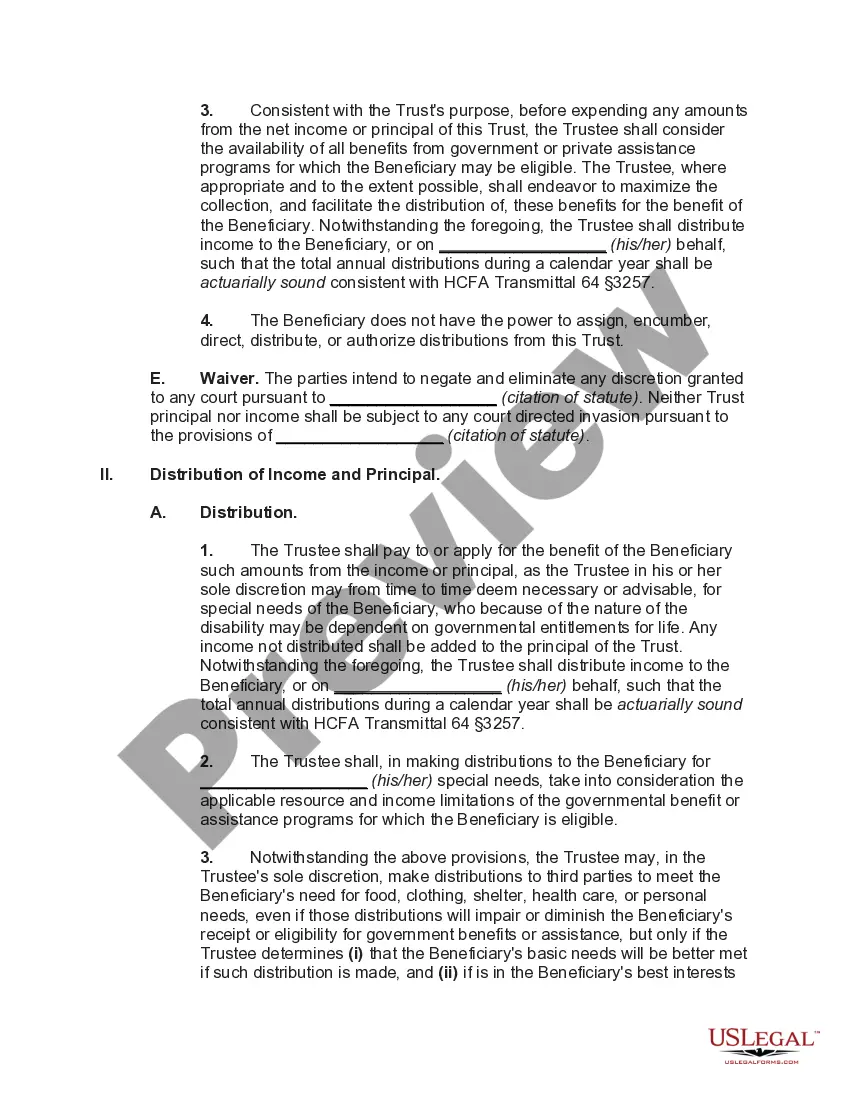
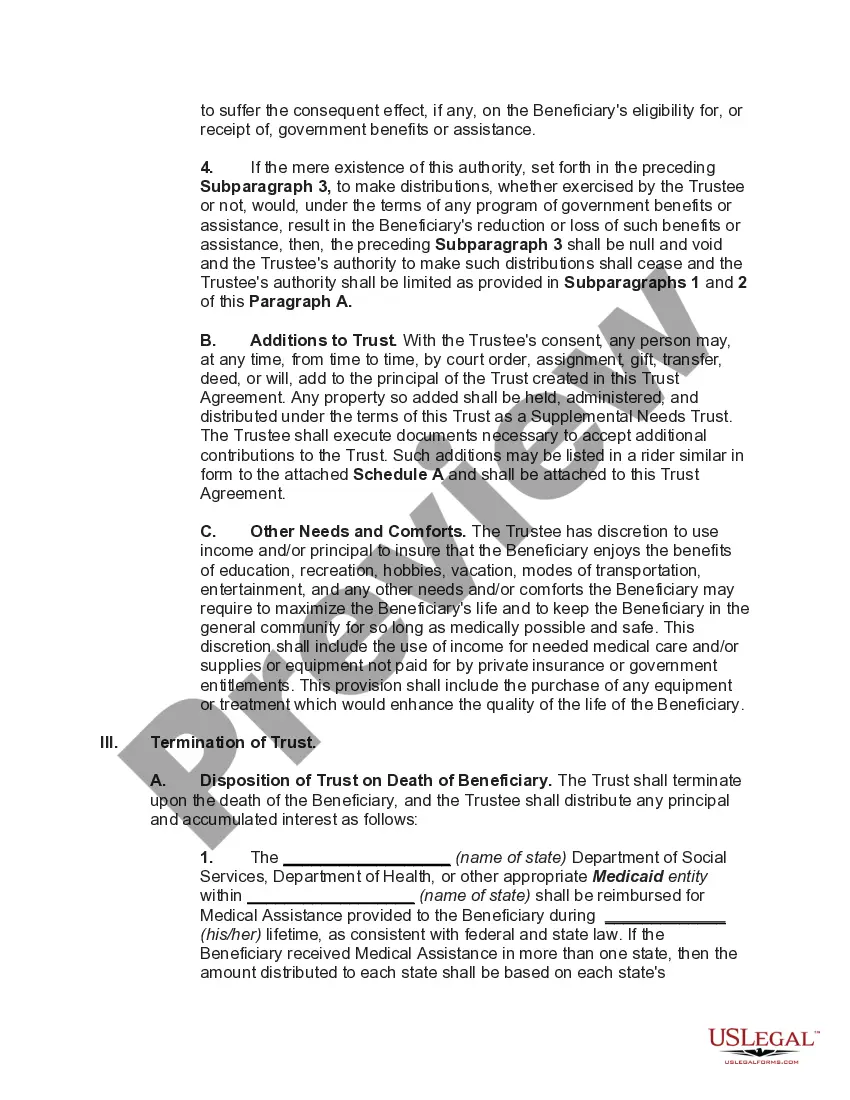
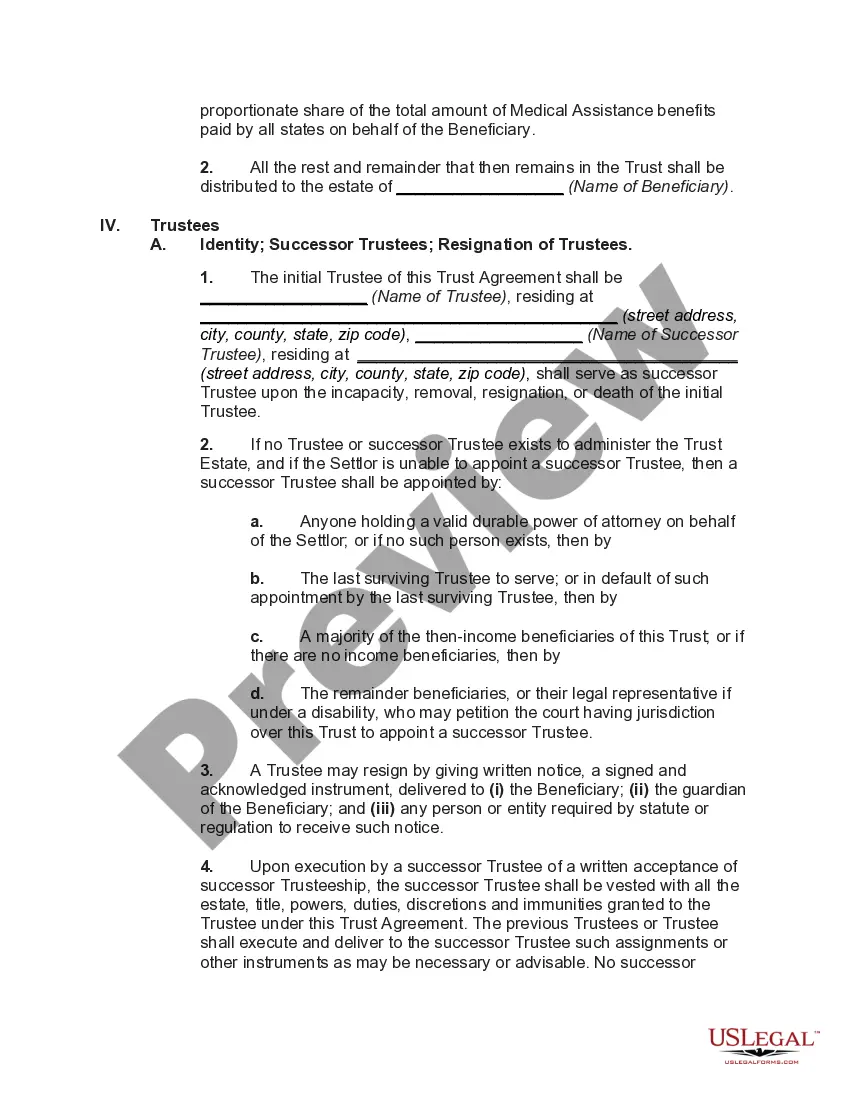
Description
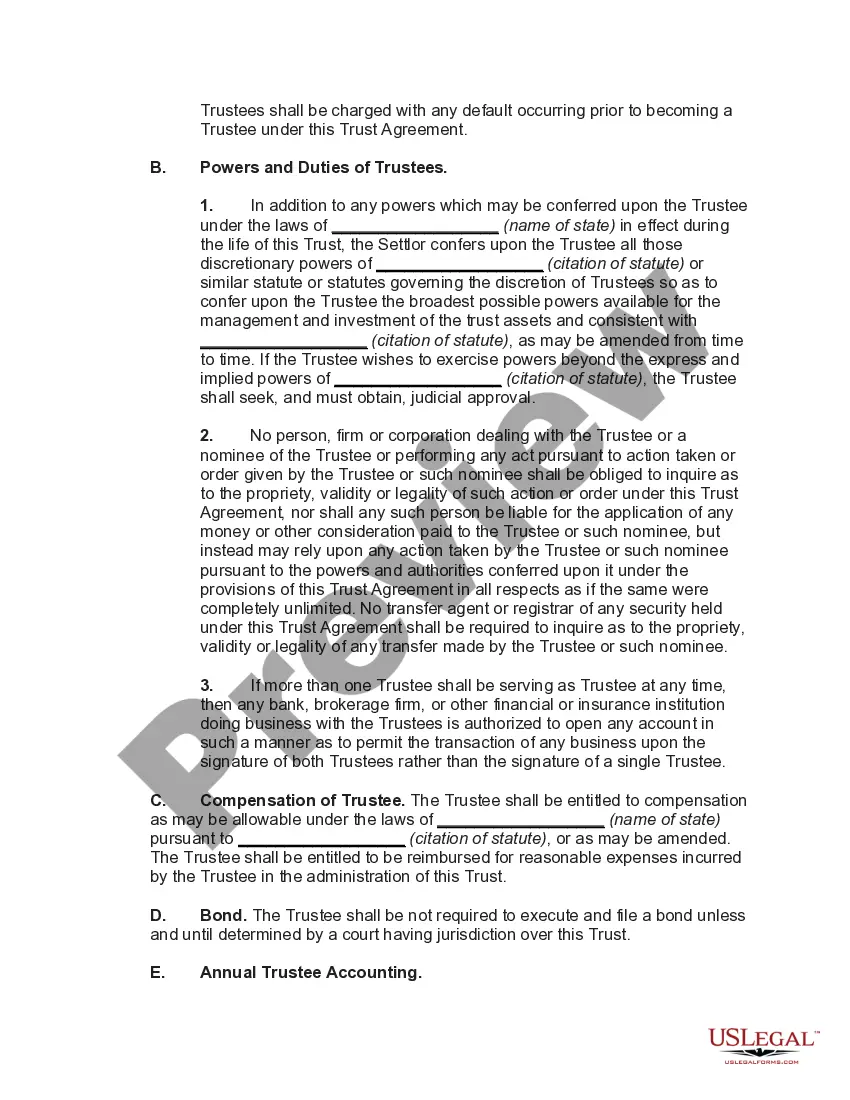
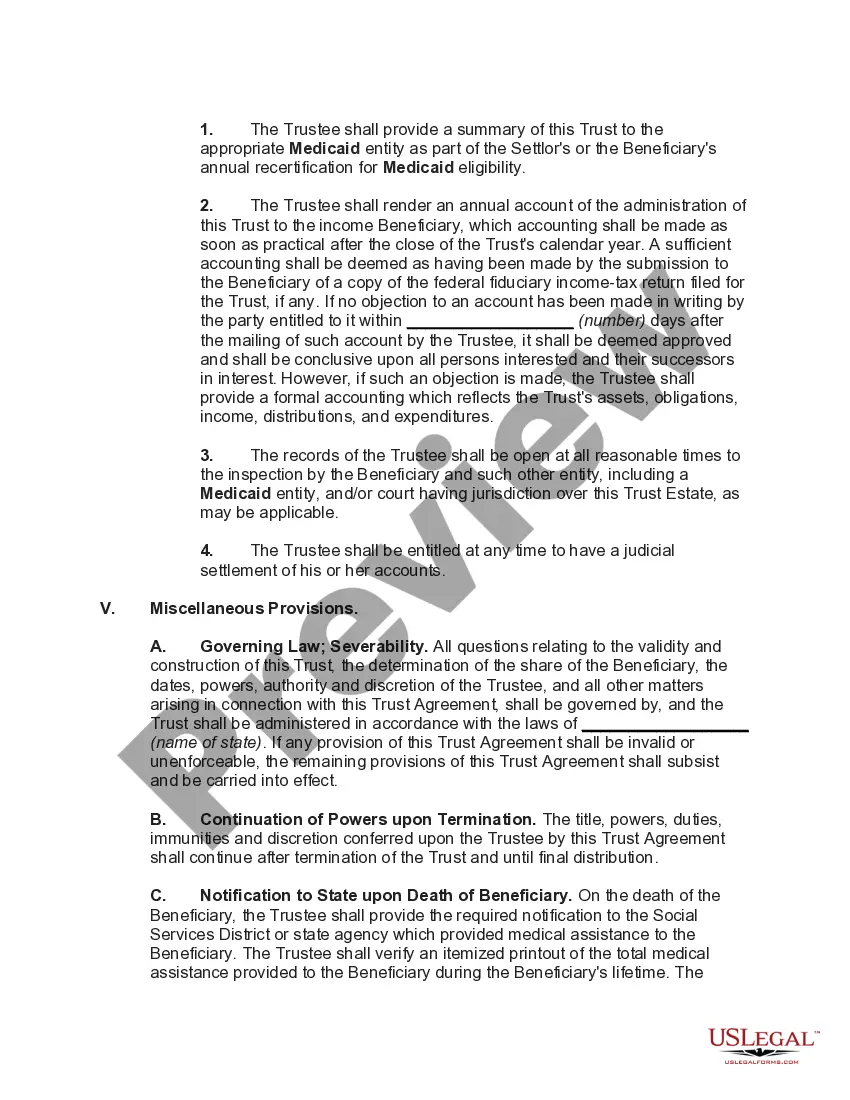
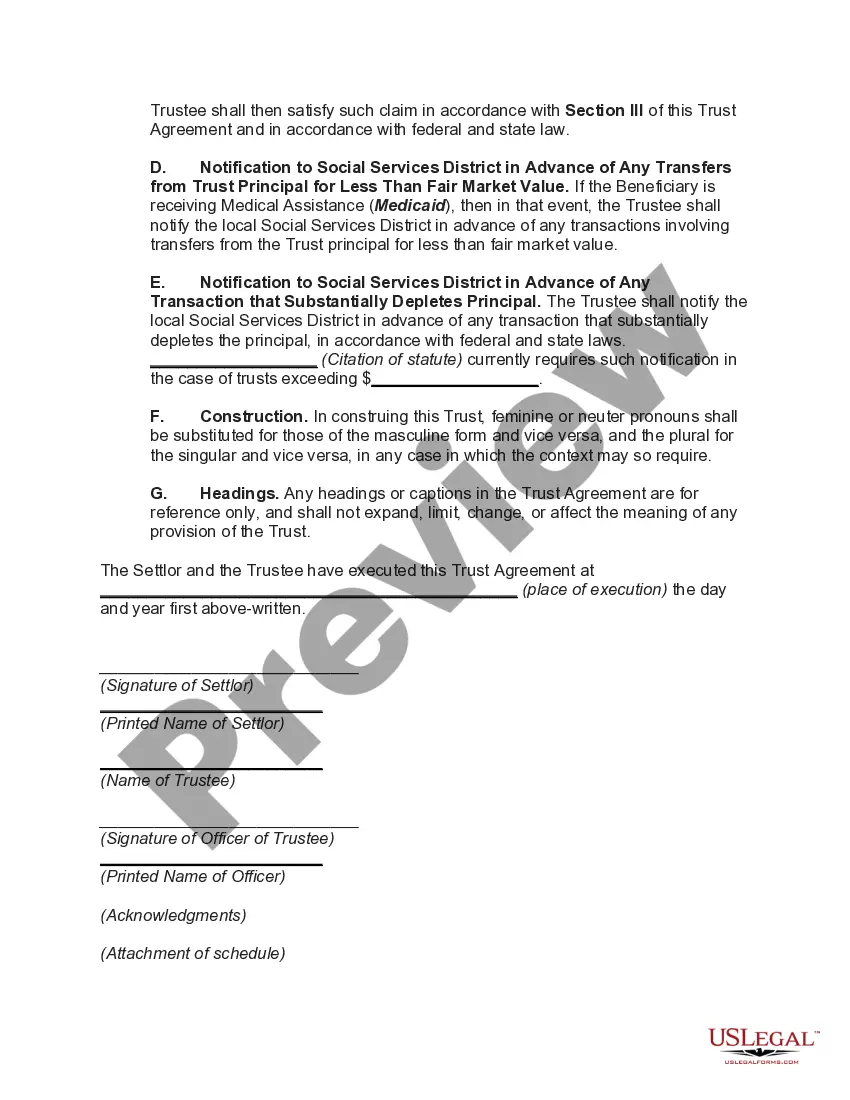
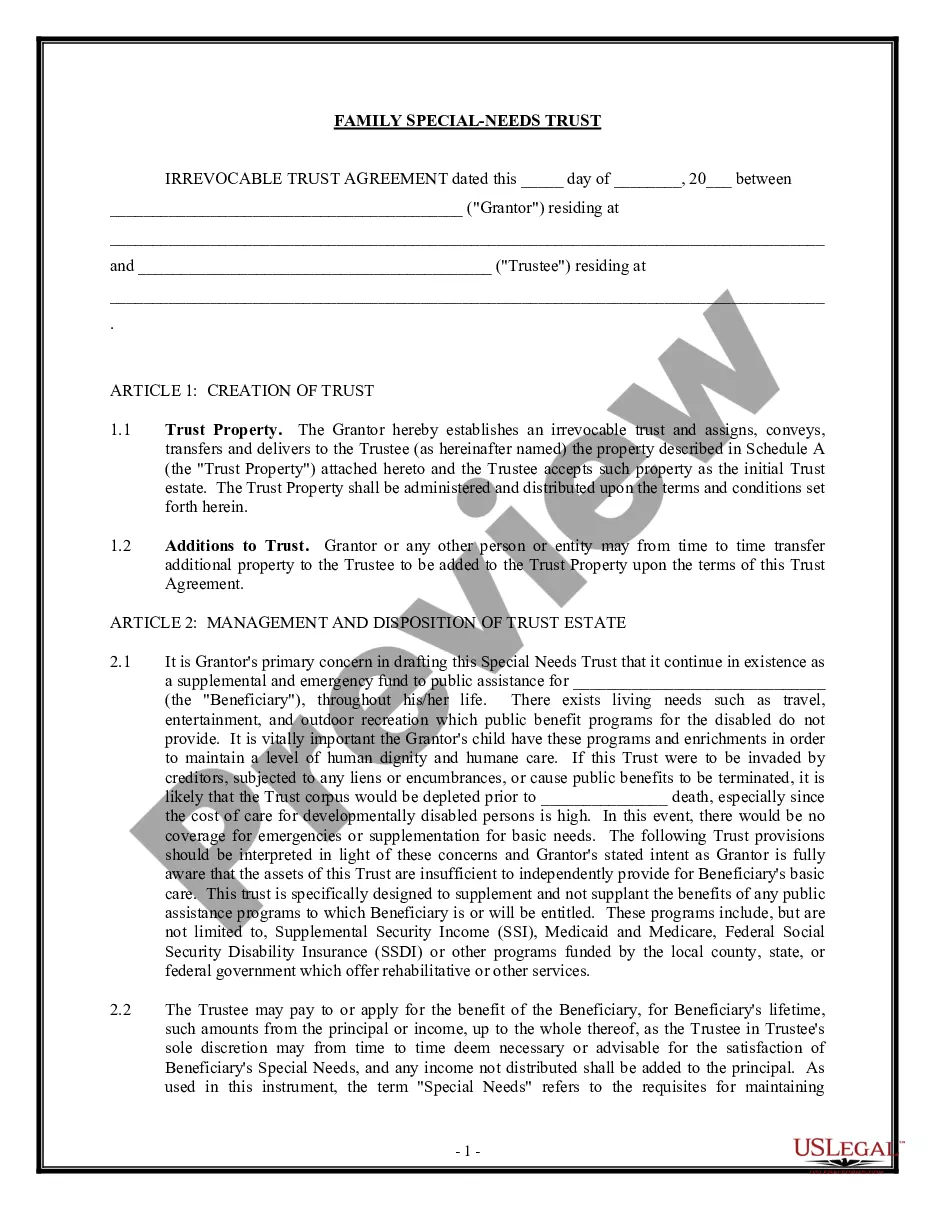



Get your form ready online
Our built-in tools help you complete, sign, share, and store your documents in one place.
Make edits, fill in missing information, and update formatting in US Legal Forms—just like you would in MS Word.
Download a copy, print it, send it by email, or mail it via USPS—whatever works best for your next step.
Sign and collect signatures with our SignNow integration. Send to multiple recipients, set reminders, and more. Go Premium to unlock E-Sign.
If this form requires notarization, complete it online through a secure video call—no need to meet a notary in person or wait for an appointment.
We protect your documents and personal data by following strict security and privacy standards.

Make edits, fill in missing information, and update formatting in US Legal Forms—just like you would in MS Word.

Download a copy, print it, send it by email, or mail it via USPS—whatever works best for your next step.

Sign and collect signatures with our SignNow integration. Send to multiple recipients, set reminders, and more. Go Premium to unlock E-Sign.

If this form requires notarization, complete it online through a secure video call—no need to meet a notary in person or wait for an appointment.

We protect your documents and personal data by following strict security and privacy standards.
Looking for another form?








How to fill out Special Needs Irrevocable Trust Agreement For Benefit Of Disabled Child Of Trustor?
Managing legal documents can be daunting, even for the most experienced experts.
When searching for Types Of Special Trusts and lacking the time to dedicate to finding the accurate and current version, the process can be overwhelming.
US Legal Forms addresses any requirements you may have, from personal to business documentation, all in one location.
Leverage advanced tools to complete and manage your Types Of Special Trusts.
Here are the steps to follow after obtaining the desired form: Verify that it is the correct form by previewing it and reviewing its details. Ensure that the template is validated in your state or county. Click Buy Now when you are prepared. Choose a subscription plan. Select your desired file format, and Download, fill out, eSign, print, and send your document. Benefit from the US Legal Forms online catalog, backed by 25 years of experience and reliability. Improve your everyday document management in a simple and user-friendly manner today.
- Utilize a resource library of articles, guides, and relevant materials tailored to your situation and needs.
- Save time and effort searching for the documents you require, and employ US Legal Forms’ sophisticated search and Preview tool to locate Types Of Special Trusts and acquire it.
- If you have a membership, Log Into your US Legal Forms account, search for the form, and obtain it.
- Check your My documents tab to review the documents you’ve previously saved and manage your folders as needed.
- If it’s your first experience with US Legal Forms, create a free account and gain unlimited access to all platform features.
- A robust online form catalog can be transformative for anyone looking to navigate these matters efficiently.
- US Legal Forms stands as a leader in online legal documents, providing more than 85,000 state-specific legal forms available to you at all times.
- With US Legal Forms, you can access tailored legal and organizational forms specific to your state or county.
Form popularity
FAQ
A special needs trust, also known as a supplemental needs trust, is a type of irrevocable trust that can provide benefits to minors and physically or mentally challenged individuals.
A Special Needs Trust (SNT) allows for a disabled person to maintain his or her eligibility for public assistance benefits, despite having assets that would otherwise make the person ineligible for those benefits.
Special Needs Trusts are created for the benefit of a physical or mentally disabled person, under the age of 65, who will need life-long care. These Trusts are a way to provide financially without jeopardizing any eligibility for supplemental government aid (SSI or Medicaid).
The trustee works in very close contact with the beneficiary and/or their caregiver to manage the trust and its financial distributions to pay for these things. The main takeaway regarding distribution of SNT funds is this: The beneficiary never sees the money directly, but the money is used to pay for their needs.
Unlike conventional trusts, which are taxed at a flat rate, a Special Trust is taxed on the same sliding scale applicable to natural persons.