Tax Return For Special Needs Trust
Description



Get your form ready online
Our built-in tools help you complete, sign, share, and store your documents in one place.
Make edits, fill in missing information, and update formatting in US Legal Forms—just like you would in MS Word.
Download a copy, print it, send it by email, or mail it via USPS—whatever works best for your next step.
Sign and collect signatures with our SignNow integration. Send to multiple recipients, set reminders, and more. Go Premium to unlock E-Sign.
If this form requires notarization, complete it online through a secure video call—no need to meet a notary in person or wait for an appointment.
We protect your documents and personal data by following strict security and privacy standards.

Make edits, fill in missing information, and update formatting in US Legal Forms—just like you would in MS Word.

Download a copy, print it, send it by email, or mail it via USPS—whatever works best for your next step.

Sign and collect signatures with our SignNow integration. Send to multiple recipients, set reminders, and more. Go Premium to unlock E-Sign.

If this form requires notarization, complete it online through a secure video call—no need to meet a notary in person or wait for an appointment.

We protect your documents and personal data by following strict security and privacy standards.
Looking for another form?










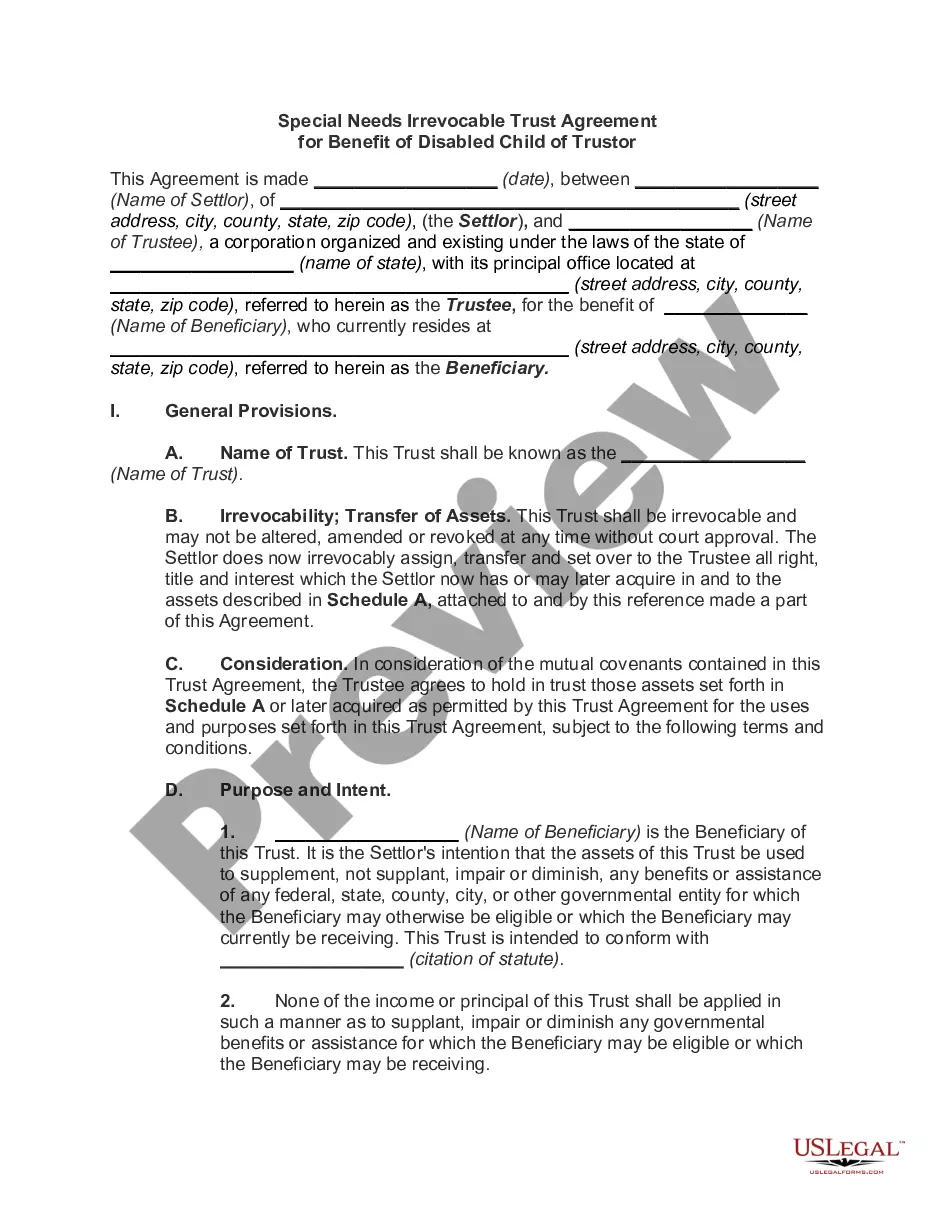
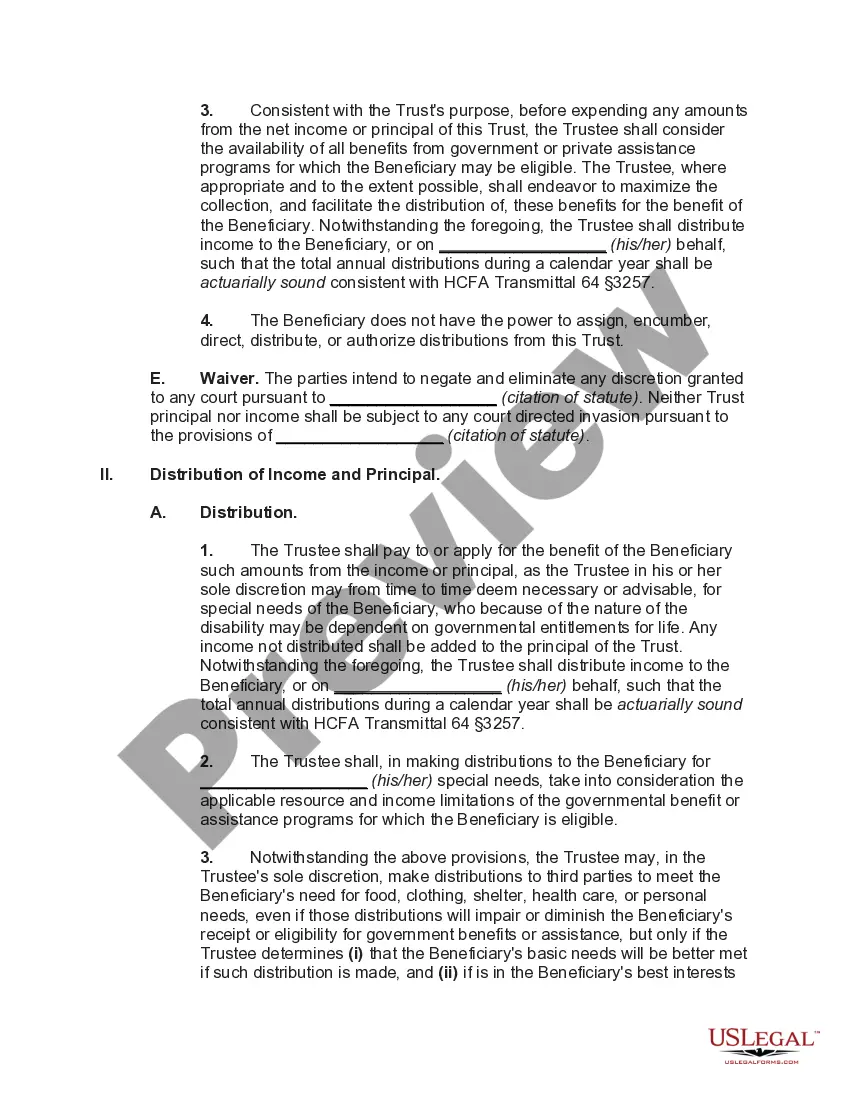
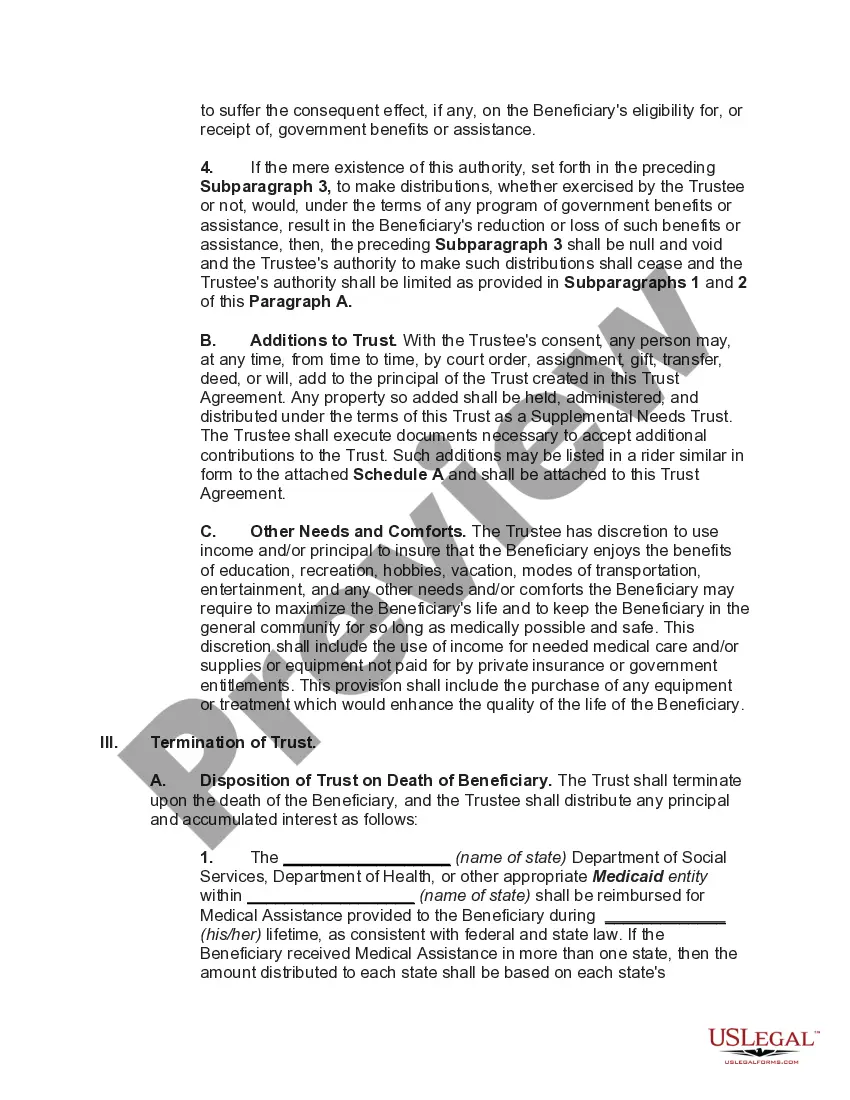
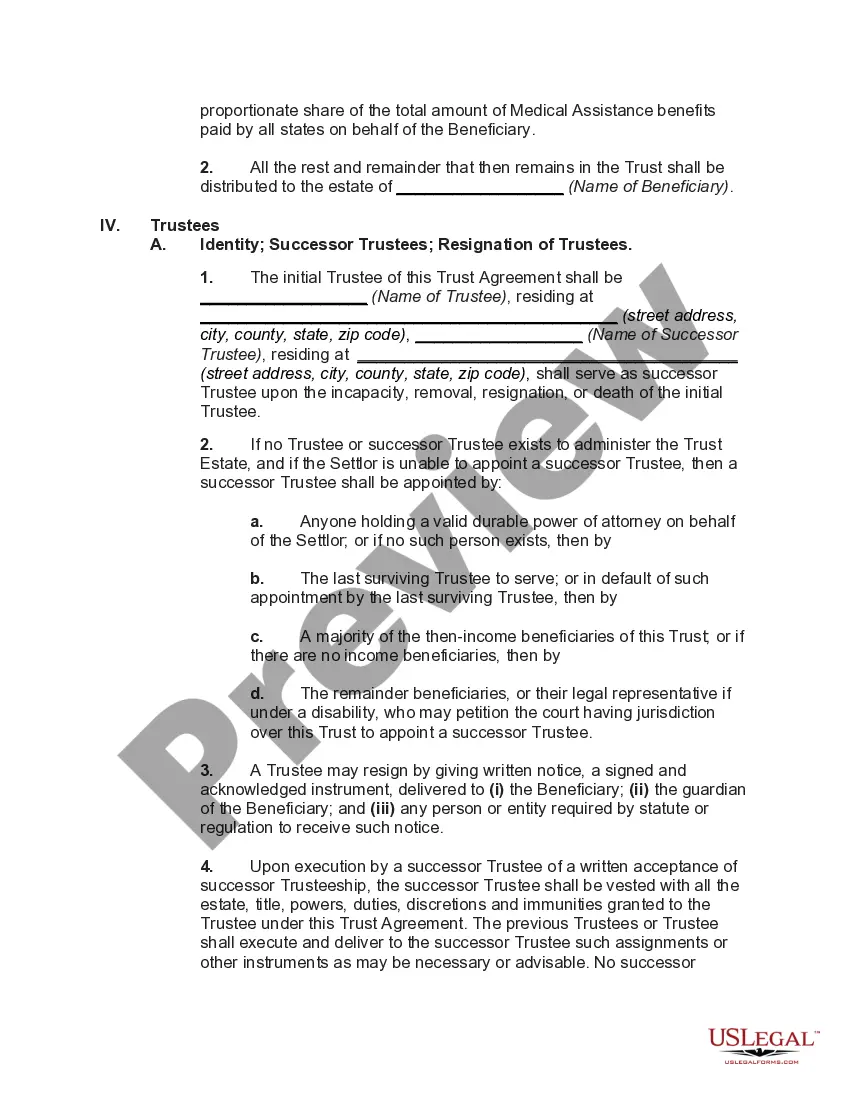
How to fill out Special Needs Irrevocable Trust Agreement For Benefit Of Disabled Child Of Trustor?
It’s a well-known fact that you cannot become a legal authority instantly, nor can you swiftly learn to draft a Tax Return For Special Needs Trust without possessing a specific set of competencies.
Drafting legal documents is a lengthy process that demands a particular education and expertise. Thus, why not entrust the preparation of the Tax Return For Special Needs Trust to the experts.
With US Legal Forms, one of the most comprehensive libraries of legal templates, you can find everything from court documents to templates for internal communication.
If you require any other form, restart your search. Create a complimentary account and select a subscription plan to buy the form.
Select Buy now. Once the payment is processed, you can access the Tax Return For Special Needs Trust, complete it, print it, and send or mail it to the relevant individuals or organizations. You can regain access to your documents from the My documents tab at any time. If you are a current client, you can simply Log In, and locate and download the template from the same tab. Regardless of your paperwork's purpose—be it financial, legal, or personal—our website has you covered. Try US Legal Forms today!
- We understand how vital compliance and adherence to federal and state laws and regulations are.
- That’s why all forms on our website are location-specific and current.
- Here's how you can initiate your experience with our site and obtain the document you need in just a few minutes.
- Find the form you require using the search bar at the top of the page.
- Preview it (if this option is available) and review the supporting description to determine if the Tax Return For Special Needs Trust is what you need.
Form popularity
FAQ
It is important to remember that the SNT cannot deduct expenses like rent and food. Deductions can be for medical care, custodial care, support services, and similar care not provided by public benefits programs.
In the case of third party special needs trusts, if the trust is considered a grantor trust, all items of income, deduction and credit are generally taxed to the individual(s) who created and funded the trust (typically parents or other relatives of the individual with a disability).
A Special Needs Trust must have its own Federal Identification Number (also called an Employer Identification Number, EIN, Tax Identification Number, or TIN) to be valid. This unique number means that the Trust is its own entity, and that it does not belong to anyone but itself.
Form 1041 is an Internal Revenue Service (IRS) income tax return filed by the trustee or representative of a decedent's estate or trust. The form consists of three pages, requiring basic information about the estate or trust and detailing its income and deductions.
A living trust is a common solution for many people with estate planning needs. However, few people know about its tax-filing requirements. Generally, any trust with at least $600 in annual income must file a federal return.