Special Trust Child Statement With Text
Description

Get your form ready online
Our built-in tools help you complete, sign, share, and store your documents in one place.
Make edits, fill in missing information, and update formatting in US Legal Forms—just like you would in MS Word.
Download a copy, print it, send it by email, or mail it via USPS—whatever works best for your next step.
Sign and collect signatures with our SignNow integration. Send to multiple recipients, set reminders, and more. Go Premium to unlock E-Sign.
If this form requires notarization, complete it online through a secure video call—no need to meet a notary in person or wait for an appointment.
We protect your documents and personal data by following strict security and privacy standards.

Make edits, fill in missing information, and update formatting in US Legal Forms—just like you would in MS Word.

Download a copy, print it, send it by email, or mail it via USPS—whatever works best for your next step.

Sign and collect signatures with our SignNow integration. Send to multiple recipients, set reminders, and more. Go Premium to unlock E-Sign.

If this form requires notarization, complete it online through a secure video call—no need to meet a notary in person or wait for an appointment.

We protect your documents and personal data by following strict security and privacy standards.
Looking for another form?

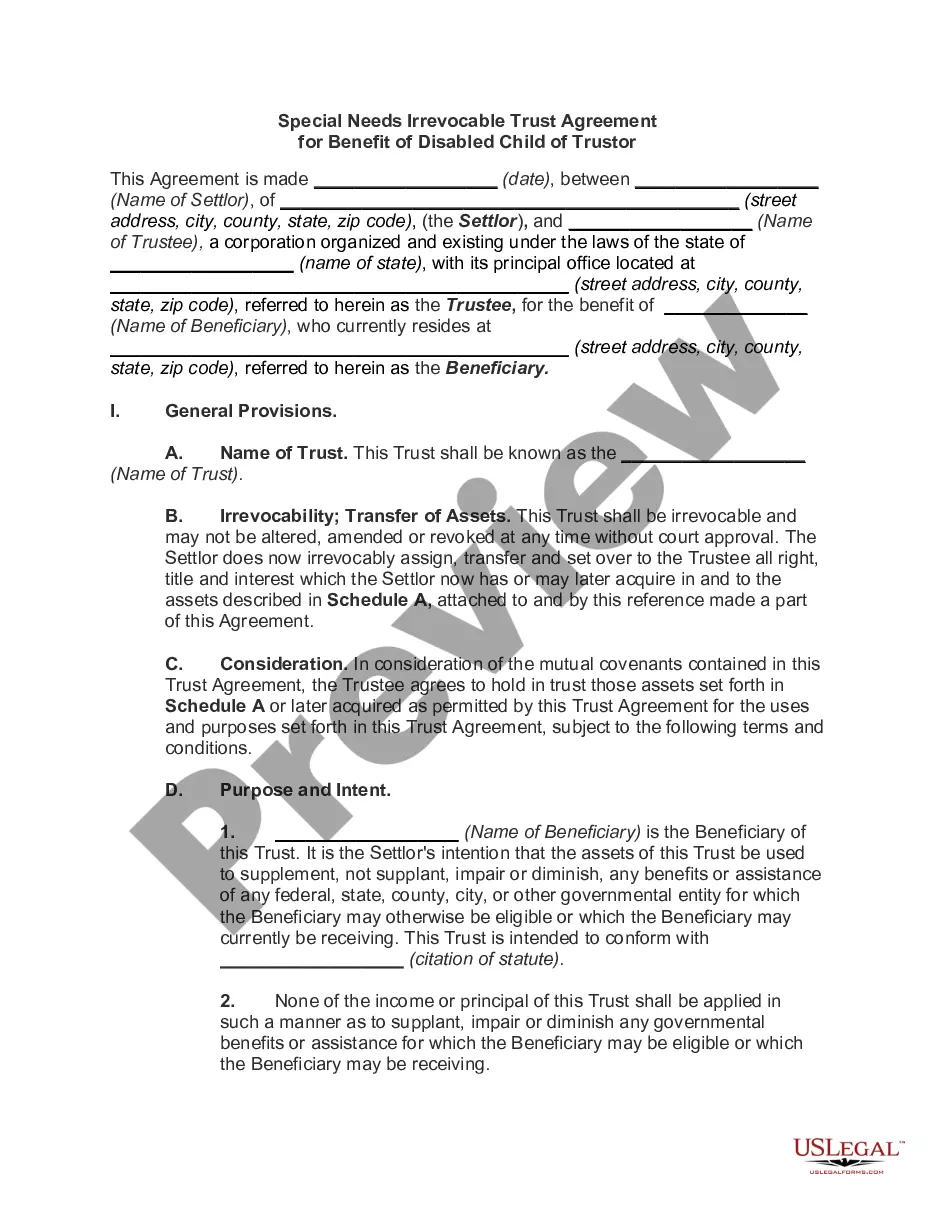
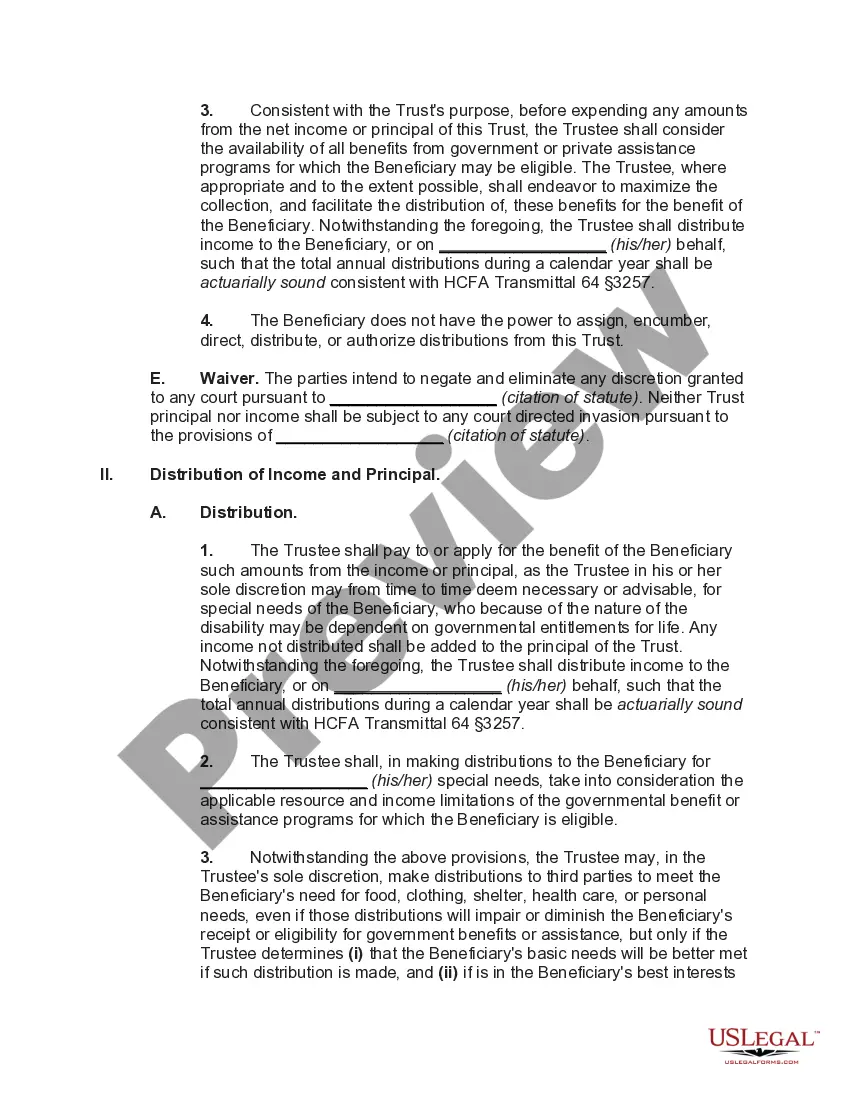
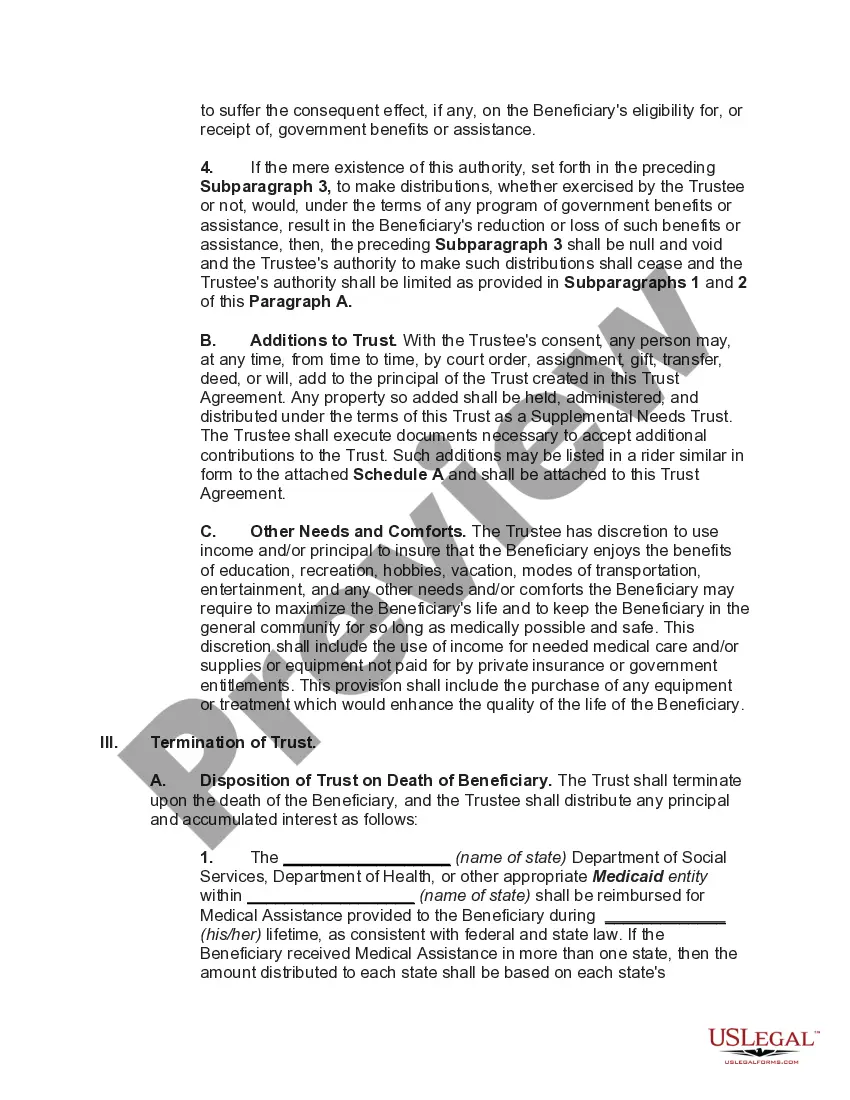
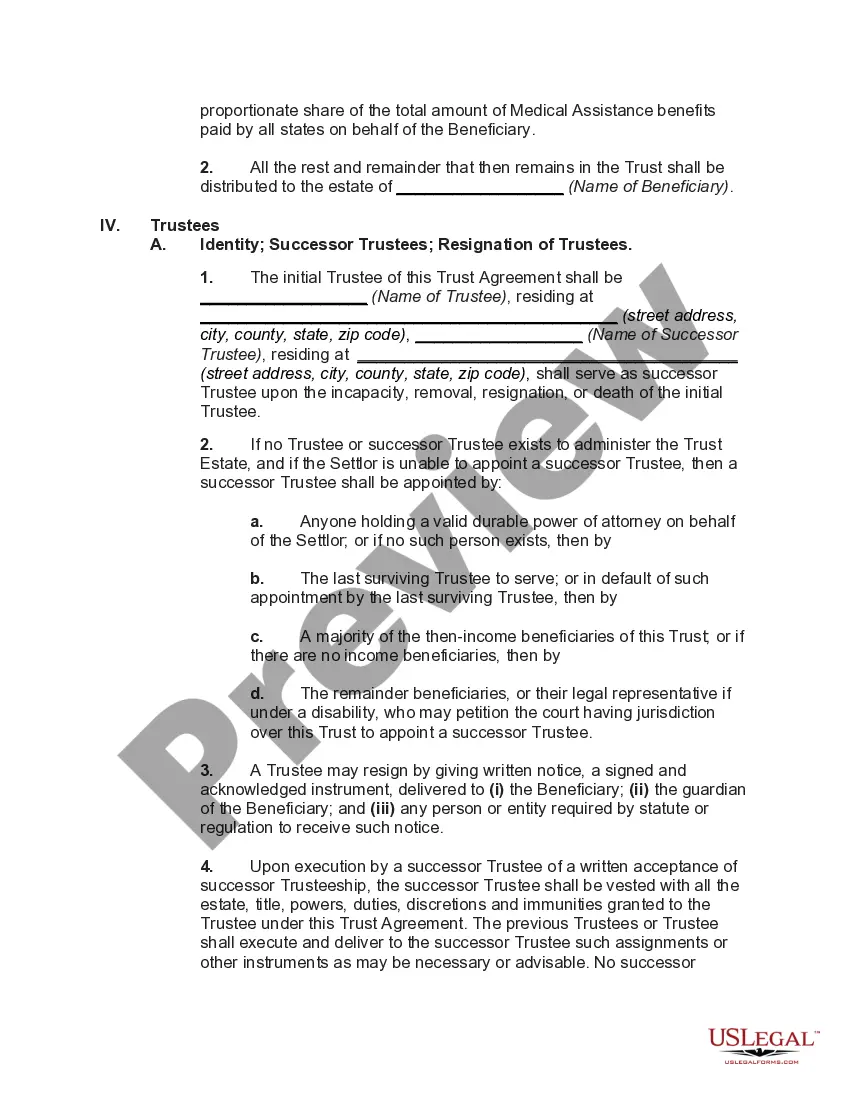
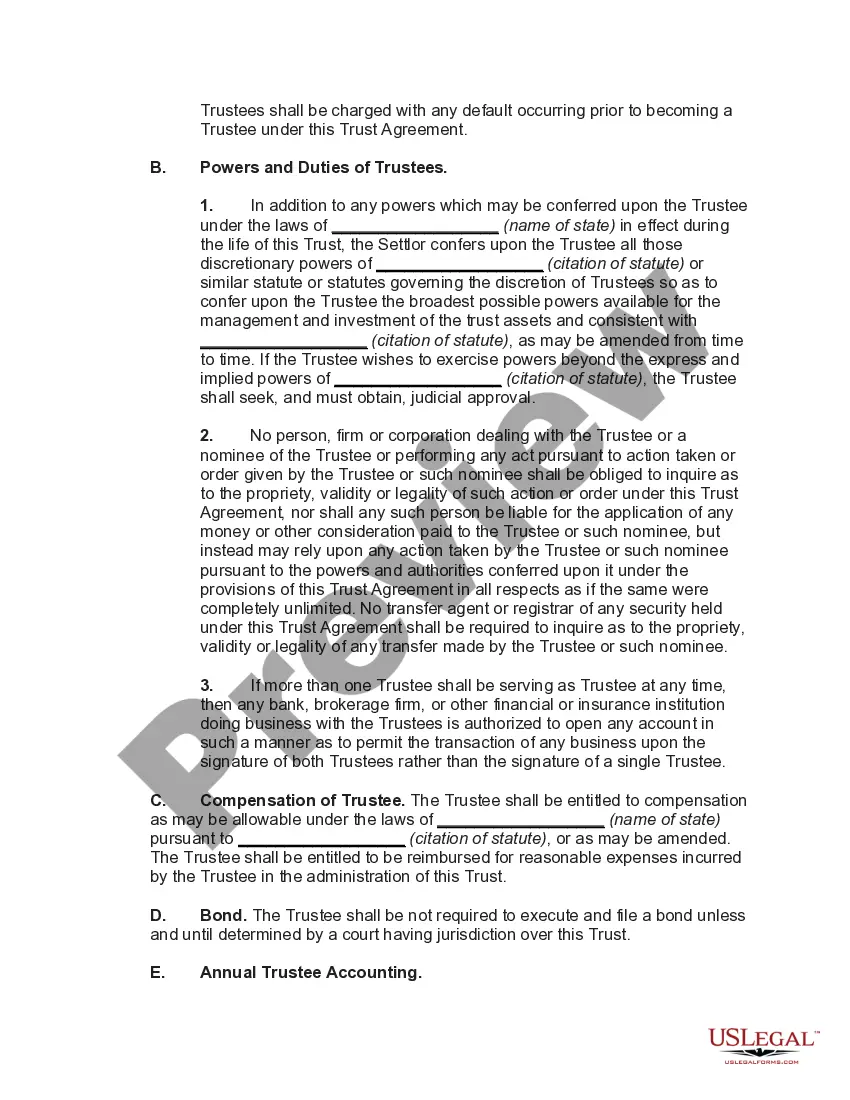
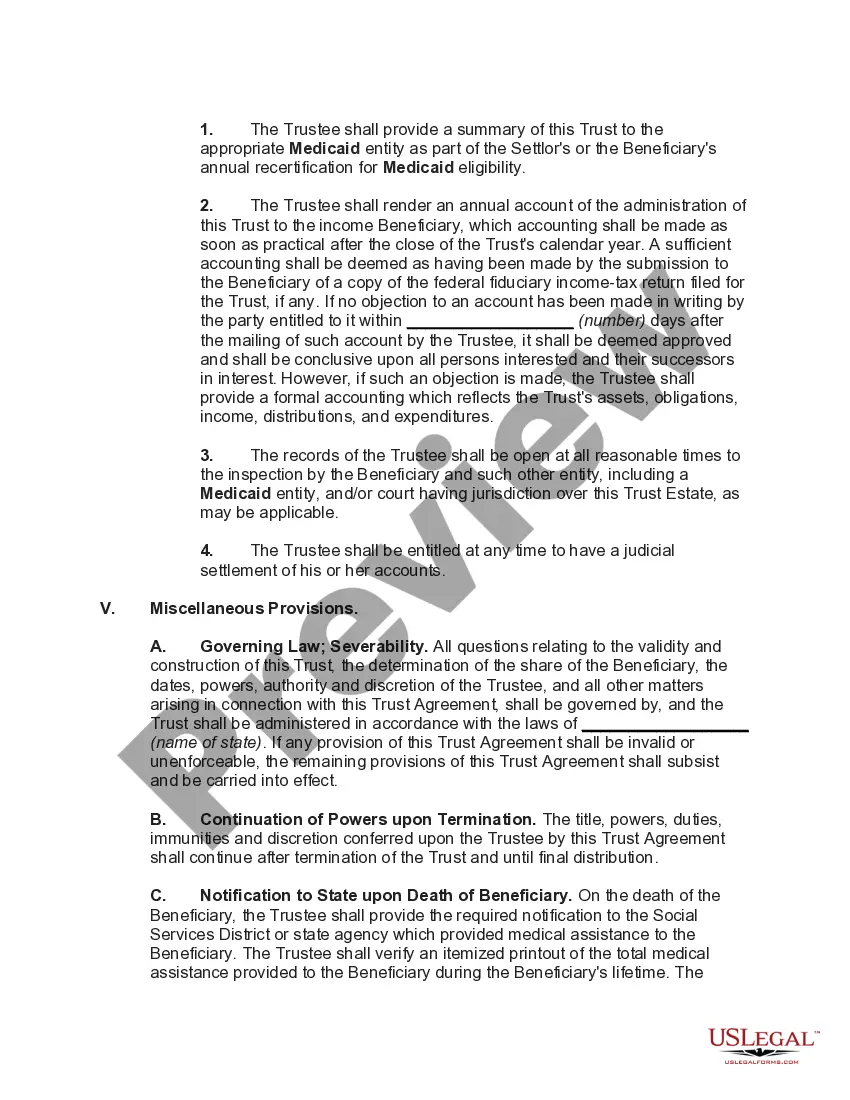
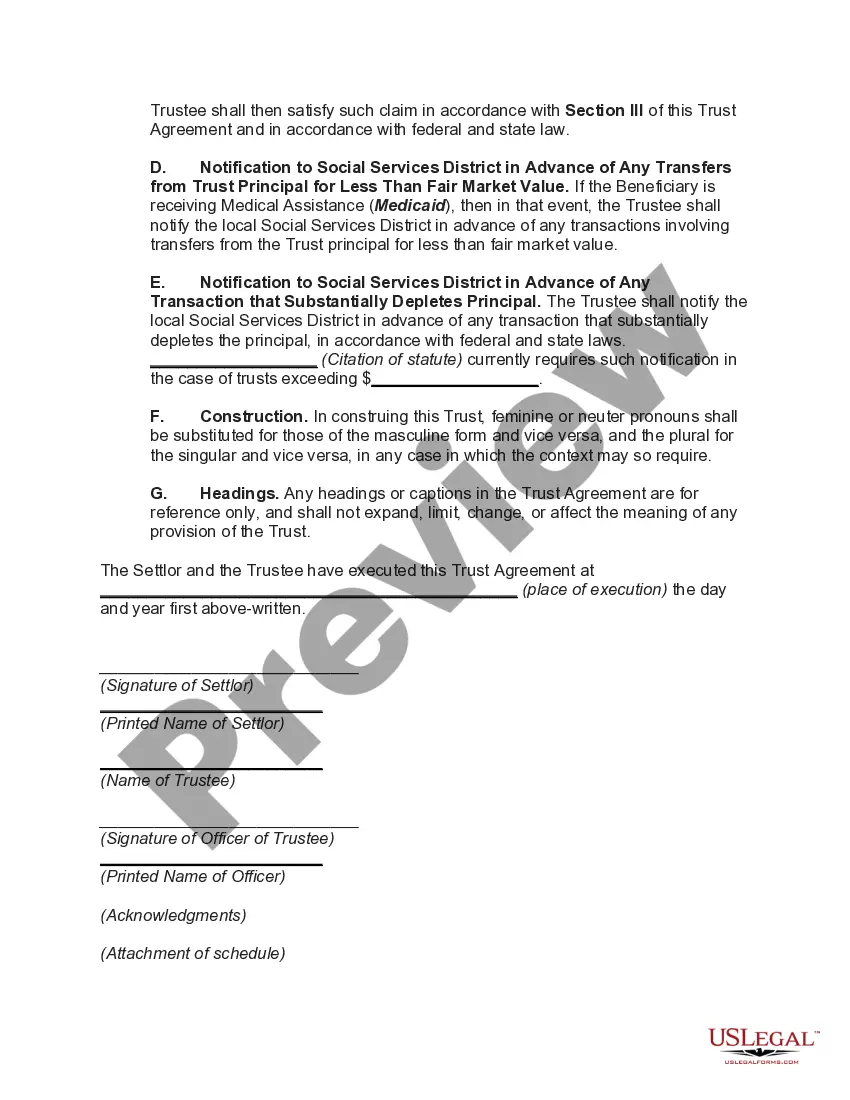
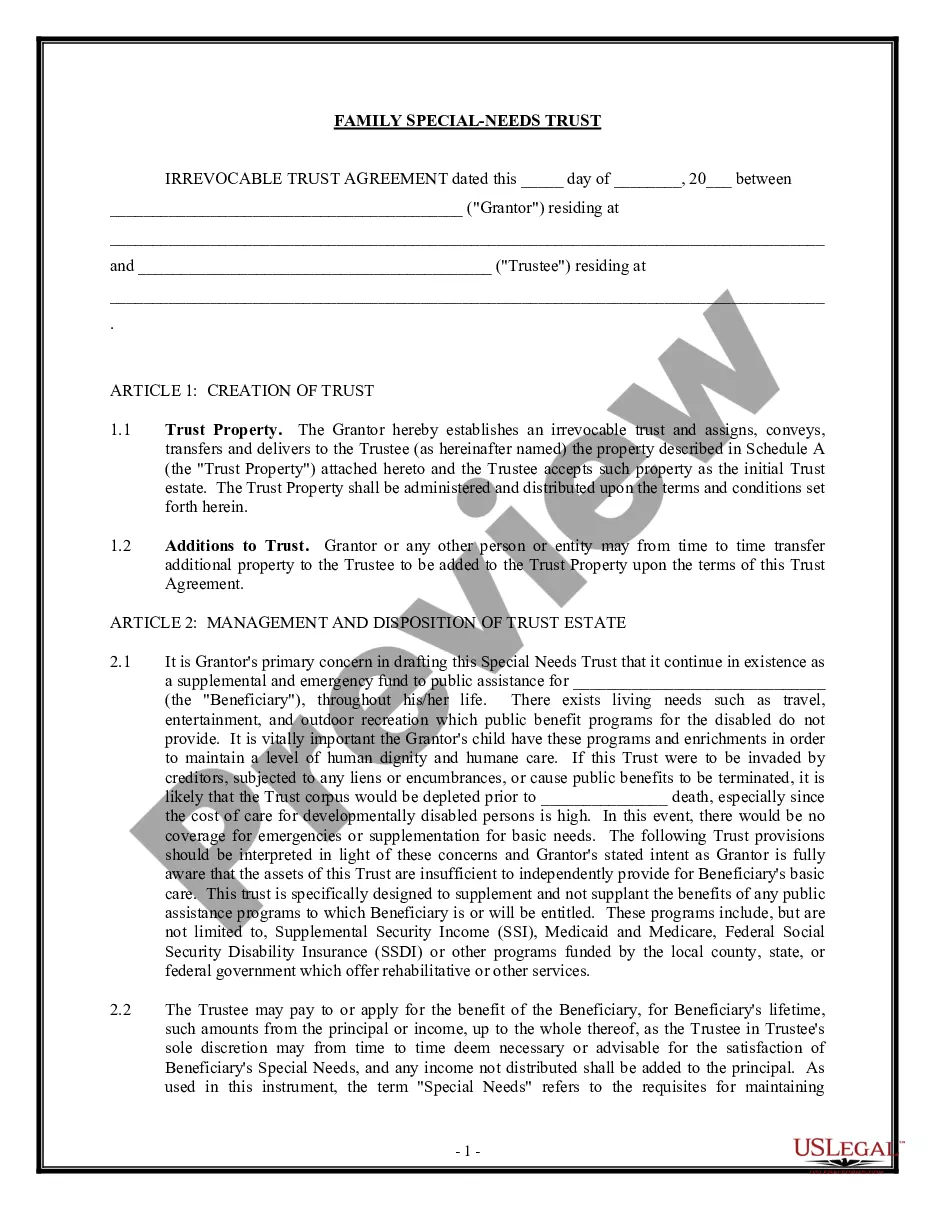
How to fill out Special Needs Irrevocable Trust Agreement For Benefit Of Disabled Child Of Trustor?
- If you are a returning user, log in to your account through the US Legal Forms website and proceed to download the necessary form template by clicking the Download button. Ensure your subscription is active or renew it as per your payment plan.
- For new users, start by exploring the Preview mode and reading the form description to guarantee that the template matches your specific requirements and adheres to local jurisdiction standards.
- If you need a different template, utilize the Search tab to locate the appropriate one. Ensure it fits your needs before advancing.
- Purchase the document by clicking on the Buy Now button and selecting your preferred subscription plan. You will be prompted to create an account to gain access to the full library.
- Complete your transaction by entering your payment information via credit card or PayPal. Save your newly acquired template on your device.
- Access your downloaded form anytime through the My Forms menu in your user profile for future reference.
In conclusion, US Legal Forms not only simplifies the process of acquiring legal documents but also ensures accuracy and compliance. With more than 85,000 customizable forms at your disposal, completing your Special Trust Child Statement with text becomes a hassle-free experience.
Start your journey towards legal efficiency today by visiting US Legal Forms and explore the resources available to you!
Form popularity
FAQ
Setting up a trust for a special needs child involves several key steps to ensure proper management of funds while maintaining eligibility for government benefits. First, you should create a special trust child statement with text that outlines your child’s unique needs and how the trust will address them. Collaborating with legal experts can streamline the process, ensuring compliance with applicable laws. At uslegalforms, you can find resources and templates designed specifically for establishing trusts for special needs children.
A sample trust for grandchildren often includes various provisions tailored to support their educational and personal development needs. It allows grandparents to pass on financial resources while setting specific guidelines on how and when funds can be accessed. In this context, the special trust child statement with text plays a significant role, as it provides customized directions for the use of assets for the benefit of grandchildren. This ensures that the trust aligns with the grandparents' intentions and values.
The purpose of a special trustee is to manage and safeguard the assets of a trust for beneficiaries, particularly in complex situations. A special trustee handles the specific needs outlined in the special trust child statement with text, ensuring that the trust provisions are carried out effectively. This role is especially crucial when dealing with minors or individuals with special needs, as the trustee must act in their best interest. Overall, a special trustee helps instill confidence in the trust management process.
A trust must file taxes if it generates any income of $600 or more during the year. This threshold applies to the total income the trust makes before deductions. The Special trust child statement with text will provide a comprehensive view of the trust’s income. Understanding these requirements helps you manage trust compliance effectively.
The trustee requires your tax return to ensure accurate tax reporting for the trust. Reviewing your tax return helps the trustee understand your tax liability and any distributions you may need. Using the Special trust child statement with text can help present your financial situation clearly. This collaboration ensures transparency and compliance for both parties.
Yes, you can file Form 1041 electronically using approved e-filing software. This option offers you convenience and may speed up the processing of your return. Incorporating the Special trust child statement with text can simplify the e-filing process, as it provides important information in a clear format. Make sure to check the IRS guidelines for e-filing trusts.
A trustee files taxes typically by submitting IRS Form 1041 for the trust. This form details the trust's income, deductions, and distributions to beneficiaries. The Special trust child statement with text can assist in summarizing financial activities for the tax year. Proper filing helps maintain transparency and trust compliance.
Yes, a trust can write off certain expenses related to managing its assets. These expenses can include fees for investment management, legal fees, and accounting costs. Utilizing a Special trust child statement with text can help clarify what expenses may be deductible. Always consult with a tax professional to ensure proper documentation and compliance.
Yes, a trustee must file a tax return if the trust has taxable income. This includes income generated from assets held within the trust. You can use the Special trust child statement with text to help provide the necessary documentation. Remember, filing correctly ensures compliance with tax laws and protects the interests of the beneficiaries.
Filing taxes on a special needs trust can be straightforward but requires careful attention to detail. The trust must obtain its Employer Identification Number (EIN), and you will need to report income generated by trust assets on Form 1041. If your special trust child statement with text allows distributions to the beneficiary, those amounts may also need to be reported on their tax return. Consulting a tax professional who understands trust taxation is highly recommended.