Special Needs Trustor Complete For Students
Description




Get your form ready online
Our built-in tools help you complete, sign, share, and store your documents in one place.
Make edits, fill in missing information, and update formatting in US Legal Forms—just like you would in MS Word.
Download a copy, print it, send it by email, or mail it via USPS—whatever works best for your next step.
Sign and collect signatures with our SignNow integration. Send to multiple recipients, set reminders, and more. Go Premium to unlock E-Sign.
If this form requires notarization, complete it online through a secure video call—no need to meet a notary in person or wait for an appointment.
We protect your documents and personal data by following strict security and privacy standards.

Make edits, fill in missing information, and update formatting in US Legal Forms—just like you would in MS Word.

Download a copy, print it, send it by email, or mail it via USPS—whatever works best for your next step.

Sign and collect signatures with our SignNow integration. Send to multiple recipients, set reminders, and more. Go Premium to unlock E-Sign.

If this form requires notarization, complete it online through a secure video call—no need to meet a notary in person or wait for an appointment.

We protect your documents and personal data by following strict security and privacy standards.
Looking for another form?

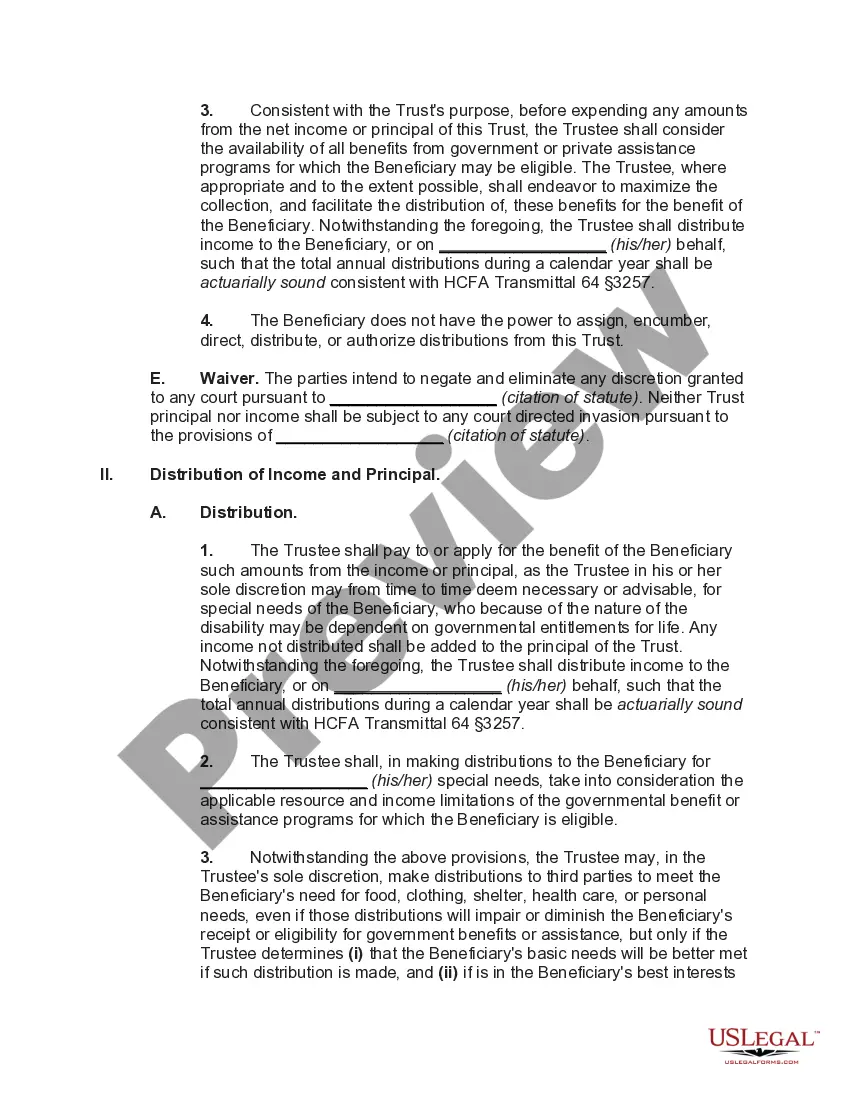
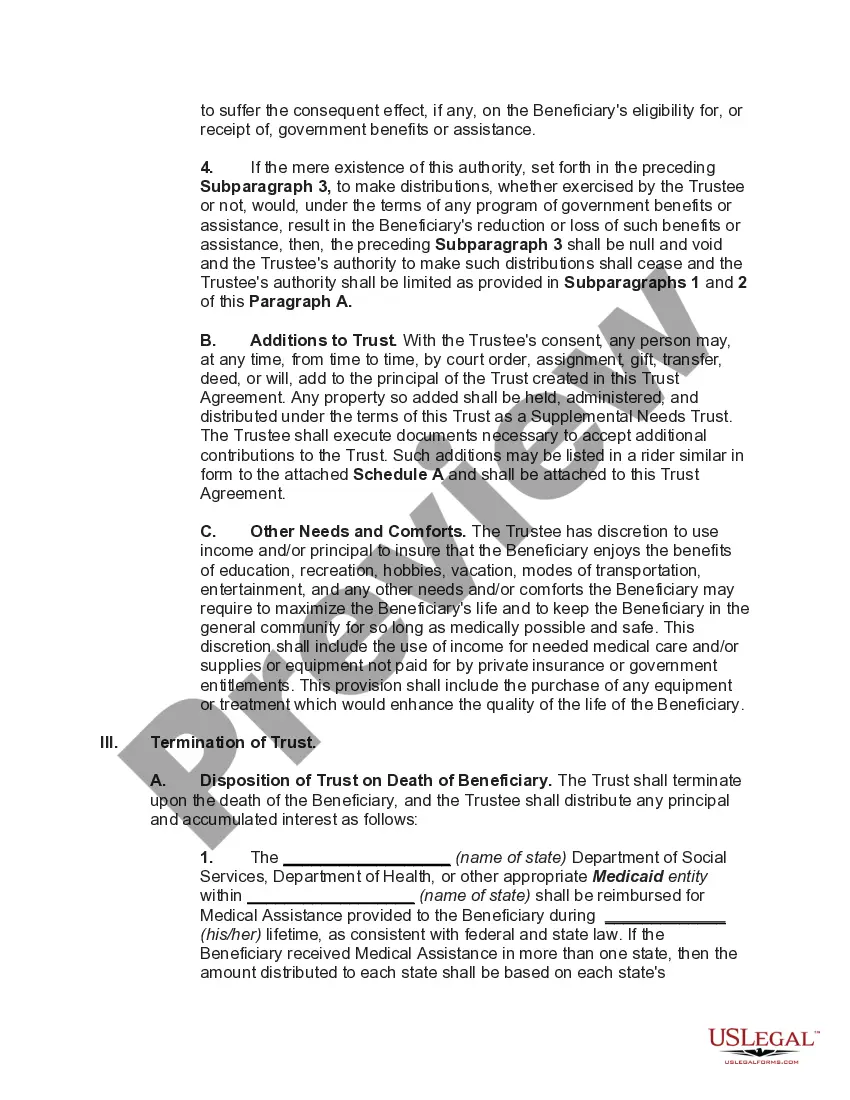
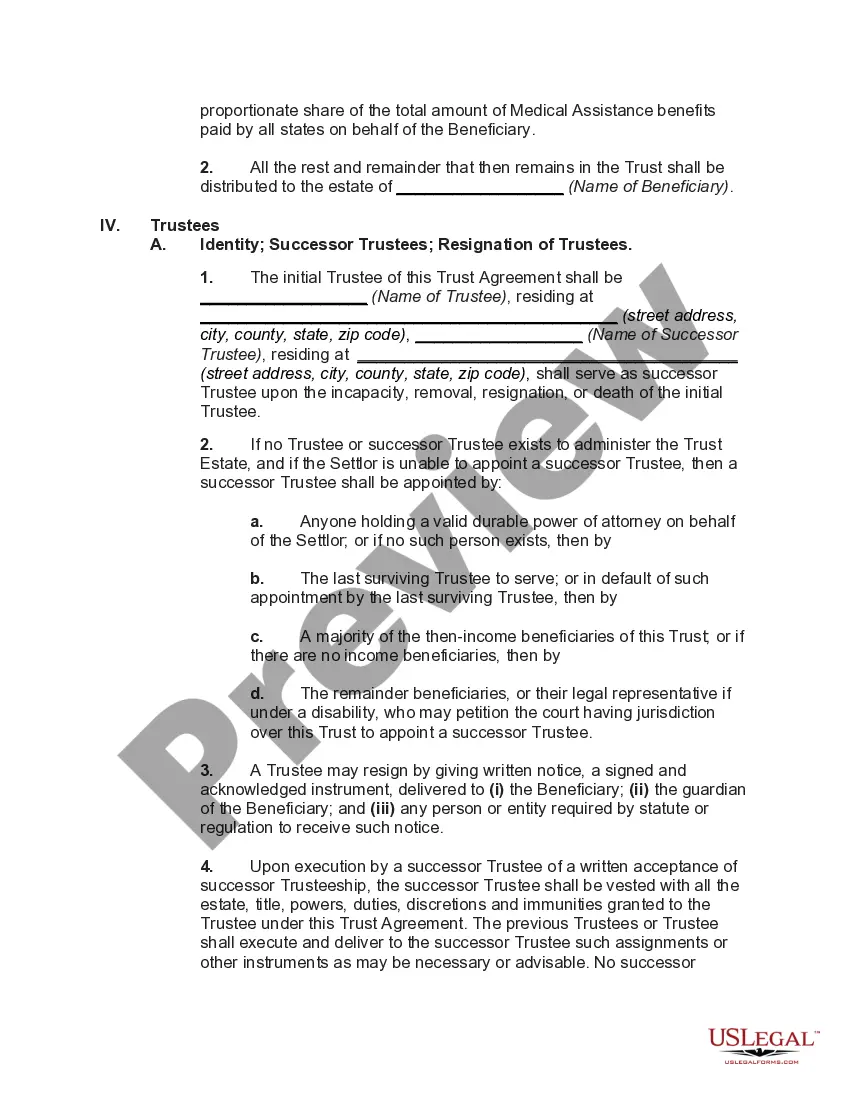
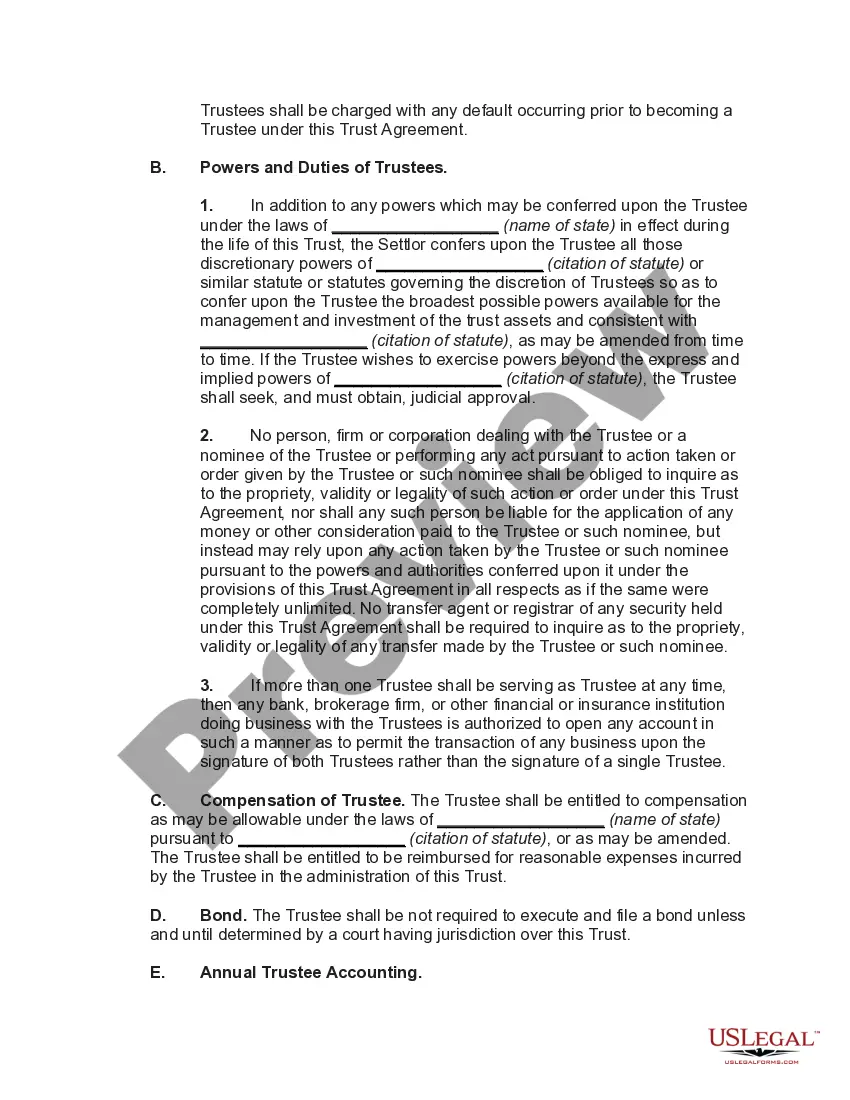
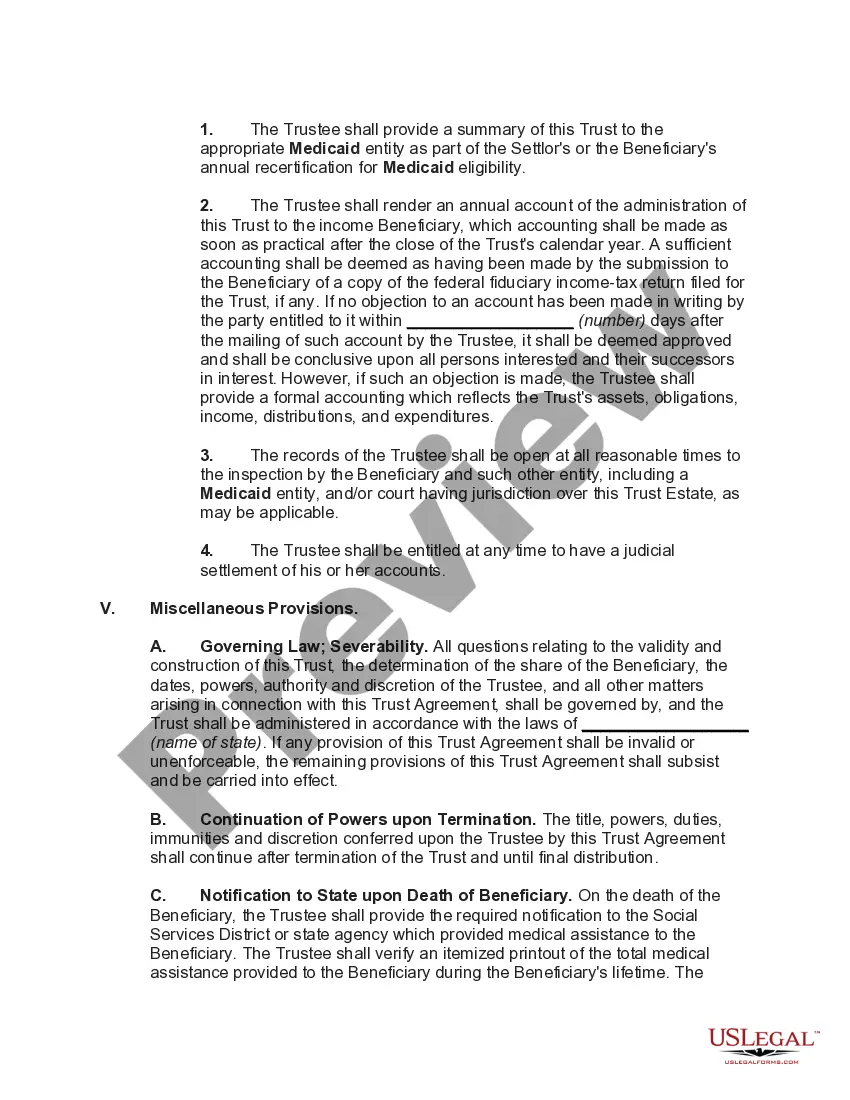
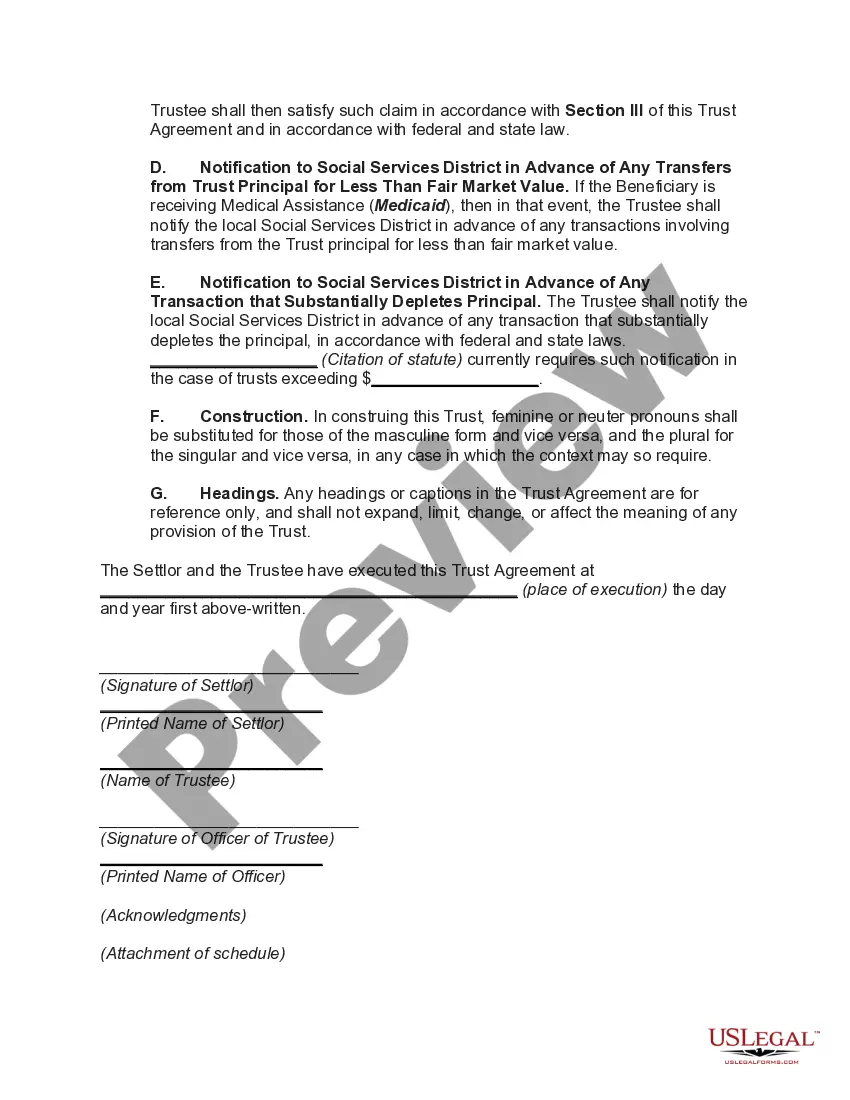
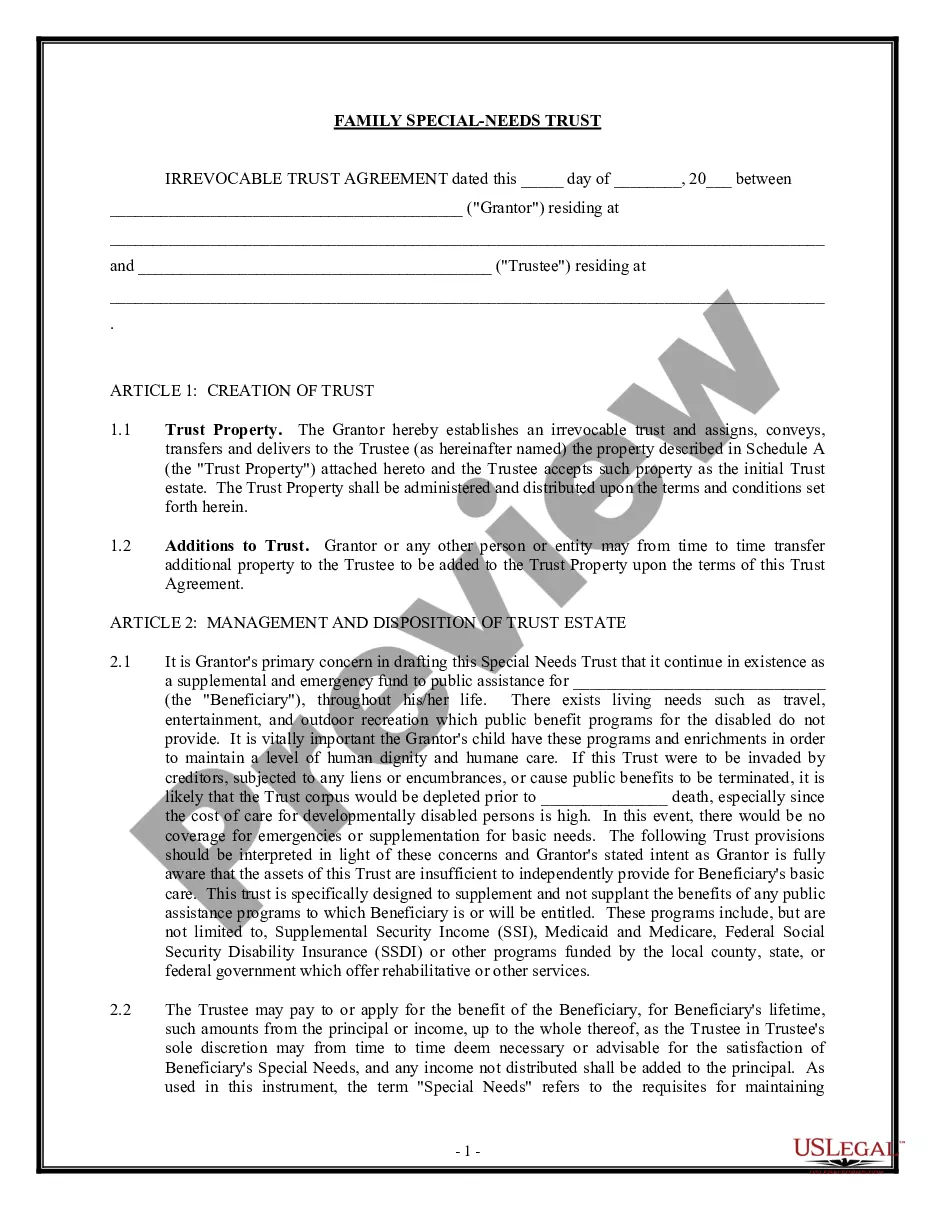
How to fill out Special Needs Irrevocable Trust Agreement For Benefit Of Disabled Child Of Trustor?
- Begin by logging into your existing US Legal Forms account to access your saved templates. If you do not have an account, you will need to create one.
- Review available forms in the Preview mode. Ensure the document fits your requirements and complies with local laws.
- If you have trouble finding the correct form, use the Search function to locate the necessary document that suits your needs.
- Once you find the right template, click the Buy Now button and choose a subscription plan that works best for you.
- Complete your payment by entering your credit card details or using your PayPal account for convenience.
- Finally, download the form to your device. Access it anytime via the My Forms section in your account for future reference.
In conclusion, US Legal Forms provides a simple and comprehensive way to handle legal documents, ensuring you have everything you need at your fingertips. By following these steps, you can easily complete a special needs trustor for students.
Don't wait any longer—start your document preparation today with US Legal Forms and ensure your loved ones are taken care of!
Form popularity
FAQ
Some trusts can be tax exempt, including certain charitable trusts and qualifying special needs trusts. Special needs trusts are designed to benefit individuals with disabilities without affecting their eligibility for government assistance. This feature makes them essential in a special needs trustor complete for students, offering peace of mind for families.
The trustee plays a crucial role in managing the special needs trust and ensuring that funds are used appropriately for the beneficiary's well-being. Responsibilities include distributing funds, keeping accurate records, and adhering to legal obligations. A trustworthy and knowledgeable trustee is key to a successful special needs trustor complete for students.
Setting up a special needs trust fund involves several steps. First, consult with a lawyer who specializes in special needs planning to ensure compliance with regulations. Then, draft the trust document, outline its purpose, and designate a trustee. This systematic approach is essential for creating a special needs trustor complete for students.
Indeed, you must file a tax return for a special needs trust if it earns income. This applies to both revocable and irrevocable trusts when the income surpasses the allowed threshold. Keeping track of tax obligations helps protect the beneficiary's financial interests within a special needs trustor complete for students.
Yes, filing a tax return for a special needs trust is typically required. The trust must file Form 1041 if it generates income that exceeds a specific limit. Understanding tax responsibilities is crucial for ensuring compliance and maintaining benefits for the beneficiary, especially under a special needs trustor complete for students.
To set up a trust for your special needs child, start by defining the trust’s purpose and selecting a trustworthy trustee. The special needs trustor complete for students should then gather necessary information and consider using a legal platform, like uslegalforms, to obtain templates and guidelines. It's often beneficial to consult with legal and financial advisors to ensure the trust meets all legal requirements and adequately supports your child's needs.
Yes, a special needs trust usually requires its own tax identification number, known as an Employer Identification Number (EIN). The special needs trustor complete for students must obtain this number from the IRS for tax reporting purposes. This separate identification helps in maintaining clear financial records and ensures compliance with tax laws. Consulting a tax professional can make this process easier.
One downside of a special needs trust is the potential complexity in its administration and compliance. The special needs trustor complete for students must adhere to strict regulations to avoid jeopardizing government benefits for individuals with disabilities. Additionally, the trust can incur management costs, which may affect the overall estate plan. It’s important to weigh these factors against the benefits and ensure the trust is structured properly.
While it is possible to set up a special needs trust without a lawyer, it is not advisable due to the complexities involved. The special needs trustor complete for students may risk making significant errors that could affect the trust's validity and the beneficiary's benefits. Utilizing legal and financial resources can provide valuable guidance in navigating regulations and requirements. Platforms like uslegalforms offer helpful templates to assist in the process.
Typically, there is no legal minimum amount to set up a special needs trust, but practical considerations come into play. A special needs trustor complete for students should consider funding the trust with a sufficient amount to cover the beneficiary’s needs over time. Many advisors suggest starting with at least $10,000 to ensure the trust can fulfill its purpose effectively. Planning for regular contributions can also enhance the trust’s benefits.